
Where it started
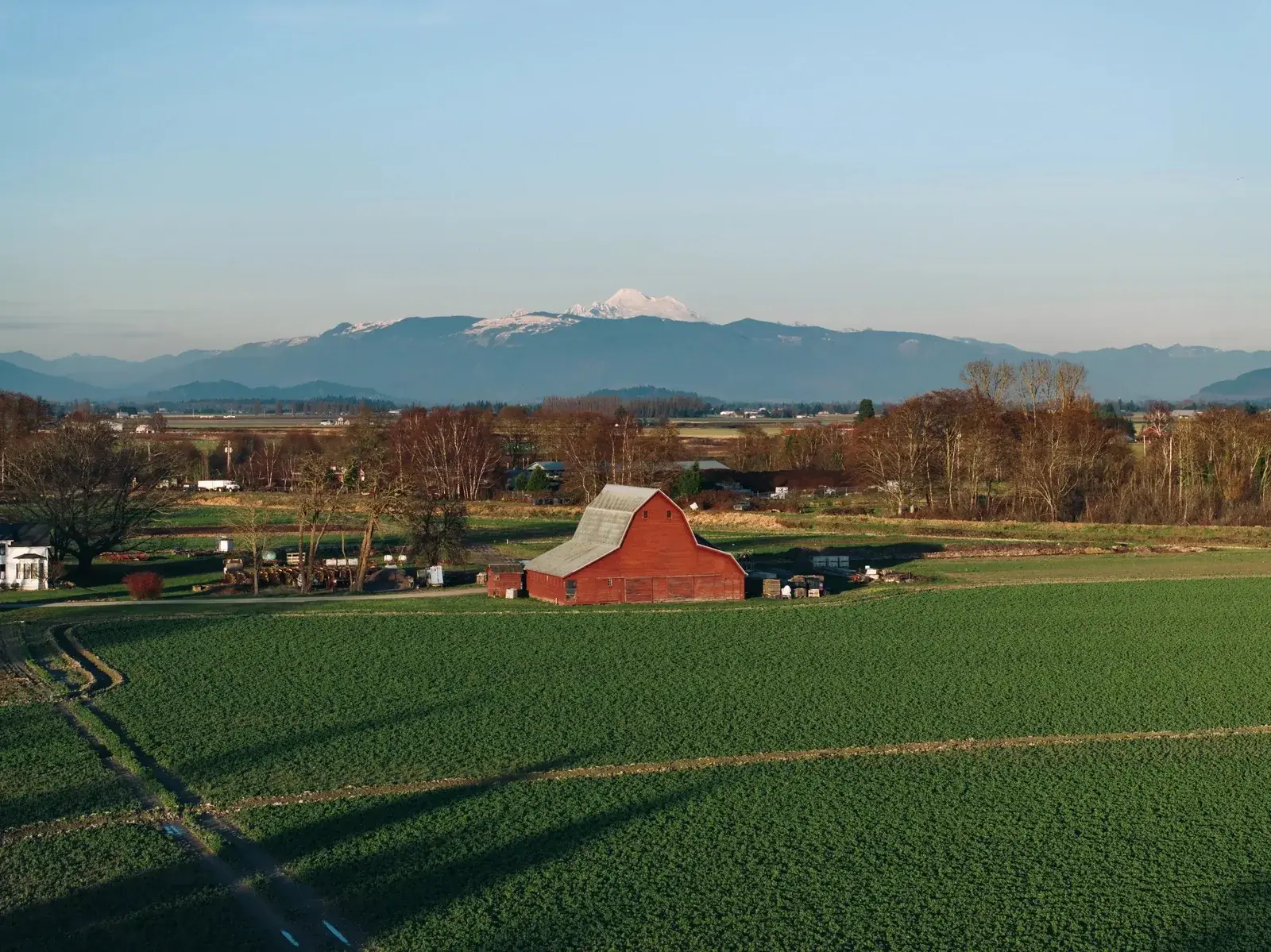
Cairnspring Mills was founded in 2016 in Burlington, Washington, by a group of Skagit Valley farmers, local economic development leaders and bakers. One of them was Kevin Morse, now the company's CEO, who had worked as a farmer and with The Nature Conservancy before the mill. The company's own account lists the problems the founders wanted to solve: keeping local farmers viable as urbanization and commodity prices squeezed them, building markets for distinctive regional grains, shortening the distance between farmer and customer, and strengthening soil health on working farmland.
A flour mill fit the valley. Skagit farmers already grew wheat as a rotation crop, planted between their main cash crops to suppress weeds and break pest and disease cycles. In a 2025 interview with FoodNavigator-USA, Morse explained that the mill was started to give those producers a way to process grain that larger mills had little interest in, because yields were less predictable and consumer awareness and demand were lower. The Burlington mill itself came out of a public-private partnership with the Port of Skagit. The company also credits Dr. Stephen Jones and The Bread Lab, and farmers Dave Hedlin, Tim Wallace and John Roozen, among its early supporters.
That starting point is the case for acting locally in a staple crop. The company notes that the United States once had more than 20,000 flour mills and that a handful of very large mills now dominate the industry. FoodNavigator reported the company's figure that 10 companies control 87% of US milling capacity. The wider pattern is covered in Local Grain Economies: Small Mills and Regional Flour.
What they changed
Cairnspring did not set out to farm. Its lever is the grain contract. The company buys directly from farmers rather than on the commodity market, and its sourcing pages describe the growers as committed to regenerative practices such as crop rotation, animal integration and no-till systems that prevent erosion. Contracts are renewed every year, which the company says lets it raise its standards with growers season by season. Two practices are banned outright: glyphosate as a harvest aid and neonicotinoid insecticides, which the process page says the company prohibits because of their documented effects on ecosystems. In return, farmers receive a premium over commodity prices.
The company describes its approach as "progress over perfection": it meets farmers where they are and works with them through a Soil Health Initiative to build organic matter and biodiversity. Varieties are chosen with growers and tested for flavor and baking performance in local soils, not only for yield or protein. After harvest, each variety is stored separately in small local silos and is never blended with commodity grain, so every lot can be traced to its farm and farmer.
The milling changed too. Cairnspring grinds with stone rather than steel rollers and keeps all three parts of the wheat berry, the bran, germ and endosperm, in the flour. Its flours are not bleached, bromated, enriched or treated with dough conditioners. For growers thinking about the livestock side of these rotations, Tips for Adding Animals to Your Crop Rotation covers the practical questions.
How it works today
The company now stands on two mills. The second, in Pendleton, Oregon, was built with the Confederated Tribes of the Umatilla Indian Reservation (CTUIR); FoodNavigator reported in September 2025 that construction was to start on October 1. According to The Shelby Report, the Tribes leased the site at Coyote Business Park to the company for 50 years and invested $5 million in Cairnspring, their first equity stake in a private company. Blue Mountain Mill opened in October 2026 and, the company says, begins commercial production in November. The 27,000 square foot mill is designed for high-volume hard red wheat shipped by the truckload. At full speed, the company says, it will raise annual milling capacity from about 8 million pounds to more than 115 million pounds, source wheat from about 60,000 acres and pay farmers more than $22 million a year.
The financing was unusual for a flour mill. The reported partners include Steward, Native American Bank, Mission Driven Finance, eight Native community development financial institutions, the USDA and the State of Oregon, along with New Markets Tax Credits and an EB-5 investment. FoodNavigator reported that a crowdfunding round in July 2025 raised $1 million from more than 500 investors. With the new mill running, the Burlington mill is to focus on unusual grain varieties for specialty bakers and on product development.
Most of the business is wholesale to foodservice, Morse told FoodNavigator, and the new mill will also mill for customers that sell flour under their own labels. Grand Central Bakery, which buys 5 to 6 million pounds of flour a year, was quoted at the opening as an early customer. Home bakers buy through the company's online shop, which also offers local pickup on Saturdays.
On certification, two marks are confirmed at the certifiers. In December 2025 Cairnspring became the first flour company to earn The Climate Label, which, as the company's sustainability manager described it to The Change Climate Project, means measuring cradle-to-customer emissions annually, setting a climate transition budget and funding climate projects. And the Regenerative Organic Alliance directory lists the company's Edison All-Purpose Flour as Regenerative Organic Certified. For its conventionally grown flours, the process page describes ongoing work toward regenerative certification through A Greener World, and the October 2026 opening release says growers in its network have enrolled more than 44,000 acres in that program. The same release says Cairnspring itself is certified regenerative by A Greener World; that could not be confirmed in the certifier's public directory, so it is not listed here. How these labels differ is explained in Regenerative Certifications Compared.
What it shows
Cairnspring is a brand, not a farm, and its example sits in the middle of the supply chain. Morse calls it "middle infrastructure": a human-scale mill and model that serves real markets, supports farmers and keeps value in the community where the grain is grown. The economic mechanism is simple. A premium for named practices, written into a contract that is renewed every year, gives farmers a reason to keep rotations, livestock and no-till in place. For grain that carries no regenerative certification, the contract terms rather than a measured field outcome are what make it regenerative, which is why the company's push toward third-party certification matters.
The model has limits that the company names itself. There is one wheat harvest a year, and because Cairnspring does not buy on the commodity market, the grain it contracts has to carry it until the next harvest. Demand outran supply: Morse said sales grew 40% a year until the Burlington mill hit full capacity about two years before the 2025 interview. Scaling up meant building a mill designed for truckloads of hard red wheat, which is a different business from milling small lots of unusual varieties. The figures for Pendleton (acres, farmer income, jobs) are company projections at full capacity, not results yet. The Change Climate Project also states that its label does not mean a company has zero environmental impact.
What the case shows most clearly is how processing capacity shapes what farmers can grow. A rotation crop only pays if someone will buy it at a fair price, and in grain that someone is usually a mill. Cairnspring's partnership with the Umatilla Tribes adds a second point: ownership of the processing step can keep more of the value where the wheat is grown. It fits the argument for decentralized food systems, and comparable businesses appear in the food brands directory.