
The word regenerative is on more packages every season, and by May 2025 a farm that grazes well or has quit tilling gets asked a new question at the wholesale table: are you certified? Four or five seals now compete for that answer. They do not require the same things, they do not cost the same, and they do not open the same doors. This is a plain comparison, written for the farm that is trying to decide whether to apply at all.
There is no official definition, so the certifiers wrote their own
Start with the gap that every seal is trying to fill. A review of 229 journal articles and 25 practitioner websites, published in Frontiers in Sustainable Food Systems in 2020, found no legal or regulatory definition of regenerative agriculture and no widely accepted one in common usage. Some definitions were process-based (cover crops, livestock integration, less tillage), some were outcome-based (soil health, carbon, biodiversity), and many mixed the two.
That split is the single most useful way to read the labels below. A practice-based certifier audits what you do. An outcome-based one measures what the land does. Both come with a yearly visit, but the visit looks very different.
Where USDA stood in spring 2025
USDA does not define regenerative. The one farming-system label the department itself defines and polices is organic, under 7 CFR Part 205. That is why one of the biggest private seals simply builds on top of it, and it is the background to our older piece on organic versus sustainable farms.
For meat and poultry, the relevant federal voice is the Food Safety and Inspection Service, which must approve every animal-raising or environment-related claim before it goes on a label. In the updated guideline it announced on August 30, 2024, FSIS named "Raised using Regenerative Agriculture Practices" and "Climate-Friendly" as examples of environment-related claims, asked for more robust documentation behind them, and said it strongly encourages third-party certification to substantiate them. Encourages, not requires. A farm with good records can still carry its own claim, as we covered in Honest Labels. But the direction of travel is clear: the less documentation you hold, the more a seal helps.
Regenerative Organic Certified
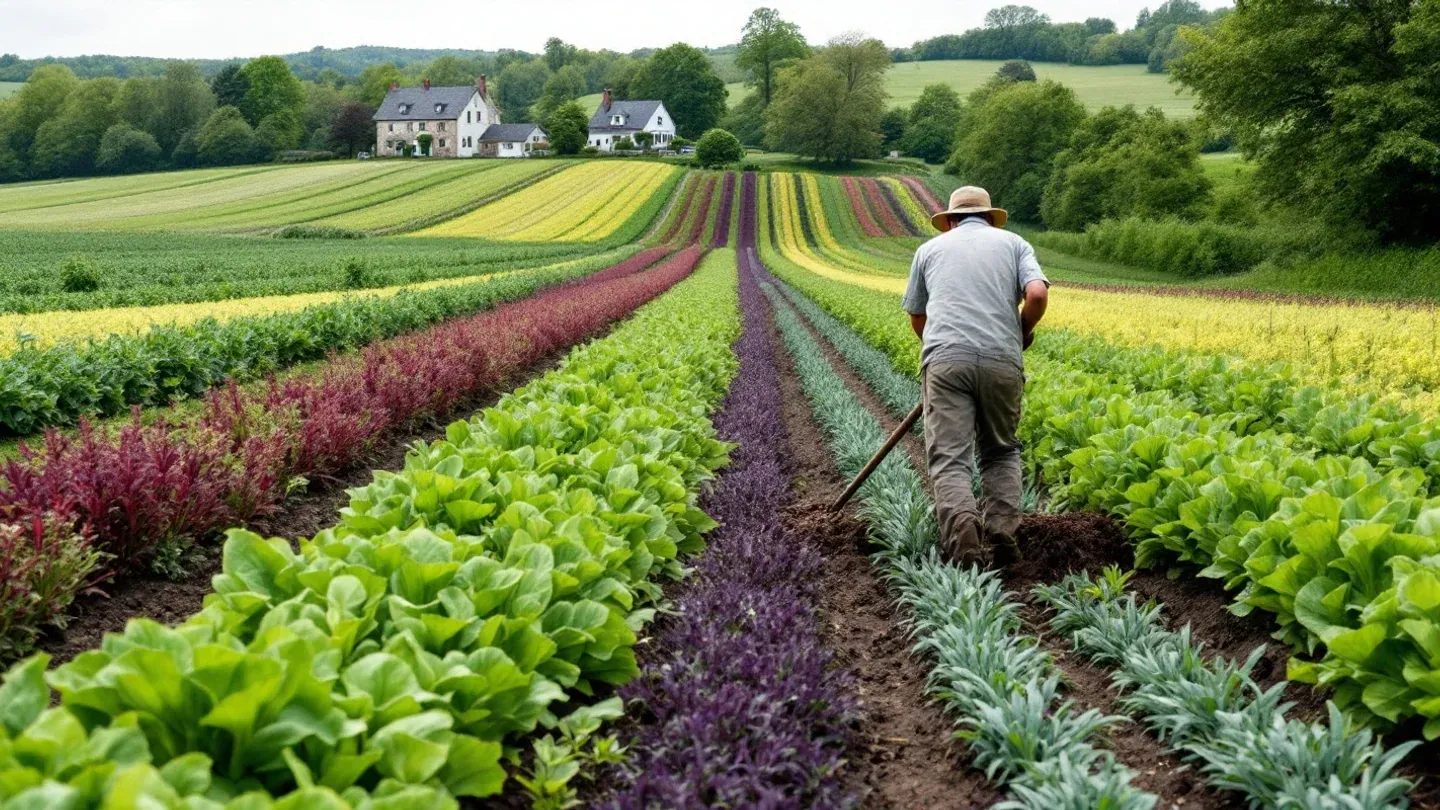
Regenerative Organic Certified (ROC) is run by the Regenerative Organic Alliance, a 501(c)(3) nonprofit whose founders and board, by its own framework's account, include Rodale Institute, Patagonia and Dr. Bronner's. On paper it is the most demanding of the seals, and the most practice-based.
The framework in force in 2025 (version 4.1, effective June 2023) starts from a hard floor: an operation is not eligible at any level until it holds USDA organic certification or a recognized international equivalent. On top of organic sit three pillars, soil health and land management, animal welfare, and farmer and worker fairness, each with its own list of required practices.
There are three levels. Bronze needs at least 10 percent of the food- or fiber-producing land certified at the start, rising to at least 50 percent by year five. Silver starts at 50 percent and reaches 75 percent by year five. Gold is 100 percent of the land and 100 percent of the revenue, and for Gold-labeled products a processor in the chain is audited too. Annual recertification audits are required at every level.
The practice lists are specific. Bronze maintains year-round vegetative cover on 25 to 50 percent of cultivated land and rotates at least three crops; Gold covers 75 to 100 percent, runs seven-crop rotations with a nitrogen-fixing cover crop and must adopt no-till unless it can justify an exemption. Ruminants must be more than 50 percent grass-fed at Bronze, more than 75 percent at Silver and 100 percent at Gold, finishing included. On the social pillar every level must show a commitment to a living wage, and Gold must demonstrate that it is paid without exception. Measurement is built in: a soil health lab test at application and every three years, plus in-field soil tests collected at every audit.
A separate baseline document, version 2.1, effective November 2024, adds two more floors: besides organic, an operation needs an approved animal welfare certification if it sells animal products, and an approved social fairness certification, with one important exception. Bronze and Silver farms in the Global North, the United States included, can skip the separate social fairness certification and be audited on that pillar by the ROC certifier instead; the fee sheet notes that an extra social fairness audit fee of $500 to $1,000 a year may be assessed for them case by case.
What it costs. The Alliance's fee sheet in force this spring (version 5.2, effective January 2024) lists a one-time application fee of $350 for a farm with fewer than five distinct parcels, $550 for five or more, and $1,000 for grower groups, then an annual producer fee of $250 (estimated value of certified crops under $1 million) or $500. The bigger number is the one the sheet does not fix: the audit itself is billed by an ROA-approved certifying body at its own rates, on top of what you already pay for organic. That organic bill is partly recoverable: the Organic Certification Cost Share Program at the Farm Service Agency reimburses up to 75 percent of certification costs, capped at $750 per certification scope. The cost share covers the organic certification only; the regenerative layer on top is yours to carry.
Scale, as of this spring: the Alliance's own counter on its home page showed 352 certified farms and ranches and 278 licensed brands at the start of May 2025.
Land to Market and Ecological Outcome Verification
Land to Market is the Savory Institute's sourcing program, and it is the clearest example of the outcome-based approach; Savory bills it as the first outcomes-based verified regenerative sourcing solution. There is no practice checklist. Instead the land is monitored under Savory's Ecological Outcome Verification protocol, and a landbase is verified only if its results show regeneration for its ecoregion.
The protocol has two layers. Short-term monitoring happens every year during the growing season and scores leading indicators you can see on your knees: live canopy abundance, litter and how well it is incorporated, dung decomposition, bare soil, soil capping, wind and water erosion, and the mix of grasses, forbs, legumes and shrubs. Those scores are summed into an Ecological Health Index. Long-term monitoring is done at baseline and every fifth year, using permanent sites and photopoints: soil carbon from cores to at least 30 cm, water infiltration rate, foliar cover by species and biodiversity measures such as species richness. A regional verifier from a local Savory Hub sets up the baseline, accredited monitors do the annual visits, and the Savory quality assurance team grants or renews verification. Only then can the land apply for the Land to Market seal.
It is a grassland tool at heart, which is why Savory describes its member brands as leaders in the food, apparel and footwear industries. The 2021 announcement that the program had passed 50 member brands named Timberland, UGG, EPIC Provisions, Pasturebird and Alexandre Family Farm; by spring 2025 the program page was reporting more than 5 million acres verified, over 80 member brands and over 1,000 verified products. Savory does not publish a price list for EOV; producers fill in an interest form and are connected with a verifier. Budget for the monitoring days and ask the hub directly. For a ranch already managing on holistic planned grazing, the appeal is obvious: the audit measures the thing you are managing for, the land, which is also why it sits so naturally with our belief in managing holistically.
Regenified, Certified Regenerative by AGW, and the bird seal
Three more seals are worth knowing, each with a different design.
Regenified, a Dallas-based certifier, runs a five-tier system described in Food Business News in May 2024. Tier 1, with less than 20 percent of a farm's land certified, does not qualify for the seal; Tiers 2 to 5 run in 20-point steps up to 80 to 100 percent of the land. On the product side, a package may say "100% Regenified" only if every ingredient other than water and salt comes from Tier 2 to 5 fields; between 75 and 100 percent by weight it may say "made with" certified ingredients; below 75 percent no seal. Its 6-3-4 standard describes itself as measuring both practices and outcomes, with in-field assessment and lab testing.
Certified Regenerative by AGW, from the nonprofit A Greener World, is plan-based. Under its 2022 standard, the farm and a qualified expert (who can be the farmer) write a site-specific Regenerative Plan covering soil, water, air, cropping systems, livestock, biodiversity, wild harvest and human and societal factors; AGW's Review Panel approves it; the plan must run at least five years and be reviewed every year, with at least one audit visit a year and annual renewal of participation. Organic certification is not required, which AGW presents as early access to regenerative markets without being certified organic. Livestock are moved toward AGW's Animal Welfare Approved standard on a timetable: one species certified within three years of application, and a documented plan for all animals to comply within five. AGW says on its fees page that it charges below-market rates for application and auditing; get the current schedule from them before you plan a budget.
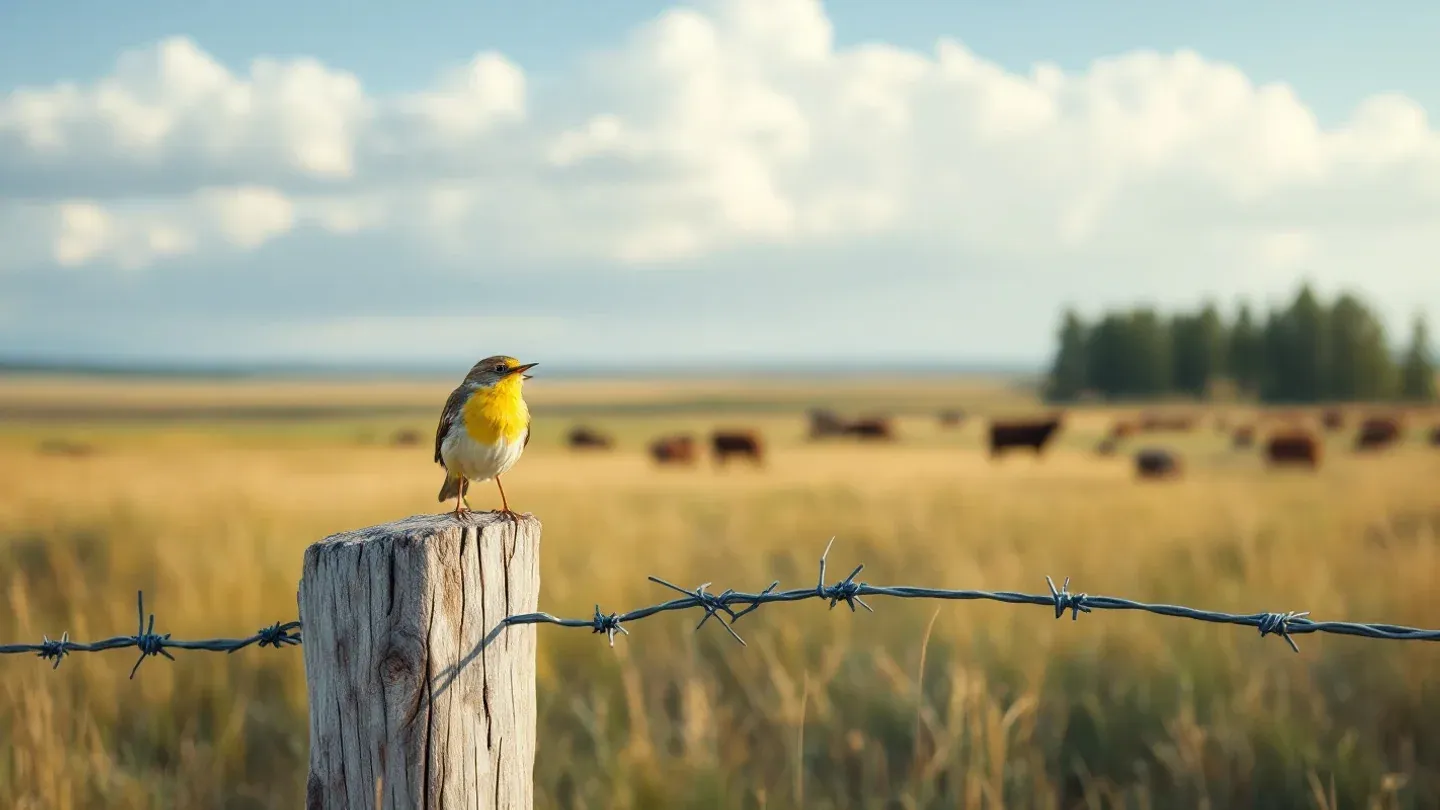
Audubon Conservation Ranching is narrower and often overlooked. Ranches that meet its habitat management, environmental and animal welfare requirements earn the Audubon bird-friendly land certification, and beef and bison from that land can carry the Audubon seal. For a grazier whose customers care about grassland birds, it is a story that is easier to tell than carbon.
Practice-based or outcome-based: what it means on audit day
The difference is not academic. A practice-based audit (ROC, AGW, most of Regenified) wants records: tillage events and the plan to reduce them, cover crop seeding, rotations, grazing charts, worker contracts, pay records, invoices for feed. If your paperwork is thin, the audit is painful even when the farming is good. An outcome-based audit (EOV) wants the land to show improvement against its own baseline and its ecoregion. If you are in year one of a transition, or a drought flattens your forage, the monitoring can simply say "not yet". Neither is more honest than the other; they fail in different ways, and they reward different farms. The same question comes up when you consider carbon contracts, which also split between paying for practices and paying for measured tons.
Who actually asks for the seal
Brands do. A regenerative seal is a sourcing instrument first and a shopper signal second, which is why both ROC and Land to Market sign brands up as licensees or members and list them with pride. If you are selling into a food brand or a distributor that has made a public regenerative sourcing commitment, ask which seal their buyer recognizes before you spend a dollar; it will usually be one of the two big ones. If you are getting ready for larger buyers anyway, the first certification they ask about is usually food safety, which we covered in getting wholesale ready with GAP.
Shoppers mostly do not ask. Purdue's Consumer Food Insights survey of 1,200 US consumers in August 2024 found that 43 percent were not at all familiar with the term regenerative agriculture and another 28 percent only slightly familiar, and that stated support fell once people were told about the cost. At a farmers market stall, a seal most customers cannot read is not what sells the beef.
When your own transparency is enough
If most of your sales are direct, the honest answer is often that a certificate buys you little. What sells at a stall, in a CSA newsletter or to a chef is the same evidence an auditor would ask for, shown plainly: your soil test results year over year, a grazing map, photos of the same fence line each June, the names of your cover crop mixes, and a straightforward account of what you pay the people who work with you. Publish it, date it, keep it up. That is the approach we laid out in how to market sustainable farming. It is a matter of being consistent rather than being certified.
Two cautions. If you sell meat or poultry under federal inspection, a regenerative claim on the label still needs FSIS approval and documentation, seal or no seal. And if your buyer is a brand, your transparency is only as useful as their ability to audit it, which is precisely the gap a seal fills.
A practical way to decide
- Write down who buys from you now and who you want to sell to in three years. If a brand or distributor is on that list, ask them which seal they recognize.
- Count your direct sales share. Above roughly three quarters direct, start with your own published records and revisit certification when a wholesale buyer asks.
- Check the floor. ROC needs organic first; if you are not certified organic, that decision comes before this one, and our piece on why there are so few organic farms explains the hurdles. AGW says outright that organic is not required, and neither Regenified's published standard nor Savory's EOV protocol lists organic as a prerequisite.
- Match the audit to your strength. Good records and a practice list point to ROC, AGW or Regenified. A grazing operation with visible land change points to EOV.
- Price the whole stack: application fee, the certifier's audit bill, your own time, and the monitoring days, then set it against the premium a named buyer has actually offered in writing.
- Whatever you choose, keep the baseline. A soil test and a set of fixed-point photos taken this year cost almost nothing and are the one asset every seal, every carbon contract and every customer will eventually want to see.
The certifiers in this article, and the organizations that stand behind them, are listed with current links in our organizations directory.