
The first time a produce buyer at a grocery chain, a distributor or a school district asks "Are you GAP certified?", most small farms have to say no. That one question is the gate between the farmers market and the wholesale account. Here is what the audit actually is, what the auditor looks at, what it costs at the rate in force this spring, how a group of farms can share the bill, where cost share is open right now, and how to tell whether it pays at your scale.
What a GAP audit is, and what it is not
A Good Agricultural Practices audit is a voluntary, fee-for-service check run by the USDA Agricultural Marketing Service. It verifies that fruits and vegetables are grown, packed, handled and stored in ways that minimize microbial food safety risk, measured against the FDA's guide to minimizing microbial hazards in fresh produce and recognized industry practice. USDA has run the program since January 2002, and in 2021 it performed audits in 50 states, Puerto Rico and Canada, covering more than 90 commodities. The program scope reaches conventional, organic, greenhouse and hydroponic growers and U-pick operations alike.
It is not a government inspection. The FDA's Produce Safety Rule is federal law, enforced by FDA and state inspectors, at no charge to the farm and on no fixed schedule. A GAP audit is a market access tool: a buyer wants it, you request it, you pay for it, and it is good for one year. NC State Extension puts the difference plainly: farms selling wholesale have had to pass a third-party audit every year for two decades, the audit is a snapshot of one day, the fee is not refunded if you fail, and passing it does not replace a regulatory inspection. If you have not yet sorted out whether the Produce Safety Rule covers your farm at all, start with our piece on designing a wash and pack shed that meets FSMA and come back.
The three USDA audits, and which one buyers want
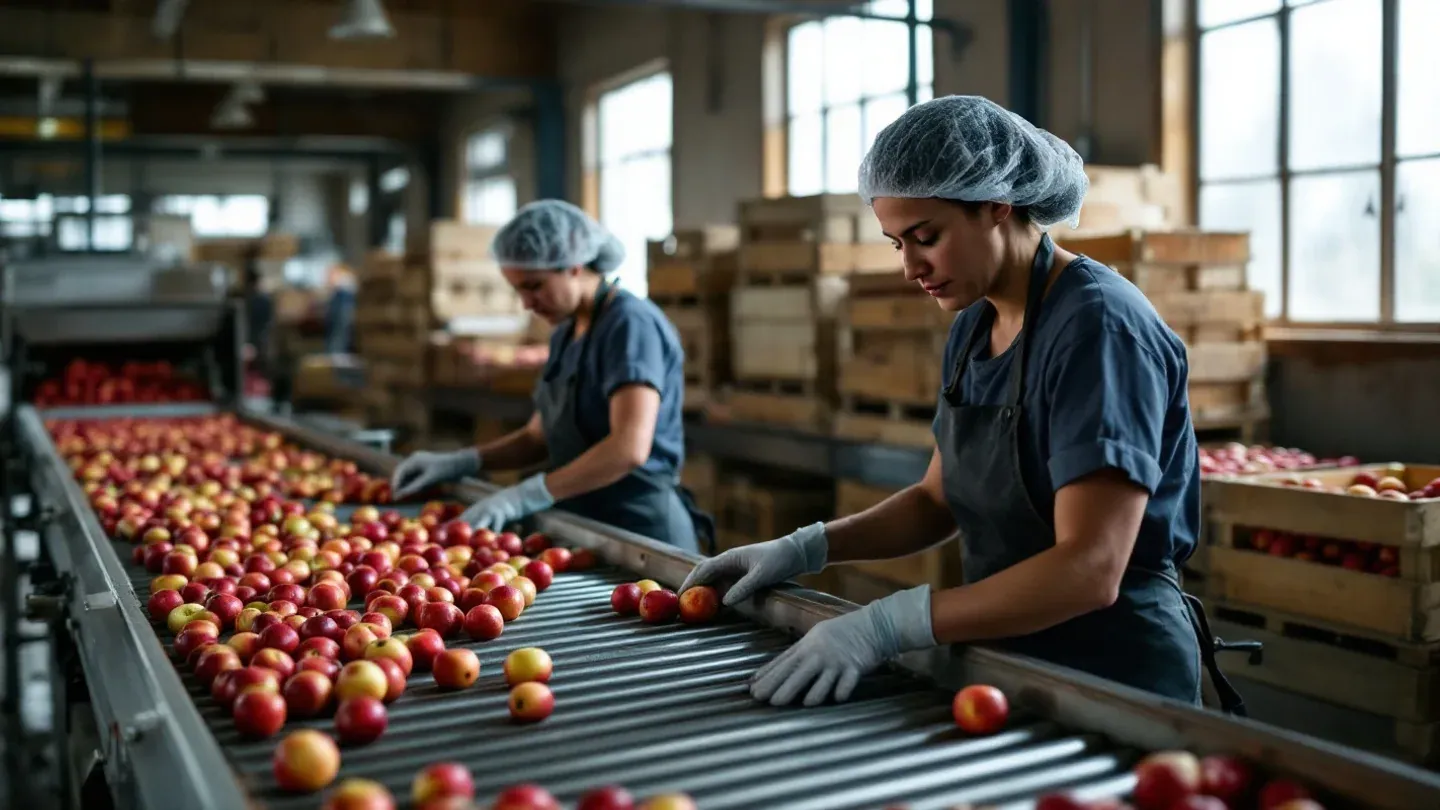
USDA offers three tiers for fresh produce, and the right one depends entirely on who is asking.
USDA GAP is the basic audit. Since August 2022 it runs on checklist version 3.0, split into scopes you select when you request the audit: a mandatory General Questions section that every audit must pass, Part 1 Farm Review, Part 2 Field Harvest and Field Packing Activities, Part 3 House Packing Facility, Part 4 Storage and Transportation, Part 5 Preventive Food Defense Procedures, and an addendum for farms that want to use the USDA GAP logo. Each question is worth 5, 10 or 15 points, with no partial credit. To pass, the program user's guide requires at least 80 percent of the available points in every scope audited and no "automatic unsatisfactory" condition, such as post-harvest wash water that does not meet the EPA drinking water standard. A certificate is valid for one year from the initial audit, the auditor may come back for an unannounced verification visit during the season, and a failed scope means a corrective action report and a follow-up audit.
USDA Harmonized GAP uses the Produce GAPs Harmonized Food Safety Standards, an industry standard maintained by the International Fresh Produce Association's GAPs Harmonization Initiative rather than written by USDA. USDA folded the standards into its own audit program in 2011, and in June 2018 USDA and FDA aligned it with the Produce Safety Rule, so the audit covers the rule's relevant technical requirements. It still is not a substitute for an inspection, but it tells you how ready you are for one.
USDA Harmonized GAP Plus+ adds the requirements that give it technical equivalence under the Global Food Safety Initiative, the benchmark the largest buying companies in the food industry recognize. GFSI acknowledged version 3.0 of the standard in October 2022. It carries a separate GFSI certification fee on top of the hourly audit charge.
Mississippi State Extension gives the only advice that matters here: ask the buyer before you book. Many wholesale markets require only basic USDA GAP. A national chain will have its own requirements and may want a GFSI-benchmarked audit. A smaller buyer may ask only for a written food safety plan and a farm visit. And buyers change: when a smaller buyer is acquired by a larger company, the food safety requirement tends to tighten.
What the auditor actually looks at
The foundation is a written food safety plan. New York's agriculture department calls it the first step in becoming GAP certified: a document specific to your farm that says what you do to keep produce clean and what you do when something goes wrong. The audit then verifies that the plan is being followed and that the checklist questions are met.
From there the checklist walks the whole operation: worker hygiene, with drinking water, toilets and handwashing in reach of the crew; training records for everyone who touches the crop; water sources and the tests behind them; manure and compost handling; signs of animals in the field; harvest containers cleaned on a schedule and not left outside to shelter rodents; packing house surfaces, drains and cold storage; transport; and traceability, meaning you can follow a case of greens back to the field and the day and pull it from the market if you had to.
Two things catch first-timers. The checklist instructions require the farm to be in operation during the audit, so a field harvest audit happens while product is actually being harvested, never in the quiet of winter. And the auditor is not a consultant: the user's guide bars auditors from telling you how to fix your plan, to keep them impartial. For help you go to extension, to the Produce Safety Alliance, the Cornell, FDA and USDA collaboration whose grower training course prepares farms for the Produce Safety Rule. A food safety advisor from our service providers directory can help too.
Most of what the audit asks for is not expensive. It is the habit of writing things down every day: the cooler temperature, the sanitizer concentration, who washed the totes. That is a culture question before it is a money question, which is why we keep coming back to being consistent. A crew trained once and reminded often is also the crew that stays; our older piece on finding and keeping farm employees still applies.
What it costs at the 2024 rate
USDA bills by the hour, and the hour got dearer last fall. The 2023/2024 AMS fee notice set audit services, whether performed by a federal auditor or a state cooperator, at $155 per hour from October 1, 2023, with a $250 per audit GFSI certification fee for Harmonized GAP Plus+.
The hours add up in ways that surprise people. NASDA's GAP cost page lists what is billable: all travel time, preparation time to review your plan, the time on site, and administrative time to review, certify and post the result. When the rate was $132 an hour, NASDA put a typical single-farm audit at $900 to $1,600 and a typical unannounced visit at $275 to $575. At $155 an hour, budget a little above that, more if you are far from the nearest auditor or spread over several crops and scopes. If your state department of agriculture performs the audit under its cooperative agreement, expect two bills: one from the state for the audit itself, one from USDA for review and certification.
Then there is what the audit makes you buy: a handwashing station or two, a water test, a thermometer and log for the cooler, maybe a proper wash line. Those are the investments we walked through in on-farm cold storage and the wash and pack shed article, and most earn their keep whether or not an auditor ever sees them.
The paperwork is small. A new applicant files the SC-430 vendor form to open a billing account, then the SC-237A request for audit service and the SC-651 participation agreement with the nearest Specialty Crops Inspection Division office, which contacts you to arrange the visit. Do it early; the auditor needs to see the crop in the ground.
Sharing the bill: GroupGAP
For many small farms the individual audit never pencils out, which is why USDA built GroupGAP. Piloted with one group in 2011 and established as a program in 2016, it lets farmers, food hubs and marketing organizations band together under a shared quality management system and be certified as one body. The group trains its own internal auditor, who audits every member farm annually; USDA then audits the group's system and a sample of the member farms rather than each one. NASDA describes that sample as the square root of the group size: a group of 36 growers gets six USDA farm visits.
The savings are real but the setup is not free. NASDA's cost table lists an application review billed at eight hours, internal auditor training around $900 per auditor, and 40 to 80 hours of staff time to write the quality manual, or a consultant's fee if the group hires that out. The arithmetic works best where a hub or cooperative already exists to carry the management. If you sell through one, ask whether it has looked at GroupGAP; our article on food hubs explains what a hub needs from its growers in return.
Cost share: where the money is this spring
A first audit is the most expensive one, because it comes with the plan writing, the training and the fixes. Three pots of money are worth a call before you pay anything.
The Farm Service Agency's Food Safety Certification for Specialty Crops program, first opened in 2022 with up to $200 million behind it, covers a share of what small and very small specialty crop operations spend on plan development, certification fees, audit upload fees, microbiological testing and training. The window for 2023 expenses closed on January 31, 2024, so ask your county FSA office what the current terms are, watch the program page on farmers.gov for the next application form, and keep every receipt from this season.
Several states run first-audit programs of their own, some of them with Specialty Crop Block Grant money from the Farm Bill, the funding stream we described in our Farm Bill explainer. New York's GAP Certification Assistance Program, paid from that grant, reimburses up to $2,000 of an operation's first GAP audit, including training, water tests and a consultant's help with the plan, first come, first served. Minnesota pays from its own state AGRI fund: the AGRI GAP/GHP cost share returns 75 percent of certification costs up to $2,000 for certificates awarded or continuing between May 16, 2023 and May 15, 2024, with applications due by May 31, 2024. Other states have similar first-audit programs; your state department of agriculture or the groups in our organizations directory will know what is open where you farm.
Is it worth it at your scale?
Run the numbers before the paperwork. An audit, the unannounced visit, the fixes and your own hours can easily total a couple of thousand dollars in year one, and SARE's wholesale guide is honest about the other side of the ledger: wholesale prices will be nowhere near direct market prices, you make it up on volume, and buyers will also want liability insurance, documentation and reliable delivery. If the account that is asking for the certificate would buy a few hundred dollars of produce a month, the audit will eat the margin. If it would take a pallet a week through the season, the audit is a line item like seed.
Three honest tests. Is the buyer a specific person who has told you what they would order, at what price, and which audit they need, or is "get GAP certified" a vague hope? Does your farm already keep the records the checklist asks for, so the audit is a verification rather than a transformation? And does the plan still hold if that one buyer disappears, the kind of long-term thinking that keeps a diversified farm standing when a channel closes? Insurance belongs in the same conversation; our guide to what insurance a farmer needs covers the product liability policy most wholesale accounts require alongside the certificate.
One thing is true either way. Writing the plan, training the crew and keeping the logs are worth doing even if you never book the audit. Mississippi State's agricultural economists note that farms which have been through certification have an easier time when the Produce Safety Rule reaches them, and that buyers who do not require a certificate often still want to see a plan. School districts, as we found in our piece on selling to your local school district, sometimes ask for the audit too, and large grocery chains and wholesale buyers often do, so the plan is the first step whichever buyer you are courting.
A practical path for this season
If the answer is yes, here is the order that saves money.
- Call the buyer and get the audit name and the scopes in writing: GAP, Harmonized or Plus+, field only or field plus packing house.
- Take the Produce Safety Alliance grower training course if nobody on the farm has. It is the best preparation for the audit you can buy.
- Write the plan from a template, not a blank page. Extension offices have them, and the On-Farm Food Safety Project linked from the USDA GAP audit page walks you through a personalized plan and offers the forms and templates that go with it.
- Fix the physical gaps: handwashing within reach of the field and the pack shed, a water test on file, a cleaning schedule for totes, a cooler log.
- Audit yourself with the real checklist, scope by scope, against the 80 percent line.
- Apply for cost share before you pay the auditor, and keep every invoice.
- File the SC-430, SC-237A and SC-651, and schedule the visit for a week when the crop you declared is actually being harvested.
Keep the plan short enough that your crew will read it. The farms that pass on the first try are not the ones with the thickest binder; they are the ones where the written procedure and the daily habit are the same thing, which is what we mean by always simplify. The certificate is a piece of paper. The habits are the asset, and they pay whether the buyer calls back or not. The business plan that says which markets you are building toward, and why, belongs next to it; our guide to farm business plans is the place to write that down.