
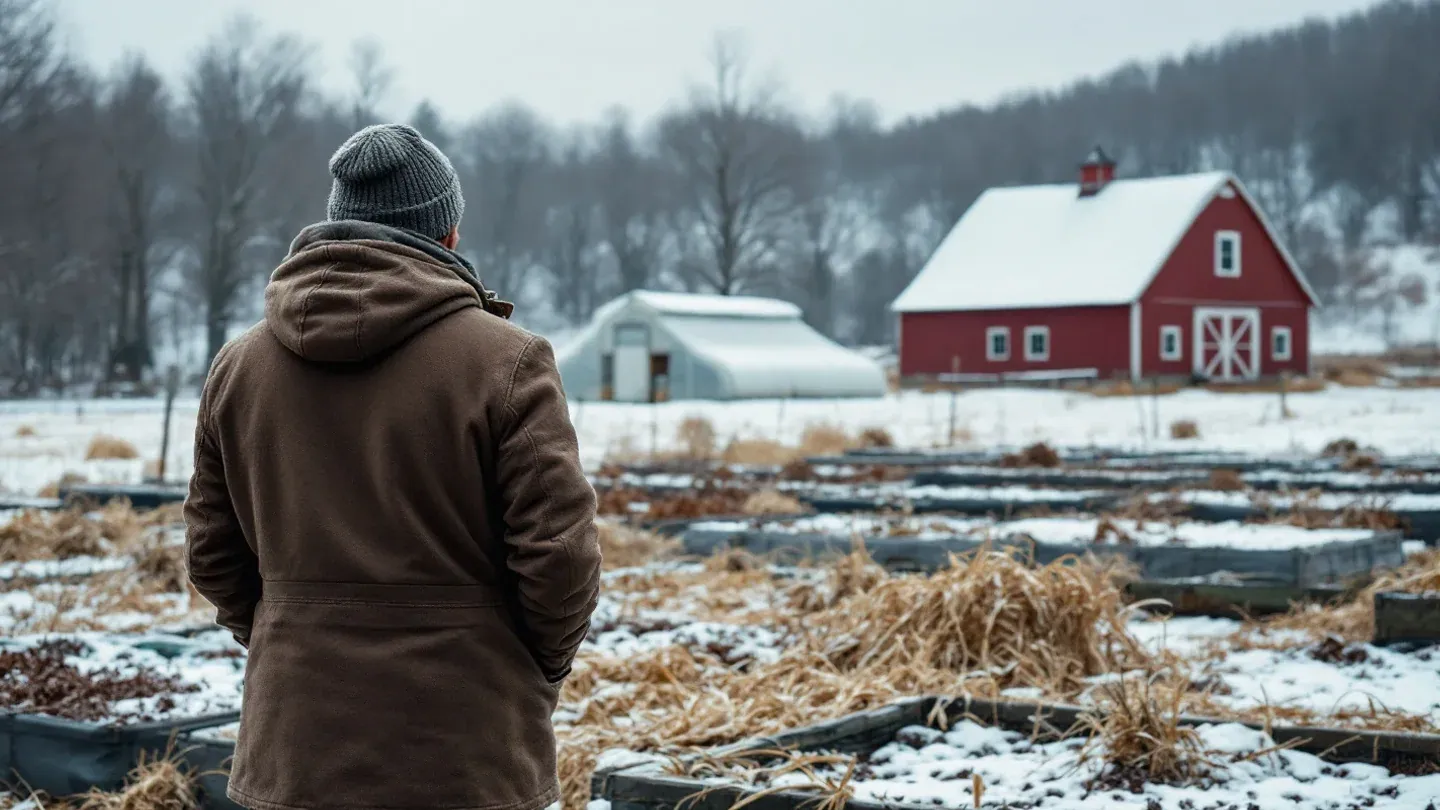
It is the last week of December. The markets are closed or down to a monthly winter session, the cattle are on hay or stockpile, the seed catalogs are stacking up by the door, and for the first time since March there is an afternoon with nothing in it. This is the planning week. What you write down before the catalogs win is worth more than anything you will decide in a hurry in April.
The timing suits the wider picture, too. On November 30, USDA's Economic Research Service released the second revision of its 2023 farm income forecast. American Farm Bureau economist Danny Munch read it as a national net farm income of about $151 billion for 2023, roughly $31.8 billion or 17 percent below 2022, with production expenses still expected to rise by about $14.9 billion, around 4 percent. Those are national averages that say little about any one farm, but the direction is plain: receipts softened while costs did not, and the margin now has to be found in planning rather than in prices. Add that Congress extended the 2018 Farm Bill through September 30, 2024, in the appropriations act approved on November 17, so the conservation and loan programs a small farm leans on keep running through next season.
Here is a routine that fits into one winter week.
Start with the season's numbers
Before you set a single goal, pull the numbers from the year that just ended: sales by channel (market, CSA, wholesale, farm stand), yield by crop and by bed, hours worked, and what every input cost. Josh Volk, who was growing 70 crops for a year-round CSA at Slow Hand Farm when he wrote up his method for the Oregon State University Small Farms Program in 2011, starts in November by reviewing his notes and records from previous seasons before he writes a line of next year's plan.
If your records are thin, borrow a structure. University of Delaware Extension published fresh market vegetable enterprise budgets this April for bell peppers, broccoli, cabbage, cantaloupe, seedless watermelon, hand-harvested sweet corn, tomatoes and potatoes, each an Excel file with the research estimates on one tab and a second tab for your own costs and returns. Most land-grant universities offer something similar for their region. The point is not the Delaware numbers. The point is the list of line items you forgot to count: seed, potting mix, boxes, market fees, fuel, your own hours. Do the same for the beef or the egg enterprise. The honest version of this exercise usually finds one crop that paid for three others, and one that never paid at all.
Keep a per-pound and a per-bed figure where you can. Per pound tells you whether a price is fair. Per bed tells you whether the crop deserves the ground.
Write the holistic goal, or rewrite it
The next step is not a spreadsheet. It is a short written statement of what the farm is for, and it belongs to everyone who has a stake in it: partners, spouse, children old enough to care, a long-serving employee.
Atina Diffley, who grew and delivered produce with her husband Martin, describes the tool in a SARE-funded guide to farm partnerships. A holistic goal, taken from the Holistic Management school of thought, has three parts: the quality of life you want, the forms of production you must commit to in order to produce that life, and the future resource base, meaning the land and relationships those forms of production depend on. Her own cautionary tale is worth the read. The farm grew, became profitable and efficient, and stopped being a friendly, safe place for her children to be part of, because having the kids involved had never been written into the goal. Once it was, the decisions changed. A refrigerated delivery truck looked to outsiders like a cold-chain purchase; it was really bought so that nobody had to load produce at 3 a.m. and the couple could sleep until six.
Diffley and her husband reviewed their holistic goal every winter. That is the habit to copy. The Savory Institute, which teaches the same framework, calls the holistic context your north star and pairs it with holistic planned grazing and a simple, cash-based financial planning procedure. We lay out why this way of deciding fits a small farm on our manage holistically page. Why the long view belongs in the goal is under think long term.
A draft can be a single page. Write the quality-of-life part first, in plain words: the hours you will work, the weeks you will take off, what the farm should feel like for a child or a visitor. Then the production commitments. Then the land as you want it in twenty years.
Turn the goal into this year's targets
With the goal on the wall, the year's targets come more easily. SARE's Building a Sustainable Business, the whole-farm planning guide by Gigi DiGiacomo, Robert King and Dale Nordquist, walks through five tasks in order: identify values, review your history and current situation, clarify vision, mission and goals, build and compare strategies, and then present, implement and monitor the plan. Its advice on goals is practical: write them down, sort them into short-term (one to five years), intermediate (five to ten) and long-term, state how much income the family needs to draw from the business each year, and then prioritize, because no farm can chase every goal at once. One of its example growers, a vegetable farmer, counted a couple of weeks off in summer among his top goals, and his strategy of hiring extra labor was built around it.
Three to five targets for 2024 is plenty: a sales figure by channel, a labor figure, one enterprise to grow and one to drop, one piece of ground to improve. If a lender needs the full document, our older piece on farm and agriculture business plans covers the plan itself.
The crop plan: harvest first, then plantings, then the map
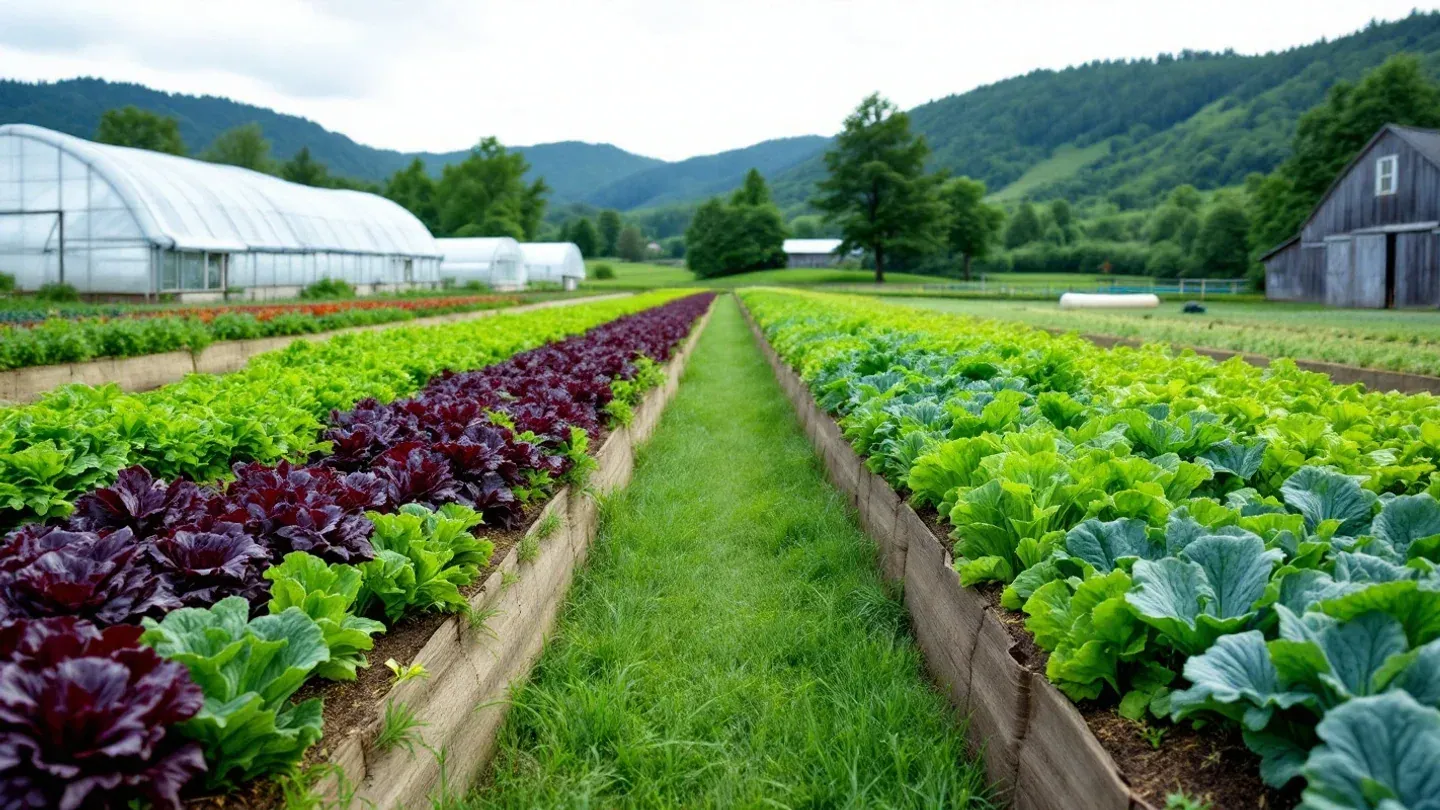
Volk's method is the clearest we know for a diversified vegetable farm, and it runs in a particular order. Plan the harvest first: what you want to sell each week, spread so that the mid-summer flood is tamed and the early and late gaps are filled. Then build the planting plan from the harvest plan: sowing dates, transplant dates, greenhouse space, seed quantities. Then take every planting to the field map and check that it fits, in the right rotation block, with cover crops in the gaps. The map usually sends you back to adjust the first two sheets. That loop is the plan doing its job.
Rotation deserves its own column. Volk plants some crops mainly to support the rotation or to even out the work flow rather than for the money they bring in, and he plans the rotations years in advance. Our primer on the six principles of crop rotation covers the families and the breaks. Our guide to choosing a cover crop mix for your region will help you fill the windows.
Anchor the dates to your station's freeze probabilities rather than to memory. NOAA's National Centers for Environmental Information released the 1991 to 2020 U.S. Climate Normals in May 2021, and the annual normals documentation lists the probability dates of the first and last occurrence of 36 F, 32 F and 28 F, among other thresholds, at every level from 10 to 90 percent. NC State Extension explains how to read NCEI's freeze and frost tables, where 36 F stands for frost, 32 F for a freeze and 28 F for a hard freeze: the 50 percent date is the median, the spring date with only a one in ten chance of a later frost is the conservative choice, and the date that nine years in ten will still see a frost after it is the aggressive one. Use the conservative date for tender transplants and the aggressive one for crops that can take a frost.
The grazing plan for the growing season
If you run livestock, the grazing plan is the crop plan's twin, and winter is when it gets written. The NRCS national standard for Prescribed Grazing, Code 528, sets out what a sound plan contains, and it is a good checklist even if you never sign an NRCS contract: move animals according to the rate of plant growth, the forage available and a stated target such as plant height or residual dry matter; give grazed plants enough recovery time; plan deferment or rest around the critical periods for the plants and the animals; provide enough drinking water for the days the stock will occupy a paddock; write a contingency plan for drought, wildfire or insects; and set up monitoring with triggers that tell you when to change course.
On a small place that means a paddock map, a rough forage budget for each month, a stocking rate you can defend, and a drought trigger date written down in December when nobody is panicking. Our earlier pieces on the six principles of grazing management and on how high stock density grazing differs from holistic planned grazing cover the thinking. The piece on winter feeding, stockpiling and bale grazing covers the hay inventory you should be counting right now.
The seed and supply order
Order early. Volk orders seed in December or January so that the first sowings can start in late January, and in a year when the seed houses sell out of a popular variety, the farm with the finished plan gets the seed.
Before you order, inventory what is in the seed fridge and be realistic about age. Purdue Extension's table of expected storage life under favorable conditions gives onion and parsnip one year, sweet corn and pepper two, bean, carrot and squash three, tomato four, cucumber five and lettuce six. Storage conditions matter about as much as the species, so anything that spent the summer in a hot shed is suspect.
For any lot you are not sure of, run a germination test. The University of Arkansas extension method is simple: count 50 or 100 seeds onto a damp paper towel, roll it, bag it, date it, keep it at room temperature and moist but not saturated, and count the sprouts after three to five days for most species. With 100 seeds the count is your germination percentage. Then sow heavier or buy fresh accordingly.
Do the same inventory for potting mix, trays, drip tape, row cover, fence wire, mineral, and anything that broke in October. December is when those orders are cheap in time, if not always in money.
Money and paperwork before spring
Two deadlines belong on the January page. If at least two thirds of your gross income in 2023 or 2022 came from farming, the IRS lets you skip estimated tax payments altogether by filing your return and paying everything due by March 1; if you would rather file later, a single estimated payment by January 16, 2024, the date the IRS gives for farmers and fishermen in its tax calendar for 2024, avoids the penalty. Farm income and expenses go on Schedule F, and the IRS Farmer's Tax Guide, Publication 225, is the reference. Our coming piece on Schedule F and farm taxes goes into depreciation and records.
The farm bill extension matters here too. Because the 2018 act now runs through September 30, 2024, the EQIP and CSP conservation payments and the FSA microloans and beginning farmer loans we covered this year are open on the same terms as last season. Our farm bill explainer has the background. If a high tunnel, a water line or a cover crop payment is in the plan, the winter is when the conservation application gets written, and the local office is quieter now than it will be in March.
Build the calendar last
Only now does the calendar get drawn, because only now do you know what goes on it. One sheet per month, or a single wall chart for the year, with four layers: sowing and planting dates from the crop plan, moves and rest periods from the grazing plan, sales dates by channel, and the deadlines above. Add the family dates first, the weeks off from the holistic goal, and treat them as fixed.
Diffley sums up what a written goal gives you in four words: plan, monitor, control, replan. The calendar is the plan. The weekly walk is the monitor. The mid-season adjustment is control. Next December is the replan. A plan that is reviewed every winter and corrected every month beats a perfect plan that lives in a drawer, which is the whole case for keeping it simple enough to use. It is why always simplify and be consistent sit among our beliefs. It is also why our older piece on managing your time as a farmer still reads well in December.
A week's worth of work
If the week between the holidays is all you have, here is the order:
- Pull last year's sales, yields and costs into one sheet, by enterprise.
- Write or revise the holistic goal with everyone who has a stake in the farm.
- Set three to five targets for 2024 and put a number on each.
- Draft the harvest plan, then the planting plan, then the field map.
- Draft the grazing plan: paddocks, forage budget, drought trigger.
- Inventory seed and supplies, test the doubtful lots, place the order in January.
- Note the tax dates and start the conservation application.
- Draw the calendar, family dates first.
For the long winter reads behind this routine, our books, films and magazines directory is the place to start. The groups that teach the frameworks above, the Savory Institute and Holistic Management International among them, are listed in our organizations directory. Then close the laptop. The catalogs can wait until the plan is done.