
Across the Corn Belt this week, the cover crop question has flipped. The rye that held the soil since October has been sprayed, rolled or planted into, and the fields are filling with corn and soybeans. USDA's Crop Progress report released today puts corn at 65 percent planted across the 18 main corn states, well ahead of the 59 percent five-year average, with Iowa at 86 percent and Ohio at 26 percent against its 34 percent average. Soybeans stand at 49 percent planted against a 36 percent average.
So May, not August, is the month to plan the next cover crop: seed ordered, drill ready for the week the combine leaves, species fitted to the goal, the region and the cash crop that follows. Here are those decisions in the order a farm makes them.
Start with the job, not the seed catalog
The NRCS standard for the practice, Conservation Practice Standard 340, Cover Crop, lists the purposes a cover crop can serve. Every state adapts it in its Field Office Technical Guide; the Wisconsin edition names, among others, erosion control, soil organic matter, excess nutrients, compaction, nitrogen fixation, supplemental forage, soil moisture management, and weed and pest suppression. Pick one purpose, at most two, and write it down. A mix chosen to do everything usually does nothing well.
The purpose points to a plant family. Grasses such as cereal rye, oats, wheat and annual ryegrass build biomass fast, hold soil and scavenge leftover nitrogen; the standard itself says to use "fibrous-rooted cereal grains or grasses" to take up excess nitrogen. Legumes such as hairy vetch, crimson clover, field peas and cowpeas fix nitrogen for the next crop. Brassicas such as forage radish and turnips drive a taproot through compacted layers, pull nutrients from deep in the profile and, in the northern states, winterkill on their own. That is the whole decision tree for most farms, and it belongs to the first of our beliefs: heal the soil by keeping living roots in it for as much of the year as the climate allows.
Single species or a mix
The latest SARE and CTIC National Cover Crop Survey, with 1,172 farmers responding from all 50 states, shows how the country actually plants. Cereal rye dominated, with 203,887 acres among respondents, followed by radish at 101,467 acres and oats at 74,572. Among farmers who blended species, radish (54.6 percent), cereal rye (51.4 percent) and oats (42 percent) were the most common components, and two-, three- and four-species blends together accounted for about three out of four farmers who answered the question, rather than long cocktails.
A single species is cheaper, easier to seed and easier to kill, and cereal rye alone is the right answer for a great many fields that need cover after corn. A two- or three-way mix earns its extra cost when the goals genuinely differ: a grass for biomass and nitrogen capture plus a legume for nitrogen, or a grass plus a radish where compaction is the problem. The practice standard puts it plainly in its considerations: design mixtures "with at least one grass and one legume". Beyond three or four species the seed bill climbs, the rates get hard to balance and one aggressive species usually wins anyway. Our rule is to always simplify: one goal, one grass, one partner, and only add a species once you have seen what the first two do on your ground.
Cool season or warm season
Most US cover crops are cool-season plants seeded in late summer or fall and grown through winter into spring. Cereal rye is the workhorse because, as the SARE handbook Managing Cover Crops Profitably notes, it will germinate "as long as soil is just above freezing". Oats and radish are the cool-season choice when you want cover that winterkills in the north and leaves a mellow seedbed with no spring termination. Hairy vetch and crimson clover are the winter legumes, but the handbook warns that vetch "needs at least 15 days before frost in 60° F soil" to establish, which rules it out after late-harvested corn in the northern Corn Belt.
Warm-season covers fill a different window: the summer gap after wheat, after early vegetables, or in a prevented-planting year. Cowpeas, sorghum-sudangrass, buckwheat, millet and sunn hemp grow fast in heat. Cowpeas, for instance, are drilled "1 to 2 inches deep at about 30 to 90 lb./A" into a moist seedbed and will not survive waterlogged ground.
Region by region
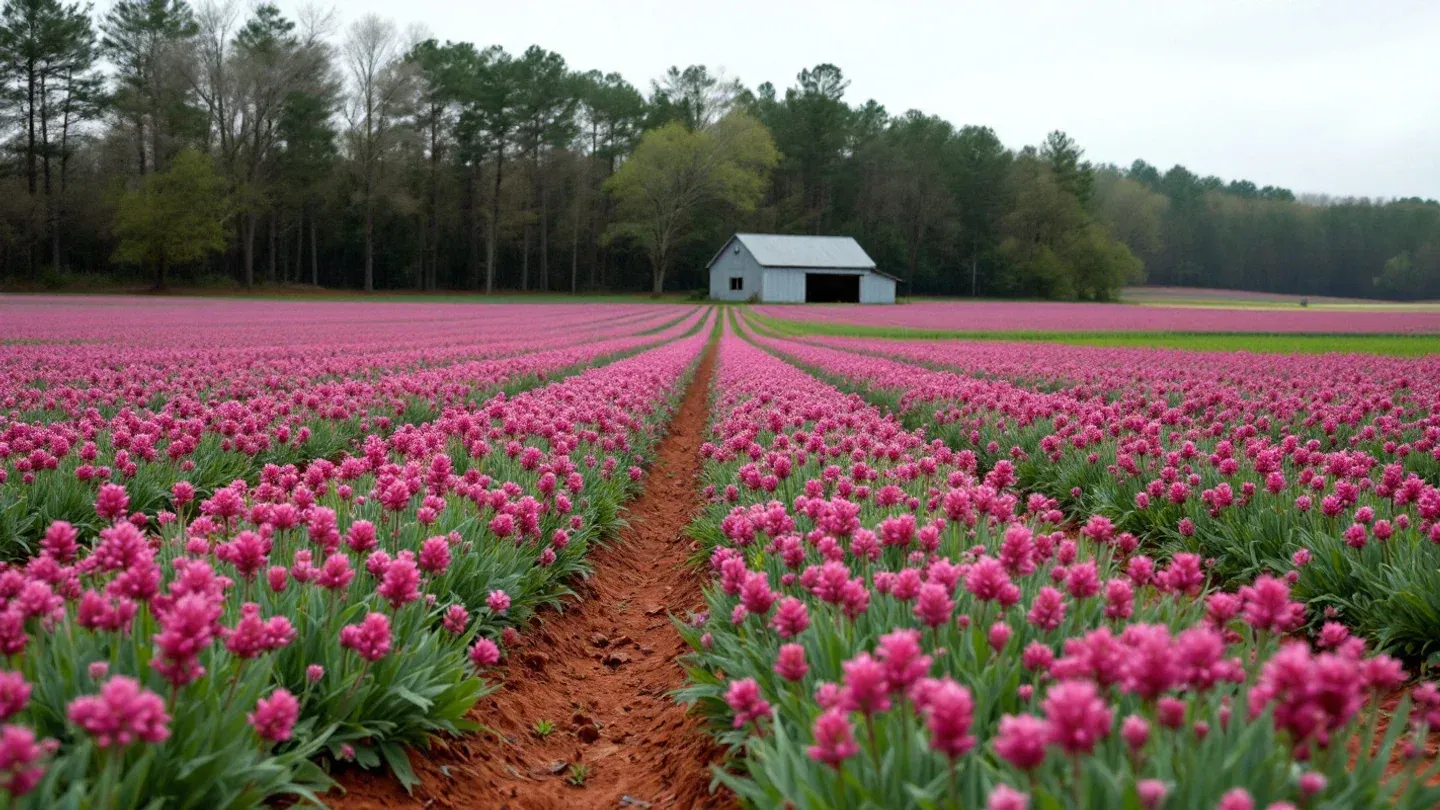
Corn Belt and Upper Midwest. The window after corn harvest is short and cold, so the default is cereal rye drilled behind the combine and killed ahead of soybeans. The handbook's model Corn Belt rotation is corn, cover, soybean, cover: "rye or rye/vetch mixture following corn; vetch or rye/vetch mixture following beans". Before corn, choose something that winterkills, such as oats or radish, or plan an early rye termination. The Midwest Cover Crops Council runs a web-based Cover Crop Decision Tool that pools each state's expert ratings to help you choose species at the county level around your cash crop's planting and harvest dates.
Northeast and Mid-Atlantic. Longer falls and manure-heavy dairy rotations favor grasses that catch nitrogen: rye, triticale and annual ryegrass, often with crimson clover or radish where corn silage comes off early. Penn State Extension's seeding rate guidance is a good regional reference.
Southeast. Mild winters let crimson clover, vetch and rye overwinter and build heavy spring biomass, and the summer window is long enough for cowpeas and sunn hemp. NC State Extension's Winter Annual Cover Crops guide gives seeding windows by region, from early August for crimson clover in the mountains to mid-November for rye on the coastal plain, and notes that hairy vetch is the hardier legume and can go in later.
Great Plains and dryland West. Water is the constraint. The handbook states it directly: "Soil moisture availability and use by cover crops are the dominant concerns in dryland production systems", and in dryland areas of the Southern Plains "lack of water limits cover crop use". The practice standard's moisture criteria say to "terminate sufficiently early to conserve soil moisture for the subsequent crop". Water-thrifty species, early termination and grazing the cover rather than merely growing it are what make covers work out there.
Vegetable and orchard ground. Horticulture respondents to the survey planted radish most, ahead of oats, winter pea and cereal rye: small acreages can afford costlier seed, and the goal is tilth rather than tons of residue.
Match the cover to the crop that follows
The crop coming next sets the termination date, and the termination date decides the species.
Before corn, be conservative with cereal rye. Iowa State University's plant pathologists recommend terminating rye 10 to 14 days before planting corn because their field trials in 2019 and 2020 found that planting corn into a living rye stand can contribute to seedling disease and set back corn growth, development and yield. Their agronomy colleagues add that decomposing rye immobilizes soil nitrogen for a time, so consider starter nitrogen or an early side-dress; the same post notes that research by John Sawyer found corn after rye does not justify a higher total nitrogen rate. Oats or radish that winterkill sidestep the whole problem.
Before soybeans, rye is the standard choice, and planting green into a living rye stand has become common: 52.5 percent of survey respondents had planted green somewhere on the farm, and of those 70.5 percent reported better weed control and 68 percent better soil moisture management in the wet spring of 2019.
Before small grains or vegetables, mind the family. The practice standard requires species "that do not harbor pests or diseases known to affect subsequent crops in the rotation", so no brassica cover ahead of a brassica vegetable, and think twice about a cereal cover directly ahead of wheat. This is the same logic as our older piece on the six principles of crop rotation and the warning in The Dangers of Monocropping. Check herbicide carryover too: the standard requires the cover to be compatible with "previously applied herbicides", and a residual sprayed on corn in June can thin a legume seeded in September.
Seeding rates and how to seed
Rates from the SARE handbook, per acre: cereal rye drilled at 60 to 120 pounds (1 to 2 bushels) or broadcast at 90 to 160; hairy vetch drilled at 15 to 20 pounds or broadcast at 25 to 30; forage radish drilled at 8 to 12 pounds or broadcast at 12 to 20; annual ryegrass drilled at 10 to 20 pounds; cowpeas drilled at 30 to 90 pounds. Penn State's rye guidance is leaner for a pure cover crop: 45 to 90 pounds per acre for weed suppression and erosion control, 30 to 60 pounds when the plan is to plant green, and the full 2 bushels only for forage.
In a mix, do not add the full single-species rates together. Each component goes in lighter: the handbook's own examples run annual ryegrass at 8 to 15 pounds in a mix against 10 to 20 alone, and a trial cited there sowed Austrian winter peas at 41 pounds in mixtures against 54 in pure stands. Drilling beats broadcasting on almost every count; if you broadcast, use the higher rate and expect a thinner stand. What you are aiming for, in the standard's own numbers, is at least 25 stems per square foot, 80 percent canopy and about 2,700 pounds of dry biomass per acre, with rates of 1.5 to 2 times normal where weed suppression is the main goal.
What it costs and what pays it back
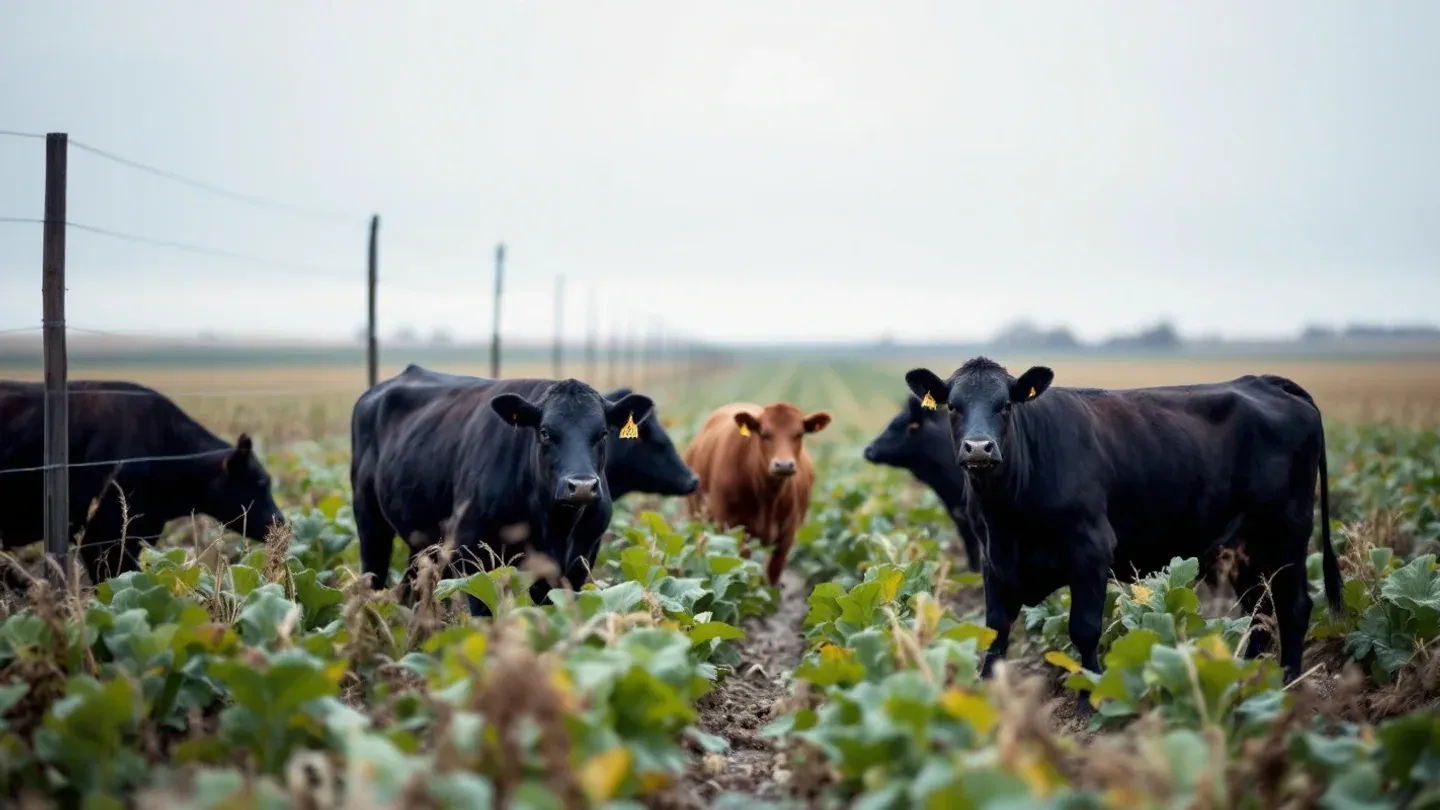
SARE's Cover Crop Economics report sets a national baseline: seed at $10 to $50 per acre, seeding at $5 to $18, termination at $0 to $10, for a range of $15 to $78 and a survey median of $37 per acre. Hiring an aerial applicator runs $12 to $18 per acre, a fertilizer dealer with a spreader $8 to $15. In the 2019-2020 survey, about half of respondents paid $11 to $20 per acre for seed.
The return is slow but real. Farmers in the survey reported yields after cover crops that were 5.0 percent higher in soybeans, 2.0 percent in corn and 2.6 percent in wheat, and 49 percent of corn growers and 41 percent of soybean growers reported lower fertilizer bills. The economics report names seven situations where covers pay fastest: herbicide-resistant weeds, grazing the cover, compaction, a transition to no-till, dry soils or irrigation needs, high fertilizer costs or manure nutrients to capture, and incentive payments. Grazing is the quickest of all; see our notes on adding animals to a crop rotation and on no-till, the system cover crops belong in. We will cover winter grazing of stockpiled forage and cover crops in a later article, and the nitrogen side of legume covers in a piece on cutting synthetic nitrogen.
Getting help with the first years
Cover crop acres in the United States reached 15.4 million in the 2017 Census of Agriculture, a 50 percent increase in five years, and payments helped: in the 2019-2020 survey, 19 percent of those answering had received Conservation Stewardship Program payments for cover crops and 15 percent EQIP payments. Practice 340 is paid through the Environmental Quality Incentives Program, applied for at your local USDA service center. Rates are set state by state each fiscal year; the SARE report found basic single-species rates often starting around $50 to $54 per acre, higher for multi-species mixes and lower in some states, with Iowa starting near $34. Contracts for cover crops typically run three years. Treat the payment as transition support, not income: the report's own words are that incentive payments should be viewed as transition support rather than a long-term subsidy, so the practice has to carry itself once the contract ends. We will walk through EQIP and CSP applications for a small farm in a coming piece, and our organizations directory lists the soil health groups that run field days and seed swaps.
A one-page plan for this summer
- Write the goal in one line: "catch nitrogen after corn", "break the plow pan", "feed 40 cows in November".
- Count the window: expected harvest date to the average first frost, in days. A short window in the north means cereal rye or nothing; a long one opens up legumes and mixes.
- Name the crop that follows and its termination date, then check this season's herbicide program for carryover.
- Choose a grass, then decide whether a legume or a radish adds something the goal needs. Stop at three species the first year.
- Set the rate and the method, order seed in June or July, and have the drill ready before harvest.
- Try it on one field, soil-test it first (our six easy soil tests are enough to start) and keep a record of rate, date, stand and what the next crop did.
That record is what turns a cover crop from an expense into a habit. Soil does not change in a season; it changes when the same ground sees living roots every year for a decade, which is what we mean when we say think long term. The SARE handbook is free online and worth a winter read, and our books and films directory has more for the off-season.