
If you have ever wondered whether anyone would help pay for a cross fence, a cover crop seeding or a water line to the back paddock, the answer is usually yes. The money comes through two programs run by the USDA Natural Resources Conservation Service: the Environmental Quality Incentives Program, EQIP, and the Conservation Stewardship Program, CSP. Together they are the working lands programs, the ones that put dollars on real practices on real farms.
And 2023 is an unusual year to ask. The Inflation Reduction Act opened a second pot of money for both programs this year, and the application dates for the new federal fiscal year are being set in state offices this summer.
This is a plain walk through how the two programs work, what they pay, what a contract commits you to, and how to get ready for the first conversation at your local service center. It is written with a small or beginning operation in mind, because the rules are friendlier to small farms than most people assume.
Two programs, two ideas
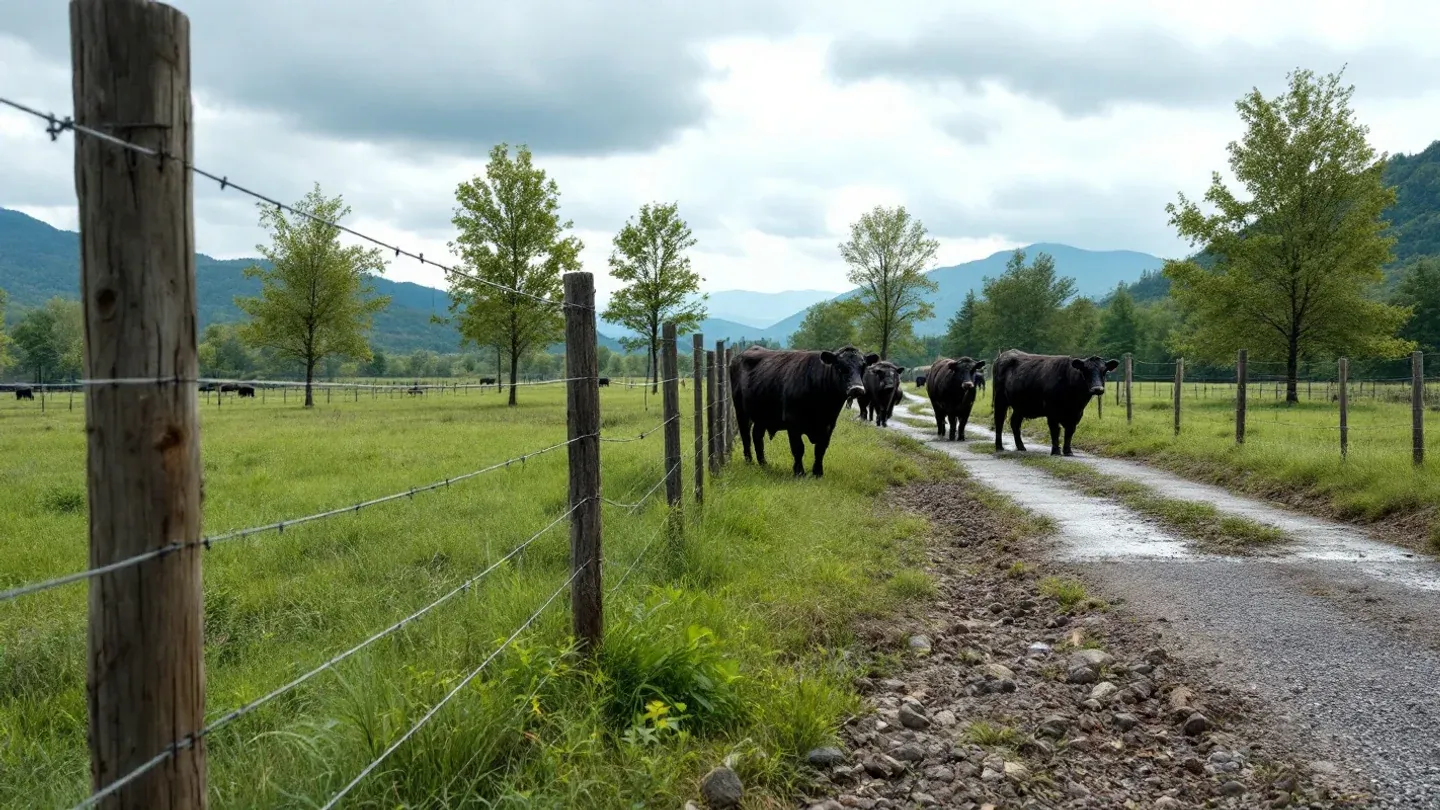
EQIP pays you to install or carry out specific conservation practices that treat a named resource concern: erosion on a slope, bare soil over winter, cattle in the creek, an irrigation system that wastes water. You and the NRCS planner write an "EQIP plan of operations" listing the practices, and that plan becomes the basis of the contract (7 CFR 1466.6). The payment is a share of what each practice costs, paid after the practice is done.
CSP is different. It enrolls your whole operation, pays an annual amount for five years, and rewards two things: the conservation already in place and the additional activities, called enhancements, that you agree to add. An application must include all the eligible land in the operation (7 CFR 1470.6). To qualify, you must already meet the stewardship threshold for at least two priority resource concerns and agree to reach it for at least one more by the end of the contract (7 CFR 1470.20).
A rule of thumb: EQIP is for a farm that needs to fix something, CSP is for a farm that already does a lot right and wants to go further. Both are, at bottom, public money for the work of healing the soil, which is why the paperwork deserves this many words.
What EQIP actually pays
Payments come off a state payment schedule, practice by practice. The rule caps a payment at 75 percent of the estimated cost of the practice, or 100 percent of the income you forgo, or both where a practice costs you money and income (7 CFR 1466.23). Historically underserved producers, which in NRCS language means beginning, limited resource, socially disadvantaged and veteran farmers and ranchers, get a rate at least 25 percent above the standard one, up to 90 percent of estimated cost. A state may also designate up to ten high priority practices that pay up to 90 percent for everyone.
The same underserved group can ask for an advance: at least 50 percent and up to 100 percent of the anticipated cost of materials or services, paid before the work, on two conditions. NRCS must approve the practice design first, and the money must be spent within 90 days (7 CFR 1466.24). For a farm that cannot float the cost of a fence until the reimbursement arrives, this clause is what makes EQIP usable.
The caps are far above a small farm's horizon: $450,000 per person or legal entity across all EQIP contracts in fiscal years 2019 through 2023 (7 CFR 1400.1), and $140,000 for practices related to organic production (7 CFR 1466.24). More relevant is the sequence of payment, set out in the same section: before NRCS issues any payment, you certify that the practice is complete and NRCS or an approved technical service provider certifies that it meets the standard in the Field Office Technical Guide. You pay the contractor, then you get paid.
A briefing that an NRCS district conservationist gave for Texas A&M AgriLife Extension answers the question small operators ask most: there is no minimum acreage, no minimum number of practice units, and no cap that favors large or small operations.
What CSP actually pays
CSP uses a split rate. One part is an equal annual payment for existing activities, based on your land uses and the stewardship NRCS assesses when you apply. The other part pays for the additional activities you complete each year, so the total can rise and fall (7 CFR 1470.24). To be paid on any land use you must schedule and adopt at least one additional activity on it, and at least one must be done within the first 12 months.
Two bonuses are written into the rule. Cover crop activities pay at not less than 125 percent of the usual annual amount, and a resource-conserving crop rotation or advanced grazing management earns a supplemental payment of not less than 150 percent. If you already run a planned grazing system or are choosing a cover crop mix, CSP was written with you in mind.
Timing matters for cash flow. NRCS pays after October 1 for activities carried out in the previous fiscal year, and a new contract gets its first payment after the October 1 that follows the fiscal year of enrollment. The payment cap is $200,000 per person across CSP contracts in fiscal years 2019 through 2023, and a single contract is limited to the same amount.
How ranking and batching dates work
EQIP accepts applications on a continuous basis throughout the year (7 CFR 1466.20), and farmers.gov says the same of every NRCS conservation program. In practice each state sets one or more cutoff dates, often called batching or ranking dates, and everything received by that date is ranked together. The farmers.gov deadlines page says it plainly: apply by your state's cutoff to be considered in the current cycle, and anything received later is deferred to the next funding period.
Ranking is neither a lottery nor first come, first served. The state builds ranking pools by resource concern, geography or operation type, with advice from its State Technical Committee and local working groups, and scores each application on cost-effectiveness, the size of the expected conservation benefit, how completely it treats the concern, and whether it builds on practices already in place. The rule says the score may not favor an application because of the size of the operation or the income it generates, and that where benefits are comparable NRCS may not rank one higher just because it costs the program less. States may screen applications into high, medium and low priority first; the high ones are ranked and funded before the rest.
CSP runs on ranking periods, at least one per fiscal year, and the rule says one should fall in the last quarter of the old fiscal year or the first quarter of the new one (7 CFR 1470.20). The federal fiscal year turns on October 1, so the fiscal 2024 dates for your state are being decided this summer. Ask the office for them by name.
The 2023 money
Section 21001 of the Inflation Reduction Act appropriated $250 million for EQIP and $250 million for CSP in fiscal 2023, rising to $3.45 billion and $1.5 billion a year by fiscal 2026, on top of the regular farm bill money. The law limits the new money to practices that improve soil carbon, reduce nitrogen losses or cut greenhouse gas emissions, and it switches off the rule that reserves half of EQIP for livestock operations for this money only. We looked at the law as a whole in April.
According to the National Sustainable Agriculture Coalition, USDA began enrolling producers with IRA money on February 13. Each state set up its own IRA funding pools and ranking criteria in both programs, the money is aimed at a list of practices NRCS drew up, and farmers proposing those practices went first in line. There is one extra form, a two-page addendum, and states reopened their application windows: many closed on March 10, some stayed open into May.
The regular money is still larger. Under the 2018 Farm Bill, EQIP carries $2.025 billion in fiscal 2023, with half reserved for livestock-related practices and a tenth for wildlife habitat, and CSP is capped at $1 billion (USDA Economic Research Service). That bill's funding runs through fiscal 2023, ending September 30, and that is why the next farm bill matters to a small regenerative farm more than the headlines suggest.
What a contract obliges you to do
An EQIP contract lists every practice, when it will be installed, how it must be operated and maintained, and what each one pays. It can run up to ten years (7 CFR 1466.21), though the NSAC guide to EQIP notes that most run one to three years. At least one practice must be scheduled for completion within the first 12 months.
The part people underestimate is maintenance. You agree to operate and maintain each practice for its intended purpose for its whole lifespan, as written in the operation and maintenance agreement, and NRCS may inspect it during the contract (7 CFR 1466.22). Let a fence fall down or plow out a grassed waterway and NRCS can terminate the contract and ask for the money back for that practice. A breach of the contract means refunding payments with interest and forfeiting future ones, though the rule allows partial refunds and a hardship waiver when something outside your control, a drought or a flood, stops you (7 CFR 1466.26). If you sell or lose the lease on the land, NRCS can terminate the contract and ask for a refund unless it approves a transfer to the next operator, who must be eligible and take on the contract's duties (7 CFR 1466.25).
A CSP contract runs five years, states the annual payment, and binds the whole operation (7 CFR 1470.21). You may not do anything on the farm that defeats the purposes of the program, and you must keep and hand over whatever information NRCS asks for to check compliance. No payment goes to a new activity started before the contract was approved unless NRCS granted a waiver first (7 CFR 1470.24), so do not seed that new cover crop in anticipation. In the first half of year five you can apply to renew for another five years, but you compete again rather than renewing automatically, and you must commit to two more priority resource concerns, or to a higher level on two existing ones (7 CFR 1470.26). Walk away at the end instead and you cannot start a new CSP contract on that operation for two years.
None of this is onerous for a farm that means to think long term. It is a problem for a farm that signs for the money and then changes its mind.
Preparing the first visit
Find the USDA Service Center for your county; in most places the Farm Service Agency and NRCS share the building. Then do the paperwork that lives on the FSA side first, because NRCS cannot rank you without it.
- Farm records. You must be the operator, owner or tenant of an operation in FSA's farm records, and the records must be established or updated before NRCS will treat you as eligible (7 CFR 1470.6). FSA holds the farm and tract maps and the farm operating plan, form CCC-902.
- Conservation compliance. Form AD-1026 is your written certification of compliance with the highly erodible land and wetland conservation rules (7 CFR 12.7).
- Income. Average adjusted gross income over the relevant three tax years must not exceed $900,000 (7 CFR 1400.500), and NRCS confirms it with FSA before a contract is approved (7 CFR 1466.24).
- Tax ID and proof of land control. The farmers.gov service center checklist asks for an official tax identification number, a Social Security number or employer ID, and a copy of the deed, survey plat or lease. If you rent, bring the lease; NRCS may require the landowner's written concurrence before a practice goes in (7 CFR 1466.6).
- A map. A CSP offer must include a map or aerial photograph of the operation with eligible acres marked. Bring one to the first EQIP conversation too; it shortens everything.
- Your concerns, in NRCS words. The Conservation Concerns Tool on farmers.gov sorts problems into soil, water, plants, animals, energy and air and lets you build a list to take to the planner. That list is the seed of the plan of operations.
Then ask three questions. Which ranking pools am I eligible for, including any for beginning or socially disadvantaged producers? Where is the state practice list and payment schedule, which the rule says NRCS must make public? And if I qualify as historically underserved, how does the advance payment work here? Ask too about technical assistance on its own: farmers.gov describes free one-on-one support with conservation concerns and planning, and a written conservation plan is worth having before any money follows.
The practical close
Start with the problem, not the program. A bare, gullied lane, a creek the cows stand in, a hay field that never got a legume: name it, and the planner can match it to a practice and a pool. Put the FSA records in order before the batching date, not the week of it. Read the operation and maintenance agreement as carefully as the payment column, because the lifespan of a fence is the length of your promise.
If you miss a batching date, the application is deferred to the next funding period; if it is ranked but not funded, ask the office what happens to it in the next period and strengthen it in the meantime: a soil test, a grazing plan, a cover crop you paid for yourself all show up in the ranking. The State Technical Committee and local working groups advise on the pools, and being in the room is how small farms get pools of their own.
The organizations in our resources directory include the groups that publish the clearest plain-language guides to these programs, and the fence, water and seed suppliers in service providers are where the practice actually gets built. Later this summer we will look at what the high tunnel initiative pays for, and in the fall at the FSA loans that carry a beginning farm until the first conservation check arrives.