
It is the last week of October. The federal fiscal year turned over on October 1, the 2018 Farm Bill ran out on September 30, and a lot of first-generation farmers are asking the same question at the county office: can I still get an FSA loan, and which one? The short answer is yes, and the longer answer is this article. We will walk through the loan types, the limits, this month's rates, what the Farm Service Agency counts as farm experience, the paperwork, and how the pieces fit a first five years. We will also be honest about what a loan cannot do.
Why FSA lending did not stop on September 30
The farm bill expiring sounds like it should shut the credit window. It does not. USDA's Economic Research Service describes the Agriculture Improvement Act of 2018 as remaining in force through 2023, and the fiscal year ends on September 30, so the lapse is real. But FSA's farm loans do not live in the farm bill. They are authorized by the Consolidated Farm and Rural Development Act of 1961, a permanent law that farm bills amend from time to time but do not switch on or off. FSA says it plainly on its own farm bill page: ownership and operating loans are authorized outside of the Farm Bill.
What the loan programs do need every year is money from Congress. That is why the real deadline was the appropriations one, not the farm bill one. On September 30 the President signed Public Law 118-15, a continuing resolution that keeps the government, USDA included, funded through November 17, 2023. County offices stayed open, loan officers kept working, and the new fiscal year's loan funds became available. The next cliff is November 17. If you are mid-application, keep moving.
October 1 matters for one more reason. The cap on guaranteed loans is indexed every fiscal year to the Prices Paid by Farmers Index, so the new fiscal year brings a slightly higher ceiling for borrowers who go through a bank. For the bigger picture of what did and did not lapse, see our farm bill explainer.
The loan types, in plain terms
FSA makes direct loans with its own money and guarantees loans made by commercial lenders. For a beginning farm, four products do most of the work.
Direct operating loans
These loans pay for livestock, equipment, feed, seed, supplies, family living expenses and the like. The direct limit is $400,000, and terms run from one to seven years depending on what the money buys.
Direct farm ownership loans
These loans buy land, build or improve barns and other structures, and can carry terms of up to 40 years. The direct limit is $600,000.
Microloans
Microloans are not a separate program so much as a smaller, simpler version of the two above. The regulation defines a microloan as an operating or ownership loan of $50,000 or less made using a reduced loan application, with modified eligibility and security rules. An operating microloan repays over one to seven years; an ownership microloan can run up to 25 years. Security is lighter too: an operating microloan is secured by a first lien on farm property or products worth at least 100 percent of the loan, and a lien on real estate is not required unless the other assets fall short.
Guaranteed loans
These come from your bank, Farm Credit association or credit union, with FSA guaranteeing up to 95 percent of the lender's loss. The cap started at $1.75 million in fiscal 2019 and is adjusted upward each October. For requests up to $100,000 there is an EZ Guarantee with streamlined underwriting. Guaranteed rates are set by the lender, not by FSA.
This month's rates
FSA posts new rates on the first business day of each month. The October 2023 rates, effective October 2, are 5.250 percent for direct operating loans, 5.250 percent for direct farm ownership loans, 3.250 percent for ownership loans in a joint financing arrangement, 1.500 percent for down payment loans and 3.750 percent for emergency loans. November's rates will post on November 1.
Two details in the rules work in a borrower's favor. The rate you pay is the lower of the rate at approval or the rate at closing. And applicants who cannot show a feasible cash flow at the regular rate can ask about the limited resource rate, which is lower.
Who counts as a beginning farmer
The label matters because FSA sets aside a share of its loan funds every year for beginning farmers, and because it is the gate to the down payment loan. Under 7 CFR 761.2, a beginning farmer is someone who has not operated a farm for more than 10 years, will materially and substantially participate in running it, agrees to any required borrower training, and, for ownership loans, does not own farm real estate larger than 30 percent of the average farm in the county according to the latest Census of Agriculture.
FSA's own example makes the acreage test concrete: if the average farm in your county is 94 acres, you may not own more than 28.2 acres when you apply. The acreage limit does not apply to women farmers or members of historically underserved groups, and it never applies to operating loan applicants. FSA also notes that, except for the down payment loan, "beginning farmer" is a funding source rather than a loan type. You apply for an operating, ownership or microloan; the classification determines which pot of money pays for it.
The down payment loan, worked through
This is the program built for buying a first farm, and the arithmetic is worth seeing once. You bring at least 5 percent of the purchase price. FSA lends up to 45 percent of the lesser of the purchase price, the appraised value or $667,000, which puts the maximum FSA piece at $300,150. The remaining 50 percent comes from a bank, a private lender, a cooperative or the seller, and FSA can guarantee that lender's part.
The FSA piece carries a rate of the direct ownership rate minus 4 percentage points, but never below 1.5 percent, which is why it sits at 1.500 percent this month. It repays in equal annual installments over up to 20 years. The other lender must amortize over at least 30 years with no balloon payment inside the first 20. All financing together may not exceed 95 percent of the price.
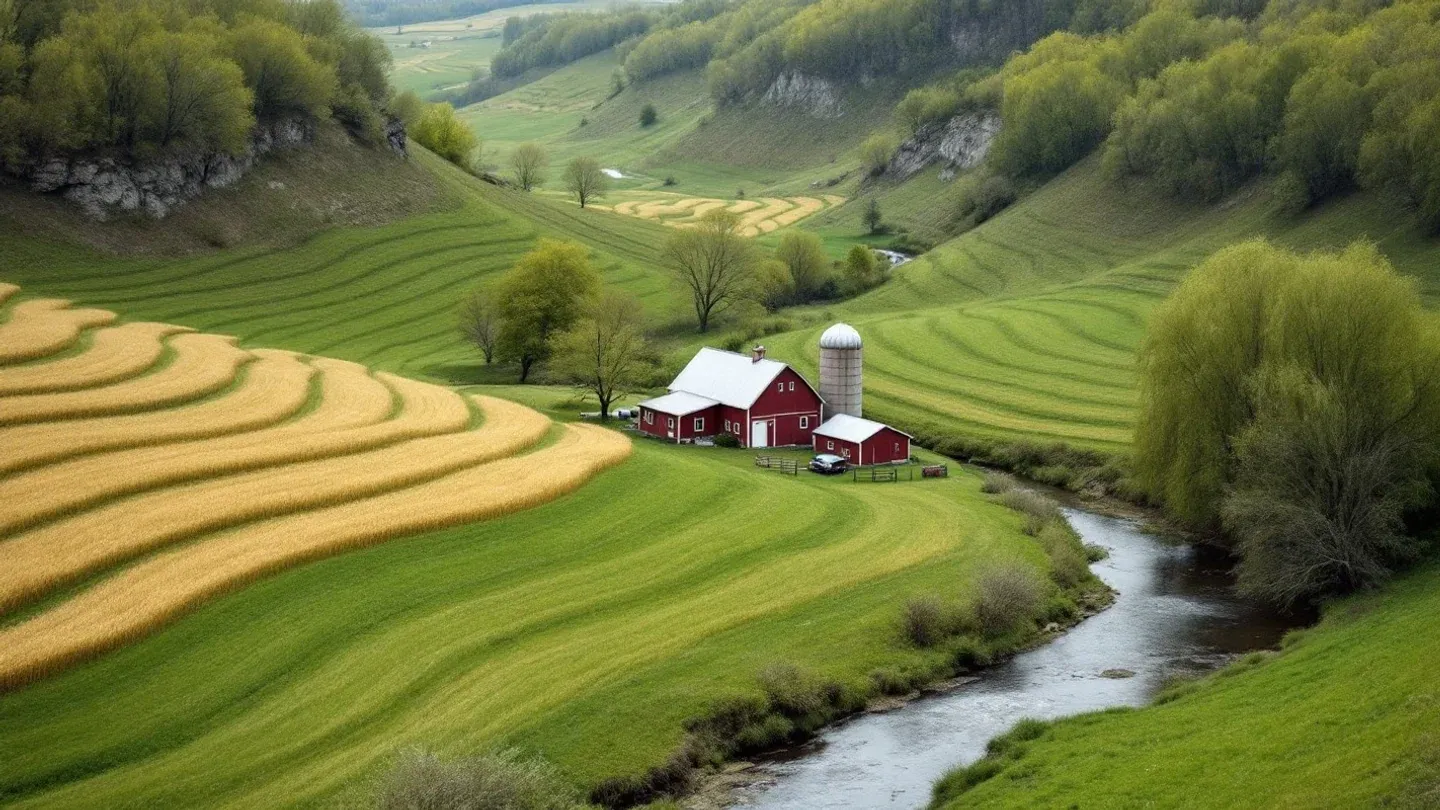
Say a 60-acre farm in the Driftless costs $500,000. You bring $25,000, FSA lends $225,000 at 1.5 percent over 20 years, and a bank lends the remaining $250,000. If the farm does not qualify for the down payment program, the joint financing option is the fallback: when FSA's share is no more than half of the total, the FSA rate is the ownership rate minus 2 points with a 2.5 percent floor, which is 3.250 percent in October.
What counts as farm experience
This is where many applications stall, so read it twice.
For a direct ownership loan, the applicant must have participated in the business operations of a farm for at least 3 of the past 10 years. Up to two of those three years can be replaced by alternatives: at least 16 credit hours of post-secondary agricultural coursework; a farm management course from extension, a community college, a nonprofit or a land-grant university; one year as a farm laborer with substantial management responsibility; a completed internship, mentorship or apprenticeship in day-to-day farm management; significant business management experience; an honorable discharge from the armed forces; a repaid FSA youth loan; or an established relationship with a SCORE counselor or an FSA-approved mentoring organization. The whole three-year requirement is waived for an applicant who has both the year of farm labor with management responsibility and the mentoring relationship.
For operating loans and microloans, the test is managerial ability, shown by education, on-the-job training or farming experience. Running a farm business through one full production cycle is the regulation's own example. Operating microloan applicants get two more doors: certified past participation in 4-H, FFA, a beginning farmer development program or a community-based organization; or a written plan for a self-directed apprenticeship, paired with prior farm work or significant small business experience, in which a qualified mentor guides you through your first production and marketing cycle.
One trap: if your farm experience is more than five years old, you must show recent training or education to prove you still have it. Write your experience down in detail before you visit the office. Two seasons managing a CSA's harvest crew count for more than ten summers of casual help on an uncle's place, and the written description is what the loan officer reads.
The paperwork
A full direct loan application under 7 CFR 764.51 includes the application form, your written experience description, three years of farm financial records including tax returns (unless you have farmed for less), three years of production records, proof that you could not get credit elsewhere on reasonable terms, verification of non-farm income and debts, a current balance sheet, a farm operating plan with a projected cash flow, legal descriptions and leases, and the fee for a credit report.
A microloan trims that list. You still provide the form, the experience description, the credit-elsewhere documentation, the balance sheet and operating plan, and the credit report fee, but records only for your most recent production cycle, if you have one. FSA also reports in its October rate notice that the direct loan application itself was cut from 29 pages to 13, with a fillable electronic version, and that the Loan Assistance Tool on farmers.gov walks applicants through the process step by step.
Three eligibility points surprise people. First, the "credit elsewhere" test: FSA is a lender of last resort, so you must show that a bank would not lend to you on reasonable terms. Second, credit history: a thin file with no credit history is not automatically disqualifying, and isolated late payments are not either; a pattern of not paying when you could have is. Third, borrower training: FSA can require production or financial management courses, but it cannot reject a direct loan solely because you need the training.
How the loans fit a first five years
Here is a sequence we see work.
Years one and two
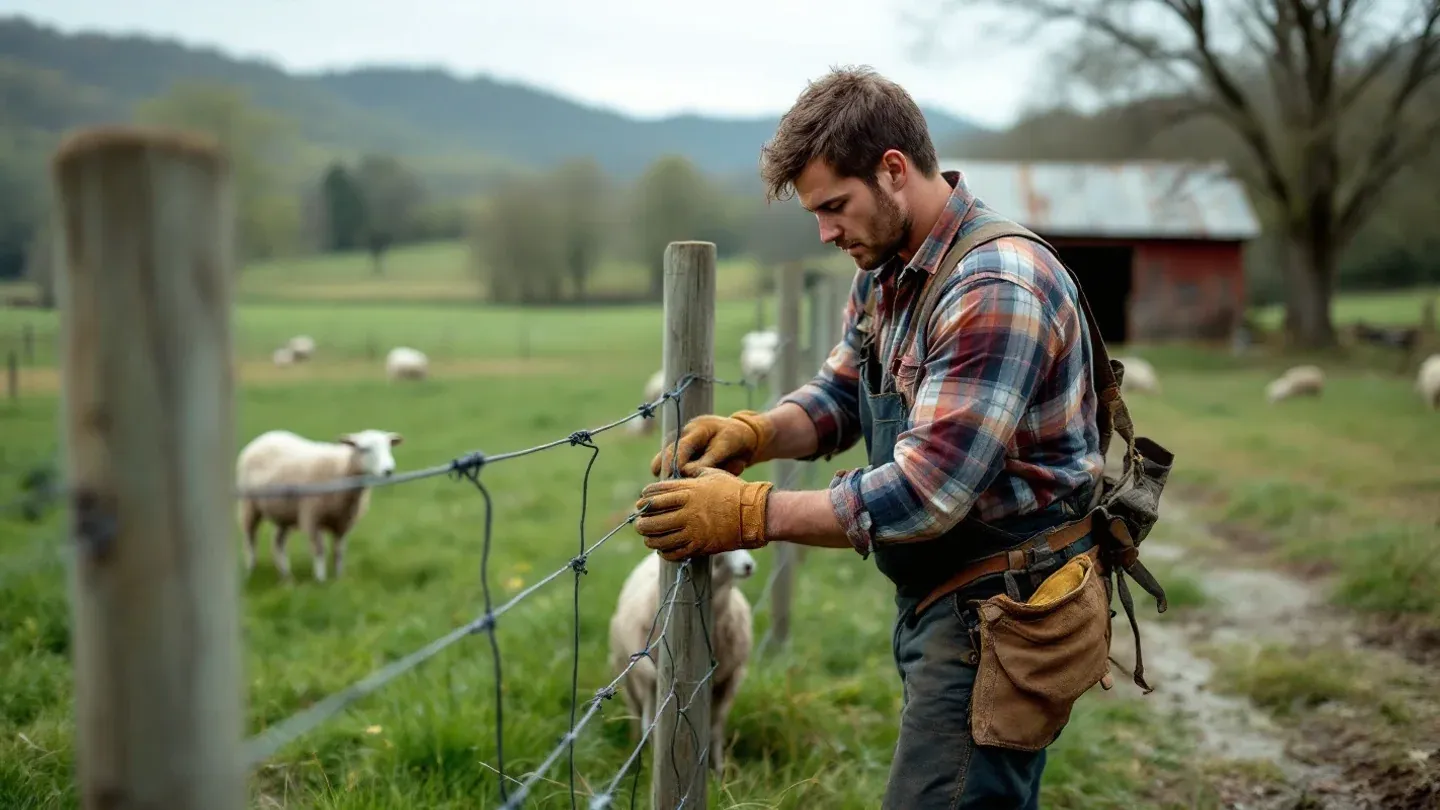
An operating microloan for breeding stock, fencing, irrigation, a walk-in cooler or the first season's inputs. Keep books from the first sale, because the records you cannot produce in year one are the records a full application asks for in year three. A written farm business plan is not just for the loan officer; it is the cash flow you will be held to.
Years two and three
Pair the loan with conservation money that does not have to be paid back. EQIP and CSP payments can fund fencing, water systems and cover crops that an operating loan would otherwise carry at interest.
Years three to five
When a parcel comes up, the down payment loan or an ownership microloan for a small piece of ground. Operating loans normally run out after seven calendar years of borrowing, but that limit does not apply to beginning farmers, and microloans to beginning farmers are not counted against it. The stated purpose of FSA's borrower training is to prepare you to graduate to commercial credit. Plan for that graduation rather than for permanent dependence.
Along the way, diversify your income so that one bad season does not become a missed payment, and let the enterprises that pay fund the ones you love.
What a loan cannot fix
A loan is a tool for timing. It moves money you will earn later to the moment you need it now. It does not create the earning. At 5.25 percent, every $50,000 borrowed costs roughly $2,600 in interest in its first year, before a dollar of principal. If the enterprise cannot clear that margin, the loan does not make it viable; it makes the failure larger and slower.
A loan cannot fix a missing market. Borrowed money buys the hens; it does not buy the customers for the eggs. Build the market stall or the wholesale relationship first, even at a tiny scale, then borrow to meet demand you have already found. It cannot fix an unknown cost of production, and it cannot fix a lease that ends in two years. And it cannot fix a plan that only works if nothing goes wrong. FSA's own October notice reports that the Inflation Reduction Act set aside $3.1 billion for distressed FSA borrowers and that about $1.5 billion had already gone to more than 24,000 of them since October 2022. Those are real farms where the loan outran the plan.
This is why we keep coming back to thinking long term and to simplifying. The right first loan is usually smaller than the one you qualify for, and the right first farm is usually smaller than the one you can picture. Start with one enterprise you can run consistently, borrow against it only once it has proved itself, and let the record of that discipline be what you bring to the next application.
Where to start this week
- Run the Loan Assistance Tool on farmers.gov to see which loan you fit and what documents to gather.
- Call your county FSA office and ask about beginning farmer targeted funds for the new fiscal year.
- Write your farm experience description now, in full, naming dates, responsibilities and the people who can confirm them.
- Build a 12-month cash flow for the enterprise the loan will fund, with the loan payment in it.
- Decide whether a microloan covers the need. If it does, take the shorter path.
- Find a mentor. The organizations and people in our resource directory include groups that run beginning farmer programs, and a named mentor can satisfy part of the experience rule as well as keep you out of trouble.
If you started with no money at all, you are in good company; we wrote about starting a farm without any money years ago, and the advice still holds. The loan is the second step, not the first.