
It is the first week of September 2023, and the 2018 Farm Bill runs out at the end of the month. If you run a small diversified farm, you have heard that sentence at the market, at the feed store and on the radio, usually followed by a shrug. This is the version without the shrug: what the farm bill is, what its twelve titles do in plain language, which of them touch a farm like yours, what "expires on September 30" actually means for the programs you use, and how to follow the rewrite without reading a thousand pages.
What the farm bill is
The farm bill is an omnibus law that Congress rewrites roughly every five years. The current one, the Agriculture Improvement Act of 2018, was signed on December 20, 2018 and, in the words of USDA's Economic Research Service, will remain in force through 2023. It bundles nearly everything the federal government does in food and agriculture into one bill, so that votes from farm districts and city districts have to be found together.
The money tells you what the bill really is. At enactment the Congressional Budget Office projected that 76 percent of outlays under the 2018 Act would go to nutrition programs, 9 percent to crop insurance, 7 percent to conservation and 7 percent to commodity programs. Everything else, from research to rural broadband to farmers market grants, shares the last 1 percent. Across five years that came to about $428 billion in mandatory spending. The farm programs that make the news are a slice. The food assistance that holds the coalition together is the loaf.
The twelve titles in plain language
The Congressional Research Service lists the twelve titles of the 2018 Act. Here is each in one line.
- Commodities. Payments to growers of corn, wheat, soybeans, rice, cotton, peanuts and dairy when prices or revenues fall, plus disaster aid for livestock and orchards.
- Conservation. Payments and technical help for stewardship on working land, plus land retirement and easements.
- Trade. Export promotion and international food aid.
- Nutrition. SNAP and the smaller domestic food assistance programs.
- Credit. The Farm Service Agency's direct and guaranteed farm loans.
- Rural Development. Loans and grants for rural water, housing, business and broadband.
- Research, Extension and Related Matters. Money for the land-grant universities and the competitive research grants.
- Forestry. Forest Service programs on public and private forest land.
- Energy. Renewable energy on farms and biofuels.
- Horticulture. Specialty crops, organic, local food and hemp.
- Crop Insurance. The permanently authorized federal crop insurance program.
- Miscellaneous. Livestock health, outreach to beginning and underserved farmers, and whatever did not fit elsewhere.
If you grow vegetables, raise pastured animals and sell within a hundred miles, Titles I and XI will barely know you exist. Your farm lives in Titles II, V, X and IV, with a corner of VII and XII.
Conservation: the title you feel most
This is the title a regenerative farm meets first, because it pays for practices you already want to do. The Environmental Quality Incentives Program exists, in the words of its own regulation, to promote agricultural production, forest management, and environmental quality as compatible goals, and its list of resource concerns runs from soil, water and air quality through nutrient management, pest management, irrigation and organic production. The Conservation Stewardship Program is for farms already doing the work; its purpose is to encourage producers to address priority resource concerns by adding conservation activities and keeping up the ones they have. The Conservation Reserve Program, run by FSA, pays annual rental payments on contracts of 10 to 15 years to take erodible or sensitive ground out of crops. We walked through how EQIP and CSP payments work on a small farm in June and what the high tunnel initiative pays for last month.
One thing changed in this title outside the farm bill. The Inflation Reduction Act of 2022 put new money into the working-lands programs and, as CRS puts it, extended some, but not all, conservation programs through FY2031. We covered what the IRA means for farming in April. The practical result is that EQIP and CSP do not switch off on September 30, although some of their policy details do: CRS notes that the EQIP payment limit of $450,000 per person for the life of the 2018 bill, and the rule that half of EQIP money goes to livestock practices, are among the provisions that expire at the end of FY2023.
Credit: the title that amends, not creates
The farm bill adjusts FSA's loan programs but does not create them. FSA says so on its own farm bill page: ownership and operating loans are authorized outside of the Farm Bill, under a permanent credit statute, the Consolidated Farm and Rural Development Act. What Title V does is adjust the terms. The 2018 bill doubled the limit on direct farm ownership loans and raised the direct operating loan limit by a third, and its sections on microloans and loan fund set-asides govern the small loans and the share of the money reserved for beginning farmers. If you are planning to borrow, the farm bill's expiration is not the thing to wait for. We will go through FSA microloans and beginning farmer loans in detail this fall.
Horticulture: the small farm's title
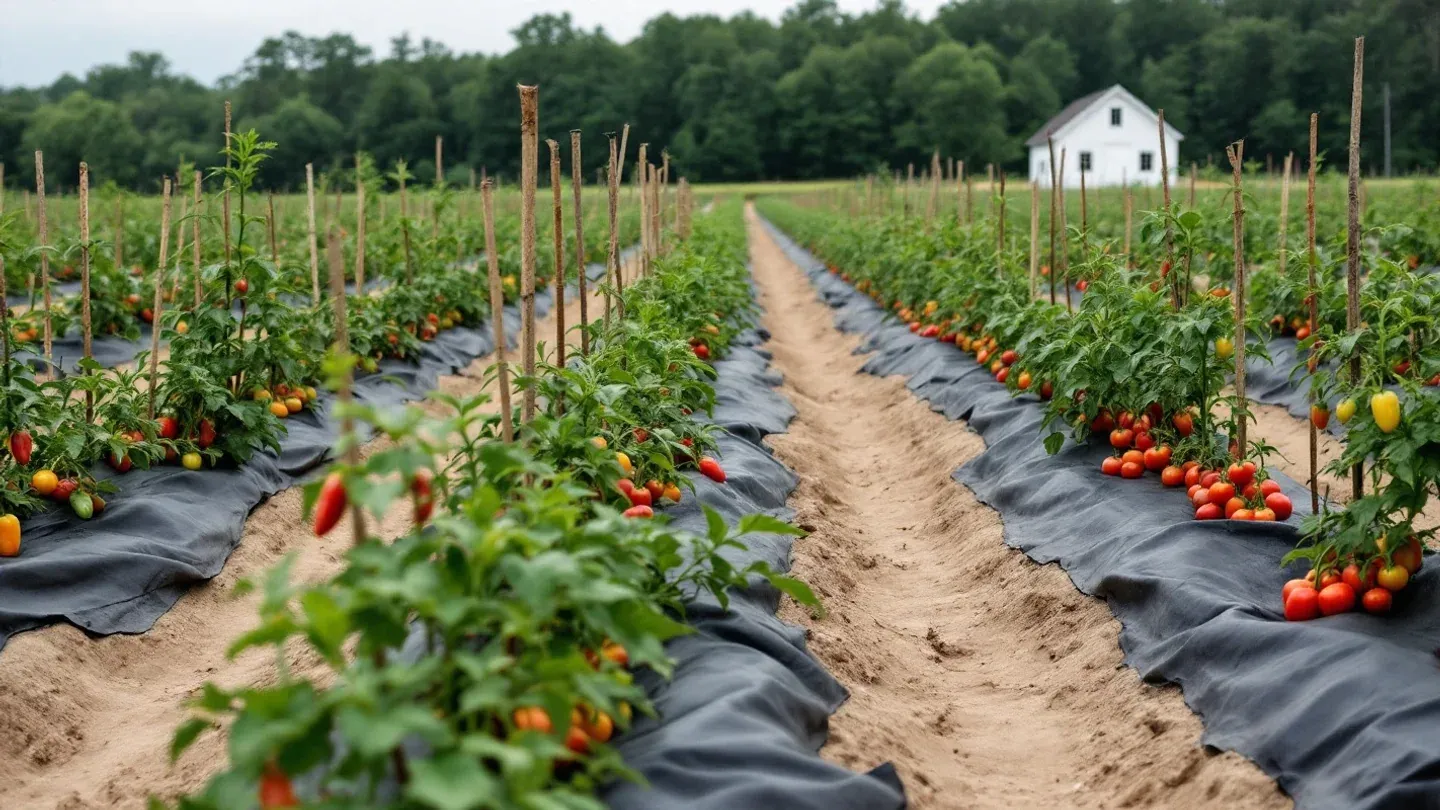
Title X is where a diversified vegetable, fruit or organic farm shows up by name. Three programs matter.
The Specialty Crop Block Grant Program sends money to state departments of agriculture, which fund projects that make fruits, vegetables, tree nuts, dried fruits, horticulture and nursery crops more competitive. You do not apply to USDA; you apply to your state, usually through a request for proposals.
The Local Agriculture Market Program is an umbrella the 2018 bill built over the Farmers Market Promotion Program, the Local Food Promotion Program, Regional Food System Partnerships and Value-Added Producer Grants. If a market you sell at got a grant for a new pavilion, or a food hub near you got money for a feasibility study, this is the line it came from. It is the federal money behind the market stall and the value-added product we wrote about earlier this year.
The Organic Certification Cost Share Program reimburses certified operations for up to 75 percent of certification costs, capped at $750 per scope, through the FSA county office or a participating state agency. The rate itself is a 2023 story: after three years at 50 percent and $500 because the money ran short, FSA restored the full 75 percent and $750 for this year in May once it found the funding was there. For a small certified farm that is a few hundred dollars a year, and it is one of the programs most exposed this month, as we will see.
Nutrition: the title that buys your produce
A small farm meets Title IV as a customer. The nutrition title is three quarters of the bill, SNAP is its biggest program, and part of that money walks through farmers markets every Saturday. The Gus Schumacher Nutrition Incentive Program funds the projects that increase what SNAP shoppers buy in fruits and vegetables, and the produce prescription projects that bring in health care partners. CRS notes that its mandatory funding runs beyond FY2023, so it is not on the expiration list. The Senior Farmers' Market Nutrition Program, which sends low-income seniors to farmers markets with federal benefits, is on it: both its authority and its money run only through the end of FY2023. School meals, by the way, are not in the farm bill at all; they run under the child nutrition laws, which is why selling to your school district, a subject we will take up next month, follows its own rules.
Research and Miscellaneous: the training money
Two smaller lines round out the picture. In Title VII sits the Organic Agriculture Research and Extension Initiative, the competitive grant program for research that serves producers and processors already farming to organic standards. In Title XII, the 2018 bill created Farming Opportunities Training and Outreach, which puts the Beginning Farmer and Rancher Development Program and the outreach program for socially disadvantaged and veteran farmers under one roof. BFRDP money goes to networks of extension services, nonprofits and colleges, not to individual farmers, and it funds the incubator plots, apprenticeships and business courses a beginning farmer walks into.
What September 30 actually means
Now the hard part, in plain terms. CRS's August report on the expiration of the 2018 farm bill explains what expiration does to each kind of program. Sorted into four groups, it comes to this.
Programs that cannot expire. Crop insurance is permanently authorized and is not affected. FSA farm loans, as above, live in a permanent statute. EQIP, CSP and the easement and partnership programs have IRA money and authority through 2031.
Programs that continue as long as Congress keeps paying. SNAP is mandatory spending that Congress provides through appropriations, so an appropriations act or a continuing resolution keeps it running whether or not the farm bill is renewed.
Programs that stop taking new business. Programs whose authority to operate and whose mandatory money both come from the farm bill, and both end with FY2023, cannot start new activity without an extension. CRS's list includes the Specialty Crop Block Grants, LAMP and organic certification cost share in Title X, the organic research initiative in Title VII, and Farming Opportunities Training and Outreach in Title XII. Those are, almost exactly, the small farm's programs.
Programs with no baseline. This is the trap inside the trap. Budget rules assume a long-standing program continues after its authorization ends, which gives it a "baseline" that an extension can carry forward at no scored cost. Newer and smaller programs do not get that assumption. In a 2022 primer CRS counted 19 programs across 6 of the 12 titles with $876 million of mandatory funding over five years, out of $428 billion, that have no baseline after FY2023. On that list: organic certification cost share, the organic production and market data initiatives, urban and indoor agriculture research, scholarships for the 1890 land-grant universities, and the feral swine pilot. Extending them costs money on paper, so they are the first to be dropped when an extension has to be budget neutral.
There is precedent for exactly that. When the 2008 farm bill expired at the end of 2012, Congress passed a one-year extension in January 2013 that carried the programs with a baseline and, as CRS records, left the programs without a baseline unfunded for FY2013. The 2014 farm bill did not arrive until February 2014. In 2018 there was no extension at all; programs lapsed on October 1, regular appropriations acts let many of them keep operating, and the new bill was signed on December 20, 2018, days before the dairy program would have reverted to the "permanent law" of 1938 and 1949.
That is the second date to know. The commodity programs run through the 2023 crop year, so for them the consequences start on January 1, 2024, with dairy first. For a vegetable grower it is an abstraction; for the dairy neighbor it is the lever that forces Congress to act by New Year.
The honest summary, then, is the one two Texas A&M economists gave in January: only about 5 percent of the bill's mandatory funding is actually facing expiration. The farm safety net is not on the line this month. What is on the line is the thin, specific slice that funds organic certification, local markets, beginning farmer training and the data that lets anyone prove regenerative farms perform. That is worth watching closely, and it is the quiet argument behind why we need small farms in the policy room at all.
How to follow it without reading a thousand pages
The bill itself, when it comes, will run to hundreds of pages. You do not need to read it. Here is what works.
Read the hearings by title, not the bill. The House Agriculture Committee's hearings page lists every session with the testimony attached. This year the ones for a small farm were Producer Perspectives on the 2023 Farm Bill on April 26, the NRCS testimony before the Subcommittee on Conservation, Research, and Biotechnology on May 23, the Title IV nutrition hearing on June 7 and the Title VII research hearing on June 14. Open the witness statements for the title you care about and skip the rest.
Go to a listening session. Committee members have been holding them in their districts all year: Rep. Tracey Mann hosted Chairman Thompson in a Kansas wheat field on May 2, and Rep. Marie Gluesenkamp Perez held one in Centralia, Washington in March where the room talked about leveling the field for local producers. If your representative holds one, go and say one specific thing.
Let CRS do the reading. The Congressional Research Service writes for members of Congress in plain English, and its reports are public. The two linked above, on what the farm bill is and on what expires, are shorter than you would guess and far clearer than any news story.
Follow one organization that reads it for you. The groups in our organizations directory, the National Sustainable Agriculture Coalition among them, track every title that touches a small farm and tell you when to call. Pick one and read it weekly until the bill is signed. The policy debate over subsidies will rage on cable; the lines that matter to you are quieter.
What to do this month
Three things, in order.
First, if you are certified organic, file your 2023 cost share claim with the county office now rather than in the winter. Cost share sits on both of CRS's lists of exposed programs, and the money in hand is the money you can count on.
Second, if you have an EQIP or CSP application in mind, get it in. The IRA money is there, the ranking is done locally, and nothing about the expiration changes that.
Third, write to your representative and both senators with one ask, in your own words, about one program you use. The farmers who show up are the ones the staff remember when an extension is drafted in a hurry. The farm bill has always been written for the people in the room, and this fall is the moment to act locally on a national law. The next five years of conservation payments, market grants and organic cost share will be decided by people who have heard from you, or have not. That is a long-term bet worth a stamp.