
The farm bill that was supposed to be written in 2023 is now a 2024 job. Congress let the 2018 law run past its September 30 expiry, then put it on a one-year extension in November. USDA itself is working under a stopgap funding bill that runs out on January 19, and congressional leaders only agreed on overall spending totals on Sunday.
Under all of that sits one pot of money that both parties want and neither will give up on the other's terms: the conservation dollars from the Inflation Reduction Act. If you farm and you are hoping for an EQIP or CSP contract in two or three years, this fight is about whether that contract exists, what practices it pays for and how long the money lasts. Here is how the pieces fit.
Where conservation money comes from
The programs most working farms use sit in Title II of the farm bill, the conservation title. The main ones are the Environmental Quality Incentives Program (EQIP), the Conservation Stewardship Program (CSP), the Agricultural Conservation Easement Program (ACEP), the Regional Conservation Partnership Program (RCPP) and the Conservation Reserve Program (CRP). The Natural Resources Conservation Service runs the first four. The Farm Service Agency runs CRP.
They are mandatory spending, paid through the Commodity Credit Corporation rather than through the annual appropriations bills, and the farm bill sets the amounts. The 2018 Farm Bill gave EQIP $2.025 billion for fiscal year 2023 and CSP $1 billion, put ACEP at $450 million a year, and capped CRP at 27 million acres in fiscal 2023 (Agriculture Improvement Act of 2018, Title II). CRP pays an annual rental rate on land taken out of production under contracts that typically run 10 to 15 years (USDA Farm Service Agency, Conservation Reserve Program).
Those numbers are the baseline in the budget sense. The Congressional Budget Office projects what each mandatory program would spend if current law simply continued, and every farm bill proposal is scored against that projection: more spending than the baseline costs money, less spending counts as savings (Congressional Research Service, Farm Bill Primer: Budget Dynamics). Programs with a baseline are assumed to carry on. Nineteen of the twenty-one smaller programs that had no baseline past 2023 had to be given $177 million of one-year money in the extension just to keep running.
The extension itself is Section 102 of the Further Continuing Appropriations and Other Extensions Act, 2024, approved on November 17, 2023. It keeps every authority of the 2018 Farm Bill, including the mandatory funding levels, in force as they stood on September 30, 2023 until September 30, 2024 (Public Law 118-22). The same law set January 19, 2024 as the deadline for the first group of appropriations bills, and the first on that list is the one that funds USDA (Public Law 118-15, section 101).
We walked through the whole bill in The Farm Bill Explained for a Small Regenerative Farm; this article is about the one title where the money is in play.
What the Inflation Reduction Act added
In August 2022 the Inflation Reduction Act appropriated, on top of the farm bill amounts, $8.45 billion for EQIP, $3.25 billion for CSP, $1.4 billion for ACEP and $4.95 billion for RCPP, stepped up over four years. EQIP, for example, gets $250 million in fiscal 2023, $1.75 billion in 2024, $3 billion in 2025 and $3.45 billion in 2026 (Inflation Reduction Act, section 21001). Add $1 billion for conservation technical assistance, $300 million for measuring carbon and emissions outcomes and some administrative money, and the package comes to roughly $19.5 billion (American Farm Bureau Federation, Market Intel). We looked at the law from a farm's point of view when it was new in The Impact of the Inflation Reduction Act of 2022 on Farming.
Two conditions in the statute drive the whole argument. First, the money may only go to practices that the Secretary of Agriculture determines "directly improve soil carbon, reduce nitrogen losses, or reduce, capture, avoid, or sequester carbon dioxide, methane, or nitrous oxide emissions" from farming. Second, it is temporary. The funds stay available until September 30, 2031, USDA may not sign an agreement that runs past that date, and it may not use other money to finish obligations started under this section.
That is what people mean when they call the IRA money climate-smart and outside the baseline: a separate stream into the same programs, with its own rules and an end date.
Why baseline is the word that matters
Because the IRA money is a one-time appropriation, CBO does not count it in the conservation title's baseline. It projects that spending separately, and as early as February 2023 it estimated that only $15.3 billion of the roughly $18 billion in program funds would actually be spent by fiscal 2031 (farmdoc daily, February 2023). By November, working from CBO's May 2023 baseline, the projection was $15.99 billion (farmdoc daily, November 2023).
Two consequences follow, and they pull in opposite directions.
The first is that the money vanishes from every projection after 2031. A farm bill written in 2024 is scored over ten years, so a conservation title that leans on IRA money looks rich until 2031 and thin after it. Moving the IRA funds into the farm bill baseline, where the regular EQIP and CSP amounts already sit, would make them permanent for scoring purposes.
The second is that the IRA money is also the largest pile of unspent cash anywhere in the bill, which makes it the obvious offset for anything else somebody wants to buy. Rescind it, and CBO scores the savings at its projected outlays, not at the full appropriation. Jonathan Coppess of the University of Illinois warned in November that Congress would get credit for about $15.99 billion in savings while farmers would lose the whole $18 billion less whatever was already obligated.
The two sides as 2024 opens
The positions have been set for most of a year. In May 2023 Senate Republicans led by John Boozman of Arkansas said they wanted the IRA conservation money moved into the farm bill and used with more flexibility than the climate conditions allow, and John Thune of South Dakota argued it would stretch farm bill dollars further. Boozman acknowledged in the same breath that the red line of Senate Agriculture Chair Debbie Stabenow was that the money be used as it was intended (Agri-Pulse, May 2023).
By September the Senate committee's Republican staff were arguing that many traditional EQIP and CSP practices do not qualify under the IRA's climate rules, so farmers who are eligible for regular farm bill money are shut out of the new money. Stabenow, who fought to put the money into the IRA, answered that nearly half of all funded conservation applications already use climate-smart practices and that she was committed to defending the funds for their intended purposes. USDA's own reply was that demand exceeds the money and that the IRA is additive to the farm bill programs, not a substitute (DTN, September 2023).
House Agriculture Chairman Glenn Thompson made the House case at a member day in December. His argument is that the initial $19.5 billion has already been cut back by the Congressional Budget Office because of budget sequestration, that USDA cannot get it all out the door on the statutory timeline, and that rolling it into the farm bill would preserve conservation investment "well beyond 2031" (DTN, December 2023). Sean Casten, an Illinois Democrat, used the same hearing to ask the committee to preserve the IRA dollars for conservation.
Then there is the third option, the one that hangs over every negotiation: using the IRA money to pay for higher reference prices in the commodity title. Agriculture Secretary Tom Vilsack put the cost of a reference price increase at $2 billion a year and said it would help only a few farmers, while the IRA money is open to all of them. Stabenow herself has said she supports some increase in reference prices (DTN, September 2023). The open question is what pays for it.
So as of this week the lines are: the House chair wants the money inside the farm bill with the climate conditions loosened; the Senate chair has said she will defend it for its intended purpose, which Boozman himself calls her red line; and the budget hawks of both chambers know where the only large unspent pile is. Congressional leaders agreed on overall spending totals on Sunday, but the announcement said nothing about the farm bill, the topline numbers do not spell out what any department gets, and the USDA appropriations bill still has to pass by January 19 (DTN, January 7, 2024).
What is actually at stake on a farm
Strip away the budget vocabulary and the question is how many farmers get a contract.
Before the IRA, NRCS was turning away about as many good applications as it funded. Across 2017 to 2022 it received an average of 120,606 EQIP applications a year and funded 36,620 of them, 31 percent. Of the applications that were valid, 49 percent went unfunded on average because the money ran out (farmdoc daily, September 2023). Coppess calls that group the conservation bardo: approved, waiting, unpaid. USDA has reported that it obligated the entire fiscal 2023 IRA appropriation, more than CBO had projected, and demand still outran the money (farmdoc daily, November 2023).
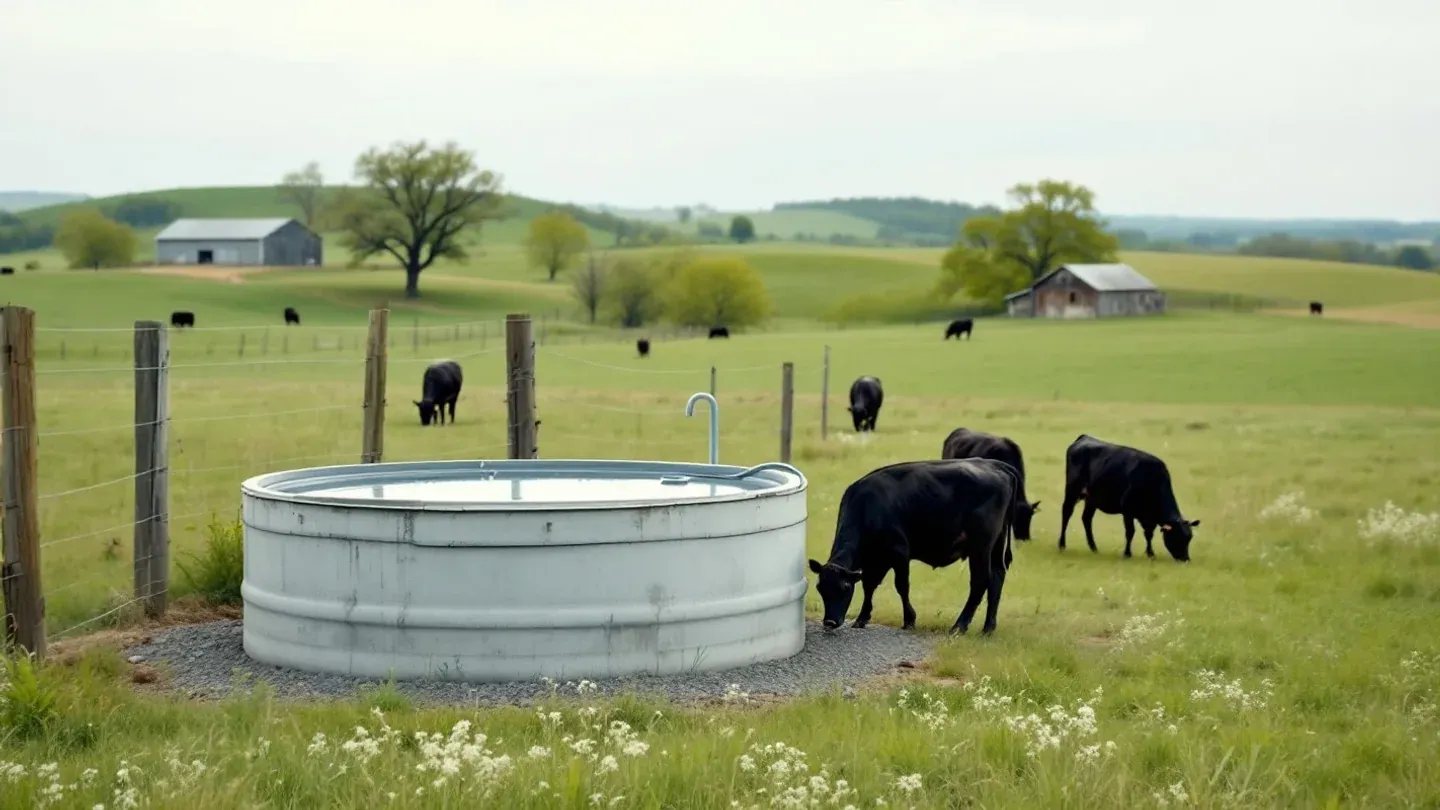
Now picture a farm that plans to apply for an EQIP contract for fencing, water and a grazing plan in 2026, or a CSP contract in 2027. Three futures are on the table.
If nothing changes, IRA money peaks in fiscal 2026 at $3.45 billion for EQIP and $1.5 billion for CSP, on top of the regular amounts, but only for practices on the climate list, and every agreement has to be finished by September 2031. That favors the practices that build soil carbon or cut nitrogen losses. For a farm already working to heal the soil, it is the best funding picture in a generation. A farm that mostly needs a new well or a manure storage structure may still be queuing for regular money.
If the money is moved into the baseline without the climate conditions, more practices qualify and the funding becomes permanent in the budget sense. The trade is that the same dollars get spread across more applicants and more years, so the annual boost is smaller than the 2025 and 2026 peaks the IRA scheduled.
If the money is rescinded to pay for something else, the programs fall back to the 2018 levels of $2.025 billion and $1 billion a year, the backlog stays where it was, and the planned contract becomes a lottery ticket again. We laid out both sides of the subsidy debate in Pros of Agricultural Subsidies. The other side is in Cons of Agricultural Subsidies. Whichever side you lean to, conservation payments are the one kind that reward work on the land rather than a price on a screen.
What to do now
You do not get a vote in committee, but you can position the farm so that any of the three outcomes is survivable.
Get in the queue this year. The fiscal 2024 IRA allocation is the first big step up in the schedule, from $250 million to $1.75 billion for EQIP alone. Ask your NRCS field office when the next ranking cutoff falls and what has to be on file before it. A farm with a current conservation plan, records at FSA and a signed application is ready when a ranking period opens. A farm that starts the paperwork the week the money appears is not. Our walkthrough of the mechanics is in How EQIP and CSP Conservation Payments Work for a Small Farm. For a vegetable farm the High Tunnel Initiative is often the first contract.
Apply for practices that can be paid from either stream. Cover crops, reduced tillage, nutrient management and prescribed grazing are core EQIP and CSP practices, and they are the obvious candidates under the statute's soil carbon and nitrogen test. Ask the field office which practices are on its climate-smart list for your state and put those first. An application built on them can be funded from whichever pot has money that year.
Do not build the budget on the payment. A practice that only pencils out with cost share is a practice you will abandon when the contract ends. Use the money to speed up what you would do anyway. That is what thinking long-term means on a farm with a five-year contract and a thirty-year plan.
Say something. The committees read the letters, and the National Sustainable Agriculture Coalition, which tracks every turn of the conservation title, is in our organizations directory. The extension runs to September 30, and most of the bill will be written by people who never hear from a grazier in Kansas or a vegetable grower in Vermont. Being involved is cheaper than being surprised.