
Early February is when market managers write the vendor packet for the coming season and farmers decide which markets are worth the drive. It is also the first winter after November 2025, when the longest government shutdown on record held up SNAP benefits for millions of households. About 42 million people, roughly one in eight Americans, buy groceries with the program, at an average of around $190 a month per person. Whether any of that money reaches your table depends on paperwork you can do now, in the slow months. This article walks through how EBT works at a market, what the free equipment program covers, how incentive programs double a shopper's produce money, what the July 2025 reconciliation law changed and on what dates, and where the farm bill stands this winter.
SNAP in a farmer's terms
SNAP is a federal program, authorized by the nutrition title of the farm bill and run day to day by the states, which determine eligibility and load benefits onto an EBT card each month. The card works like a debit card at any retailer that USDA's Food and Nutrition Service (FNS) has authorized. The rules define eligible food as any food for human consumption except alcohol, tobacco and hot foods prepared for immediate consumption, plus seeds and plants that grow food. In market terms: vegetables, fruit, eggs, meat, cheese, honey, bread, jam, cold cider and seedlings all qualify. Hot soup, cut flowers and soap do not.
The same definitions list a farmers' market as a retail food store in its own right. That is the hinge of the whole system: a market can be the authorized retailer, or each farmer can be. Both routes are open, and many markets use both at once.
Two ways a market takes the card
In the first model, every farmer who wants SNAP customers applies to FNS as a direct marketing farmer, gets an FNS number and a permit, and runs a card reader at the stall. The sale goes straight to the farm's bank account, the farmer sees the numbers, and the market does not need to touch the money. This suits a farm that sells at several markets and a farm stand, the kind of operation we described in running a roadside farm stand that pays for itself.
In the second model, the market itself is the retailer. A shopper swipes the card once at the information booth, chooses an amount, and receives tokens or paper scrip in that value. Vendors accept the tokens like cash for eligible foods, and the market reimburses them from the EBT deposit, usually weekly. Only one reader and one data connection are needed, a new vendor can take SNAP on the first day, and the manager can see the market's total at a glance. The cost is staff time at the booth and careful token accounting.
Whichever route you choose, the equal treatment rule applies: SNAP customers pay the same prices on the same terms as everyone else, and no sales tax is charged on eligible foods bought with benefits. Nobody at the table should know, or care, how a customer is paying.
The authorization itself
FNS authorizes retailers under 7 CFR 278.1. The application asks for the Social Security numbers of the owners or officers, and FNS can ask to see state and local business licenses, photo identification, and sales, invoice and tax records before it decides. FNS must approve or deny a completed application within 45 days, and a completed application is one that gives FNS everything it needs short of a visit to the site. For a market the person who signs is typically the manager or a board member; for a farm it is the owner.
Two timing lessons. First, 45 days from a complete application is the rule, and a packet with a missing license is not complete. Second, the fall shutdown showed that a federal office can go quiet for six weeks at a stretch, and an application sitting in a queue does not age into approval. A market that wants to open in May with EBT should have its application in by early March.
Equipment: what the free program covers
The cost of a terminal used to be the reason small markets stayed out. That barrier is largely gone. MarketLink, a program of the nonprofit Farmers Food Assistance Bureau funded in part by USDA, runs a SNAP Equipment Grant for both direct marketing farmers and markets. The grant provides one free Bluetooth EBT card reader, a one-year subscription to the TotilPay Go point-of-sale app, no per-transaction fees on SNAP sales (which stay free after the grant year), and one-on-one help with the FNS application. If you process at least $500 in SNAP during the year, the subscription renews free for another year, while grant funds last or until September 30, 2029, whichever comes first. Below that threshold the app costs $239.25 a year or $24.95 a month.
It is a bring-your-own-device program: you supply a phone or tablet running a current operating system and a data plan or Wi-Fi. Before you apply, stand where your table will be and check the signal. A reader that cannot connect is a reader that cannot sell. Direct marketing farmers can also apply for a separate SNAP Online Grant that covers an e-commerce subscription and the PIN service needed to accept SNAP for online orders, which pairs well with the customer list we discussed in keeping customers through email lists and repeat buyers.
Incentives: where the market beats the supermarket
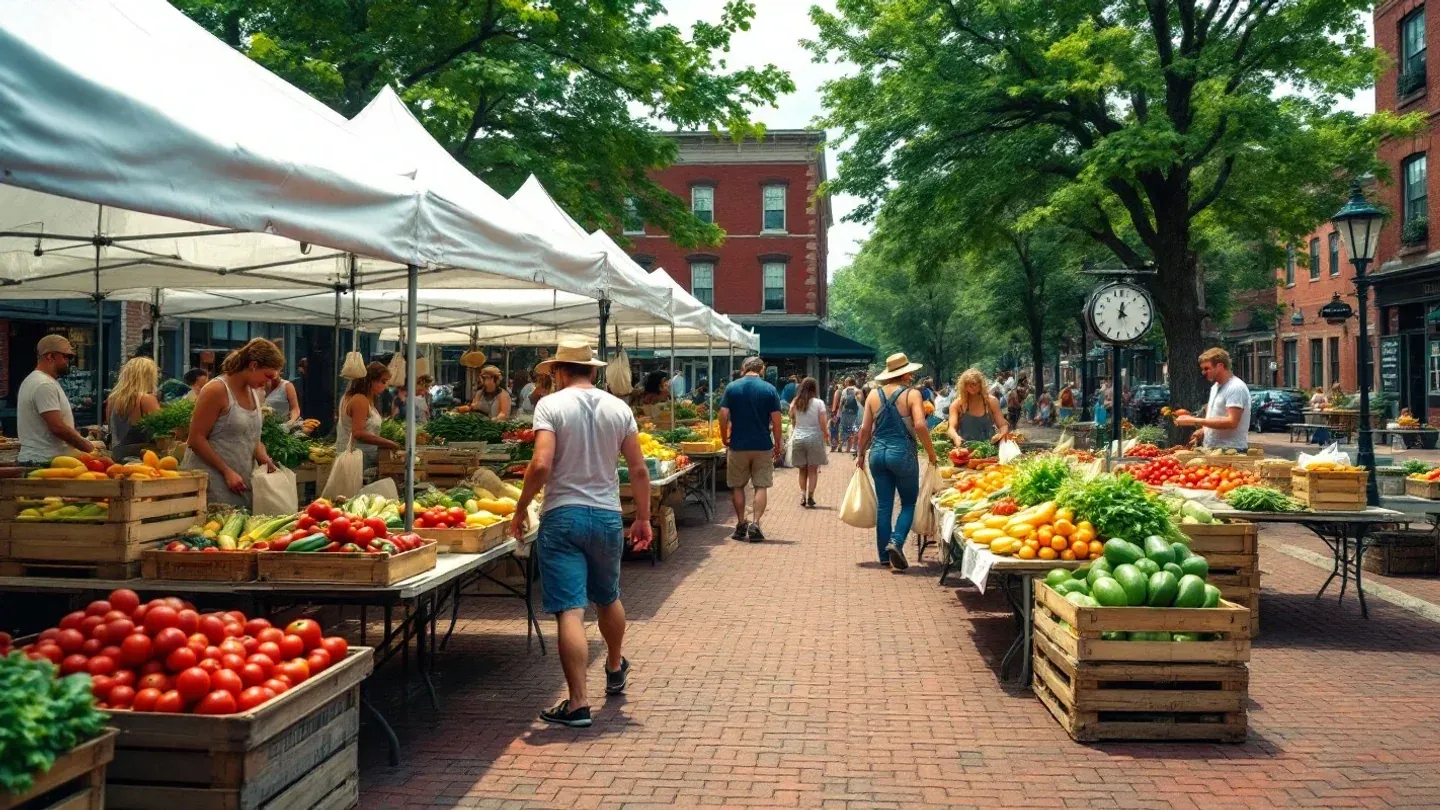
Accepting the card gets a market to parity with the grocery store. Nutrition incentives take it past parity. The Gus Schumacher Nutrition Incentive Program, run by USDA's National Institute of Food and Agriculture, funds projects that give SNAP shoppers extra money for fruits and vegetables at the point of sale. It grew out of a pilot and the 2014 farm bill's FINI program, was renamed in the 2018 farm bill, and saw its annual funding rise from $45 million to $56 million over five years. Between 2019 and 2024 it put more than $330 million into more than 250 projects across three streams: nutrition incentives, produce prescriptions and the training and evaluation centers.
The statute, 7 U.S.C. 7517, is friendly to markets by design. It gives priority to projects that maximize the share of funds going to direct incentives, that use direct-to-consumer marketing, and that are designed so the incentives earned can be spent only on fruits and vegetables, and it lists farmers' markets among the partners a grantee can work with. The federal share of a nutrition incentive project is capped at 50 percent, so every grantee raises a local match from foundations, health systems or state budgets.
In practice the incentive usually looks like Double Up Food Bucks. In Kansas and Missouri, for example, Double Up matches SNAP spending on fresh fruit and vegetables up to $25 a day at participating markets and grocery stores. California runs the same idea as Market Match, distributed by more than 50 community organizations and market operators at more than 270 farm-direct sites. A shopper who spends $20 of benefits on your carrots leaves with $40 worth of produce, and the farm is paid in full for both halves. A market does not apply to NIFA for this; it enrolls with the organization that holds the grant in its state. The Nutrition Incentive Hub, built by the program's training and evaluation center, keeps a map of the grantees, which is the place to find that organization.
Two older programs run alongside SNAP and are worth a separate line in your packet. The WIC Farmers Market Nutrition Program issues between $10 and $30 a year in benefits that can be spent only on fresh fruits, vegetables and herbs from authorized farmers, and the Senior Farmers Market Nutrition Program issues between $20 and $50 a year. Both have their own farmer authorization through the state agency that runs them, separate from the FNS retailer permit.
What the July 2025 reconciliation law changed
The budget reconciliation law signed on July 4, 2025, Public Law 119-21, rewrote several SNAP rules in its nutrition subtitle. For a market, the ones that matter are these, with their dates straight from the statute.
Work requirements (Section 10102): the time limit for able-bodied adults now reaches to age 65 rather than stopping in the mid-fifties, and the exemption for caregivers applies only to a parent or household member responsible for a child under 14, down from under 18. The section carries no delayed effective date.
Benefit levels (Section 10101): the Thrifty Food Plan, which sets the maximum benefit, keeps its annual cost-of-living adjustment each October 1, but a re-evaluation of the market basket cannot happen before October 1, 2027 and must be cost neutral. The 2021 edition of the plan is now written into the statute as the baseline.
State cost sharing (Sections 10105 and 10106): the federal share of administrative costs falls from 50 percent to 25 percent starting in fiscal year 2027, which begins October 1, 2026. Starting in fiscal year 2028, states with payment error rates of 6 percent or more will pay a share of the benefits themselves, 5, 10 or 15 percent depending on the rate. Expect states to tighten paperwork at the client end as those dates approach.
Nutrition education (Section 10107): the SNAP nutrition education grant program, SNAP-Ed, was funded only through fiscal year 2025. If an extension educator ran cooking demonstrations at your market under that program, ask now what replaces it.
Every one of these provisions is built to shrink the program's cost. Fewer SNAP dollars in a county means fewer SNAP dollars at its market, which is one more reason to make sure the incentive program is in place: it is the part of the system that still grows the produce dollar.
Where the farm bill stands this winter
The 2018 farm bill expired on September 30, 2025 and lapsed for six weeks, the situation we described in what happens when the farm bill lapses. The law that ended the shutdown on November 12, 2025, Public Law 119-37, did two things that matter here. Its Division E says the authorities of the 2018 farm bill, at their mandatory funding levels, continue until September 30, 2026 at the earliest, which keeps GusNIP and the farmers market nutrition programs on their existing footing for this season. Its Division B is a full-year agriculture appropriations act, so USDA's nutrition programs and the retailer side of SNAP are funded through the end of the fiscal year regardless of what happens to the agencies that were left on the January 30 continuing resolution.
The November episode is worth remembering when you plan. USDA told states on October 24 that it would not fund November benefits, a federal court ordered full payments on November 6, the Supreme Court paused that order on November 7, and when the shutdown ended about two-thirds of states had issued partial benefits or none. A market whose incentive program kept matching through those weeks was one of the few places a SNAP household could stretch what it had. The policy argument for local food, the one we make on our act local page, was never more concrete than at a token booth in early November.
The vendor's to-do list
- Choose your route. If you sell at one market with a central terminal, use its tokens. If you sell at several outlets or online, get your own FNS number.
- Gather the packet: state or local licenses if you need them, photo ID and the Social Security number of each owner or officer, and the sales and tax records you have. Apply to FNS and expect up to 45 days from a complete application.
- Apply to MarketLink for the reader and the app, and test the signal at your table.
- Train everyone who works the stall on the eligible food list, the no-tax rule and the same-price rule. Flowers and hot food go on a separate ticket.
- Enroll with your state's incentive grantee, and ask whether the WIC and senior farmers market programs are active in your county.
- Update your listing in the National Farmers Market Directory, which shows accepted forms of payment, and say it on your own table and in your emails. The pricing basics from setting up a farmers market stall that sells still apply: a clear price on every crate makes the token math easy.
- Keep a running total of SNAP sales. You need it for the $500 renewal threshold and the grantee will ask for it at the end of the season.
The manager's to-do list
A market that runs the central terminal takes on a small bank's worth of bookkeeping. Set a fixed token design and denomination, count the drawer at close, reimburse vendors on a fixed day, and reconcile the EBT deposits monthly. Write the equal treatment rule into the vendor agreement. Budget for booth staffing, because the terminal only works when someone is there. If an incentive grantee asks the market to help raise the local match, say yes and bring a sponsor; a hospital foundation or a county health department is the natural partner, and the organizations in our resource directory include several that have done exactly that.
Then tell the story. We wrote years ago that there was not enough help for farmers selling locally. We also wrote that a local market is one of the simplest ways to improve food security. Nutrition incentives are the rare policy where the help flows to the farmer and the family in the same transaction, which is what we mean by nurture families. The paperwork is a winter job. Do it now, and the first market of the season opens with every card welcome at every table.