
October is National Farm to School Month. The National Farm to School Network marks it every year, and the idea goes back to a House resolution in November 2010 that counted farm to school programs in more than 9,700 schools and encouraged districts to put local produce in their meals. If you have ever wondered whether the cafeteria down the road could be a customer for your farm, this is the month the people inside it are most open to the conversation.
Farm to school, as the network defines it, has three parts: local food in the cafeteria, school gardens, and education about food and farming. This article is about the first part, the one that pays a farm.
The market is large and it is steady. The National School Lunch Program runs in nearly 100,000 public and nonprofit private schools and served about 4.9 billion lunches in fiscal year 2019, the last full year before the pandemic. Those lunches go out five days a week on a schedule published months ahead. For a farm that wants a buyer who keeps coming back, that is a rare thing. We wrote about why it matters in Localism in Agriculture. It sits at the heart of our belief that a farm should act local.
The catch is that a school district buys with federal money, and federal money comes with rules. None of them are hard. You simply need to know them before you walk in.
Who actually buys
The legal buyer is the school food authority, which the regulations define as the governing body responsible for one or more schools that has the authority to operate the lunch program (7 CFR 210.2). In practice that is the district, and the person who decides what goes on the menu is the school nutrition program director, defined in the same section as the individual responsible for the day-to-day operation of food service across the district's schools. That is the name you want.
Two other players can sit between you and the director. Some districts hire a food service management company, a commercial or nonprofit contractor that manages part or all of the food service. If a district has one, the company's local manager makes the daily purchasing decisions, though the district still owns the procurement rules. And most districts buy the bulk of their produce through a distributor, which means your fastest route to a tray is sometimes to become a local line item in that distributor's catalog rather than a direct vendor.
Start with a phone call or a visit to the district office in late winter, not in September. Menus are planned a season ahead and bids for the coming school year are often written in spring. Your state's farm to school coordinator, usually in the state department of agriculture or education, can tell you which districts are already buying local. The groups in our organizations directory are a good place to find that person.
The money behind a school lunch
Understanding the budget explains every price conversation you will have. For the 2023-24 school year, a district in the contiguous states receives a federal section 11 payment of $3.85 plus a section 4 payment of 40 or 42 cents for every free lunch it serves, about $4.25 to $4.27 in all, with another 8 cents if it is certified as meeting the meal pattern (Federal Register, July 7, 2023). A paid lunch earns only the 40 or 42 cents from Washington plus whatever the student pays. Districts also receive USDA Foods on top of that cash, which is why so much of the protein and the canned goods on a tray come from the federal commodity program.
Out of roughly four dollars a district has to cover food, labor, equipment and utilities. A half cup of fruit, the daily minimum for grades K through 8 under the lunch meal pattern, has to fit inside that. So the director is not haggling to be difficult. There is a ceiling, and it is low. Your advantage is not price. It is freshness, a story the cafeteria can tell, and a product that arrives ready to serve.
Bid thresholds: where your sale falls
Federal procurement rules for school meals come from 2 CFR 200.320, which 7 CFR 210.21 applies to every purchase made with school food service funds. There are three tiers, and the dollar lines decide how much paperwork a district has to do to buy from you.
Micro-purchases
Below the federal micro-purchase threshold, set at $10,000 in the Federal Acquisition Regulation, a district may buy without soliciting competitive quotes at all, as long as it considers the price reasonable and keeps a note of why. The rule asks the district to distribute these purchases equitably among qualified suppliers, which is exactly what a farm wants to hear. A district may also self-certify a higher micro-purchase threshold, up to $50,000, if its internal controls and state law allow. Most first sales from a small farm to a district land in this tier.
Small purchases
Between the micro-purchase threshold and the simplified acquisition threshold, $250,000 in the same regulation, the district uses informal procedures: it must obtain price quotes from an adequate number of qualified sources, and it decides what adequate means. This is the tier where a director who wants local product writes a short quote request, sends it to three or four farms, and picks one.
Formal procurement
Above that line the district must run sealed bids or a formal request for proposals. This is how the big produce and milk contracts are let, and it is where a single small farm rarely competes alone. Pooling with neighbors is how farms reach this tier; we cover that in Food Hubs Explained.
One more point. A district may set thresholds lower than the federal ones, and many do. Ask the business office for the district's written procurement procedures before you quote. They are a public document.
The geographic preference option
The 2008 Farm Bill amended the National School Lunch Act to direct USDA to encourage schools to buy unprocessed, locally grown and locally raised products, and USDA's final rule on the option took effect in May 2011. The result is 7 CFR 210.21(g): a school food authority may apply a geographic preference when it buys unprocessed locally grown or locally raised agricultural products, and it may use "locally grown", "locally raised" or "locally caught" as a specification or as a scoring criterion in its solicitations.
Three things matter for a farmer here. First, the district decides what local means, as long as enough qualified firms can compete. A county, a radius, a state: all are allowed. Second, the preference is a tool for the district, not a right you can claim. You cannot force it, but you can ask a director whether the next solicitation will use it. Third, and most useful, the rule's definition of unprocessed is generous. The regulation lists handling that does not change a product's character: cooling, refrigerating, freezing, peeling, slicing, dicing, cutting, chopping, shucking and grinding, forming ground meat into patties without additives or fillers, drying, washing, packaging such as putting eggs in cartons, bagging and mixing vegetables in one bag, adding ascorbic acid to stop produce browning, butchering livestock and poultry, cleaning fish, and pasteurizing milk.
That list is the whole product development brief for a farm to school program.
Remember too that the same section carries the Buy American requirement: a district in the contiguous states must buy domestic commodities to the maximum extent practicable. Local product satisfies it by definition.
Product forms a cafeteria can use
A school kitchen is not a restaurant kitchen. Many are heat-and-serve operations with a few staff, little knife work and no time between breakfast and lunch service. The product that wins is the one that goes from case to tray with nothing in between.
- Whole fruit sized for a child's hand: small apples, pears, peaches, plums, small citrus where it grows. These are served as the half-cup fruit component and go straight into a bin on the line.
- Washed, cut and bagged vegetables: carrot sticks, cucumber coins, broccoli florets, shredded cabbage for slaw, halved cherry tomatoes. The weekly pattern requires dark green, red and orange, and bean subgroups, so a product that fills a named subgroup on a named day is easier to place than a generic box of greens.
- Frozen product for the off season: individually frozen berries, sliced peaches, roasted squash cubes. Freezing is on the unprocessed list, and it is how a northern farm sells into a school year that runs from August to May.
- Ground beef patties without fillers, eggs in cartons, pasteurized milk: all qualify under the same list, provided you are inspected for the channel.
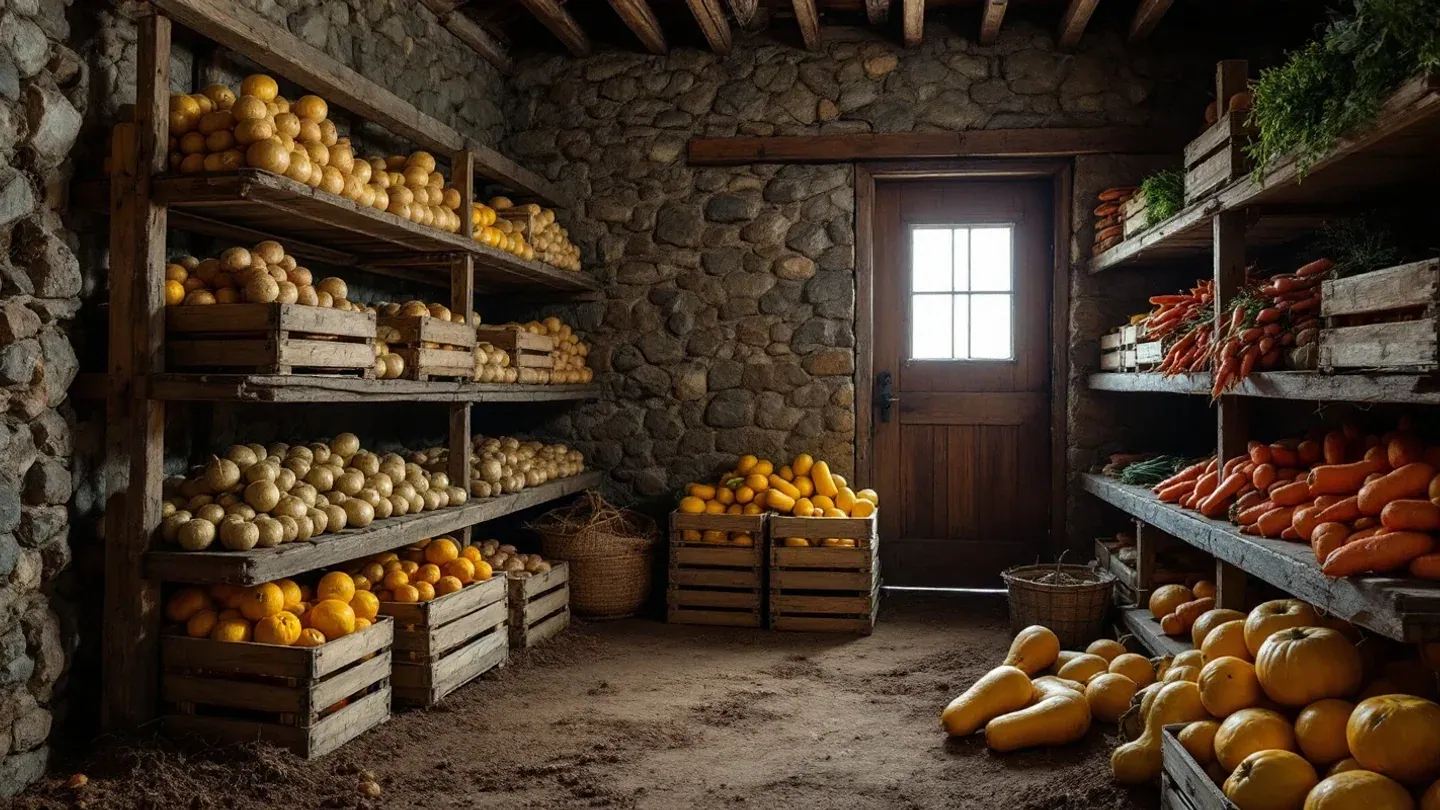
- Storage crops: potatoes, winter squash, onions, cabbage, apples. They harvest in October and keep until spring, which lines up with the school calendar better than anything else on the farm.
Price everything by the case and quote by the serving where you can. A director thinks in half-cup portions and knows the reimbursement to the cent. If you can say what one serving of your product costs, you have done the math for them. Our piece on turning a crop into a value-added product covers the equipment side. So does the one on on-farm cold storage.
Delivery and food safety paperwork
Every district has a vendor packet, and it is shorter than you fear. Expect the following.
A food safety audit
USDA calls its GAP and GHP audits voluntary, but many districts and nearly all distributors ask for one. They are fee-based audits run by the Agricultural Marketing Service that verify produce is grown, packed, handled and stored to minimize microbial risks; you request one with forms SC-237A and SC-651 through your regional audit office, and the service includes a Harmonized GAP audit and a GroupGAP option for groups of growers. We walk through the process in Getting Wholesale Ready.
FSMA status
The FDA's Produce Safety Rule does not cover farms averaging $25,000 or less in produce sales over three years, and farms under $500,000 in food sales that sell mostly to qualified end users can claim a qualified exemption with labeling and records. Know which category you are in and be able to say so; a director's own food safety plan will ask. Our guide to a wash and pack shed that meets FSMA goes deeper.
Liability insurance
Districts set their own minimums and will ask for a certificate naming the district. Talk to your agent before the first meeting; we covered the policies a farm carries in What Types of Insurance Should a Farmer Have?. Our service providers directory is a starting point for finding help.
Vendor forms and invoices
A W-9, a vendor application, and invoices that match the purchase order line by line. Put the product, the pack size, the count and the harvest date on every case. Districts keep records for audits, and your paperwork becomes part of theirs.
Delivery
Cold chain from your cooler to their walk-in, a delivery window the kitchen can staff, and a back-up plan for the day your truck breaks down. A district that has been let down once by a local farm tells every other district in the county. Reliability is the whole brand; it is why being consistent is one of the beliefs we work by.
Realistic volumes
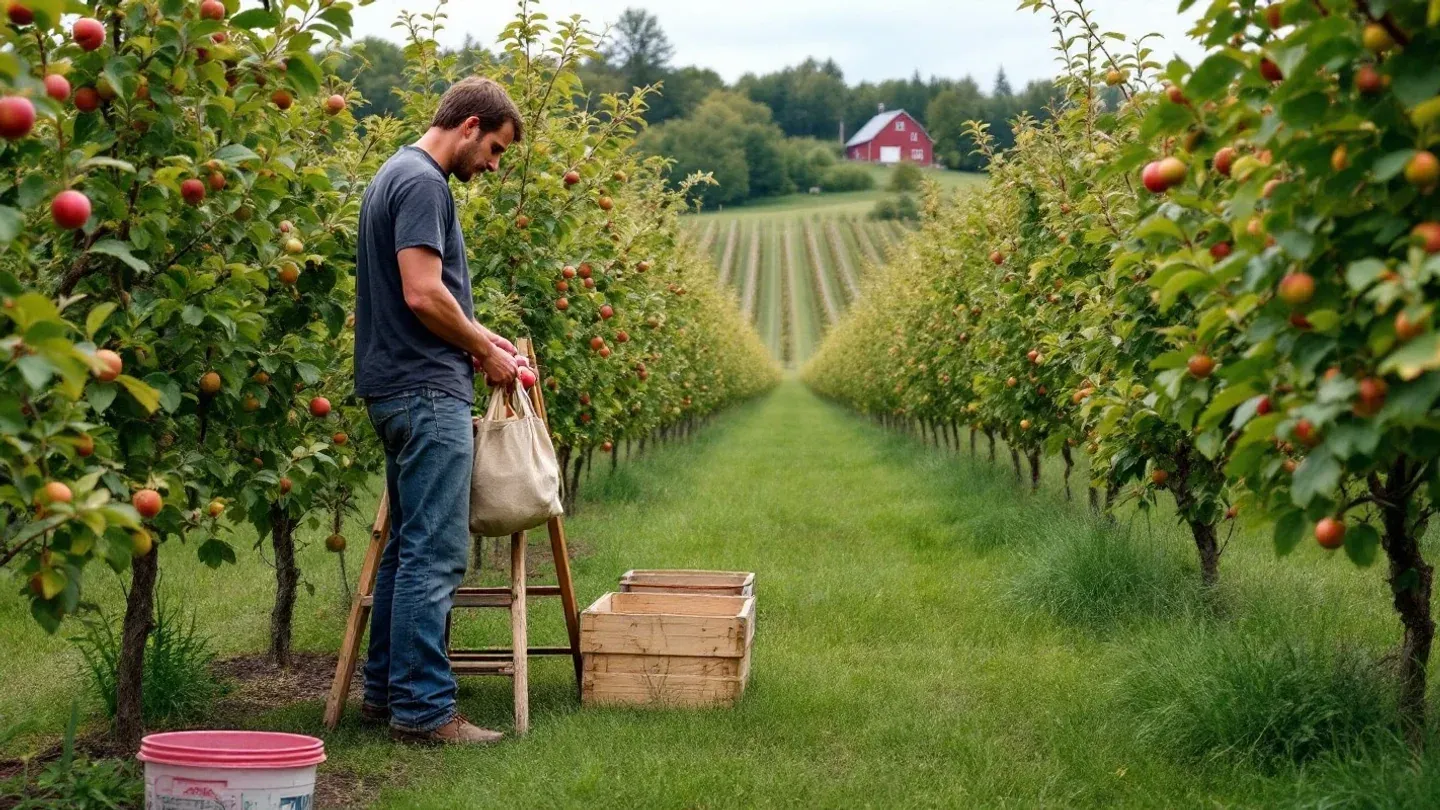
Here is the arithmetic that keeps a first contract sane. The meal pattern sets a half cup of fruit per lunch for grades K through 8 and a full cup for high school. A single elementary school serving 300 lunches a day uses 150 cups of fruit, a bit over nine gallons, if your product is the only fruit on the line that day. A district of ten such schools using your apples one day a week needs 3,000 half-cup servings, or 1,500 cups, in a week, not in a day.
So the realistic first order is one product, one day a week, in one or a few schools, for one season. That is often a few cases per school per week, and it sits comfortably below the micro-purchase line. It is also a size you can deliver without hiring anyone. The director gets a story for the newsletter, you get a reference, and both of you learn the logistics before anything scales. Season two is when you talk about every Wednesday across the district, and season three is when you and two neighbors answer the formal bid together, which is the cooperative path.
Timing cuts both ways. The school year misses July and most of August, which is peak harvest in much of the country. A farm that plans for schools plants for September through November and for storage, and freezes what it cannot sell fresh. A farm built around a farmers market stall will find the school calendar inverted from its summer habits.
There is also new money on the district side. USDA's Local Food for Schools Cooperative Agreement Program gives states funds to buy domestic local foods for schools, with the stated aim of a fairer, more competitive and more resilient local food chain. Ask your state agency whether it holds an agreement and how producers get on its list.
The grant that funds the other side
The district's farm to school work is often paid for by USDA's Farm to School Grant Program. The fiscal 2023 round was posted on grants.gov on October 6, 2022 and closed January 6, 2023, with about $12 million available, projects limited to $100,000 each with larger multi-state awards possible, and an eligibility list that includes schools, state and local agencies, tribal organizations, nonprofits and, notably, agricultural producers or groups of producers. As of this writing the fiscal 2024 request for applications has not been posted, and the last two rounds opened in October, so watch grants.gov this month if a district you work with wants help with equipment, training or a planning project. The same page lists the priorities USDA scores highest, and local food on the menu is the first of them.
A practical close
If you want a purchase order from a school district by next fall, here is the order of work this winter.
- Find the school nutrition director's name and ask for twenty minutes in January or February. Bring a sample and a one-page product sheet with pack size, price per case and price per serving.
- Ask for the district's written procurement procedures, its micro-purchase threshold and its bid calendar. Ask whether it uses the geographic preference and what local means to it.
- Offer one product, in one serving-ready form, for one day a week, in one season. Say what you cannot do as plainly as what you can.
- Assemble the packet before you are asked: insurance certificate, FSMA status, any GAP audit, W-9, a sample invoice, a traceability label.
- Deliver on time, in cold, every time. Then ask for the second season, and put the numbers into your business plan so the channel is priced from the start.
The farms that succeed here are rarely the biggest. They are the ones who treat a cafeteria manager as a colleague, who show up for the taste test, and who think of the school as part of the community the farm feeds. It is slow money, but it is dependable money, and it puts your name in front of several hundred families every week. That is as local as a market gets, and it is one of the best ways we know to be involved where you farm.