
A buyer that can change a farm's year rarely wants what one farm can supply. The produce manager of a regional grocery chain, the food service director of a school district, the purchasing office of a hospital: each of them wants the same case of the same product, graded and packed the same way, on the same day every week, from May to October and often beyond. One farm with twelve acres cannot promise that. Six farms with twelve acres each can, if they are organized to sell as one. That is what a producer cooperative is for.
The timing of this piece is deliberate. The United Nations General Assembly declared 2025 the International Year of Cooperatives under the theme "Cooperatives Build a Better World", October has been Co-op Month in the United States since a federal proclamation in 1964, and today, September 15, is the deadline for USDA's fiscal 2025 round of Rural Cooperative Development Grants, the program that pays for the centers that help groups like yours get organized. More on that below.
What a producer cooperative is, and what it is not
A cooperative is a business owned and controlled by the people who use it. Cornell's Cooperative Enterprise Program describes it as owned and democratically controlled by the member-owners who use its services, with benefits in proportion to use. A member holding at least one share has one vote at member meetings, however much produce or money that member brings, and the member's risk is limited to the money put in. Profits come back in proportion to the business each member did with the co-op, which is what "patronage" means.
Penn State Extension adds the part that trips people up. A cooperative prices at about cost and passes the benefit to members, so the return on invested capital is deliberately limited, yet successful cooperatives must be well-run businesses that resemble ordinary for-profit firms in many ways. A co-op is a firm with a different owner, not a club.
Farmer cooperatives are old and common here. The National Council of Farmer Cooperatives counts more than 1,600 local farmer cooperatives under its regional and national members, most of them far larger than anything a group of vegetable growers will build. The structure scales down fine.
The legal foundation for farmers selling together is the Capper-Volstead Act, a 1922 law that lets producers of agricultural products act together, through an association, in processing, preparing for market, handling and marketing their products, and make the contracts needed to do it, which is why competing farmers can lawfully sell through one association. Three conditions come with it. The association must be run for the mutual benefit of its members as producers. It must either allow no member more than one vote regardless of capital, or cap dividends on stock at 8 percent a year. And it may not handle more product from nonmembers than from members. Write those three into the bylaws and keep them there; they are what makes the co-op a co-op in the eyes of the law.
What a co-op can do that a food hub cannot
Food hubs solve the same aggregation problem, and we have written about them in food hubs explained for small farms. USDA's working definition is wide: a regional food hub is a business or organization that actively manages the aggregation, distribution and marketing of source-identified food products primarily from local and regional producers to meet wholesale, retail and institutional demand. The Agricultural Marketing Service is explicit that a hub is defined by what it does, not by its legal form, and lists four forms in practice: nonprofit, privately held, cooperative and publicly held.
So the question is not co-op or hub. It is who owns the hub. If a nonprofit or an LLC owns it, you are a supplier, chosen and dropped at the owner's discretion, and the margin between farm gate and buyer belongs to someone else. If the producers own it, the margin is theirs, the manager answers to a board they elect, and the year-end surplus comes back by patronage. USDA's guide names the trade-off honestly: nonprofit hubs find grants and donations easier and loans harder, while producer cooperatives can tap member equity and the business services of cooperative extension, but find fewer grant and loan programs open to them. In the same guide's interviews with twenty established hubs, viability did not track legal structure but did track age: the viable hubs had operated a median of 9.5 years, the not-yet-viable ones 5.
One more thing a co-op can do: it can bind supply. A nonprofit hub asks its farmers for product. A co-op writes a marketing agreement into membership, so that each member commits a stated volume or share of a crop, and the buyer's forty cases are promised by people who have promised them to each other. The case for keeping that ownership with the growers is the one we made in localism in agriculture and in our piece on the importance of decentralization for farmers. Where the cooperative sits beside the sole proprietorship and the LLC is covered in farm business structures.
How a producer co-op is formed
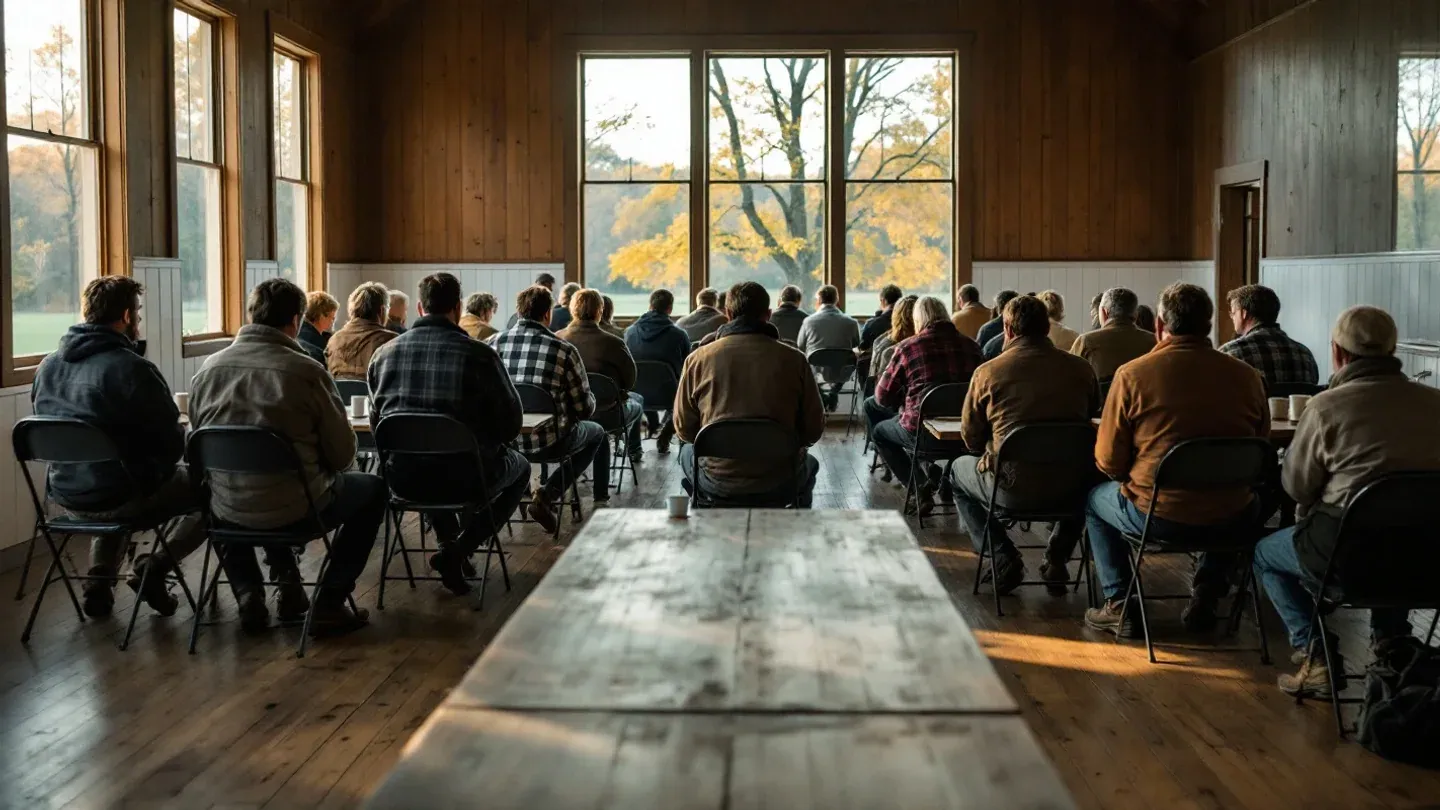
Nobody should form a cooperative for its own sake, and the development centers say so first. The Nebraska Cooperative Development Center lays out seventeen steps, worth reading in full. Condensed: name the economic need; elect a steering committee; survey members on how much they would actually use the co-op; run a cost analysis and vote by secret ballot on whether to continue; commission a feasibility study and write the business plan; incorporate and adopt bylaws; elect a board; run the membership drive; raise capital; hire the manager; open.
The University of Wisconsin Center for Cooperatives compresses the same road into six stages and warns that it takes six months to two years, sometimes longer. Two of its rules matter most. The feasibility study should be done by someone who knows the sector and has no stake in the result, because the steering committee is the last group able to judge its own idea. And the business plan must carry five years of financial projections, because the lender will read it before the members do. Our older piece on farm and agriculture business plans is the template; a co-op plan simply has more owners.
Incorporate under your state's cooperative statute, not as a generic corporation. Penn State notes that a cooperative must organize under state law to get its tax status, and Wisconsin's center advises having the draft bylaws reviewed by a lawyer who knows cooperatives before the first membership meeting adopts them. The bylaws are where the Capper-Volstead conditions, the voting rule, the equity plan, the marketing agreement and the rule for leaving all live. Get them right once.
Governance that holds
The members elect a board. The board, in Penn State's summary, hires the manager, sets policy, approves the budget and decides the patronage refund. That is the entire job, and the two most common ways to wreck a young co-op both come from forgetting it: a board that runs the warehouse, and a manager who runs the board.
Wisconsin's list of success factors for new co-ops reads like a governance checklist: a clearly defined mission; members kept informed; orderly meetings with agendas; competent hired management; clear roles for board and manager; regular financial reports; written policies on confidentiality and conflicts of interest; alliances with other cooperatives. Every one is a document or a habit that costs nothing but discipline.
Conflicts of interest deserve a word, because in a producer co-op every director is also a supplier. The director whose cabbage is graded leniently, or whose late delivery is forgiven, is the end of the co-op's credibility with the other members. Write the policy, read it aloud once a year, and apply it to the chair first. That is managing holistically in a shared business. It is also why we ask members to be involved rather than merely to deliver.
Patronage and capital: how the money works
A patronage dividend has a precise meaning in federal tax law. Under Subchapter T of the Internal Revenue Code it is an amount paid to a patron on the basis of the quantity or value of business done with the cooperative, under a pre-existing obligation, out of the co-op's net earnings from business with its patrons. Not a dividend on shares; a share of the surplus in proportion to use.
The cooperative can leave those payments out of its own taxable income if it pays them within the payment period, which ends on the fifteenth day of the ninth month after the close of the year. It may pay in cash, or partly in written notices of allocation that keep the money in the business as member equity. For a notice to count as "qualified", at least 20 percent of the patronage dividend must be paid in money or by qualified check. Each member who receives $10 or more in a year gets a Form 1099-PATR. The difference between qualified and nonqualified allocations changes who pays tax and when; have a cooperative accountant explain it before the first year closes.
Those retained allocations are how a co-op builds equity, and equity is the cooperative's oldest problem. Kansas State's Arthur Capper Cooperative Center is blunt: cooperatives have no access to public equity markets, so they build equity mostly by retaining profits from member business, either allocated to the member who generated them, who keeps a claim on them, or held as retained earnings on which the cooperative itself has the claim, money a member sees only if the cooperative is sold. More allocated equity means more visible ownership and less cushion against a bad year; more retained earnings means the reverse. Decide the split on purpose and write a revolving plan that says when allocated equity is paid back, so a retiring member knows what to expect.
Up front, members pay in. Wisconsin's center reports that members typically supply 30 to 50 percent of startup equity and the co-op borrows the rest, and that lenders read member equity as the measure of commitment. There is also the per-unit retain, a fixed amount per case or per hundredweight set by agreement without reference to net earnings, which is a clean way for a marketing co-op to build capital in step with volume.
Patronage is also a marketing tool. A Kansas State summary of a survey of an Oklahoma Farm Credit association's member-borrowers found that they clearly preferred cash patronage to the same benefit buried in a lower interest rate, and the lesson transfers: a visible check in March does more for loyalty than the same money retained quietly. Pay what the balance sheet allows in cash, and say what the rest is for.
Reaching the bigger buyer
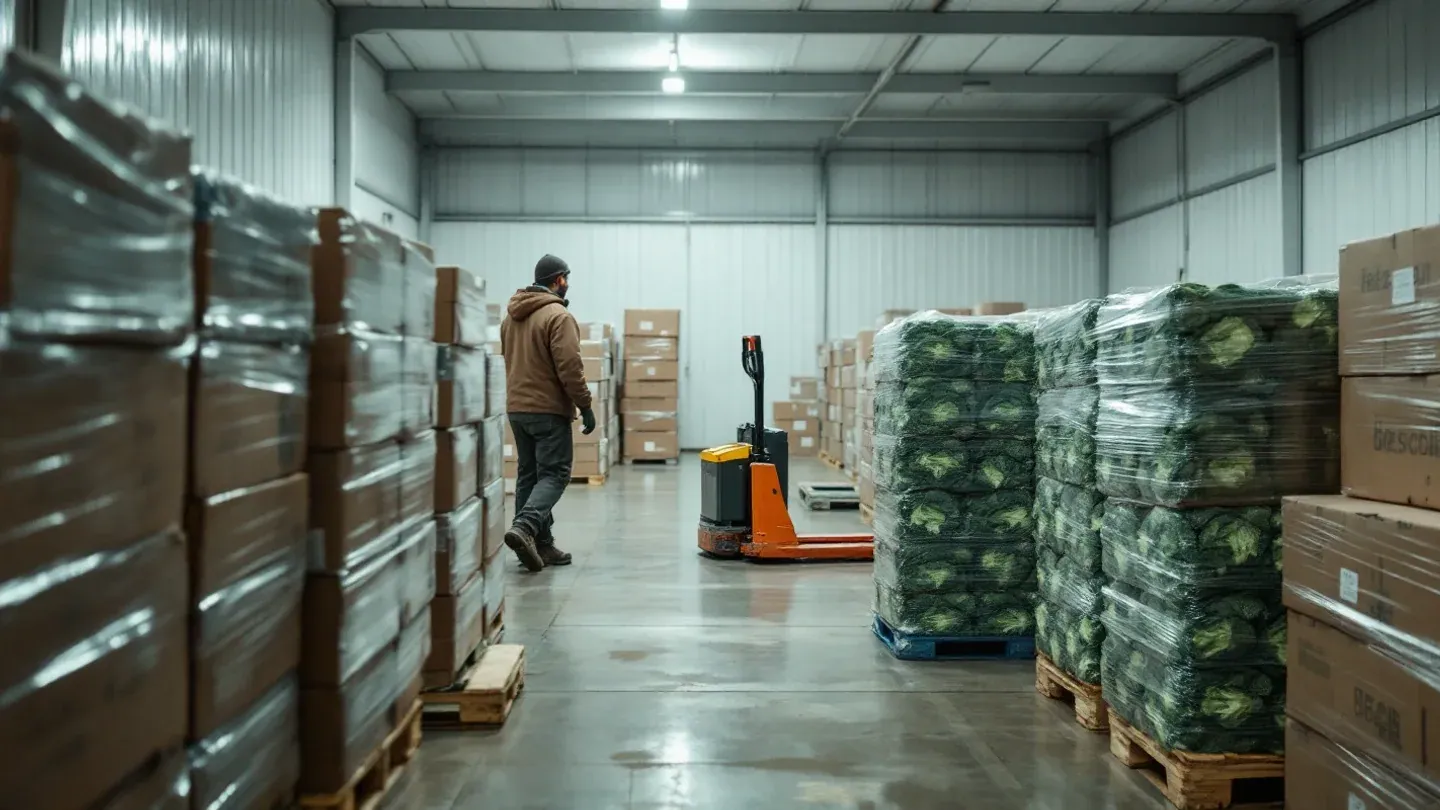
Pooling only works if the pooled product is uniform. A buyer who takes forty cases from six farms is not buying six farms; it is buying one specification. That means a shared grade standard, a shared pack, one food safety story the buyer can audit, and one cold chain from field to dock. Our guide to GAP certification covers the audit. Our guide to on-farm cold storage and post-harvest handling covers the cooler. Those are where most new co-ops spend their first capital, because the cooler and the audit are precisely the things no member could afford alone. For who the buyers are and what they ask, see selling to your local school district. For restaurants, see what chefs actually want.
Price the pool on real numbers. A co-op that pays members the market price and then discovers that grading, packing and delivery cost more than the margin has simply moved the loss from six farms into one. Know your cost of production before you set a price applies to the co-op as a business, with its own cost sheet, before it applies to any member. This is thinking long-term in practice: a co-op that underprices to win its first contract has to raise prices on its best customer in year two.
The failure modes to design against
Development centers have watched a lot of co-ops die, and their lists agree. Penn State names three causes, weak member commitment, an unrealistic business plan and too little startup funding, and adds the sentence worth framing: a cooperative cannot turn a bad idea into a good one. Nebraska's ten pitfalls add a mission never defined, organizers who skipped experienced advisers, leaders who overestimate sales and underestimate costs, no hired manager because the members are busy on their own farms, and poor communication that breeds "apathy or suspicion". Cornell's startup guide flags, at the commitment stage, unrealistic member expectations, the inability to discipline members who fall short, insufficient member equity and a poorly designed governance structure, and the simplest one of all: lack of member business volume.
That last one is the producer co-op's particular disease. The member who sells to the buyer directly in the good week, when the spot price is high, and delivers to the co-op only in the glut, takes the benefit of the pool without the cost. Design against it: a marketing agreement with a stated volume commitment, a penalty clause for selling around the co-op, and a board willing to enforce it on a friend. Design against the others the same way: one mission on one page, a feasibility study by an outsider, member equity paid before the first truck is leased, a paid manager hired by the board, monthly financials to every member, a conflict-of-interest policy with teeth.
Help and money
You do not have to do this without advisers. The Rural Cooperative Development Grant program funds nonprofit institutions, including universities, to establish and operate centers for rural cooperative development that give groups like yours technical assistance; the centers put up a 25 percent match.
The program's own year has been unusual. The fiscal 2024 round came from Rural Development's Rural Business-Cooperative Service with $5.8 million available, a $200,000 cap and a June 3 deadline. The fiscal 2025 round was posted on grants.gov on September 4 by a different agency, the National Institute of Food and Agriculture, with about $5.8 million, an award cap of $1,000,000 and applications due at 5:00 p.m. Eastern today, September 15, eleven days after posting. Farmers cannot apply; the centers do. A farmer group's job is to find its regional center and ask. Our organizations directory is one place to start. The service providers and manufacturers directory is another. The authorization, like the rest of the 2018 farm bill, runs on the American Relief Act, 2025 extension through September 30, two weeks from now; see what happens when the farm bill lapses.
Money for the co-op itself is a different program. A "Farmer or Rancher Cooperative" is one of the four eligible applicant types for Value-Added Producer Grants, which fund planning and working capital for farm products that are changed in physical state, segregated, or aggregated and marketed as locally produced food. We sort the federal programs by whether they repay the effort in USDA grants worth a small farm's time.
A practical close
If a buyer has already asked for more than you can grow, do these in order:
- Write the economic need in one sentence and show it to five other growers. If three of them nod, hold the exploratory meeting and elect a steering committee.
- Survey the prospective members on volume, by crop and by week, and compare the total with what the buyer wants. If it does not reach, stop or recruit.
- Commission a feasibility study from someone with no stake in the answer, and budget for it.
- Draft bylaws under your state's cooperative statute with the Capper-Volstead conditions, a marketing agreement with a volume commitment, the equity plan and a conflict-of-interest policy, and have a cooperative lawyer read them.
- Run the membership drive with a real equity payment, and go to a lender only after the members have paid in.
- Elect the board, hire the manager, and let the board stop managing.
- Set the patronage policy, including the cash share, before the first season closes, and have an accountant walk the members through Form 1099-PATR.
A producer cooperative is one of the oldest forms of acting local in American farming, and it works for the same reason a grazing rotation works: the discipline is written down and followed when it is inconvenient. Done that way, six farms become a supplier a big buyer can plan around. Done as a handshake, they become six farms again by the second August.