
Friday was March 1, 2024, the day the IRS set for farmers who skipped estimated tax payments to file their 2023 return and pay everything they owe. If you made that date, good. If you paid a single estimate by January 16 instead, you have until April 15 like everyone else. Either way, this is a fine week to understand the form in front of you, because the small choices on it, how you write off a used tractor, whether you kept a mileage log, whether your farm looks like a business to the IRS, are worth real money every year.
This article walks through the federal side for a sole proprietor or a married couple filing Schedule F. It is not tax advice, and it does not cover state income tax, which varies. The reference for everything below is the IRS Farmer's Tax Guide, Publication 225, issued in October 2023 for 2023 returns. If you read one government document this year, make it that one.
What counts as a farm to the IRS
Publication 225 puts it simply: you are in the business of farming if you cultivate, operate or manage a farm for profit, as owner or tenant. A farm includes livestock, dairy, poultry, fish, fruit and truck farms, along with plantations, ranches, ranges, orchards and groves. Size does not enter into it. A five-acre market garden that sells at the Saturday market and a 2,000-acre grain operation both file Schedule F.
What matters is the profit motive and the activity. The form itself lists what does not belong on it. If your main income comes from providing agricultural services such as soil preparation, veterinary work, farm labor or horticultural services, that is a Schedule C business. So is breeding, raising or caring for dogs, cats and other pets, and so is managing someone else's farm for a fee. Sales of animals you held for draft, breeding, sport or dairy purposes go on Form 4797, not Schedule F, because those animals are business assets rather than products.
Two more boundaries trip up new farmers. A landowner who rents ground for a share of the crop or livestock but does not materially participate reports that income on Form 4835, not Schedule F. And a farm that is really a hobby does not get Schedule F at all, which is the subject of its own section below.
Schedule F, line by line
The 2023 form opens with a few questions. Line A asks for your principal crop or activity, line B for a six-digit activity code (vegetable and melon farming is 111210, beef cattle ranching is 112111), and line C whether you use the cash or accrual method. Most small farms use cash: income counts when you receive it, expenses when you pay them. Line E asks whether you materially participated. Answer honestly, because a no combined with a loss brings in the passive activity limits. Lines F and G ask whether you made payments that require a Form 1099 and whether you filed them. Under the Schedule F instructions, that generally means at least $600 in a year to someone for rent, services or other income payments. The custom baler, the fence contractor and the landlord you pay cash rent are the usual cases.
Part I is income. Line 1 is for livestock and other items you bought for resale, with the purchase cost subtracted on line 1b. Line 2 is the big one for most farms: sales of livestock, produce, grain and other products you raised. Line 3 covers cooperative distributions from a Form 1099-PATR. Line 4 is agricultural program payments, which is where EQIP, CSP and other USDA money lands; USDA reports those payments on a Form 1099-G and, as farmers.gov reminds producers, they are taxable farm income. Line 5 handles Commodity Credit Corporation loans, line 6 crop insurance proceeds and federal disaster payments (with an election to defer them a year), line 7 custom hire income if you did machine work for a neighbor, and line 8 other income including fuel tax credits. Line 9 adds it up.
Part II is expenses, lines 10 through 32: car and truck, chemicals, conservation expenses, custom hire, depreciation and Section 179 (line 14), employee benefits, feed, fertilizer and lime, freight, fuel, insurance, interest (mortgage on 21a, other on 21b), labor hired (line 22, which excludes anything you pay yourself), pension plans, rent or lease (machinery on 24a, land and animals on 24b), repairs, seeds and plants, storage, supplies, taxes, utilities, veterinary and breeding costs, and an other block with six write-in lines. Line 33 totals them. Line 34 is your net farm profit or loss, and it flows to Schedule 1 of your Form 1040 and to Schedule SE.
That last step is the one that surprises first-year farmers. Net farm earnings of $400 or more owe self-employment tax at 15.3 percent, 12.4 percent for Social Security on up to $160,200 of net earnings for 2023 and 2.9 percent for Medicare with no cap, before any income tax. You deduct the employer-equivalent half in figuring adjusted gross income, which softens it, but a farm that nets $20,000 should expect close to $2,800 of SE tax on top of whatever income tax applies. Plan for it; it is the price of building your own Social Security record.
One more line deserves a note. Car and truck expenses on line 10 can be actual costs or the standard mileage rate, which Publication 225 sets at 65.5 cents per business mile for 2023. Either way you need a log, dated, with the purpose of each trip.
Depreciation and expensing: the choices on line 14
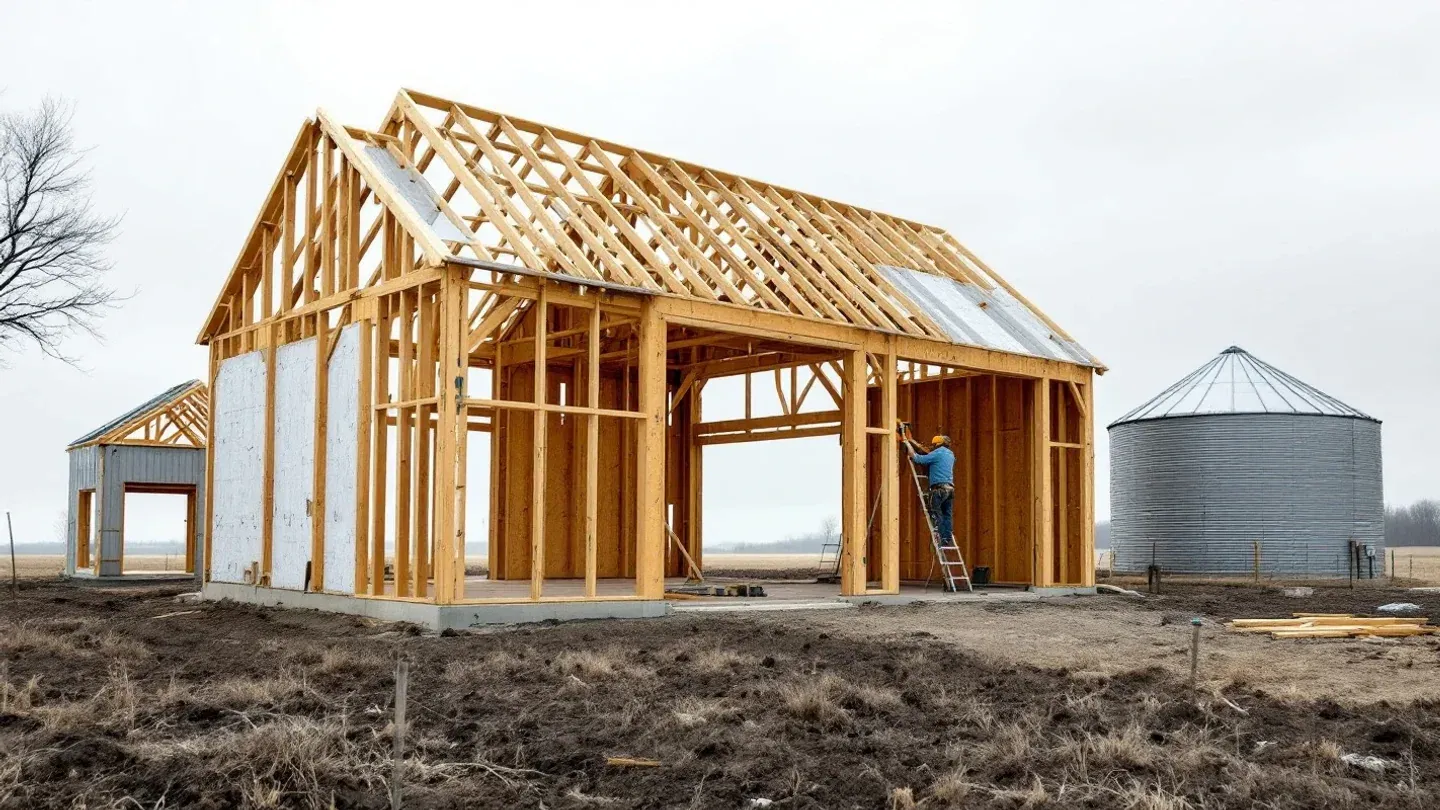
Line 14 is where the real decisions sit, because the tax code gives you three ways to recover the cost of a tractor, a walk-in cooler or a fence, and the choice changes this year's bill and the next several.
The default is MACRS depreciation over a recovery period from Table 7-1 of Publication 225. New farm machinery and equipment whose first use starts with you is five-year property. Used machinery is seven-year property, as are agricultural fences and grain bins. Dairy and breeding cattle are five-year, breeding sheep and goats five, breeding hogs three. Single-purpose livestock or horticultural structures and fruit or nut trees and vines are ten-year. Drainage facilities and water wells are fifteen-year, and general-purpose farm buildings, the pole barn or the machine shed, are twenty-year property. Pickups and other trucks are five-year. For farm property in the three- to ten-year classes placed in service after 2017, the 200 percent declining balance method applies, which front-loads the deduction; the fifteen- and twenty-year classes stay at 150 percent, and trees and vines use straight line. Publication 946 has the full tables.
The second option is the Section 179 election, which lets you deduct the entire cost of qualifying equipment in the year you place it in service. For tax years beginning in 2023, Revenue Procedure 2022-38 sets the limit at $1,160,000, reduced dollar for dollar once you place more than $2,890,000 of such property in service, with a $28,900 cap on sport utility vehicles. No small farm will come near the ceiling. The practical limit is different: the deduction cannot exceed your business income for the year, so a loss-making start-up gains little from it, and the part you cannot use waits for a later year.
The third is the special depreciation allowance, usually called bonus depreciation, which applies by default to new and used property with a recovery period of twenty years or less unless you elect out. It was 100 percent through 2022; for property placed in service in 2023 it is 80 percent, and Publication 225 already notes that it falls to 60 percent for 2024. That phase-down is a reason to think carefully, not a reason to buy equipment you do not need.
Two smaller tools round this out. The de minimis safe harbor lets a farm without an applicable financial statement (for a small farm, that means no audited statements) expense items costing up to $2,500 per invoice or item, provided you attach the election statement to your return each year. A drill, a set of harvest totes, an $1,800 irrigation pump: these never need to touch a depreciation schedule. And Rural Tax Education, hosted by Utah State University Extension, offers a plain introduction to depreciation that makes a point worth repeating: be cautious about accelerating depreciation on financed equipment. Taking the whole deduction in year one while the loan payments run five more years can leave a cash flow problem in those later years, because the deduction has been used up and the payments have not. Total depreciation does not change between methods, only its timing. That is a think long term decision, not a March decision.
The hobby loss question
Every farmer who also holds a town job eventually meets Section 183 of the tax code. It says that an activity not engaged in for profit cannot deduct its losses against other income. The consequence is harsher than older guides suggest: Publication 225 explains that hobby income is still reported on Schedule 1, while the expenses can no longer be deducted at all, even by a taxpayer who itemizes.
The statute gives a safe harbor. Under 26 U.S.C. 183(d), an activity that shows a profit in three or more of the last five tax years is presumed to be for profit; for breeding, training, showing or racing horses the test is two of seven. Fail the test and nothing is automatically decided. The IRS then weighs the nine factors in Treasury Regulation 1.183-2(b): whether you run the activity in a businesslike manner, your expertise and that of your advisors, the time and effort you put in, expected appreciation of assets such as land, your success in other ventures, the history of income and losses, the amount of any profits, your financial status, and the elements of personal pleasure. No single factor decides.
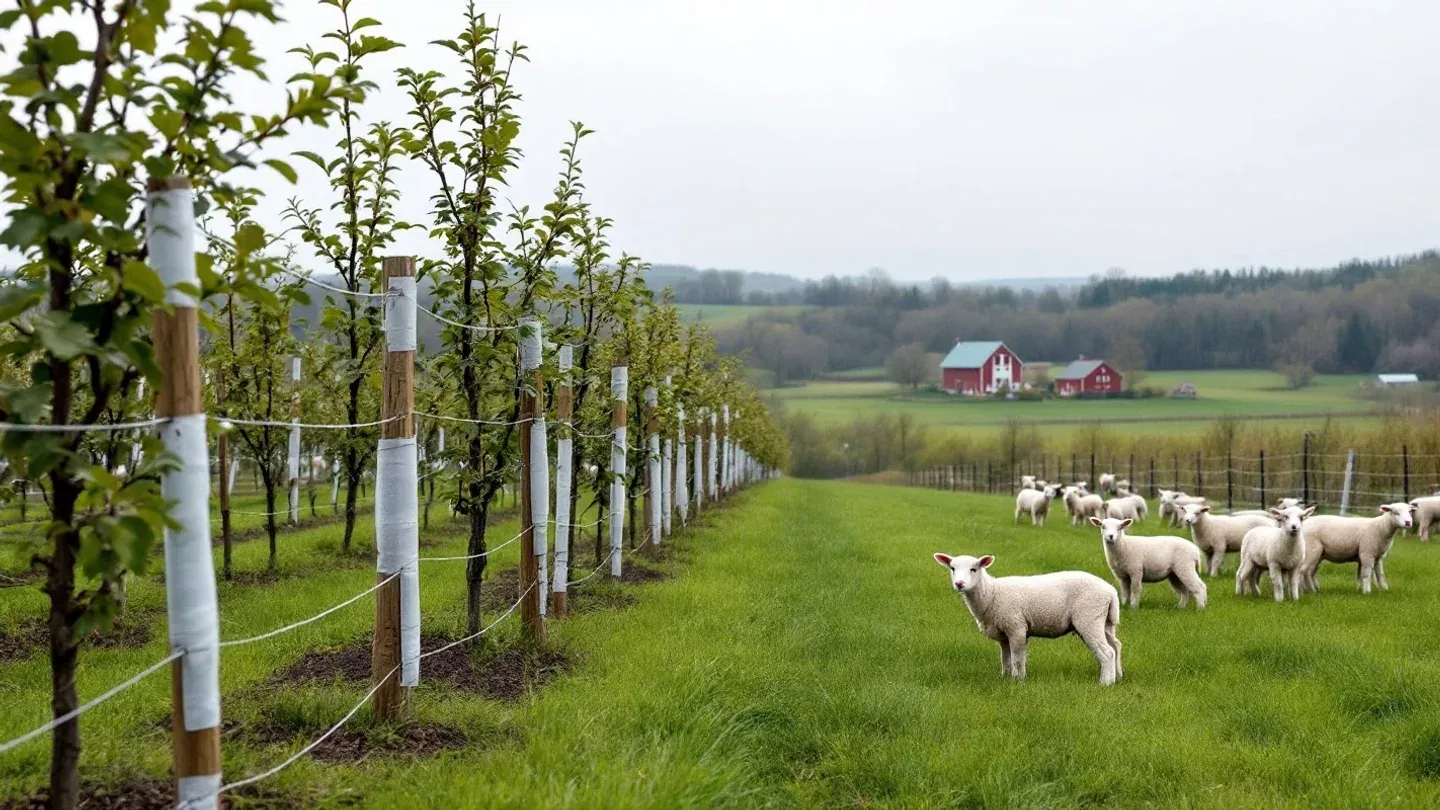
For a regenerative farm the honest problem is that the first years often lose money by design: soil takes time to heal, and perennial plantings or a breeding herd do not pay in year one. The factors allow for that. Start-up losses, and losses from drought or disease, are not by themselves a sign that you lack a profit motive, provided the record shows a plan to reach profit. A Rural Tax Education fact sheet by an Oklahoma State University extension specialist on farm losses versus hobby losses lists the proof that holds up: a written business plan, a separate bank account used only for the farm, records of hours worked and miles driven, notes on the advice you sought and the changes you made in response, and Form 5213 if you want to postpone the IRS determination while a new farm finds its feet. We covered the mindset in turning a hobby farm into a business. We covered the document itself in farm and agriculture business plans. That same plan is what a lender asks for first, as our guide to FSA microloans explains.
Off-farm income is not a mark against you by itself. USDA's Economic Research Service notes that the great majority of US farms are small family farms and that their households earn most of their income off the farm. What draws attention is a pattern of large losses sheltering a large salary, year after year, with no change in method.
Four more rules worth knowing
The farmer's estimated tax rule. Publication 225 defines a qualified farmer as someone with at least two-thirds of gross income from farming in either 2022 or 2023. Qualified farmers can skip quarterly estimates entirely and instead file and pay by March 1, or make one estimated payment by mid-January (January 16 this year) and file by April 15. IRS Topic 416 sets out the two options. The catch, as the Rural Tax Education filing dates fact sheet points out, is that there is no extension for the March 1 route, while brokerage statements need not be mailed until February 15 and partnership K-1s may not arrive before the March 15 partnership deadline. Many farms find the January payment the calmer path.
Income averaging. Schedule J lets you spread all or part of this year's farm income across the tax rates of the three prior years. It matters in a year when a herd sale or a bumper crop pushes you into a higher bracket.
The qualified business income deduction. The Schedule F instructions remind sole proprietors that they may deduct up to 20 percent of qualified business income, subject to limits that depend on taxable income. Ask your preparer whether it applies to you; for many small farms it does.
The limit on business losses. For 2023 a noncorporate taxpayer's total business losses are capped at $289,000 above business income, or $578,000 on a joint return, with the excess carried forward as a net operating loss. Small farms rarely reach it, but a bad flood year on a mid-sized operation can.
The records that make it easy
Chapter 1 of Publication 225 says that the law, with few exceptions, does not require any particular system of records, only one that clearly shows your income and expenses. It then lists why records matter beyond the return: to monitor which enterprises make money, to prepare the financial statements a bank will ask for, to separate farm receipts from household receipts, and to support every item if the IRS asks. That is as good a description of managing holistically as any.
The habits that make Schedule F a one-evening job rather than a lost weekend:
- One bank account and one card for the farm, nothing personal through it. This is also the first thing the hobby loss factors look at.
- A weekly fifteen minutes to code the week's receipts and deposits. Consistency beats a heroic January.
- A mileage log for the truck, dated, with the purpose of each trip.
- An asset list with the columns Publication 225 names: when and how you acquired each item, new or used, full cost, improvements, Section 179 taken, depreciation taken, how it is used, and when and how you dispose of it. This list is what your preparer needs to get line 14 right, and what you need when you sell the tractor.
- Copies of every 1099 you receive and every 1099 you issue, plus W-2s and K-1s.
- Written notes on big decisions: why you changed the grazing plan, what the consultant said, which markets you dropped. These are the business-plan evidence the regulations ask for.
How long to keep it all: the IRS retention rules say three years from filing in the ordinary case, six years if you underreported income by more than a quarter, four years for employment tax records, and for property, until the limitations period runs out for the year you dispose of it. In practice that means the folder for the barn you built in 2023 stays with you as long as the barn does.
Software helps, and our guide to choosing farm management software still applies; a spreadsheet with a column per Schedule F line is enough for many small farms. Keep it simple: the system you actually use beats the one you intend to set up.
Where to go from here
If 2023 is filed, spend an hour in March on 2024 and fold it into your winter planning calendar. Make the farm account and the receipt routine real. Write down which equipment you expect to buy this year and ask your preparer, before you buy, whether Section 179, 60 percent bonus or plain MACRS fits the loan terms and your expected income. If your farm has lost money for several years, read the nine factors with fresh eyes and put the business plan on paper. If you are a landlord or a crop-share farmer, check whether Form 4835 or Schedule F is the right home for that income. And if your farm has grown enough that liability or payroll are in the picture, our article on farm business structures looks at when an LLC or a cooperative makes sense.
Two places to find help. Rural Tax Education, administered by the National Farm Income Tax Extension Committee, the same committee the IRS thanks in the front of Publication 225, publishes plain-language tax information written for farmers and ranchers. And a preparer who already files Schedule F for other farms in your county is worth more than a cheaper one who does not; our service providers directory is a place to start looking. Our organizations directory is another. Good records make that conversation short, and a short conversation in March is the whole point.