
The election last Tuesday returned Donald Trump to the White House, and the farm press has spent the week asking what that means for everything USDA started over the past four years. One of the unfinished pieces is the carbon market program Congress ordered up in the Growing Climate Solutions Act. We get to where it stands below. The bigger question for a farm looking at a carbon offer does not change with the occupant of the White House: what do these contracts actually pay, and what do they ask for in return?
This is the plain version, drawn from USDA's own 2023 assessment of the market, Purdue's farmer surveys and the contract guides written by extension lawyers in Texas and Ohio.
What a carbon contract is
A carbon contract is a private agreement. A company, usually a broker or an aggregator, sometimes an ag retailer or an input maker, pays you to adopt practices that store carbon in the soil or cut emissions: no-till or strip-till, cover crops, longer rotations, tighter nitrogen management, planned grazing. The company bundles the carbon stored on your fields with hundreds of other farms, has the total modeled or measured and then verified under a registry protocol, and sells the resulting credits to corporations that want to offset their own emissions. One credit is one metric ton of carbon dioxide equivalent.
The Texas A&M AgriLife Extension guide Understanding and Evaluating Carbon Contracts makes the first point in its first paragraph: assume only the written terms will be enforced, and never rely on what the person selling the contract tells you.
The two ways contracts pay
Every offer pays in one of two ways, and the Texas A&M guide lays them out. A per-acre payment pays a flat amount for adopting the practice, whether or not the soil cooperates. A per-ton payment pays for carbon as modeled or measured and verified, sometimes at a price fixed in the contract, sometimes at a market price on a date the contract names.
Per-acre contracts are simpler and the money is predictable, but the amounts are small. Per-ton contracts can pay more on paper, and the paper is the problem: you are paid on what a model or a soil sample says your field stored, after the company's share, after any deductions the contract allows, and after a slice of the credits goes into the registry's buffer pool as insurance against reversals.
On a cropland farm the ton is smaller than people assume. USDA's assessment of agriculture and forestry in U.S. carbon markets, delivered to Congress in October 2023, reports that most cropland offset projects generate between 0.25 and 2 tons per acre, against 1 to 6 tons per acre for forest projects. The Texas A&M guide adds that agronomists put the likely sequestration in the Texas Panhandle and South Plains far below the one ton a year it takes to make a single credit. If your ground is dry and sandy, read a per-ton offer with that in mind.
What the offers have actually looked like
Purdue's Ag Economy Barometer has asked farmers about carbon contracts since 2021. In the January 2024 survey, 8 percent of respondents said they had discussed carbon capture contracts with a company; across the nine surveys from 2021 to 2023 that asked the question, the share ranged from 2.6 to 9 percent. Of the farmers in talks in January 2024, 61 percent had been offered less than $10 per metric ton, and 12 percent had been offered $30 or more.
Put those numbers together with the tons above. A Midwest field storing half a ton per acre at $10 a ton grosses $5 an acre before the company's cut. At $30 a ton and a full ton an acre, you are at $30 gross. USDA's report cites a survey of more than 800 Indiana corn and soybean growers in which producers who had not yet reduced tillage said they would need at least $39.40 per acre in revenue to adopt no-till. The same report, citing the World Bank, puts the average monthly global price of nature-based credits in 2022 at $5 to $16 a ton.
The participation data agree. USDA cites a Trust in Food survey in which 93 percent of crop and livestock managers knew about carbon markets and 3 percent took part. A 2024 study in Applied Economic Perspectives and Policy by Tong Wang and colleagues, a survey of Midwest farmers summarized by SDSU Extension, found that at $10 and $20 per credit only 3 and 4 percent of farmers were willing to change their practices, and that even at $40 to $70 half still would not enroll. Low pay is not a mystery here. It is the market.
The money is also slow. USDA's assessment notes that because most programs issue credits only after the practices have been independently verified, it is often 18 months to two years before producers are paid, and the farm carries the cost of the practice in the meantime. For cropland projects storing a ton an acre or less, verification can account for as much as half the development cost, which is a large part of why the farmer's share is small.
Additionality: the clause that excludes early adopters
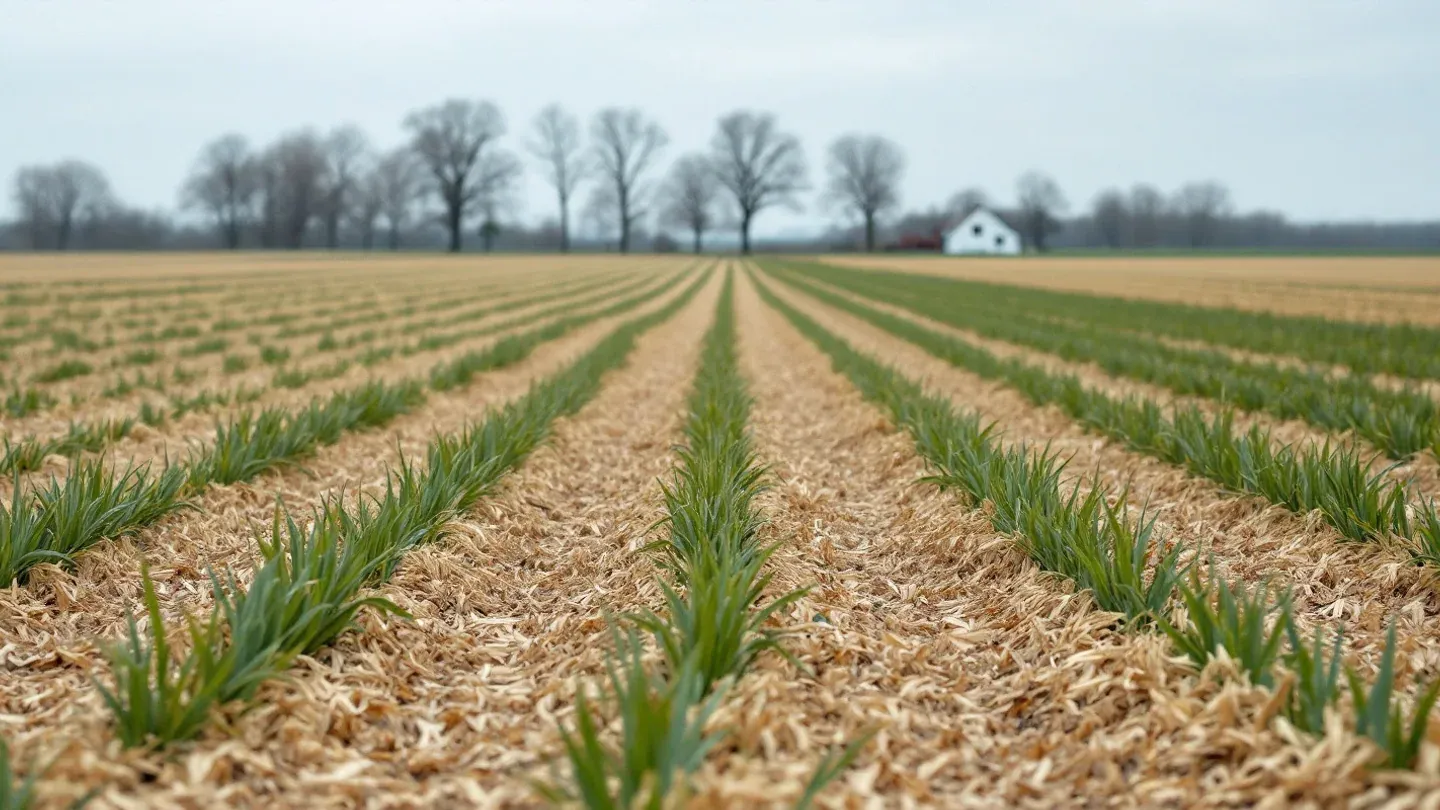
Additionality means the carbon would not have been stored without the payment. Ohio State's Farm Office explains that many agreements pay only for practices begun because of the agreement, and that some accept practices started inside a window, such as the past two years. USDA's assessment notes that Verra allows projects to credit practices up to three years back, and that the Climate Action Reserve's Soil Enrichment Protocol runs a county-level common-practice test to decide which practices still count as new.
For a farm that has run no-till under cover crops for a decade, this is the clause that matters most. The Texas A&M guide's advice is that a producer who has already adopted the practices needs a contract that pays for them or offers a look-back period, and should not sign one with a strict additionality requirement. This is the frustration behind the words "still waiting" that you hear from regenerative farms about carbon money: the market was built to buy change, not stewardship. If you reduced tillage years ago because it was right for the soil, the credit market mostly has nothing for you yet.
Permanence: how long you are tied in
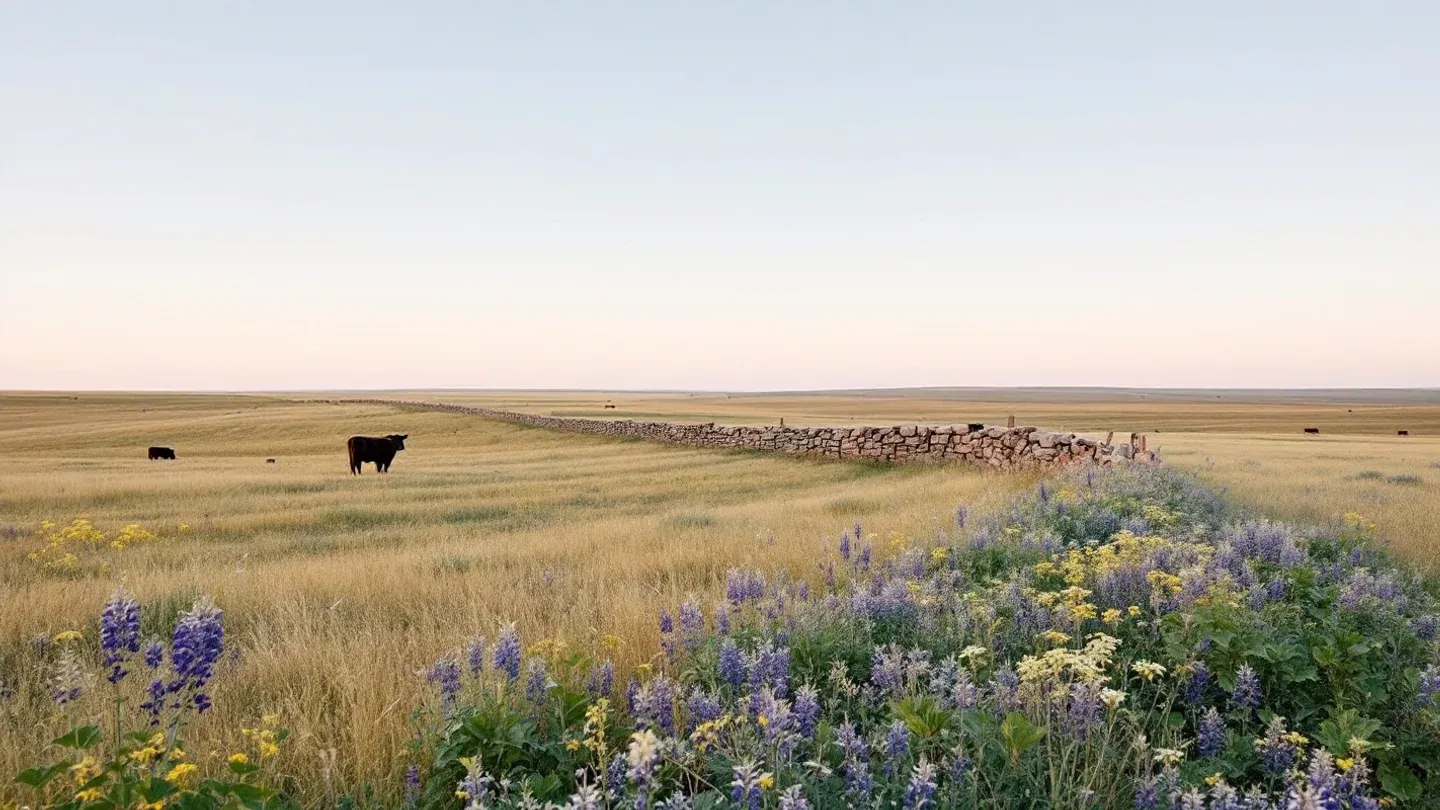
Carbon in soil is only worth paying for if it stays there. Registries handle that risk with permanence terms, buffer pools and reversal clauses, and USDA's 2023 assessment showed how far apart the terms were: the Climate Action Reserve's grassland protocol required a 100-year conservation easement after credits issued, ACR's improved forest management protocol a 40-year minimum project term, Verra assessed potential carbon loss over 100 years, and Nori's cropland method 10 years.
Your contract will probably not say 100 years, but Ohio State notes that it may require you to keep the practices going for five or ten years after the agreement ends, and the Texas A&M guide flags penalties for early termination, for carbon that is not realized or is released during the term, and for a practice that weather keeps you from carrying out. Ask what happens to a rented field whose lease ends in year three; Texas A&M notes that companies often require both tenant and landowner to sign when the lease is shorter than the contract. The Indiana growers in USDA's report wanted an extra $10.57 per acre before signing contracts with long permanence requirements.
Our view on long commitments is in Think Long-Term: a long horizon is right for the soil, but it should be your horizon, chosen by you, not a covenant written by a broker.
The data they want, and who owns it
Every carbon program runs on farm data. The models need field boundaries, tillage history, planting and harvest dates, yields, fertilizer rates and fuel use. In Texas A&M's list of ten questions, agricultural law specialist Tiffany Lashmet names fuel use, calving dates, yields and pesticide volumes among the data some contracts require, and warns about clauses that grant blanket entry rights to your property and drone flights at any time over the whole operation. USDA's report lists record keeping and data collection as a barrier in its own right, because protocols need detailed historical production and management data to build a baseline, and because the Soil Enrichment Protocol, for one, requires fresh soil sampling at least every five years.
Ohio State's rule is simple: every agreement should say what data you must share, who can access it, how it may be used, and who owns it. If the contract is silent on ownership, have it written in before you sign.
Who owns the credit, and what you can stack
Read the contract to find out whether you are selling a credit or selling a practice. In most programs the company registers the project with the registry and holds the credits; your payment is a share of what they fetch. The Texas A&M guide also notes that some contracts let the buyer place a restrictive covenant or a lien on the land, or require a conservation easement for the term, which affects what the farm is worth if you sell it.
Stacking is the other trap. Many contracts prohibit enrolling the same acres in more than one carbon program, and the Texas A&M guide warns that some are written broadly enough to bar participation in government programs such as EQIP or CRP. That matters because EQIP and CSP pay per acre for the very same cover crops and tillage changes, and the Inflation Reduction Act added money to both, as we covered when the fight over that funding began. Do not sign away NRCS eligibility for $5 an acre.
Where USDA's program stood in November 2024
The Growing Climate Solutions Act became law on December 29, 2022, inside the Consolidated Appropriations Act of 2023, and sits in the code as 7 U.S.C. 6712. It directs USDA to publish a list of widely accepted protocols, descriptions of the qualifications a technical assistance provider or third-party verifier should have, a registry of those providers and verifiers on a USDA website, and an advisory council to keep the lists honest. It is a referee's list, not a buyer. Nothing in it sets a price.
USDA's Agricultural Marketing Service keeps the timeline: the assessment to Congress in October 2023, a report on February 27, 2024 stating the Secretary's intent to establish the program, a request for information in the Federal Register on May 29, 2024 asking which protocols should be evaluated and what qualifications providers and verifiers should hold, with comments closing June 28, and the advisory council established in August 2024. The program itself is to follow "after associated rulemaking activities." As of this week there is no proposed rule, no published protocol list and no registry.
The statute stays on the books. How quickly the rule moves is now a question for the incoming administration, and nobody can answer it yet. The honest reading for a farm is that the program would not have changed your offer anyway: prices come from the corporations buying credits and the brokers in between, and USDA's report shows that voluntary credit issuance from U.S. agriculture, forestry and land use projects rose from 2.3 million tons in 2018 to 7.9 million in 2022, pulled by companies setting their own emissions goals. USDA's own route to paying for practices runs elsewhere, through conservation programs and the $3.1 billion Partnerships for Climate-Smart Commodities, which SDSU Extension notes is funding 141 projects.
How to read an offer
If a contract lands on the kitchen table this winter, work through it in this order.
- Pencil it out per acre. Turn a per-ton price into dollars per acre with a conservative tons-per-acre figure for your soil and climate, subtract the company's share and the buffer pool, then subtract what the practice costs you. Lashmet's phrase is "put pencil to paper." If the result is a few dollars an acre, you have your answer.
- Ask the additionality question before anything else. Do the practices you already use qualify, and is there a look-back?
- Count the years, including the tail after payments end, and read the penalty for leaving, for a weather year that keeps you from the practice, and for selling the farm.
- Read the data clause and the entry clause. What you must share, who owns it, where they may fly a drone.
- Check the stacking clause against EQIP, CSP and CRP before you check it against anything else.
- Get a lawyer who has read one of these before; the Texas A&M guide notes that some companies will pay part of the legal fee if you ask. The land-grant extension offices in our organizations directory are the first call, and a soil lab from our service providers directory can tell you what your ground is likely to store before anyone models it.
- Keep the goal straight. Cover crops and no-till build better soil, hold water and trim inputs, and that is where the money has been for years, as we argued in Can Regenerative Agriculture Be Profitable?. A carbon check is a bonus on a farm that already works, never the reason to change how you farm.
That is the point we hold to under Heal the Soil. The carbon is real, the soil science behind it is real, and the market for it is young, small and written by the buyers. Sell into it only on terms you understand, with a pencil, a calendar and a lawyer, and keep farming for the soil whether or not the check ever grows.