
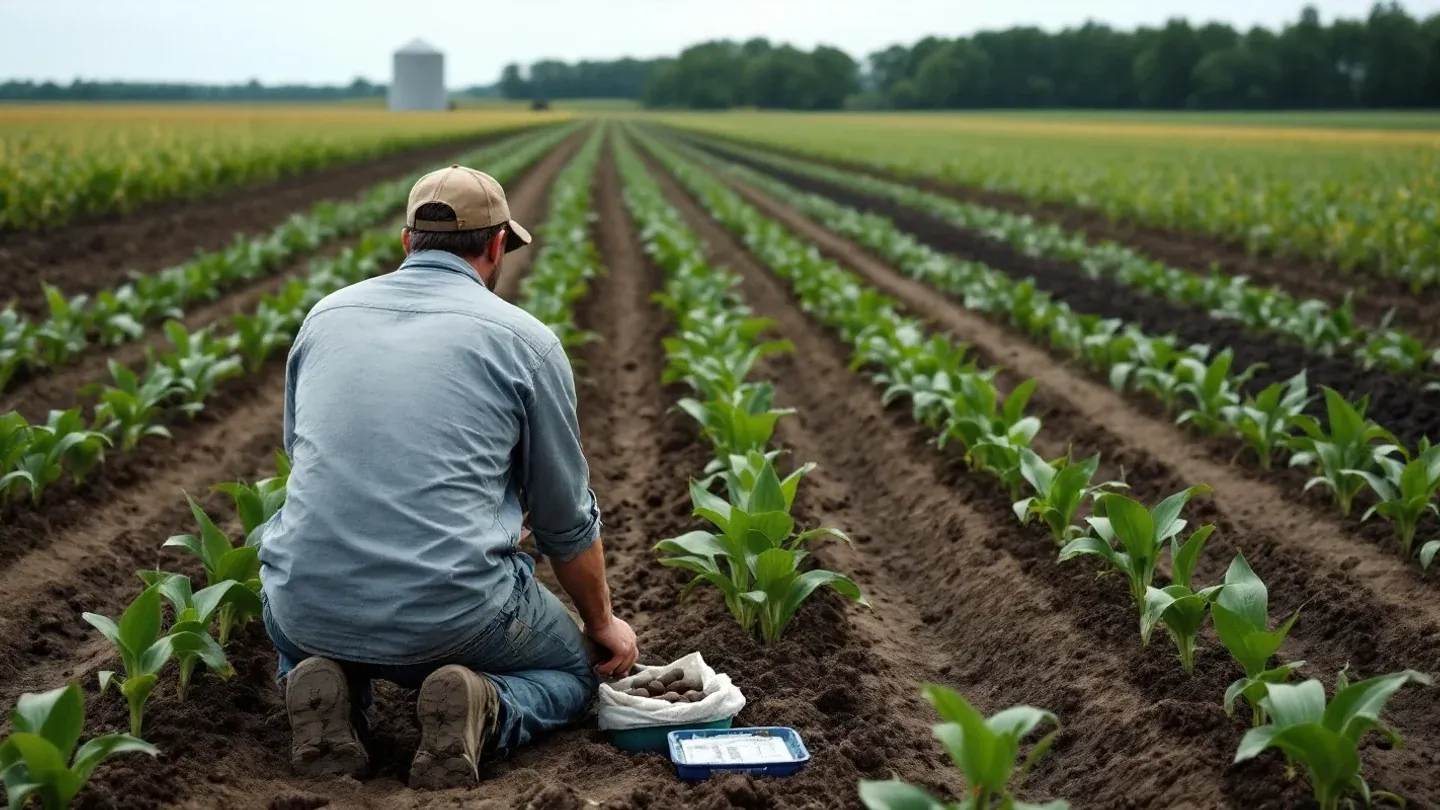
Fertilizer is the bill that moves. USDA's Agricultural Prices report released last Friday put the index of what farmers paid for fertilizer in December at 103.9, down 3 percent from a year earlier but up half a percent on the month, with nitrogen and mixed fertilizer rising while potash and phosphate slipped. The University of Illinois budget team expects 2025 costs to fall again, "led by lower fertilizer prices," though its 2025 budgets note that costs remain above pre-2020 levels.
Then on Saturday the White House announced a 25 percent tariff on imports from Canada and Mexico, with Canadian energy at 10 percent. The fact sheet does not mention fertilizer, but the U.S. Geological Survey's January summary puts Canada at 79 percent of US potash imports over 2020 to 2023, and the country imports 93 percent of the potash it uses. Canada is also the largest source of agricultural imports into the United States. Where the order lands is still moving as this is written. USDA's Fertilizer Production Expansion Program, set up in 2022 to expand domestic capacity and competition, will take years to change the supply picture.
You cannot steer any of that. What you can steer is how many pounds of purchased nitrogen your fields actually need, and the on-farm data say most fields get more than they need. This is the plain version of five tools that let a farm cut the nitrogen bill without giving up bushels, and of what the farmers who tried it found.
Start from what the field already holds
Nitrogen does not only come in a tank. A stand of alfalfa, a soybean crop, a legume cover crop and the organic matter in a living soil all feed the next corn crop, and a rate that ignores them is simply a rate that is too high.
Penn State's corn nitrogen guide shows the alfalfa effect in a three-year trial: in the first year after alfalfa, adding fertilizer N beyond the starter produced no yield increase at all, and in the second year maximum yield came at 80 pounds of N per acre. Only by the third year did the field behave like continuous corn again.
Soybeans give a smaller credit, but it is real. Iowa State's nitrogen guide for corn notes that unfertilized corn after soybean averages about 115 bushels an acre against about 60 for unfertilized continuous corn. That gap is why every Corn Belt recommendation gives corn after soybean a lower rate than corn on corn, and why a rotation is the cheapest nitrogen program there is.
A legume cover crop can go further. SARE's cover crop handbook reports that hairy vetch planted by mid-September in the warmer Northeast nets about 100 pounds of available N per acre by mid-May, that vetch and vetch-rye mixtures accumulated 130 to 180 pounds of N per acre in trials, and that a Wisconsin corn system following vetch returned a profit similar to 160 pounds of fertilizer N in continuous corn. The same page warns that vetch left to set seed can carry a polluting load of nitrogen, so the kill date matters as much as the planting date. If you are new to legumes, start with our guide to choosing a cover crop mix for your region.
Count manure and compost honestly
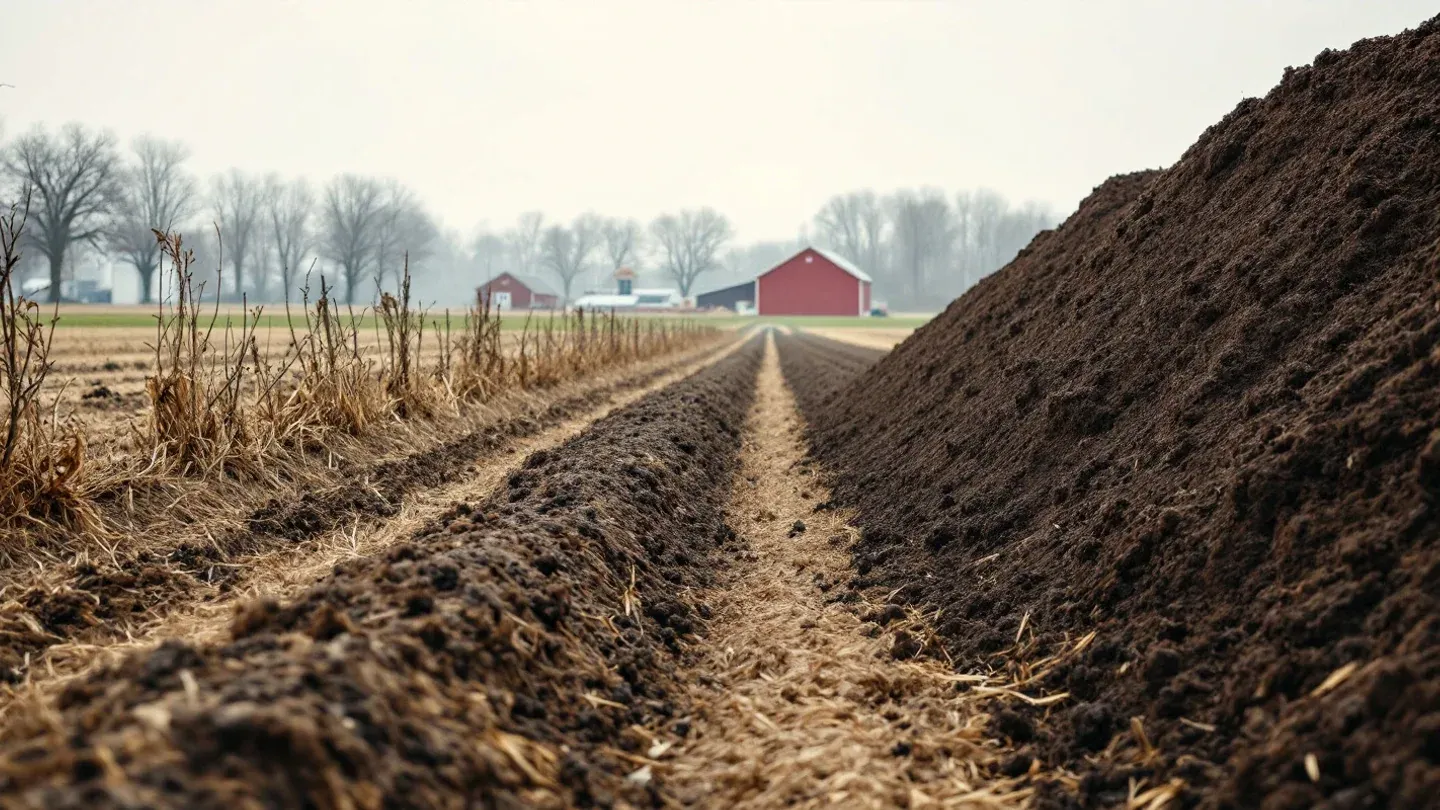
Manure is where most nitrogen accounting goes wrong, in both directions. Some farms credit nothing and buy a full rate on top. Others credit the total nitrogen on the lab sheet and come up short.
The University of Nebraska's NebGuide on crop-available nutrients from manure gives the working rules. Only part of the organic nitrogen mineralizes in the first cropping season after it is spread, typically 15 to 45 percent, with the rest trickling out over following seasons; for stored swine manure the guide uses roughly 40, 20, 10 and 5 percent across four years. The ammonium fraction is available right away if the manure is incorporated, but when it is left on the surface it converts to ammonia over several days and blows off, faster in warm weather. And because nutrient content swings with species, diet, bedding and storage, the guide is blunt that a manure analysis is preferable to using table values.
Compost is a different product. Washington State's manure and amendments guide states that composts are lower in plant-available nitrogen than most raw manures; what you gain in weed-seed and pathogen kill and in ease of handling you give up in first-year nitrogen. The same guide's rule for any organic material is to apply it on the basis of the plant-available nitrogen it supplies, to meet but not exceed crop needs, and to test soil phosphorus and potassium every three to five years so repeated loads do not build up where they are not wanted. If you make your own, our piece on farm-scale composting covers the carbon ratios that decide how much nitrogen survives the pile.
Let a soil test make the sidedress call
The single most useful tool on a field with manure or legume history is the pre-sidedress soil nitrate test, the PSNT. Penn State's PSNT guide lays it out: pull 12-inch cores when the corn is 12 inches tall, or at least a week before you plan to sidedress, and send them for nitrate. The recommendation starts at 0.72 pounds of N per bushel of yield goal, subtracts 5.1 pounds for every part per million of nitrate-N on fields with a long-term manure history (manure in two or more of the last five years), and adds 50 pounds if the cover crop was a mix of plant families. Their worked example, a 220-bushel goal with 22 ppm of nitrate, comes to about 46 pounds of sidedress N. When the answer is small, under about 30 pounds, the guide says to weigh whether the pass is worth running at all.
That is the point of the test. It replaces a guess about how much the manure or the clover delivered with a number from the field in the week it matters. Our older post on easy soil tests covers the basics of sampling; the PSNT is the one that pays for itself fastest.
Move the pounds to when the crop wants them
Nitrogen applied months before the crop takes it up has months to leave. Penn State's advice is to delay the bulk of the nitrogen so that less is lost to denitrification and leaching, to dribble UAN in a band rather than spray it, and to use the PSNT on fields with a history of organic nitrogen.
Be honest about what splitting does, though. It is not a yield booster on its own. In the Illinois data below, fields that received post-plant nitrogen earned about the same as fields that did not: the extra pass and the switch from anhydrous to nitrogen solutions cost more, and both groups were still above the recommended rate. Splitting earns its keep when it changes the decision: a modest base rate at planting, then a sidedress rate set by the PSNT and the season rather than by habit. That is the always simplify version of nitrogen management: fewer pounds, applied once you know.
Use the calculator, then test it on your own strips
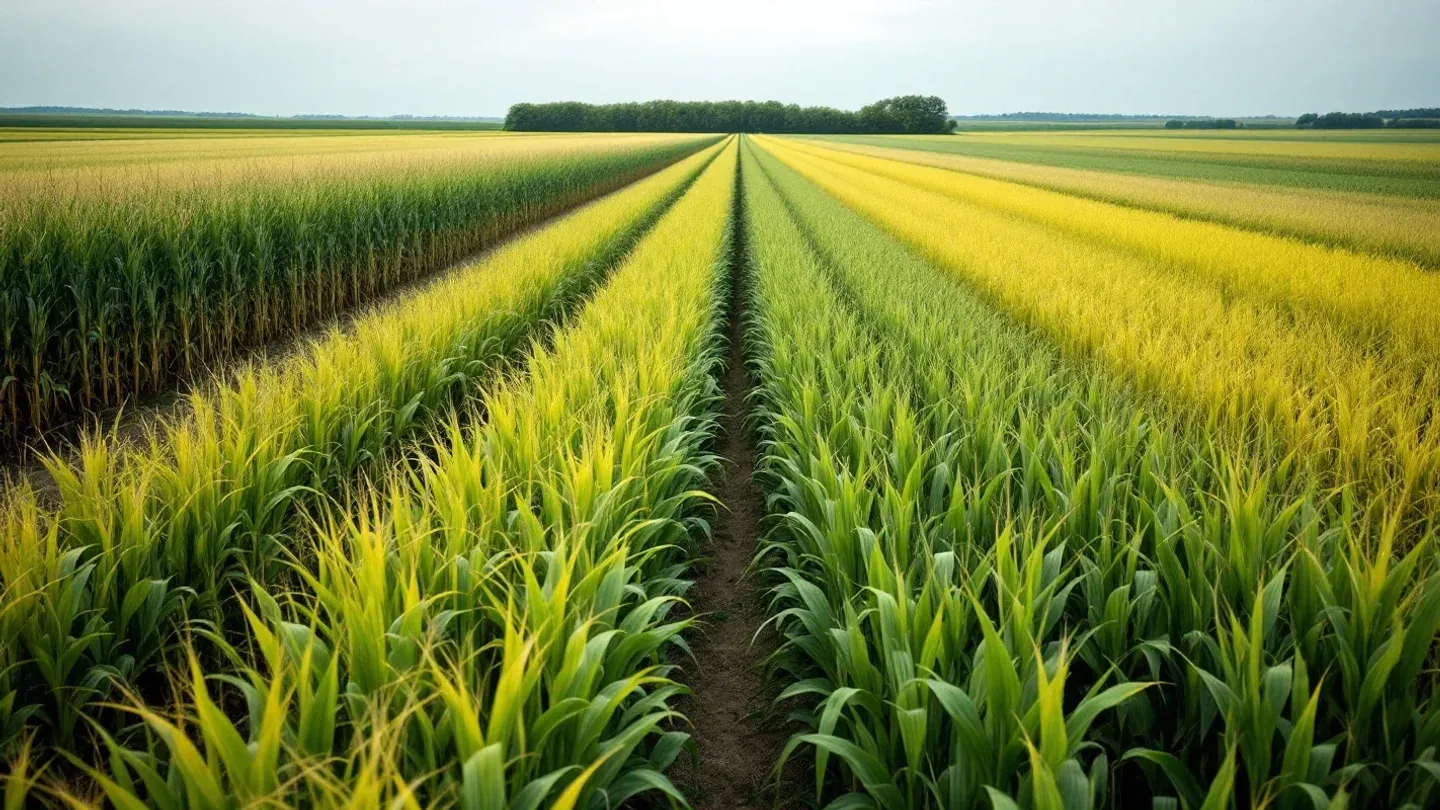
Seven Corn Belt universities maintain the Corn Nitrogen Rate Calculator, which pools university rate trials from Illinois, Indiana, Iowa, Michigan, Minnesota, Ohio and Wisconsin and returns the rate that maximizes economic return at your nitrogen and corn prices rather than the rate that maximizes yield. The difference is where the money is.
How far above that rate real farms sit was measured by Precision Conservation Management, the Illinois farmer service program led by the state corn and soybean grower associations, whose field records the University of Illinois analyzed in 2022. Enrolled fields grew from 102 in 2016 to 429 in 2021, and average total nitrogen ran from 247 pounds an acre in 2016 down to a low of 204 in 2019, while the recommended rate for corn after soybean sat between 168 and 184. Only 2 percent of fields were below 160 pounds, 25 percent were in the 160 to 200 range that holds the recommendation, and 73 percent were above 200. Operator and land returns told the story: $336 an acre in the 180 to 200 pound band, $295 at 200 to 220, $277 at 220 to 240. The authors' summary is that "the university recommended MRTNs maximize returns from nitrogen."
Farmer trials in Iowa show how to find the safe cut on your own ground. Practical Farmers of Iowa reported a Reinbeck farmer, Jack Boyer, who in 2019 compared 130 and 180 pounds of N on corn after years of cereal rye cover crops; yields were statistically the same and the lower rate improved his return by $26 an acre. In 2021 he ran five rates from 90 to 180 pounds: yield kept rising to 245 bushels at 180, but the best return to nitrogen came at 150, and every rate beat the county average of 207. Then came the 2022 trials, 16 farmers running 17 replicated strip trials with reductions of 15 to 45 percent in a dry year. Seven of the 17 came out ahead on money under every price scenario tested; eleven showed statistically significant yield losses. The authors note that dry conditions make corn less responsive to nitrogen, which is exactly why one season, on one farm, never settles the question.
Read those three results together and the method writes itself. Cut in steps, not in one jump. Replicate the strips so a wet corner does not decide the result. Keep the typical rate in the trial as the check. And give it more than one year, because the field that forgave a 50-pound cut in 2019 would not forgive a 70-pound cut in 2020. That patience is the be consistent part of this work, and it is what separates a saving from a story.
A plan for this season
Here is the sequence for a farm that wants to buy less nitrogen in 2025 without betting the crop on it.
- List every field's nitrogen history: last crop, legume cover, manure in the past five years. Credit alfalfa and soybean the way your state guide does; credit vetch or clover only after a cut-and-weigh estimate or a PSNT.
- Sample manure before you spread it and incorporate it the same day. Credit the ammonium plus the first-year share of the organic nitrogen, not the total on the sheet.
- Run the calculator at your actual prices for each rotation and treat that number as the ceiling, not the floor.
- Put a modest base rate on at planting and plan the rest as a sidedress decided by a PSNT on every field with manure or legume history.
- Pick two fields and lay out replicated strips at the typical rate and at one or two lower rates. Harvest them separately. Keep the strips in the same place next year.
- Write the result down. Three seasons of your own numbers beat any table.
The fertilizer price and the tariff news will keep changing; the bushels a field can grow on what it already holds will not. A nitrogen program that starts from the soil rather than from the invoice is what healing the soil looks like on a spreadsheet, and it is the kind of change that still pays when prices fall again. For labs, agronomists and trial programs near you, see our directories of service providers and organizations, and for the policy side of this winter's fertilizer story, our note on what to watch at USDA under the new administration. Our older piece on whether regenerative agriculture can be profitable makes the same argument from the other end: the inputs you stop buying are the margin you keep.