
The harvest is coming off, the spreader is about to get busy, and biochar is once again the amendment everyone asks about. It has a conservation practice standard of its own, a growing list of suppliers, and a reputation that runs ahead of the evidence. So here is the plain version of what the research says: biochar can do real work on sandy, acidic, low-organic-matter ground, it does little for yields on a fertile temperate loam, and whether it pays on your farm depends on your soil test, your source and your price.
What biochar is and how it is made
Biochar is charred plant or animal material made for the soil, not for the grill. The International Biochar Initiative describes it as a solid produced by heating biomass with a limited supply of oxygen at relatively low temperatures, under 700 °C. Starve the fire of air and the wood, nut shells, crop residue or manure does not burn down to ash; it chars. Cornell's Johannes Lehmann puts it simply: about half of the original carbon stays in the char, and the two properties that make it special are its very high affinity for nutrients and its persistence in soil.
Those two properties come from the pores. A charred particle is a sponge of tiny channels with a huge inner surface, which is why it holds water, nutrients and microbes, and why the feedstock and the kiln temperature matter so much. A 2022 meta-analysis in the journal Biochar found that chars made above 500 °C did more for bulk density and porosity, while chars made below 500 °C had the bigger effect on microbial diversity. On a farm, the material comes out of one of three kinds of equipment: open flame-cap kilns, slow-pyrolysis kilns, or small gasifiers, which a 2023 Washington State University assessment describes in detail, with pyrolysis running at roughly 325 to 800 °C.
The NRCS standard adds a floor. To count under practice 336, biochar must be made above 350 °C under controlled, limited oxygen, and it must either carry the IBI certified seal or come with a lab analysis that meets the standard's table: organic carbon above 10 percent, a hydrogen to organic carbon ratio below 0.7, chromium under a set limit, and the ash content and liming equivalent reported. That ratio is the test of whether the material was really charred or just scorched.
Where it helps: sandy, acidic and low-organic-matter soils
Start with the biggest pile of evidence. A 2013 meta-analysis of 103 studies in Plant and Soil found that biochar raised crop productivity by 11 percent on average, with the gains concentrated in acidic soils rather than neutral ones and in sandy soils rather than loams and silts. The authors tied the response to liming and to better aggregation and moisture.
The 2022 meta-analysis of 59 studies points the same way. Across the dataset, biochar raised soil pH, cation exchange capacity and organic carbon by 46, 20 and 27 percent respectively, cut bulk density by 29 percent and increased porosity by 59 percent. Yields rose only in coarse and fine textured soils, not in medium textured ones. Coarse soils showed the largest pH shift and the largest drop in bulk density.
That is the pattern a farmer can use. The Biochar Guidelines for Agriculture Applications, a 2023 guide from the US Biochar Initiative published with the Nebraska Forest Service, puts it in one line: lower quality soils, meaning low pH, low organic matter, low cation exchange capacity, compaction and poor infiltration, mean a higher likelihood of a positive yield response, and higher quality soils mean a lower one. The guide's case histories are the ones to read. On a grass seed farm in eastern Washington with acidic, fine silty soils, a USDA Agricultural Research Service trial in 2013 and 2014 compared biochar made on the farm from straw and seed screenings, spread at 8 tons per acre, against lime at 1 ton per acre. Both raised soil pH by a similar amount, and in the first season the biochar plots also showed higher soil moisture and higher wheat yields than the lime plots and the unamended control. On a 15-acre vegetable farm near Gainesville, Florida, biochar made from cleared brush and spread with compost improved the nutrient and organic matter levels of sandy ground.
If you have read our piece on restoring damaged soil, you will recognize the logic: biochar is a structural fix for soils that lack structure and a liming fix for soils that are sour. It is not a fertilizer.
Where it does not: fertile temperate soils
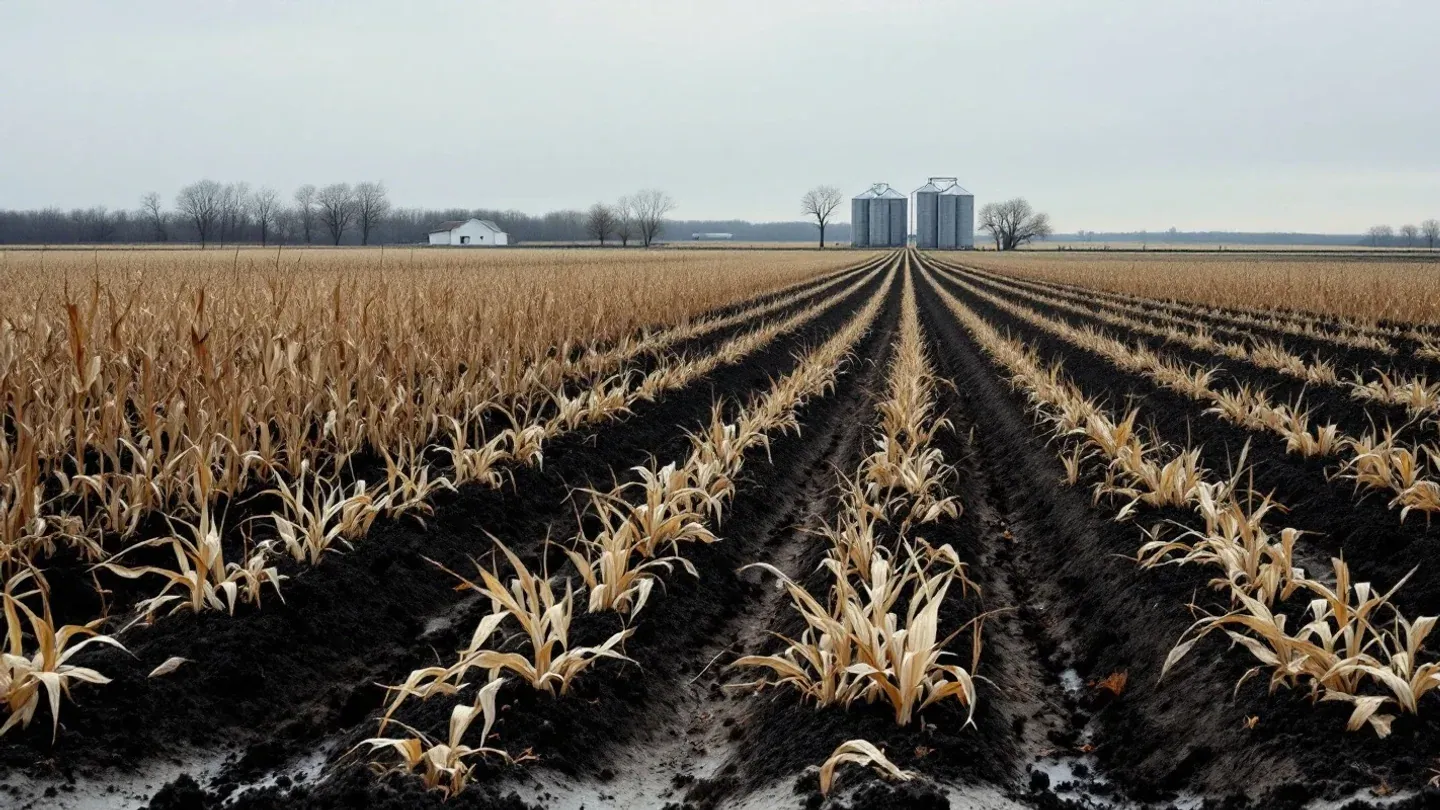
Here is the part the sales pitch leaves out. The largest geographic meta-analysis, published in Environmental Research Letters in 2017 with more than 1,100 observations from over 100 studies, found that biochar does not raise crop yields in temperate latitudes, where the average response was a slight decrease of about 3 percent, against a 25 percent average increase in the tropics. The explanation is not mysterious. Tropical arable soils are acidic and nutrient-poor, so a liming, nutrient-carrying char fixes a real constraint. Temperate arable soils are moderate in pH, higher in fertility and already well fertilized, so there is less to fix. The authors suggested that in temperate zones the case for biochar should rest on non-yield benefits such as lime and fertilizer savings and greenhouse gas control.
Washington State University's research center is blunter still: results on how biochar affects agricultural soils in temperate regions are contradictory. A three-year USDA SARE trial on Long Island's sandy nursery soils, which applied a hardwood biochar at 5, 10 and 15 tons per acre to Christmas trees and privet, concluded that the material had a variable impact on water retention and nutrient leaching, with no consistent positive effect as the rate went up. And a 2021 review in Nature Geoscience noted that crop response to biochar does not track crop response to fertilizer, which questions blanket recommendations and argues for locally specific decisions.
Two more cautions come straight from the NRCS standard. Biochar with high adsorptive capacity can reduce the effectiveness of some pesticides, so plan your weed control around it. And compost or other amendments with a carbon to nitrogen ratio above 30 to 1 can tie up nitrogen, which is the mechanism behind the first-year yield drag growers sometimes see.
So if your ground is a deep Midwest loam at pH 6.5 with 4 percent organic matter, do not expect a yield bump from biochar, and do not buy it for one.
Rates per acre
The Texas version of practice 336 asks for a rate and time that will achieve the intended purpose, and it requires a soil test first, at a lab that meets the North American Proficiency Testing Program standards, that covers at least pH, texture, extractable phosphorus, potassium, calcium, sulfur and magnesium, and cation exchange capacity. If you have not tested in a while, our guide to six easy soil tests is a place to start, but the lab test is the one NRCS wants.
The USBI guide gives the working numbers. Field rates of 1 to 10 tons per acre have shown consistent positive effects in numerous studies. A good starting point is 1 ton per acre, about 4 cubic yards, as the lowest effective rate to improve habitat for soil organisms, and 3 tons per acre, about 12 cubic yards, to move soil organic matter. For planting holes and containers, 5 to 25 percent by volume. In orchards and vineyards, put it in the planting row or hole rather than across the whole block; the guide notes that adding biochar to the planting hole is more economical than treating the entire row.
Because biochar resists decay, one application keeps working for many seasons. It does not need to go on every year the way compost or manure does, and if cash or logistics are tight, smaller amounts can ride along with your regular fertilizer or compost passes, with the trade-off that changes in the soil take longer to show. Ordinary equipment handles it: lime, compost and manure spreaders, broadcast seeders, no-till drills if the char is dry (under 20 percent moisture, or it cakes), and liquid injection for micronized product. Raw biochar is dusty, so wear a mask and goggles, moisten the pile, pick a calm day and incorporate it. The NRCS standard rules out spreading during high wind.
Charge it with compost first
This is the step that separates the trials that worked from the ones that did not. Fresh biochar is a dry sponge with empty pores. Put it on the field as is and it soaks up nitrogen and water from the soil around it, which is the yield drag. The USBI guide calls inoculating the char critical to minimize nutrient immobilization, particularly in the first year, and lists compost, manure, compost tea, fertilizer and microbial inoculants as the usual sources, with one to three weeks of contact before application. The NRCS standard says the same thing in its own words: inoculate biochar with compost, compost tea or manure to balance nutrients, stabilize pH and improve moisture content for spreading.
The practical method on most farms is to blend the char into a compost windrow or a manure pile and let the pile finish around it. If you make your own compost, our notes on farm-scale composting and on making your own compost cover the carbon ratios the pile needs. A Western SARE trial in North Coast vineyards shows why the combination matters: plots that received 10 tons per acre of biochar together with 20 tons per acre of compost were the plots where total carbon and organic matter rose most clearly, while the compost-only and control plots lost carbon over the three years, and water-stable aggregation improved significantly in the third year where biochar had gone on.
The fall window
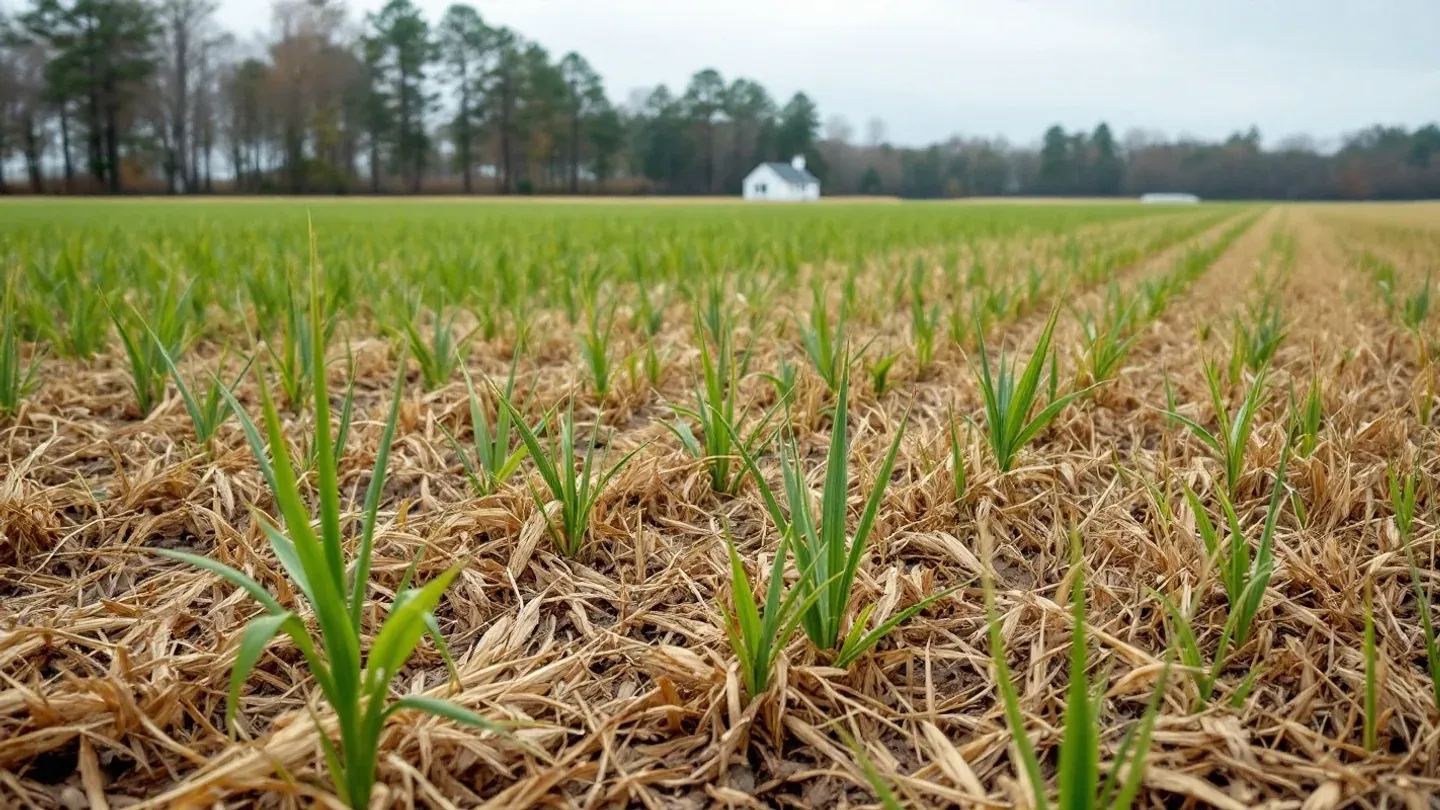
Spring is the most common time to apply biochar, but the USBI guide says a better time is often right after harvest, with a cover crop going in behind it. The char gets a winter to equilibrate with the soil, the charged nutrients have time to settle, and the cover crop holds the soil and takes up whatever nitrogen the amendment releases. The guide is firm that the cover crop is not optional in that scenario. If you are still choosing your mix, our guide to picking a cover crop for your region can help. Do not spread on frozen or snow-covered ground; many states prohibit it because of runoff.
On pasture, the guide's advice is to apply right after livestock have rotated through a paddock, so the char mixes with fresh manure and urine and charges in place.
What it costs and what NRCS pays
Price is where most biochar plans die. The USBI guide puts the national average at about $350 per ton as of 2023, down as supply has grown. At the starting rate of 1 ton per acre that is $350 an acre in material alone; at 3 tons it is $1,050, before freight and spreading, and freight on a bulky, low-density product is not small. The guide says plainly that higher rates of the ideal biochar are usually better but typically not cost-effective. That is why the case histories that pencil out tend to involve char made on the farm from brush, prunings or seed screenings, or char targeted at planting holes rather than whole fields.
The other lever is cost share. Soil Carbon Amendment, practice code 336, sits in the NRCS national handbook of conservation practice standards; a May 2022 Federal Register notice on revisions to that handbook describes it as supporting the application of biochar, compost and other approved carbon amendments on all land uses, and each state issues its own version, Texas in October 2023. The practice covers compost, biochar and other carbon-based materials applied to improve soil organic matter, sequester carbon, improve aggregate stability or improve habitat for soil organisms, and its unit is the acre. It is commonly planned alongside nutrient management (590), conservation crop rotation (328), cover crop (340) and no-till or reduced-till (329 and 345), and it comes with maintenance duties: calibrated spreading equipment, a field check after the first heavy rain, and a soil organic matter or organic carbon test one to three years after application, with later tests to track the longer-term effect.
What NRCS pays for 336 is set in each state's payment schedule for each fiscal year, and the federal fiscal year 2025 begins tomorrow, October 1. The schedules vary by state and by scenario, so the only reliable number is the one your local field office gives you. If you have never worked with NRCS, our explainer on how EQIP and CSP payments work for a small farm covers the application cycle, and our piece on the conservation title and the IRA money explains where the extra funding for climate-related practices came from. Two rules worth knowing before you buy: the standard rules out char made from crop residues that should have stayed on the field as cover, such as stover or straw, or from woody residue a forest needs; and the producer of the material must supply its analysis near the time of application.
Suppliers are listed in our service providers and manufacturers directory. Ask any of them for the lab sheet before you ask for a price.
The carbon question
The reason biochar gets so much attention is the carbon. A char's carbon persists one to two orders of magnitude longer than the biomass it came from, according to the 2021 Nature Geoscience review, and the IBI puts the stable fraction at hundreds to thousands of years. The landmark 2010 study in Nature Communications estimated that sustainably produced biochar could offset at most 12 percent of current human-caused greenhouse gas emissions, with the word sustainably doing heavy lifting: no land clearing, no crop residues taken that the soil needs, no contaminated feedstocks.
For a farm, that translates into something modest and real. Biochar is one of the few amendments that stays put, so the carbon you add in a fall application is still there a decade later, which fits the way we think about long-term stewardship. Whether anyone will pay you for that carbon is a separate question with its own contracts and its own fine print, and it should not be the reason you spread it.
A practical close
If you are weighing biochar this fall, here is the short list.
- Pull a lab soil test on the field you have in mind. If pH is below 6, organic matter is under 2 percent, or the texture is sand or loamy sand, keep reading. If it is a well-fed loam, spend the money on something else.
- Decide the purpose in NRCS language: organic matter, carbon, aggregate stability or soil life. The purpose sets the rate.
- Get the analysis sheet from the supplier, or make your own char from brush and prunings and send a sample to a lab. Look for organic carbon above 10 percent, a hydrogen to organic carbon ratio below 0.7 and a feedstock you can name.
- Charge it. Blend it into compost or manure and give it two or three weeks.
- Start with a strip trial at 1 to 3 tons per acre on your worst ground, with an untreated strip beside it, and keep the records.
- Apply after harvest on a calm day, incorporate it, and seed a cover crop over it.
- Talk to your NRCS field office before you buy, and ask about practice 336 in the new fiscal year's schedule.
- Retest the soil in year two or three.
That is the honest state of the research as of this fall. Biochar is a good tool for a specific job on specific soils, and a healthy soil heals from the biology up. Where the char gives that biology a home, it earns its place. Where the soil already has one, it mostly sits there holding carbon, which is not nothing, but it is not a yield.