
In Iowa the farm lease year turned over on March 1. Fields that changed hands did so quietly, and fields that stayed with the same tenant did so even more quietly, because most of them renewed by default. That makes the last week of March a good moment to look hard at the piece of paper, or the handshake, that stands between a farmer and the ground under their boots.
It is also the week after the one federal program built specifically for land access was switched off. If you were counting on it, or on the organization in your state that was running a project under it, you need a different plan. This article is that plan: what the numbers say about who owns American farmland, how to write soil into a lease so that building it is not a gift to the next tenant, and the tools beyond the plain lease, from lease-to-own to easements and land trusts, that put a longer horizon under a farm you do not own.
Most farmers work land they do not own
USDA's Economic Research Service reports that just over 60 percent of US land in farms was operated by its owner in 2022, which leaves just under 40 percent rented, a share that has stayed within a narrow band for fifty years. Cropland is rented far more than pasture: more than half of cropland, against just over a quarter of pastureland. Rental rates are highest in the Mississippi Delta, the Corn Belt and the Northern Plains, and ERS notes that cash grains and cotton are commonly grown in areas where more than half of the farmland is rented.
The 2024 Tenure, Ownership and Transition of Agricultural Land survey, whose highlights USDA's National Agricultural Statistics Service published in March 2026, fills in who the landlords are. About 2.1 million landowners rented out 347.8 million acres in 2024 and collected $34.1 billion in rent. Thirteen percent of those landlords were farmers themselves; 87 percent were not, and the non-operating group held 79 percent of the rented acres. The average principal landlord was 69.2 years old. Among non-operating landlords, 52 percent had never farmed, and they acquired most of their land through inheritance, trusts and gifts rather than purchase. Fifty-nine percent of the land rented out was cropland.
Rent is not cheap and land is dearer still. NASS puts the 2025 US average cash rent at $161 an acre for cropland ($147 non-irrigated, $244 irrigated) and $15.50 an acre for pasture, with Iowa non-irrigated cropland at $274 and Iowa pasture at $65. The average value of US cropland reached $5,830 an acre in 2025, up 4.7 percent in a year. For a beginning farmer that arithmetic settles the question we first raised in Starting a Farm Without Any Money: for the first years, and often for good, you rent.
What was switched off last week
USDA's Increasing Land, Capital and Market Access program opened in 2022 as cooperative agreements or grants for government entities from local to tribal, non-profit educational institutions and non-profit organizations, land trusts among them: up to five years each, between $250,000 and $40 million, no match required, with priority for projects that unlocked land for underserved producers. In June 2023 USDA awarded 50 organizations, among them tribes, farmer associations and universities, five-year contracts worth about $300 million in all. The projects ran from farmland down payment assistance and low-interest loans to land acquisitions.
On March 23 the agency sent termination letters to 49 of the 50 awardees, effective March 26, covering projects in 40 states and territories. The letters said the awards did not align with the agency's goals and priorities and described the spending as wasteful; a USDA spokesperson pointed to specific purchases it considered improper. The National Young Farmers Coalition, which had championed the program, said USDA had frozen funds and withheld approvals for more than a year before the cancellation. The Kansas Black Farmers Association said six of its farmers were waiting on down payment assistance to buy small farms when the letter arrived. Awardees have 30 days to appeal.
We will not predict how the appeals go. The practical point is simpler. If a land purchase in your plan rested on a grant from one of these projects, that money is not there today, and the tools that remain are the ordinary ones: FSA's beginning farmer loans, state programs, land trusts and, above all, a well-written lease. We wrote about the unevenness of land access in Who Gets to Farm; last week made that piece more current, not less.
Get it in writing, and know your notice date
Plenty of farm leases in this country are still handshake deals. The Farmland Access Legal Toolkit at Vermont Law and Graduate School is blunt about it: when a farmer is investing money and time in a piece of land, relying on an oral agreement is generally a big mistake, and in most circumstances a handshake does not create an enforceable lease at all. Its free Farm Lease Builder walks you through the questions a written lease has to answer.
The second thing to know is your state's notice rule, because it decides when "next year" is actually negotiable. Iowa is the clearest case. Under Iowa Code section 562.6 a farm tenancy, oral or written, one year or multi-year, continues for another crop year on the same terms unless one party serves written notice of termination by September 1; the lease then ends the following March 1. Iowa State's Center for Agricultural Law and Taxation recommends certified mail, posted before September 1, and keeping the receipt, because courts read the statute strictly. Other states set different dates and some set none, so a lease should state its own.
The lesson for a tenant who wants to build soil: the conversation about a longer term or a conservation clause belongs in spring and summer, not in the last week of August. For a landlord who wants the ground looked after, the same calendar applies.
Writing soil into the lease
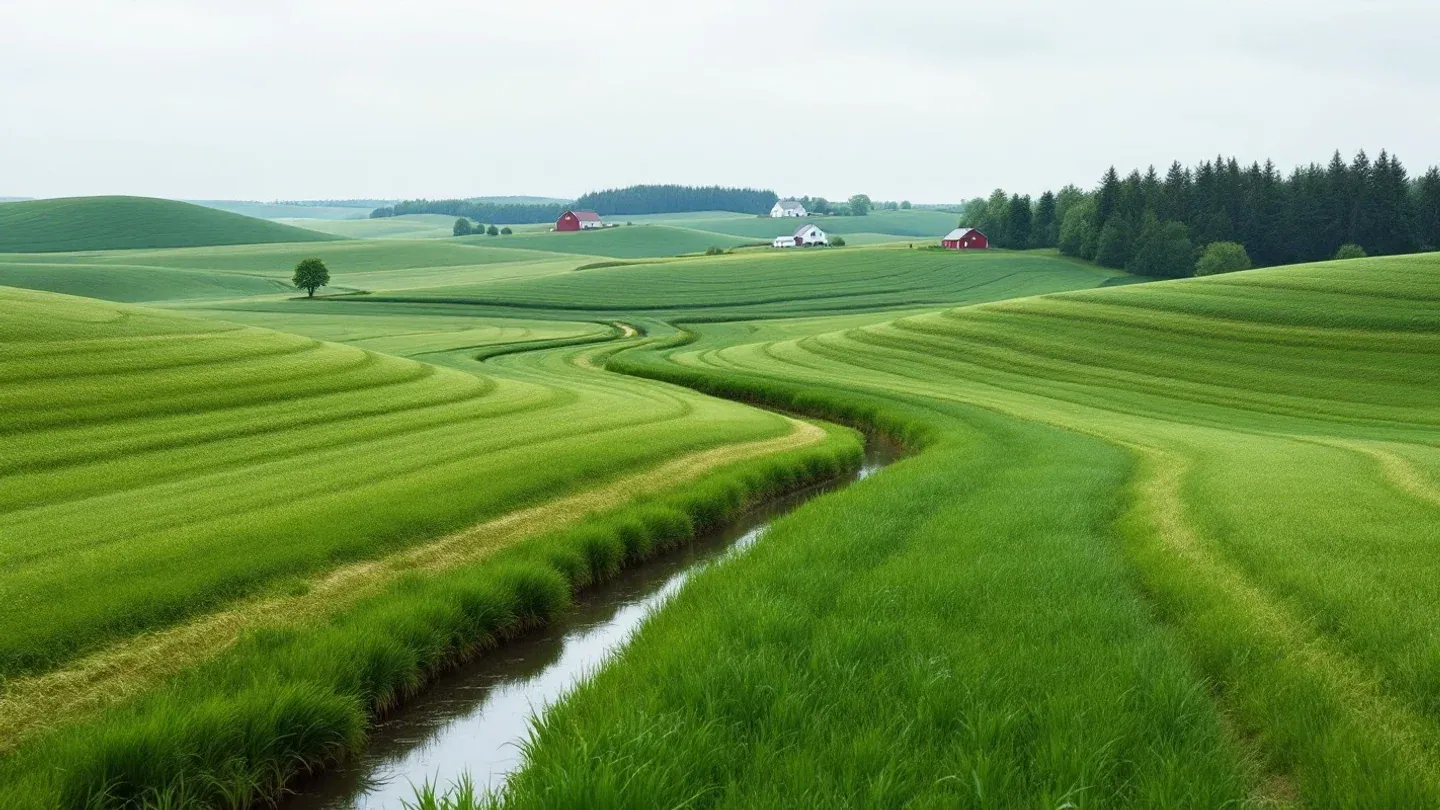
Here is the problem every regenerative tenant knows. Cover crops, a longer rotation, fencing for rotational grazing, a water line, lime, a waterway: these pay back over years, and a one-year lease gives the tenant a one-year horizon. Build soil on that basis and you are improving someone else's asset at your own expense. The answer is not to stop building better soil; it is to put the investment in the lease.
Purdue agricultural economist Michael Langemeier lays out the mechanics in a short piece on conservation practices in cropland leases. Agree the practices in advance and list them in a written lease supplement: cover crops, waterways, rotations, fall tillage rules, farm ponds. Where the tenant carries extra cost or risk, adjust the rent to reflect it during the lease. For permanent improvements such as terraces, windbreaks, pasture improvement or buffers, keep track of each party's contribution and the annual depreciation of each practice, and agree the method by which the tenant recovers the remaining value if the lease is terminated. That last clause is the one that matters most and the one most often missing.
The same clause protects your access to cost share. The EQIP rule requires an applicant to have control of the land for the term of the contract, and allows NRCS to require a tenant to obtain the landowner's written concurrence before applying a practice. A multi-year written lease is how a tenant shows control; a landlord signature line is how the practice gets approved. We walked through the money in How EQIP and CSP Payments Work for a Small Farm. The agronomy is in choosing a cover crop mix.
One more habit pays off on rented ground: take a soil baseline in the first season and sample again at the same spots every few years. A landlord who can see organic matter rising on their own land is a landlord who renews, and a tenant with that record has something concrete to bring to the next negotiation. This is healing the soil as a business argument, not only a conviction.
Longer than a lease: lease-to-own and seller financing
When the landlord is a retiring farmer rather than a distant heir, the lease can become the path to ownership. In a lease-to-own arrangement the tenant pays rent, an agreed share of each payment is credited toward a purchase price written into the lease, and the sale closes at a set date or milestone. The toolkit's checklist is short and worth following exactly: state the price, state what portion of rent counts toward it, decide who keeps the running tally and how disputes get settled, and set a deadline. Long-term versions run 10 to 99 years; a lease of that length, especially one that lets the tenant own the buildings, can also make a lender comfortable.
A contract for deed, where the seller finances the sale and keeps title until the last payment, looks similar but carries more risk for the buyer, who can lose the land after a single missed installment and, in many states, every payment already made. FSA's Land Contract Guarantee Program exists to make sellers comfortable with exactly this kind of sale to a beginning or socially disadvantaged farmer: the agency guarantees either up to three annual installments plus taxes and insurance, or 90 percent of the outstanding principal, for ten years. It is a small, little-known program, and it is still on the books.
Easements, land trusts and the price of farmland
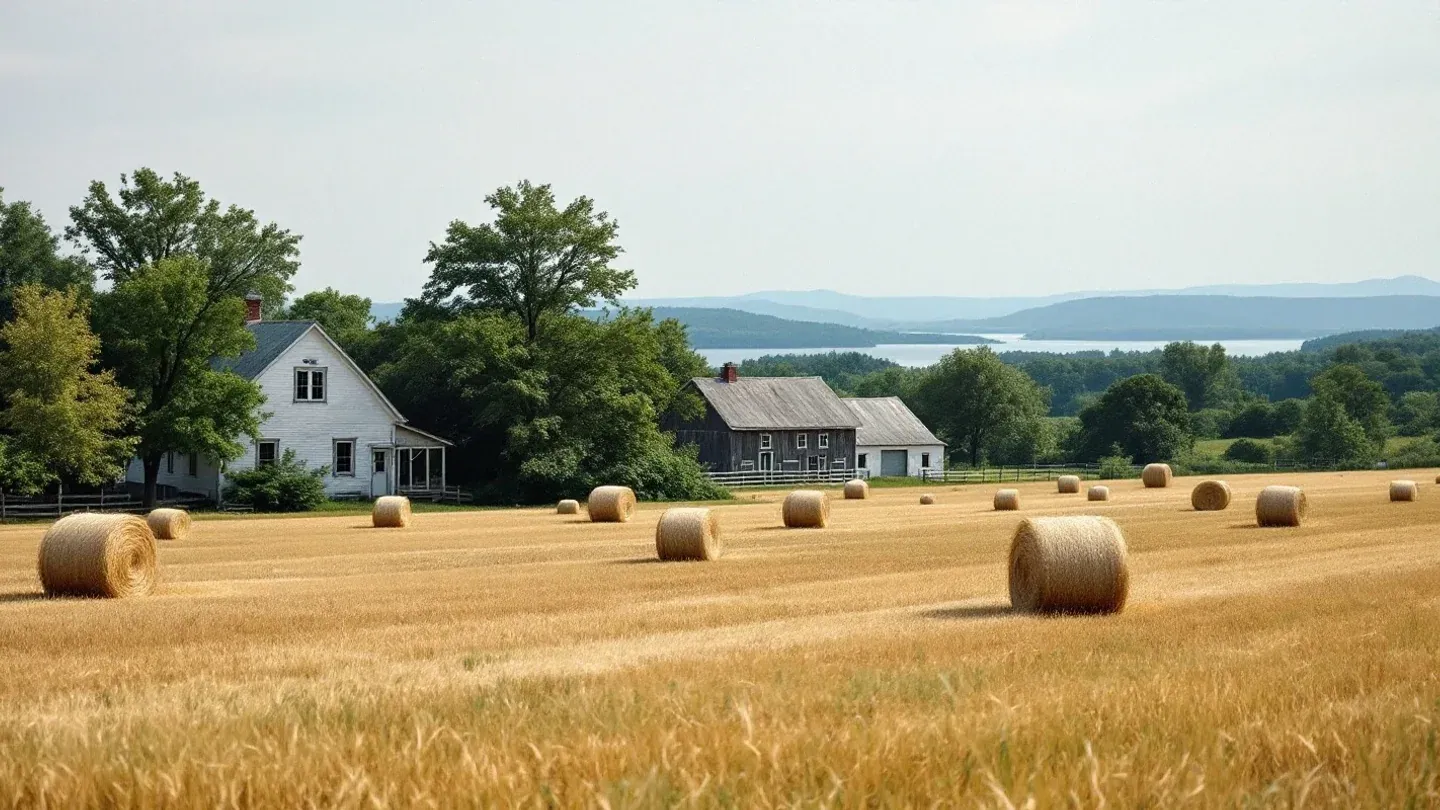
An agricultural conservation easement is the tool that changes the price itself. The landowner sells or donates the development rights to a land trust or a government agency; the restriction runs with the land, usually forever, and the land is worth less afterward because it can no longer be developed. That lower value is what makes a protected farm affordable to the next farmer. Many sales are bargain sales, part cash and part donation, because easement funding is scarce. The toolkit's worked example is Elmer Farm in Vermont, which Spencer and Jennifer Blackwell found through Vermont Land Trust's Land Access Program: the trust bought a conservation easement valued at $235,000, and that easement included an option to purchase at agricultural value. An OPAV goes a step further than a plain easement by requiring that the land be resold to a working farmer at its agricultural value.
The federal money behind this is the Agricultural Conservation Easement Program, created in the 2014 farm bill by folding together three older easement programs. Under its agricultural land easement track, NRCS provides an eligible entity, typically a land trust or a state or local government, with up to 50 percent of the fair market value, and the entity buys the easement. The entity, not the farmer, is the applicant for that money, so the route runs through the land trust or the state farmland program. Our organizations directory lists the national groups to start with, and the toolkit's land trusts page explains the difference between a conservation land trust that holds easements and a community land trust that owns the ground and leases it.
That second model deserves a look from any farmer who has given up on buying. Agrarian Trust's Agrarian Commons network counts 10 commons across 8 states and more than 400 acres of farmland held permanently out of the speculative market. Each commons is a land-holding entity governed by farmers, community members and the trust, and farmers lease from it. In Roanoke, Virginia, the Southwest Virginia Agrarian Commons was organized around Lick Run Farm, a 3.5-acre property to be held in trust as its founding farm and leased to the urban farmer who works it for 99 years. The farmer never owns the dirt. The farmer does own the business, the improvements and the certainty, which on a 99-year horizon is most of what ownership was for.
Finding the landowner who wants you
None of these instruments helps without a willing landowner, and the survey data say the owners are old, mostly not farming, and mostly not planning to sell. Non-operating landlords told NASS they intend to pass land through wills (42 percent) and trusts (26 percent); only 7 percent of their acres are headed for sale to a non-relative. American Farmland Trust counts over 300 million acres set to change hands. The farmer who gets that land is the one the family already knows.
State land-link programs exist to make those introductions. Nebraska Land Link, run by Nebraska Extension, takes applications from land seekers and from landowners who have no successor, works to find a compatible match, and teaches both sides transition planning, communication and negotiation; the interviews themselves are left to the two parties. California FarmLink pairs its land access service with loans as a community development financial institution. Other states run similar programs; ask your extension office which one is active. The best match, though, is still the neighbor. Show up at the county soil and water board, the grazing group and the church supper, because being involved locally is how a retiring owner learns your name before the land goes into a will. If you are the owner, our piece on starting the succession conversation is the other half of this one.
What to do this spring
- Put the lease in writing before the busy season, even if it has been a handshake for ten years. Use the free lease builder and have a farm lawyer from our service providers directory read it.
- Look up your state's notice date and write it on the calendar now. Propose a three- to five-year term, or an automatic renewal with a longer notice period.
- Add a conservation supplement: the practices, the rent adjustment, the depreciation schedule and the clause that pays out remaining value on early termination.
- Take a soil baseline this season and share it with the landlord. Numbers that rise are the renewal argument.
- If the owner is retiring, open the lease-to-own conversation and ask FSA about the Land Contract Guarantee.
- Call the land trust that works your county and ask what easement or OPAV funding looks like this year; put your name on the land-link list in your state.
Rented ground is where most American farming happens, and it is where most regenerative work has to happen too. The investment is safe when the paper is right. That is a question of thinking long term on both sides of the fence line, and the spring after a lease rolls over is exactly the time to start.