
The turkey that came off most tables last Thursday had a label on it, and so does the beef, the pork and the eggs sitting in your customers' refrigerators right now. Grass-fed. Pasture-raised. Free-range. Natural. Regenerative. Product of USA. Some of those words have a rulebook behind them. Most do not. A farm that sells on trust needs to know the difference, because the shopper paying a premium usually does not, and because 2023 turned out to be the year USDA said out loud that the paperwork behind these claims is too thin.
This is a plain guide to which claims are defined, who checks them, where the gaps sit, and how a farm can stand behind its own words without hiring a lawyer.
Who signs off on a label claim
Meat and poultry that pass through a federally inspected plant carry labels that the Food Safety and Inspection Service (FSIS) has to approve. Most of a label can be approved generically at the plant, but "special statements and claims" need a label application to the agency, and the regulation names claims regarding the raising of animals as one of those categories. Grass-fed, raised without antibiotics, free-range and pasture-raised all land in that bucket.
Approval is a paper exercise. The processor submits the label with the farm's documentation, and FSIS reviews what is on the page. The agency's inspectors work in plants, not on farms, and its guideline on what that documentation should contain was last updated in December 2019.
That is the background to the announcement of June 14, 2023. USDA said it would take three steps: a sampling project with the Agricultural Research Service to test cattle bound for the "raised without antibiotics" market for antibiotic residues, a revised industry guideline asking companies for stronger documentation, and a push to "strongly encourage" third-party certification of these claims. The results, the department said, would guide potential rulemaking. Secretary Vilsack framed it as a way to "level the playing field for producers who are truthfully using these claims."
As of this writing, none of the three steps has produced a final document. The sampling results are not out, the revised guideline is not out, and no rule has been proposed. What a farm can do now is get its own records into the shape the agency has already said it wants. More on that below.
Grass-fed: a claim without a federal standard since 2016
For eight years there was a USDA definition. The Agricultural Marketing Service published its Grass (Forage) Fed Marketing Claim Standard on October 16, 2007. It required that grass and forage be the animal's only feed for its whole life, apart from milk before weaning, with no grain or grain byproducts and continuous access to pasture during the growing season. AMS withdrew that standard, together with an unused Naturally Raised standard, effective January 12, 2016. The agency's reasoning was that writing such definitions fell outside its statutory authority, and that a USDA-verified claim carried no guarantee FSIS would approve the label anyway. Producers using the standard had until February 11, 2016 to name a replacement, either by turning the USDA text into a private standard or by adopting someone else's.
So today "grass-fed" on a package means whatever the company told FSIS it means, and FSIS accepted. Two gaps follow from that.
The first is that grass-fed is not grass-finished. Nearly all beef cattle eat grass or forage for at least two thirds of their lives before some of them go to a feedlot. NC State Extension draws the line this way: grass-fed should mean pasture access for the animal's entire life and no grain, while grass-finished can mean grain earlier in life and grass at the end, and both are unverified claims unless a third party has inspected the farm.
The second is that the premium rests on a real difference, which is exactly why the word needs defending. A 2010 review in Nutrition Journal found that grass-based diets improve the fatty acid composition and antioxidant content of beef: more omega-3, roughly two to three times more conjugated linoleic acid, more vitamin E and beta-carotene, and lower total fat. The same review notes that a grain-fed beef eater choosing fattier cuts may take in similar amounts of omega-3 and CLA, so the honest pitch is about the whole animal and the whole pasture, not a single nutrient.
Private standards fill the hole the government left. The American Grassfed Association certifies ruminants on four points: a 100 percent grass and forage diet from weaning to harvest, raised on pasture without confinement, never treated with antibiotics or added growth hormones, and born and raised on American family farms, with independent third-party inspection at least every 15 months. A Greener World, a 501(c)(3), runs Certified Grassfed by AGW, which guarantees a 100 percent grass and forage diet on pasture or range. If you are building a herd around the claim, our guide to setting up a grass-fed beef farm covers the production side. The piece on winter feeding with stockpiled forage and bale grazing covers the cold months.
Pasture-raised and free-range: the words with the most room in them
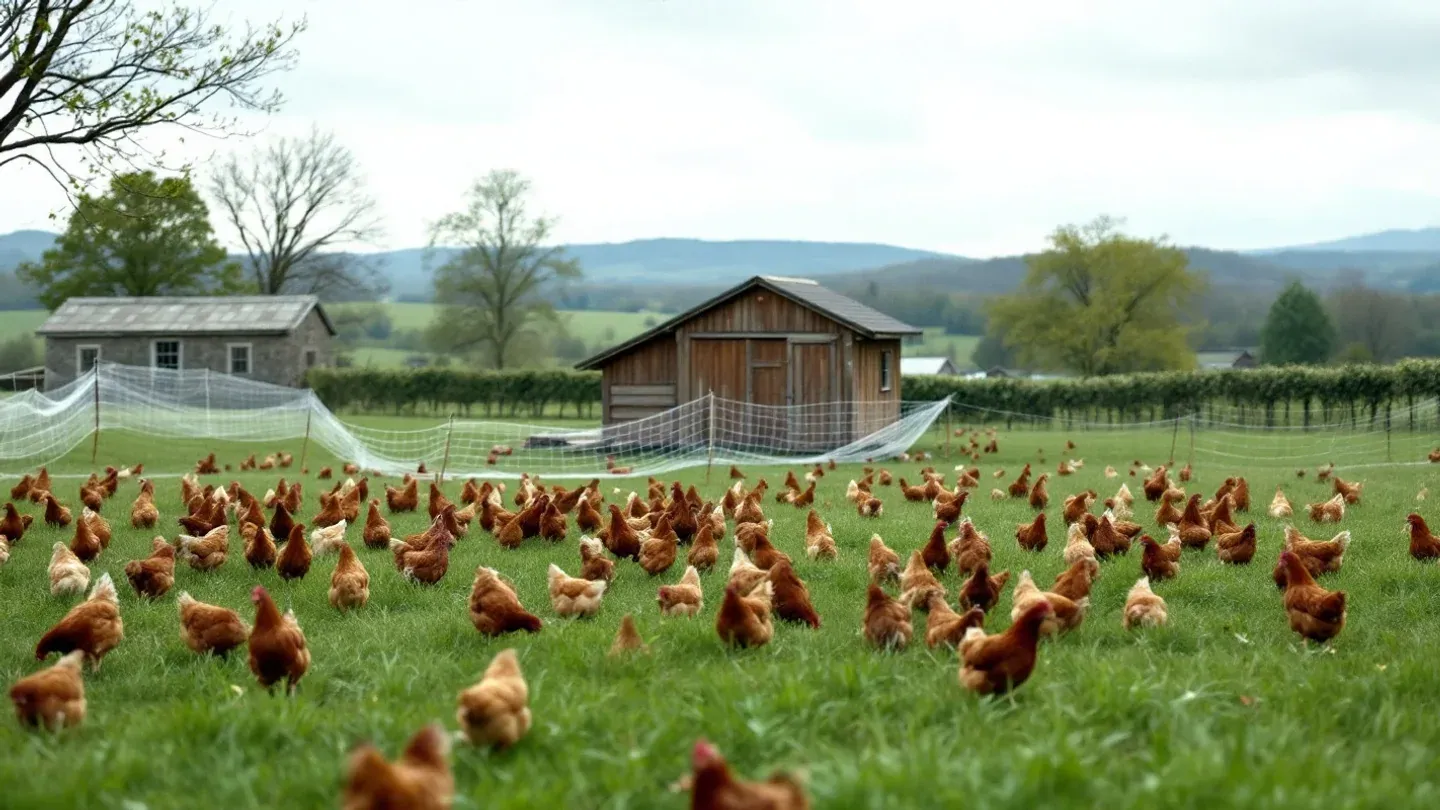
"Pasture-raised" is a term USDA does not regulate. On eggs, on chicken, on pork, it means what the seller says it means. That is not a reason to drop the word. It is a reason to say the specifics every time you use it: how many square feet per bird, how often the shelters move, how many days a year the animals are actually on grass, and what happens in January.
Organic has rules worth borrowing as a yardstick, even if you never certify. Organic ruminants must be grazed throughout the grazing season, not less than 120 days per calendar year, and take an average of at least 30 percent of their dry matter intake from grazing. For poultry, USDA published its Organic Livestock and Poultry Standards as a final rule on November 2, 2023. Outdoor areas for organic birds must be at least 75 percent soil with vegetative cover, and the rule was written to end the practice of some certifiers counting screened porches as outdoor access. It takes effect on January 2, 2024, most operations must comply by January 2, 2025, and existing layer operations get until January 2, 2029 for the outdoor stocking density and soil and vegetation requirements.
Measure your own pasture-raised claim against those numbers. If your broilers move daily on grass from May to October and your hens have a vegetated run every day the ground is not frozen, you clear the organic bar by a wide margin, and you should say so in plain numbers. Our piece on pastured broilers on a small farm has the coop and move schedules that make the claim true.
Regenerative: the newest word and the least defined
There is no USDA standard behind "regenerative," and nothing in the federal labeling rules defines it. The programs that exist are private, and the serious ones measure outcomes rather than promises. Land to Market, a Savory Institute initiative, verifies land through its Ecological Outcome Verification protocol, which assesses soil health, sequestered carbon, water and biodiversity, and products from verified land carry its seal. A Greener World's Certified Regenerative by AGW describes itself as measuring real change for soil, water, air and biodiversity. We will compare these programs side by side, together with Regenerative Organic Certified, in a dedicated article.
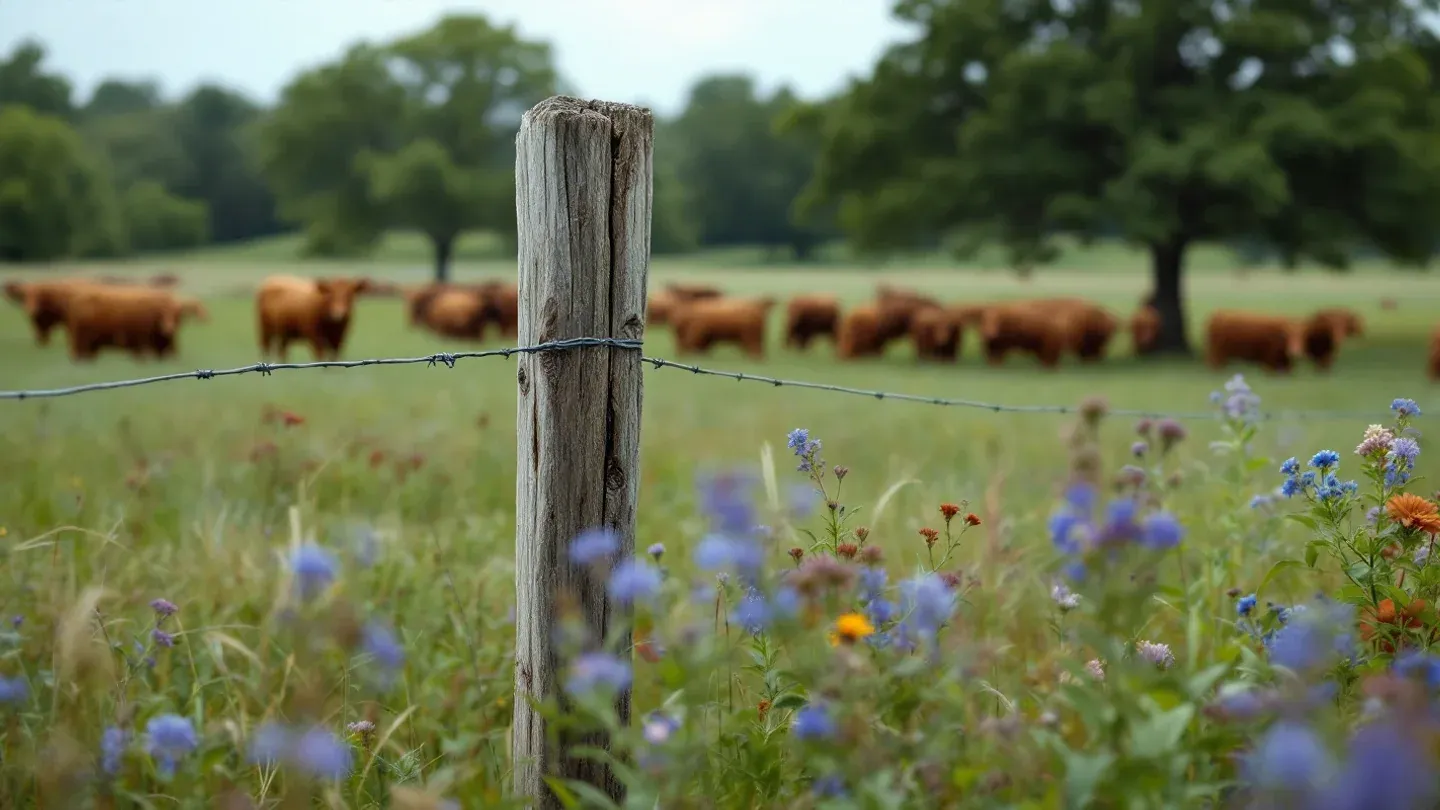
For a farm, the rule of thumb is simple: if you use the word, be able to show the change. A soil test baseline, a photo of the same fence post every June, a grazing chart with rest periods, a count of the species in your pasture. That is the difference between managing holistically and borrowing a fashionable word. Healing the soil is a result you can point to, not a sentence on a sticker.
Product of USA: a loophole on its way out
Under current FSIS policy, meat from animals that were born, raised and slaughtered in another country but minimally processed in the United States may be labeled "Product of USA." On March 13, 2023 FSIS proposed to limit that claim, and "Made in the USA," to products from animals born, raised, slaughtered and processed here and, for multi-ingredient products, with every other ingredient apart from spices and flavorings also of domestic origin. The agency's own survey explains why: 47 percent of participants believed the label already meant born, raised, slaughtered and processed in the United States, and only 16 percent picked the current meaning.
The loophole matters most to grass-fed producers. A 2017 report from the Stone Barns Center for Food and Agriculture, cited by Bloomberg, estimated that 75 to 80 percent of the grass-fed beef sold in the United States, by value, comes from abroad, much of it repackaged behind a domestic-sounding label. As of this writing the rule is still a proposal. We argued for bringing American meat suppliers back home in 2020. We will track where country of origin labeling stands as the rule moves.
Natural, no hormones and no antibiotics
"Natural" is the weakest word on the shelf. FDA's long-standing policy is that it means nothing artificial or synthetic has been added that would not normally be in the food, and the agency says plainly that the policy was never meant to address production methods. On meat it means no artificial ingredients or preservatives, and it says nothing about antibiotics or hormones.
Hormone claims have their own wording trap. "Hormone-free" is not allowed, because every animal has hormones. The approved phrasing is "no added hormones" or "raised without added hormones," backed by documentation. On chicken and pork the claim is close to meaningless, because FDA does not allow hormones in poultry or hog production in the first place.
Antibiotic claims are the ones under the microscope. The June 2023 sampling project exists because USDA said the truthfulness of "raised without antibiotics" and "no antibiotics ever" claims has come into question. If your farm makes that claim, the only honest version is the one with a treatment log behind it. Our earlier piece on the dangers of antibiotic use in farming explains why the claim is worth making at all.
How a small farm backs up a claim without a lawyer
Everything above comes down to one habit: write down what you do, and sell only what you wrote down. Six steps get you there.
Write the claim in one sentence, with definitions
"100 percent grass and forage from weaning to harvest, never confined, never given antibiotics" is a claim you can prove or be caught on. "All natural, pasture-raised goodness" is neither.
Write the protocol on one page
What the animals eat by season, where they live by season, what you do when one gets sick (treat it, and sell it under a different label), and how that animal is kept separate from the others. This is the kind of documentation the FSIS guideline asks for and the kind the agency said in June it wants strengthened.
Keep records an outsider could read
Feed receipts. A grazing chart with paddock moves. A treatment log by ear tag or flock. Processor kill sheets. Twelve months of records is enough to show a pattern; twelve years is a reputation.
Bring it to your processor
The label application belongs to the plant, but the affidavit and the records are yours. Ask what is in their FSIS label file for your product, and give them a better version if it is thin. Selling beef by the half, quarter and bundle runs on the same paperwork.
Pick a verifier when you outgrow handshake trust
AGA and AGW for grassfed, organic for the pasture rule, Land to Market for outcomes. Larger operations can apply to the USDA Process Verified Program, where AMS auditors review the quality manual on paper and then audit every facility and phase of the operation on site, on an ISO 9000 format, for a fee. Our directory of organizations lists the certifiers. The food brands directory shows which labels the honest brands carry.
Say it in public
Put the protocol on your website, print it on the card at the market table, and hand it to the chef. A customer who can read your definition does not need the government's.
A label is a promise. The farms we admire keep it the same way every week, in the pasture before the package, which is what we mean by being consistent. It is also part of respecting creation. The rules may catch up in 2024. Your customers are reading the label today.