
If you ordered chicks in May, they are feathering out in the brooder right now and the pens are waiting on the grass. Pastured broilers are the shortest livestock enterprise a small farm can add: six to eight weeks from chick to carcass, sold whole to neighbors who want to know where their chicken came from. They are also the enterprise with the most folklore around it. This article sticks to what the extension trials and the regulations actually say, so you can plan a first batch on numbers that hold up.
One piece of context first. The highly pathogenic avian influenza outbreak that APHIS first confirmed in a US commercial flock on February 8, 2022 is still the backdrop of this season. From January 2022 to March 15, 2023, APHIS reported the virus in 799 commercial and backyard flocks across 47 states, according to CDC's technical report of March 17. The pace has slowed with the warm weather: in the second week of May the latest poultry detection APHIS reported was a 20-bird backyard flock in Indiana's Posey County, while the virus kept turning up in wild birds in 18 states, many of them birds of prey, the hawks, owls and eagles that circle a pasture pen. A pastured flock lives outdoors by design, so biosecurity is about the parts you control. We come back to that below.
Pick the bird before the pen
Most meat chickens in the United States are Cornish Cross, a hybrid bred for fast growth and feed efficiency. University of Maine Extension's quick guide to pastured broilers recommends harvesting them between six and eight weeks. Kept longer, they run into lameness, heat stress and heart trouble, and the author warns that holding them past that point invites sudden death loss. They dress out at about 75 percent of live weight.
The slower-growing alternatives (Freedom Rangers, Imperials, Kosher Kings and similar crosses) carry fuller colored plumage, tolerate heat better and take two to three weeks longer to reach the same size. They eat about the same amount of feed over that longer life, drink more water and dress at 67 to 69 percent. University of Kentucky's pastured poultry guide puts the feed cost plainly: Cornish Cross can be raised on pasture at about 2 pounds of feed per pound of gain, while the slower breeds may need 3 or 4.
Maine's 2017 pasture trial measured all of this side by side in the same tractors. Cornish Cross went to the processor at 46 days and the slow growers at 60 to 62 days, at live weights that did not differ statistically, about 5.2 to 5.5 pounds. The Cornish Cross carcass averaged 4.1 pounds against 3.5 to 3.8 for the others, and feed per pound of carcass ran 3.6 for Cornish Cross versus 3.9 to 4.8 for the rest. The trial saw no leg or breast problems in any breed at that weight. Pick the bird your customers will buy, then price it on its own feed bill. We look at breed genetics more closely in a later article on heritage breeds.
The pen: two proven designs
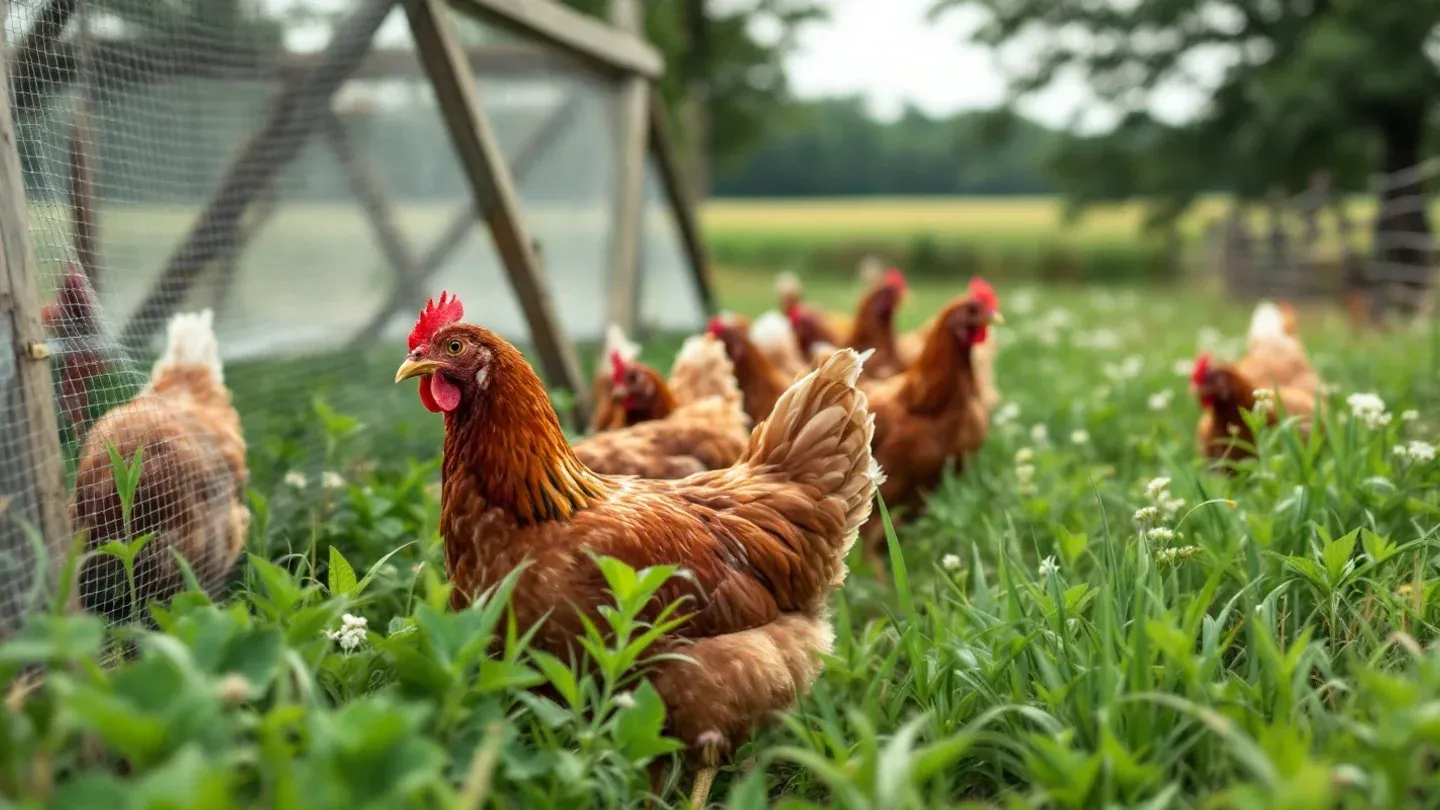
A pasture pen, or chicken tractor, is a bottomless, movable shelter that shades the birds, keeps them dry, breaks the wind and keeps predators out while the flock grazes. The Maine guide describes the two common builds: the Salatin-style pen, roughly 10 feet by 12 feet and 2 feet high, and the taller Suscovich A-frame, about 5.5 feet wide, 10 feet long and 5.5 feet tall. At 1.5 square feet per bird, the Salatin pen holds about 80 birds and the A-frame 36.
The Maine author prefers the walk-in A-frame: you can see every bird, hang feeders and waterers so they move with the pen and waste less, and watch the frame so nobody gets run over. The Kentucky guide adds a caution on the low sheet-metal pen: it cuts airflow and has overheated birds in many parts of the country, and it notes that walk-in hoop pens are popular because they are easier to get into for feeding and checking birds. Whatever you build, Maryland Extension's predator guide wants the edges of a movable house in contact with the ground, because a gap at the base is an open door. Build one pen first, run a batch through it, and only then build five. That is simplicity in practice.
The daily move
The move is the whole point. Here is the Maine timeline for a Cornish Cross batch: two weeks in the brooder, out to the tractor with a heat lamp in week three, lamp off and onto pasture in week four with a move every two or three days while the litter builds, then daily moves from week five, and twice a day in weeks seven and eight as the birds get heavier. On the first few moves, have a second person walk ahead with a broom to keep the chicks clear of the frame; they learn quickly.
The rule behind the schedule is forage utilization. Maine's trial report puts it plainly: once the birds have removed about half the forage under the pen, the plants' root structure starts to suffer, so 50 percent is the trigger to move. Chickens do not digest grass the way a ruminant does; most of the disappearance is trampling and scratching. In hot weather the birds lie down more and graze less, and the Maine team suggests slowing the moves to every other day until it cools. For land, their table works out to about 0.16 acre for a 36-bird tractor over a 21-day Cornish Cross grow-out on grass, and about 0.27 acre for a slow-growing batch that stays out 35 days. The same thinking runs through our six principles of grazing management. It is why broilers fit so well on a farm that integrates livestock and crops: the manure lands where the next crop wants it.
Feed is the bill that matters
Feed is the largest cost in the enterprise, so measure it. On a 20 percent crude protein starter and grower ration, Maine's figures are about 15 pounds of feed per Cornish Cross to reach a 4-pound carcass and about 16 pounds for a slow grower, with 3.6 gallons of water per bird for Cornish Cross and 4 to 4.5 gallons for the others.
Expect modest feed savings from pasture, not big ones. The Maine trial measured forage at about 3.6 percent of the birds' dry matter diet on a grass pasture and estimated around 5 percent on a legume stand, roughly a pound of forage per bird over its life. ATTRA's guide to pastured poultry nutrition quotes a livestock nutritionist's field estimate of 5 to 20 percent of the diet from pasture, depending on the type and age of the bird and the quality of the forage, with the biggest savings in lush late spring and early fall. ATTRA's more useful point is about protein: methionine is the amino acid that limits poultry diets, and the insects and other invertebrates birds hunt on pasture supply it. ATTRA cites research showing that even Cornish Cross broilers make up some of a methionine shortfall from vegetation and insects.
Two rules from the Kentucky guide: chickens cannot live on pasture alone, so feed a complete ration formulated for meat birds, and never feed a layer ration to broilers, which gives them too much calcium and too little protein. Kentucky also notes that legumes such as white clover attract the insects your birds want, that tall fescue and Kentucky bluegrass tolerate grazing well where tender orchardgrass thins out, and that the ryegrasses are the quick option when bird numbers are high and land is short. Pastured birds build soil with that manure; the pen moves are what keep it a gift rather than a burn.
Predators
Losses to predators are a management number, not bad luck. Maryland Extension's fact sheet lists what each predator leaves behind: raccoons climb, open simple latches and reach through wire to pull birds out; weasels and mink get through small holes and kill more than they eat; coyotes dig under and jump fences up to 5 feet; foxes stake out a pen for days and carry birds away. Hawks, owls and eagles are federally protected under the Migratory Bird Treaty Act, so the only answer to them is prevention, such as thin wire or fishing line strung over an open run. For movable housing, Maryland notes that many growers fence the pasture area with electric poultry netting, which offers some protection against ground predators as long as an adequate charge is maintained along the whole line, and the Maine guide suggests the same net fence around the tractor field where predators are plentiful. Guardian dogs work, Maryland adds, but only if raised with poultry and chosen from guardian breeds. In the Maine trial, death loss across the five breeds ran from zero to 3.6 percent, which is the range a well-run first batch should aim for. We cover the netting itself in a field guide to portable electric fencing.
Biosecurity in an avian influenza year
APHIS's Defend the Flock program is written for everyone with poultry, from a few backyard birds to thousands, and its message is the same for a pastured flock: the virus moves on infected birds, contaminated equipment, clothing, vehicles, feed and water, and wild birds carry it to domestic flocks. For a pasture operation that means keeping the brooder separate and clean, keeping waterfowl off the ponds and puddles where your pens run, wearing dedicated boots for the birds, not sharing equipment with other flocks, storing feed sealed, and limiting visitors to the pens. Sick or dying birds go to the state veterinarian or the APHIS line at 1-866-536-7593 the same day. None of this is complicated. It is the habit that matters, and the farms that keep the habit when the headlines fade are the ones that keep their birds. Being consistent is a belief for a reason.
Processing: what the federal exemptions actually say
The Poultry Products Inspection Act requires continuous inspection of poultry slaughter, with exemptions that small farms live by. They are written out in 9 CFR 381.10, and the statute behind them is 21 U.S.C. 464.
The producer/grower 1,000-bird exemption, paragraph (c), takes a farm out of the Act entirely if the producer slaughters no more than 1,000 poultry in the calendar year, all raised on that farm, does not buy or sell any other poultry products, and none of the birds move in interstate commerce. The 1,000 figure dates from a 1982 amendment; before that the cap was 250 turkeys or the equivalent in other birds.
Above that, paragraph (a)(5) is the producer/grower 20,000-bird exemption: slaughter and process your own birds on your own premises, distribute them only inside your state, keep the operation sanitary so the product is "sound, clean, and fit for human food", and label every package with your name and address and the words "Exempted" and "P.L. 90-492" in place of the usual labeling. Paragraph (a)(6) covers a producer or other person processing birds for direct sale to household consumers, restaurants, hotels and boardinghouses, and (a)(7) is the small enterprise exemption for slaughtering and cutting up carcasses. Paragraph (b) adds two limits shared by all three: no more than 20,000 poultry in a calendar year, and no use of a facility that anyone else uses to slaughter poultry unless the Administrator grants it. Personal use and custom slaughter for an owner's own household are exempt without a bird count. One thing the (a) exemptions share: they lift the inspector's presence, not the duty to slaughter under sanitary conditions and sell a product that is sound, clean and fit for human food.
Your state has the last word
The federal exemptions are a floor that states may or may not adopt. The Farm-to-Consumer Legal Defense Fund's state-by-state chart tracks which states took the 1,000-bird exemption, the 20,000-bird exemption, both or neither, and what each added on top. The differences are real.
New York counts the 1,000 birds per farm, not per farmer, treats one turkey as four chickens, prefers that exempt birds go directly to consumers from the farm or a market stall, and requires a state 5-A license for the 20,000-bird tiers, according to Cornell's guide to poultry processing.
Maine's Chapter 348 exemption, described in Maine Extension's on-farm processing bulletin, lets producers under 1,000 birds sell whole birds only, directly to consumers at the farm, at farmers markets or through a CSA, with a short list of facility requirements and three small state licenses.
North Dakota's small-scale poultry guidelines require 1,000-bird producers to register with the state meat and poultry inspection program, sell only to household consumers, and keep records of bird numbers and of customer names and dates for every sale.
So the first phone call of the enterprise is to your state meat and poultry inspection program, before the chicks are ordered. Ask which exemption you fall under, what you may sell, to whom, and what the label must say. The wider fight over local meat processing, from the PRIME Act to state-inspected plants, is a story we tell separately. The groups that track these rules are in our directory of organizations.
Processing day
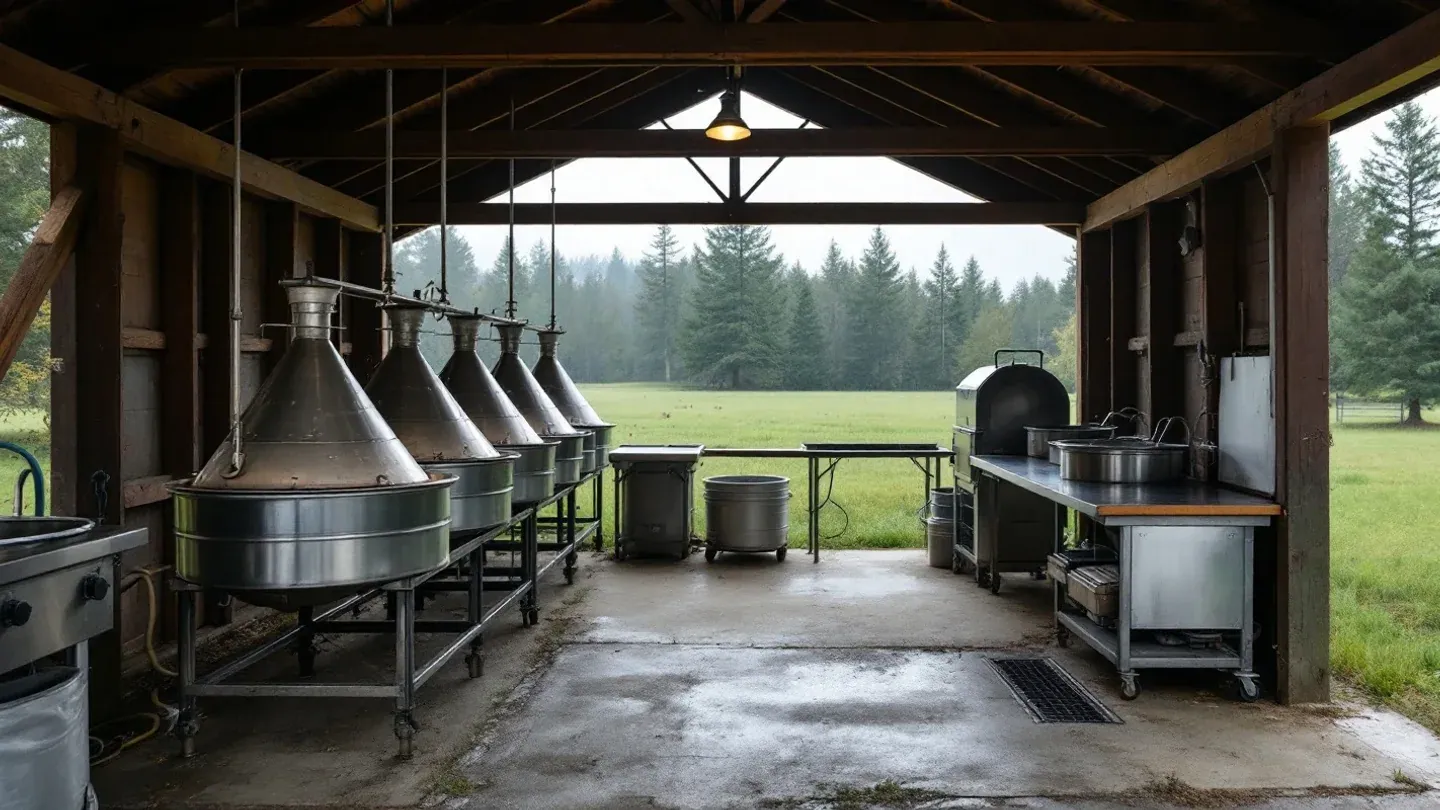
The piece of Maine advice most beginners skip: find a processor and book the date before you buy chicks, because most processors are booked well in advance. If you process on the farm, the basic kit is killing cones, a scalder, a plucker, packaging and a cooler that will take the whole batch. Maine's facility list for its exemption is a sensible model even where it is not required: a hand-washing sink, potable hot and cold water, a way to sanitize tools (170 degrees Fahrenheit for 30 seconds if you use hot water), a separate area for killing and defeathering with the blood collected, floor drains and screened ventilation. Labels there carry the grower's name, address and zip code, the product name such as whole fryer, the net weight, a lot number, the state license number and a not-inspected statement. How the birds are treated in those last minutes is a fair question for any processor, and we take it up in a later article on humane slaughter. Chilling and storage come next; our guide to on-farm cold storage covers walk-in coolers. Equipment makers and small processors are listed in our service directory.
Know your numbers before you set a price
Keep four numbers per batch: chicks bought and birds sold, pounds of feed, hours of labor, and processing cost per bird. Fifteen pounds of feed per bird at this spring's price gives you most of the cost of a 4-pound carcass; death loss, labor and processing give you the rest. Price from there, not from the next stall at the market. We go through the method in a cost of production article. If you sell at a farmers market, our stall guide from last month applies to chicken as much as to tomatoes. A pastured broiler is a local product in the strict sense, raised, processed and eaten within a few miles, which is the opposite of the long supply chains that proved so fragile in 2020.
A first batch, in order
- Call the state meat and poultry inspection program and write down your exemption, your sales venues and your label.
- Book the processor, or plan the on-farm setup, before ordering chicks.
- Order chicks to arrive seven to nine weeks before the date you want to sell.
- Build or buy one pen at 1.5 square feet per bird and set up the brooder.
- Fence the pasture with electric netting and keep the charge up.
- Weigh the feed in, count the birds out, and write both down.
- Sell whole birds first; cut-up and parts can wait until you know your numbers.
Start with fifty or a hundred birds, not five hundred. A small batch run well teaches more than a big one run badly, and the second batch is where the long-term enterprise begins. If you are drawing up the wider farm plan, our guide to farm business plans and the grass-fed beef article show how broilers fit alongside the ruminants.