
A pasture farm makes a promise about how its animals live. Slaughter day is where that promise is tested, and it is the one day most of us hand the animal to somebody else. The plant may be forty minutes away or four hours, and the farmer rarely sees what happens after the trailer gate swings shut.
That is not a reason to look away. It is a reason to ask better questions before the first animal is booked. This article covers what federal law actually requires, what the best plants measure that the law does not, how mobile and on-farm harvest work, and what a thoughtful farm asks when it walks through a processor's door. It belongs to the same conversation as our piece on animal welfare on pasture. It also belongs to the belief we call respect creation.
What the law requires
Congress passed the Humane Methods of Slaughter Act in 1958 and strengthened it in 1978. Its opening section declares it the policy of the United States that slaughter and the handling of livestock in connection with slaughter shall be carried out only by humane methods. The operative section, 7 U.S.C. 1902, says that cattle, calves, horses, mules, sheep, swine and other livestock must be rendered insensible to pain by a single blow or gunshot, or by an electrical, chemical or other means that is rapid and effective, before being shackled, hoisted, thrown, cast or cut. Ritual slaughter under Jewish or similar religious requirements is treated as humane under the same section.
USDA's Food Safety and Inspection Service (FSIS) turns the statute into plant rules in 9 CFR Part 313, and the details are worth knowing because they are the things you can see on a visit:
- Pens, driveways and ramps must be kept in good repair, free of sharp or protruding objects, with floors that give good footing.
- Animals must be moved with a minimum of excitement and discomfort and never faster than a normal walking speed. Electric prods are to be used as little as possible, and prods on house current must be stepped down to no more than 50 volts.
- Every holding pen must give access to water, animals held longer than 24 hours must have feed, and animals held overnight must have room to lie down.
- A conscious animal that cannot walk may not be dragged. It goes to a covered pen and is moved on equipment made for the purpose.
- The approved methods are captive bolt, gunshot, electrical current and carbon dioxide, each with its own section. The captive bolt rule calls stunning an exacting procedure that needs a well-trained and experienced operator, and it says delivery of calm animals to the stunning area is essential because accurate placement is difficult on nervous or injured animals.
The enforcement teeth are real. Under 9 CFR 500.3, FSIS may suspend inspection without prior notice when an establishment is handling or slaughtering animals inhumanely, and without inspection a plant cannot ship product. The agency also publishes a humane handling dataset, a yearlong snapshot of its humane handling activities at federally inspected plants, broken down by district, plant size and quarter, which it says it refreshes every quarter. It is dry reading, but it is public, and it is the closest thing a farmer has to a national scoreboard.
Where the law stops
Two gaps matter to small farms.
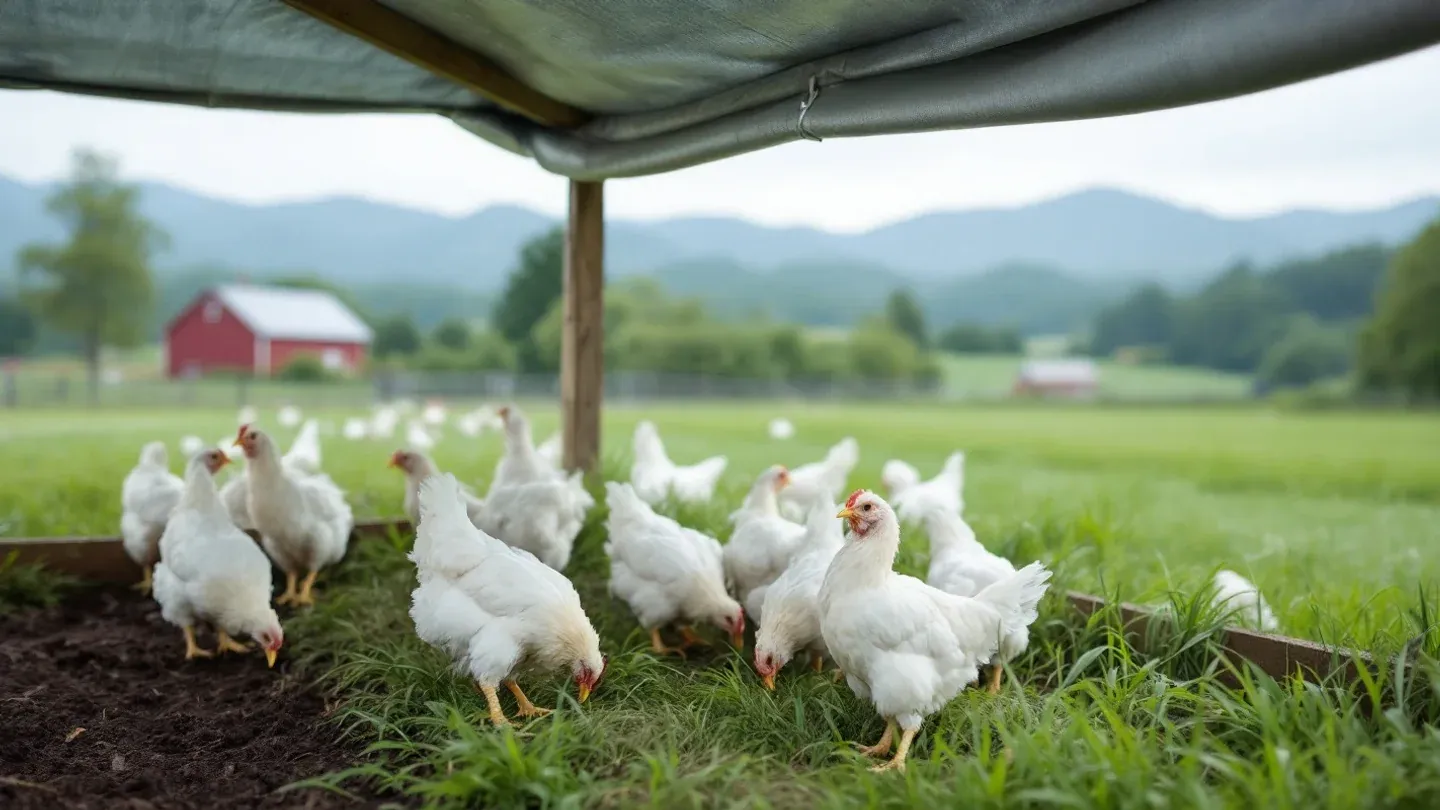
Poultry is the first. The Humane Methods of Slaughter Act lists livestock, not birds. FSIS said so plainly in a 2005 Federal Register notice: there is no specific federal humane handling and slaughter statute for poultry. What applies instead is the Poultry Products Inspection Act and 9 CFR 381.65, which require slaughter in accordance with good commercial practices, thorough bleeding and no scalding before breathing has stopped. Birds that die from mishandling rather than slaughter are condemned as adulterated, so the plant has a commercial reason to handle well, but the standard is looser than for a steer. If you raise pastured broilers, the humane standard is largely yours to set and to check.
Custom-exempt slaughter is the second. Under 9 CFR 303.1, the inspection requirements do not apply to custom slaughter of an owner's animal for the owner's household, which is how most freezer beef and half hogs move. Penn State Extension's plain guide to inspected versus custom plants notes that at official establishments inspection is usually a daily activity, while meat from custom-slaughtered livestock is exempt from inspection altogether: at a custom plant, nobody from the government is standing at the knock box on your animal's day. We covered the sales side of that split in our PRIME Act article. The welfare side is simpler: at a custom plant, the farm is the audit.
The numbers a good plant knows
The law says "rendered insensible." The industry's own audit standard, written by Temple Grandin of Colorado State University and adopted by the meat packing trade, puts figures on it. Her Recommended Animal Handling Guidelines and Audit Guide scores five things: cattle and sheep must be rendered insensible with one captive bolt shot at least 95 percent of the time (99 to 100 percent is excellent, below 90 is a serious problem); no more than 3 percent of cattle and 5 percent of pigs may vocalize in the stun box or restrainer; no more than 1 percent of animals may fall; electric prods may touch no more than 25 percent of cattle and pigs and 5 percent of sheep; and a single sensible animal on the bleed rail fails the audit outright. Willful abuse, such as dragging a conscious downed animal, is an automatic failure. For a very small plant, the guide says to score one hour of production, and on a sample of 10 to 20 cattle every one must be insensible before hoisting.
Those scores changed the industry. In a 2005 paper in the Journal of the American Veterinary Medical Association, Grandin reported that a 1996 USDA survey found only 3 of 10 beef plants could stun 95 percent of cattle with a single shot. After outside audits began in 1999, the share of plants reaching that mark rose to 90 percent, and the mean first-shot success in audited plants between 1999 and 2002 was 97.2 percent. Cattle vocalizing fell from 7.7 percent before the audits to between 1.7 and 2.4 percent.
The same guide tells you what insensibility looks like, which is useful if you are allowed to watch: after the stun the head and neck should be loose and floppy, the tongue hanging straight out and limp, no rhythmic breathing where the ribs move, no attempt to right itself, no spontaneous blinking. A limb kick is normal. A twitching nose or a tongue moving in and out is not.
The holding pens matter as much as the stun
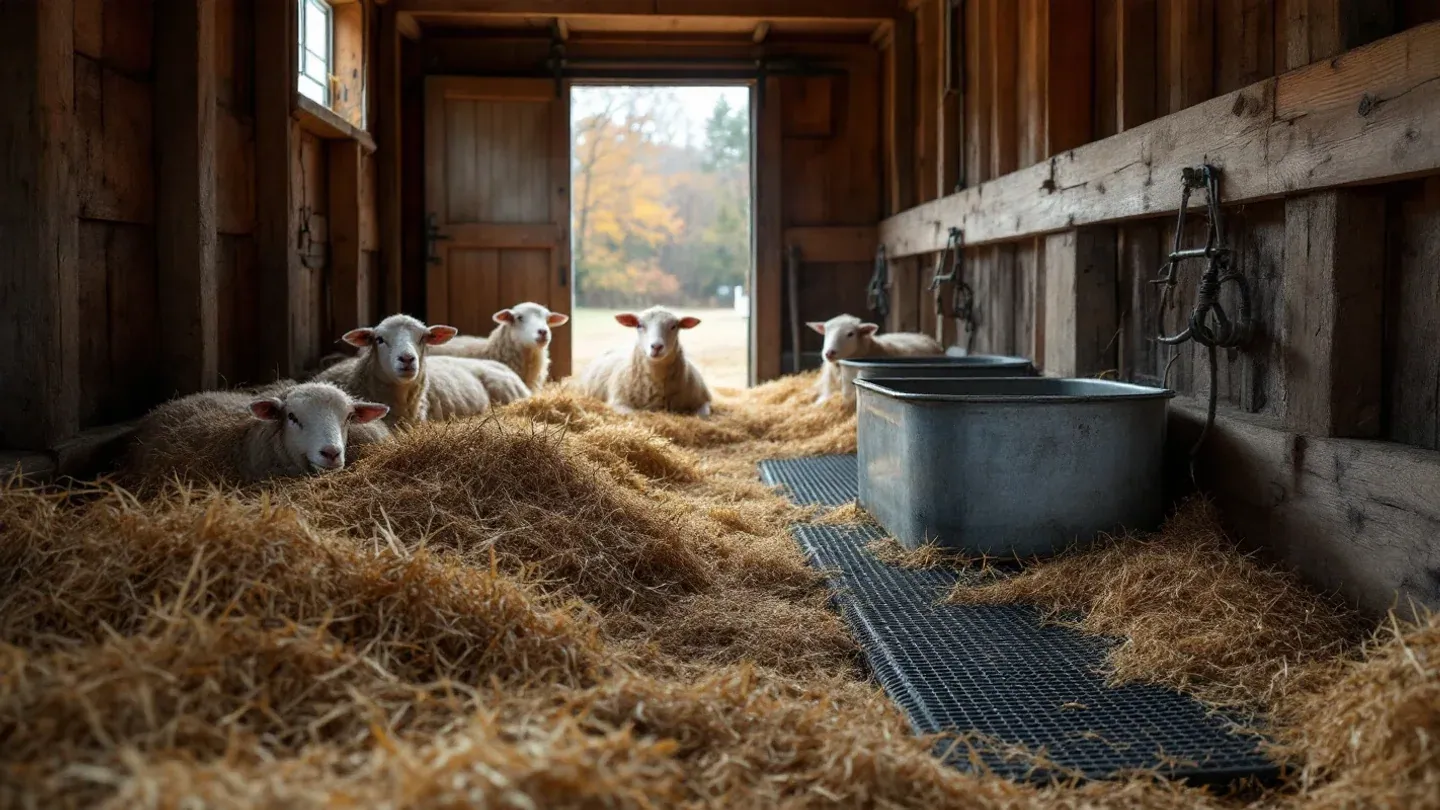
Lairage is the plant word for the yard and pens where animals wait. It is where a quiet farm animal becomes a nervous one, and nervous animals are the ones that get missed shots. Grandin's guide recommends that pigs rest two hours before stunning and that animals be kept in their transport groups where possible. The federal rule on water in every pen, feed after 24 hours and room to lie down overnight is a floor, not a target.
Transport is part of the same chain. The old federal Twenty-Eight Hour Law limits carriers moving animals across state lines to 28 consecutive hours before unloading for feed, water and at least five hours of rest. Few small farms haul that far, but the principle holds at any distance: the trailer ride is the first stage of slaughter, and the calm you built on pasture is easy to spend in an hour of rough loading.
Mobile and on-farm harvest
The alternative to hauling is to bring the knife to the farm. Three versions exist.
The first is a USDA or state-inspected mobile slaughter unit. A SARE-funded study in Florida describes the standard model: the unit drives to the farm, harvests the animals, leaves the offal, and carries the carcasses to a fixed plant to chill and cut. Island Grown Farmers Cooperative in Bow, Washington, is the example it cites, and the Niche Meat Processor Assistance Network at Oregon State University keeps a list of units, though not every entry on it is current. The economics are hard. A 2021 Farm and Dairy report counted fewer than a dozen state or federally inspected red meat mobile units in the whole country, quoted the network's director putting a trailer alone at roughly 250,000 dollars before equipment, and noted that on an inspected unit an inspector must be on hand to witness every kill. The success story in that piece, Natural Harvest LLC in Spring Green, Wisconsin, put its first state-inspected truck on the road in 2016 and by 2021 was handling 20 to 30 beef and up to 35 pigs a week. University of Nevada, Reno Extension built its own mobile harvest unit with CARES Act money in 2020, finished it in 2021, folded it into a meat workforce program in 2023, and offers both custom and USDA harvest from it.
The second is custom or itinerant slaughter on the farm, where the meat goes back to the animal's owner. Vermont's statute is the clearest example. Under 6 V.S.A. 3311a, a registered farmer may sell a live animal to a buyer who slaughters it on the farm, up to 30 swine, 10 cattle or 80 sheep or goats a year, or 12,000 pounds live weight in combination, and an itinerant slaughterer may kill an owner's animal on the farm where it was raised. Both routes require a humane method and sanitary conditions. Other states draw these lines differently, so read your own.
The third is poultry. The Cornell Small Farms Program describes mobile poultry processing units built in New York since the mid-1990s for farmers selling their own birds under the 1,000 bird exemption from federal inspection: trailer-mounted kill cones, scalder and picker that a farmer rents and tows home after training.
None of these options removes the farm's responsibility. A knock box on your own gravel still needs a trained hand, a working stunner and a backup.
What to ask on the visit
Call ahead, ask for twenty minutes with the owner or kill floor lead, and go on a slaughter day if they will let you. Then ask:
- Which inspection do you operate under, and what does that let me sell? (Inspected plants mark packages; custom plants mark them Not for Sale.)
- Who stuns, how were they trained, and what method and charge do you use for my species and size? Is there a backup stunner on the floor?
- How do you confirm an animal is insensible before it is shackled and hoisted, and what happens when a shot misses?
- Do you keep stun records or run your own handling audit, and would you share the last one?
- May I see the unloading area and the pens? Look for water in every pen, non-slip floors, solid sides, cover for a downed animal, no sharp edges, no shouting.
- How long will my animals wait, and will they stay together?
- How far out are you booking, and what is the policy if I miss my slot?
- What do you need from me: clean, dry, calm animals, sorted and on time, with the cut sheet already in hand?
A plant that answers these without defensiveness is usually a plant that has thought about them. A plant that bristles has told you something too.
A practical close
Book your date early, visit before you commit, and write your own checklist from the questions above so you ask the same things of every plant. Watch an unloading if you can. Then do your part: load quietly, haul gently, arrive when you said you would, and keep a note of how each load went so you can compare plants over the years. This is the same patient work we described in setting up a grass-fed beef farm. The same fragility of local processing we wrote about in how fragile is our meat production system is the reason a good local plant deserves a loyal customer.
Our service providers directory lists processors and equipment makers we have come across. Our organizations directory points to the networks that help small plants and the farms that depend on them. If you find a good plant, say so publicly and send them your neighbors. Being involved in your local processing is the most direct way a farm can make its promise hold all the way to the end.