
Mid-April is when the first season workers arrive on a diversified farm: the college student who answered a listing, the career changer who wants to learn grazing, the neighbor's kid who finally turned sixteen. Many arrive under the title "intern" or "apprentice," and on a lot of farms that title is doing quiet legal work. It is standing in for a wage.
This article is about what the law says a farm owes those people, what it costs to do right by them, and what real teaching looks like. The two halves belong together. A farm that pays fairly but teaches nothing is a low-wage job with a nicer name. A farm that teaches well but pays nothing is, in most states, breaking the law.
The title does not change the law
The federal test is short. The Department of Labor's Fact Sheet #71 says for-profit employers must pay their employees, and whether an "intern" is one turns on who is the primary beneficiary of the arrangement. Courts weigh seven things: a clear understanding that there is no pay; training like a school would give; a tie to coursework or academic credit; a schedule that follows the academic calendar; a length capped by the learning; work that complements rather than displaces paid employees; and no promise of a job at the end. No single factor decides, but read them against a farm season and the picture is clear.
Farm Commons, the nonprofit that writes legal guides for farmers, put a plain example into a UNH Extension fact sheet. Intern A harvests leeks with the crew, washes and packs vegetables, and works slowly. She is very likely an employee, and minimum wage and overtime apply. Intern B shadows the crew between classes, pulls a leek or two, and interviews the manager for a school project. Her time serves her own education, so she is not an employee. The rule that follows is blunt: an unpaid intern cannot provide a benefit to the operation. Cornell's Small Farms Program says it in six words: unpaid farm internships are mostly illegal.
The one real exception is the nonprofit. A charitable teaching farm can take volunteers, and the Farm Commons fact sheet says so. A family LLC selling at the farmers market cannot, however much it teaches.
What the farm owes under federal law
The federal floor is lower than most people assume. The FLSA's agricultural rules, restated by the Department of Labor in January 2025, exempt a farm from federal minimum wage and overtime if it used no more than 500 "man-days" of agricultural labor in any calendar quarter of the previous year, a man-day being any day an employee works at least one hour. The regulation puts 500 man-days at roughly seven full-time employees in a quarter and warns that a farm with two or three full-timers can cross the line at harvest with part-time help. Immediate family is exempt too. Farms over the line owe the federal minimum of $7.25 an hour, unchanged since July 2009, and no overtime: agriculture is exempt from the federal time-and-a-half rule however large the farm.
Most interns do not work at that floor, because the states have moved. California's minimum wage reached $16.50 on January 1, 2025, and the only carve-outs that could touch an intern are for apprentices formally indentured through the state's apprenticeship division and for "learners," who may be paid 85 percent for their first 160 hours. Washington has required overtime for farmworkers after 40 hours since January 1, 2024. New York's farm overtime threshold dropped to 56 hours in 2024 and falls to 52 in 2026, on its way to 40 by 2032. Whatever your state's rule, it applies to an intern exactly as to a hired hand, because the law does not know the difference.
Workers' compensation is the other line item. In New York a farm must carry it once it has paid $1,200 in cash wages in a year, and interns must be covered. Thresholds differ by state; the principle does not. An intern who cuts a hand on the wash line is your injured worker, and the insurance question belongs before the first day, not after.
Housing, meals and the stipend
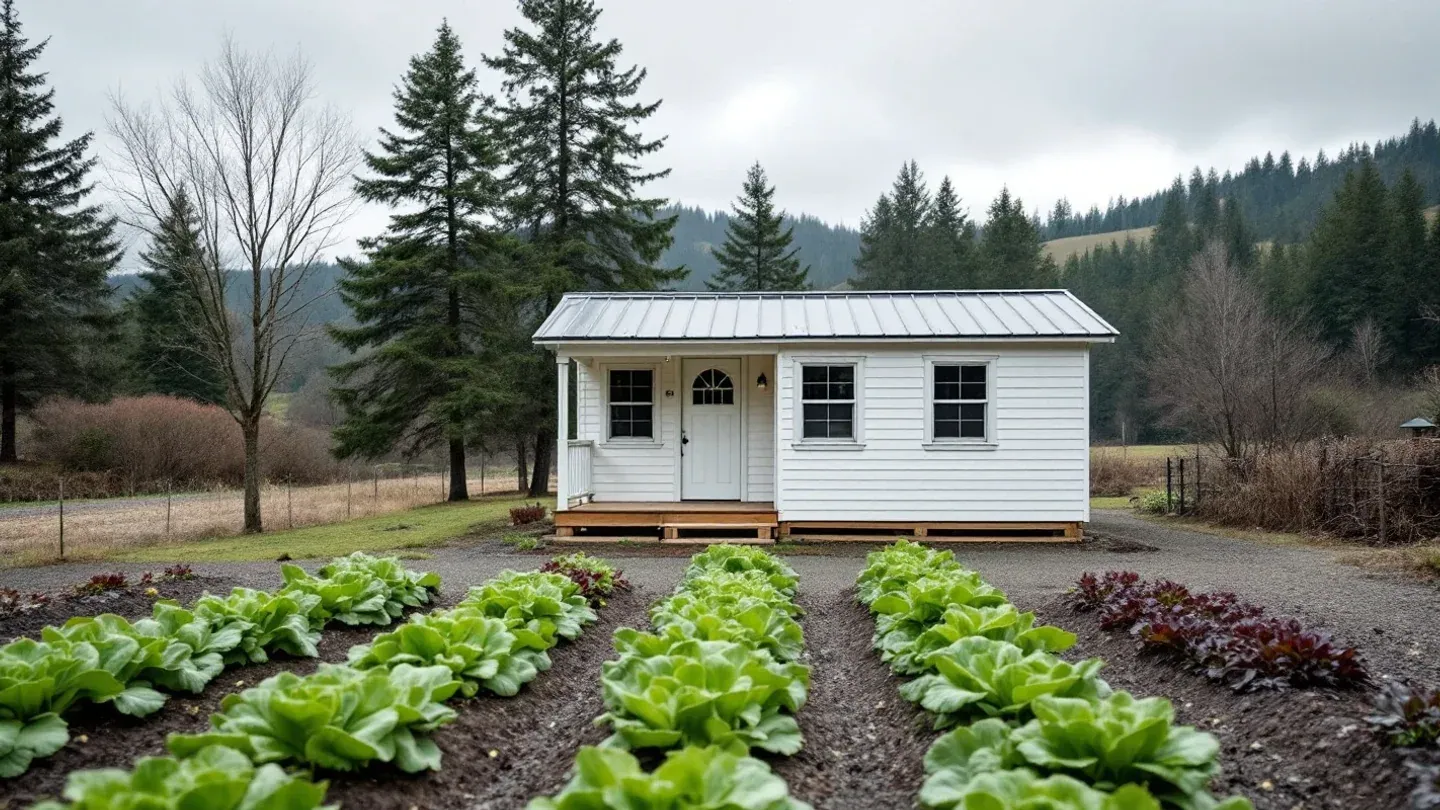
Many internships are built on a trade: room, board and a few hundred dollars a month for a full week of work. The law lets a farm count lodging toward wages, but only on its terms. The Wage and Hour Division's Field Assistance Bulletin 2015-1 lists five: the lodging is customarily provided, the worker accepts it voluntarily, it complies with the law, it primarily benefits the worker rather than the employer, and the employer keeps accurate records of what it costs. The credit is capped at "reasonable cost," meaning actual cost with no profit, and the employer must keep itemized records of what the lodging actually costs. A cabin with no occupancy permit, or a bunk the intern must occupy because the farm needs someone there at five in the morning, does not count at all.
"Complies with the law" is not vague. OSHA's temporary labor camp standard requires at least 50 square feet of floor space per sleeper, beds 36 inches apart, 35 gallons of water per person per day, one toilet per 15 people, one shower per ten, and sleeping quarters at least 500 feet from livestock. H-2A employers must provide housing at no cost that meets that OSHA standard or the Labor Department's own housing rules. The federal government does not let a farm charge a guest worker for a bunk; a domestic intern's housing should be at least as sound.
The H-2A program also supplies the clearest benchmark we have for what farm work is worth this year. The adverse effect wage rates that took effect in December 2024 run from $14.83 an hour in Arkansas, Louisiana and Mississippi to $20.08 in Hawaii; Texas is $15.79, Wisconsin $18.15, California $19.97. Those are the rates the Department of Labor requires before a farm may bring in foreign workers without depressing local wages. An intern doing the same hoeing and milking for a $600 stipend and a bunk is paid a fraction of that, and the farm should be able to say, with a straight face, what it gives in return.
One state has written a lawful middle path. Washington's farm internship program, made permanent in May 2023, lets a farm with under $265,000 in annual sales take up to three interns at a time under a state certificate. The farm must file a curriculum of learning modules and supervised work, sign a written agreement covering hours, instruction, wages, room and board, and pay workers' compensation premiums for the intern; in return the intern is not owed the state minimum wage for internship hours. Note what the state required to make that trade legal: a real curriculum, a written deal, insurance, a cap on numbers. That is the shape of a fair internship anywhere.
Young people on the farm
Youth labor has its own rules. The Department of Labor's farm youth fact sheet lets 16-year-olds do any farm job at any time; 14- and 15-year-olds may work outside school hours in non-hazardous jobs; 12- and 13-year-olds need written parental consent or a parent employed on the same farm. Under 16, the hazardous list is specific: no tractors over 20 PTO horsepower, no combines, balers or forage harvesters, no ladders above 20 feet, no chemicals labeled "danger" or "poison," no pen or stall with a breeding bull, boar or stud horse, or a cow with a newborn calf. The restrictions do not apply to a farmer's own children on the family farm. The neighbor's teenager is not your child, and the helper who learns to drive a tractor at fifteen is a serious liability.
What real teaching looks like
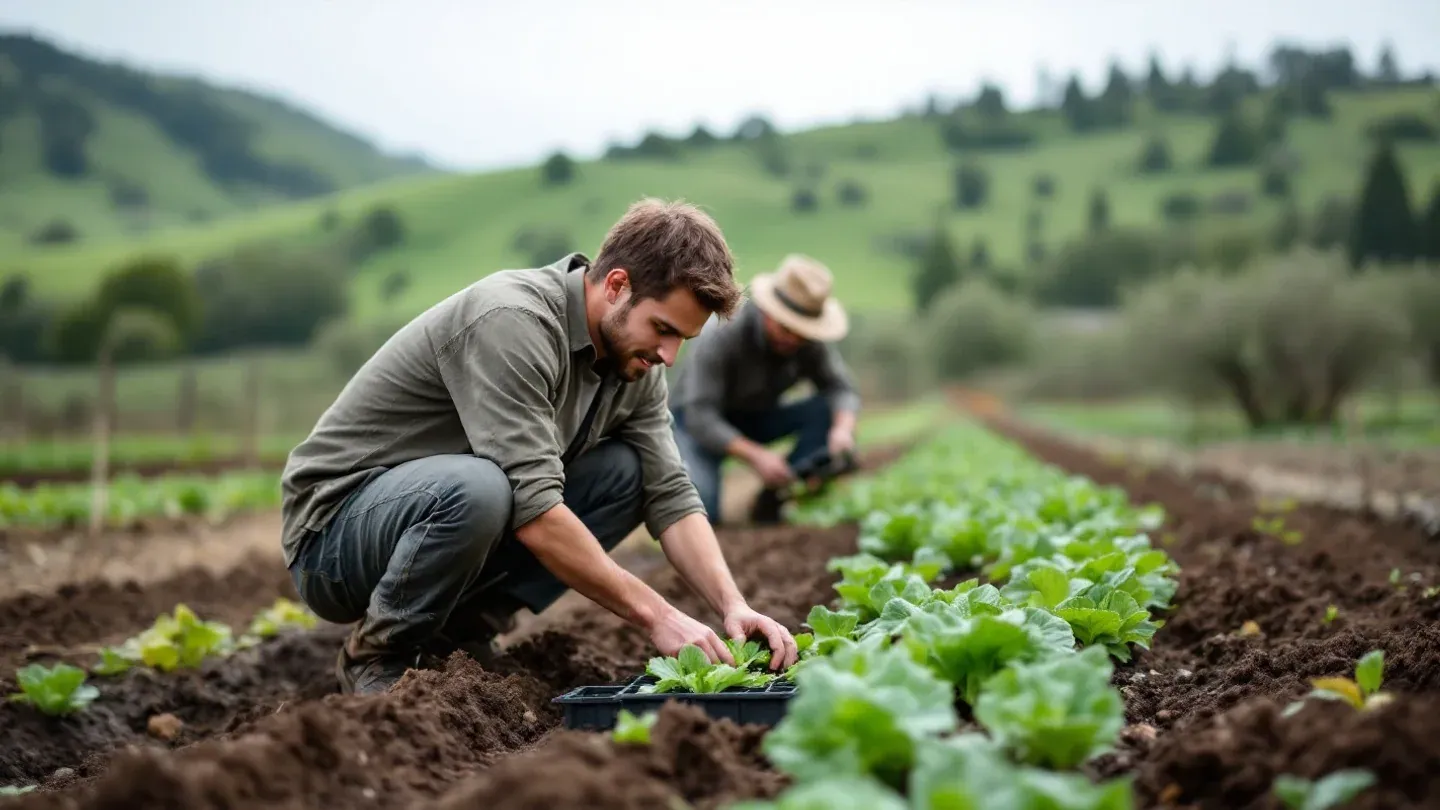
If pay keeps a farm honest, the curriculum is what justifies the word "apprentice." The best template is the one the Department of Labor uses for registered programs. The federal standards require at least 2,000 hours of structured on-the-job learning for a time-based program, recommend 144 hours of related classroom instruction a year, demand a written agreement, and require a wage schedule that rises as skills do.
Farm programs built on that model have run for years. The Dairy Grazing Apprenticeship, founded in Wisconsin in 2010 and the first registered apprenticeship for farming in the country, takes two years: 3,700 hours of paid work on a grazing dairy under a mentor grazier plus 300 hours of coursework, ending in a Journey Dairy Grazier credential. A USDA SARE project that ran from 2017 to 2019 and trained those mentors reported 180 approved Masters, the farmer-trainers who host apprentices, and did the thing most farm internships skip: it taught the teachers, with tip sheets on adult learning, communication and onboarding. In California, the Center for Land-Based Learning's state-registered farm manager apprenticeship has paired 3,000 hours of paid on-the-job training with 250 hours of instruction over about two years; the state agriculture department described it in 2018 as an effort to build a new labor pipeline. In the ranching West, the Quivira Coalition's New Agrarian Program has placed apprentices with mentors who ranch regeneratively, in eight-month seasons on working ranches across the West, since 2008.
A single farm cannot copy their budgets, but it can copy their structure:
- A written skills list. Twenty to forty things the apprentice will do unsupervised by season's end, from calibrating a seeder to reconciling the market cash box. Check them off together each month.
- A protected teaching hour. One hour a week, off the production clock, where the owner explains why: the crop plan, the grazing chart, the cost of production, the Schedule F. Apprentices who see the books learn more than apprentices who only see the hoe.
- Rotation. Four weeks in the field, four in the wash-pack, four at market, four with the animals. A season spent weeding one block teaches weeding.
- A reading list. Our six books every future farmer should read is a start and the books and films directory goes further. Discuss a chapter in the teaching hour.
- Off-farm learning. A conference, an extension field day, a neighbor's farm walk. The groups in our organizations directory run many of them, and most are cheap.
- A final project. A crop plan, an enterprise budget, a grazing plan for next year: the apprentice's proof of learning and the farm's second opinion.
- An exit conversation. What did they learn, what did the farm fail to teach, would they come back. Write it down for next year.
That is also what makes a farm worth returning to. We wrote in 2019 about finding and keeping employees; the farms that keep people are the ones that teach them, and being consistent about that one hour a week matters more than any single lesson.
The registered route
A farm that teaches at that level can register. The Office of Apprenticeship lists farmers, ranchers and other agricultural managers among apprenticeable occupations, with animal caretakers, farm equipment mechanics and soil and plant scientists. A registered program has five elements: it is industry-vetted, the apprentice holds a paid job with raises tied to skill, on-the-job learning is structured and mentored, classroom instruction supplements it, and completion earns a nationally recognized credential. A farm can sponsor its own program or join one that exists, as host farms do in the dairy apprenticeship. USDA's Beginning Farmer and Rancher Development Program funds the extension services and nonprofits that build such networks, and a call to the one in your state is cheaper than writing a curriculum from scratch.
Registration is not for everyone. It is paperwork, it binds you to a wage schedule, and it takes a two-year horizon. But that horizon is the point. The 2022 Census of Agriculture put the average age of American producers at 58.1 and counted over a million beginning producers, nearly a third of the total, who have farmed ten years or less. Every one of them learned somewhere, usually on someone else's land. We have written about how hard the first step onto land still is and which FSA loans help. A farm that trains its successor, child or stranger, is doing the work that succession planning and thinking in decades require.
A fair deal, in writing
Put it on paper before the first day. The offer letter states an hourly wage at or above your state minimum, the expected hours, your state's overtime rule, and whether housing is part of pay and at what documented cost. It says the farm carries workers' compensation. It attaches the curriculum, names the weekly teaching hour and describes the final project. It says plainly that no job is promised at the end, and that the farm will write a reference that reflects what the person actually learned.
Then run the season as if someone's family depends on it, because it does. Start the newcomer slowly in the first hot week. The intern in your cabin has parents who want them home with two hands and a skill. That is what we mean when we say a farm should nurture families, and it is why fair pay and real teaching are one subject, not two. The farm that does both is the one whose former apprentices are farming down the road in ten years, buying its heifers and sending it their own interns. The farm that does neither has a listing on the internship board every April, and a reason.