
December is the quiet month on most farms, and that makes it the right month for a conversation that is awkward in June. Pesticide drift is the most common way a regenerative or organic farm gets hurt by something it never bought, never sprayed and cannot control. It is also a subject where a small farm has more power than it thinks, as long as it acts before the sprayers roll in spring.
This article covers what drift is, what the organic rule requires in a buffer, how to talk with neighbors before the season, what to do the day you see cupped leaves, and how a state complaint works. It also takes stock of the dicamba news of 2024, because a federal court in Arizona changed this year what your neighbors can legally spray next summer.
What drift is
EPA defines spray drift as the movement of pesticide dust or droplets through the air, during or soon after an application, to any site other than the one intended. State and local agencies receive thousands of drift complaints every year.
The drift fact sheets written by Ohio State for the North Central IPM Center describe how it happens. Droplets are carried downwind during the application itself. Temperature inversions, common in Midwestern summers under light or calm winds, form in the late afternoon or evening and persist until one to two hours after sunrise; cool, dense air near the ground keeps fine droplets suspended and lets them slide sideways onto a neighbor's field like fog. Vapor drift comes later: dicamba and 2,4-D are among the few pesticides that readily turn into gas when the air temperature spikes, even after a clean application. And contamination travels through poorly cleaned sprayers, runoff water, grass clippings and compost.
NDSU Extension adds that drift can travel one mile or more under some conditions, and not necessarily from the nearest field. It takes very little. Ohio State reports grape injury at concentrations as low as 1/800th of the labeled rate. The signs are cupped leaves, narrow strapped leaves, twisted stems and stunted growth, showing within hours on fast-growing plants or within a few days when growth is slower.
The dicamba story, as of December 2024
Dicamba-tolerant soybeans came to market in 2016, and a herbicide long used on broadleaf weeds in corn and as a burndown before planting spread into May, June and July. In 2017, University of Missouri weed scientist Kevin Bradley estimated that roughly 3.6 million acres of soybean had been injured by off-target dicamba, with 2,708 cases under investigation by state agriculture departments as of mid-October that year.
On February 6, 2024, the US District Court for the District of Arizona vacated EPA's 2020 registrations of the three over-the-top dicamba products, XtendiMax, Engenia and Tavium. The court found that EPA had skipped the public notice and comment that federal pesticide law requires for a new use. On February 14 EPA issued an existing stocks order: product that had been labeled, packaged and released for shipment before February 6 could still be used through the 2024 season under the old labels.
Bayer, BASF and Syngenta then applied for new registrations. EPA published its notices on May 3, June 4 and July 23, 2024, each with a 30-day comment period. Bayer's proposed label would allow soybean applications only before, at or immediately after planting, with a June 12 cutoff, and would halve the maximum annual rate from 88 to 44 ounces. In September, EPA said it was still reviewing comments, would prepare a combined risk assessment, then publish a proposed decision for another 30-day comment period before any final decision, and warned that funding shortfalls would add delay. As this article goes out, no over-the-top dicamba product holds a registration for 2025. If that holds, 2025 will be the first season since 2016 without one.
That is good news for a tomato grower next to soybeans, but it is not the end of the subject. The ruling covered only those three products. Older dicamba formulations are still in use, and SDSU warns that they carry a higher volatility and drift potential than the vacated ones and can injure or kill sensitive broadleaf plants. The 2,4-D-tolerant soybean system, on the market since 2019, was not part of the ruling either. The neighbor conversation still matters.
What the organic rule says about buffers
The land requirement in the organic regulation is short. Any field whose crop is sold as organic must have had no prohibited substance applied for three years before harvest, and must have distinct, defined boundaries and buffer zones, such as runoff diversions, to prevent contact with a prohibited substance applied to adjoining land. The rule names no width.
USDA's National Organic Program training fact sheet on buffers fills in the practice. Many certifiers use 50 feet as a starting width and adjust it at inspection; the buffer may be reduced, enlarged or waived depending on what the inspector finds. The buffer is part of your organic system plan and is checked at inspection; failing to establish or maintain one can be a reason to deny certification. You may grow a crop in the buffer, but it cannot be sold as organic, and your certifier may test for residues at any point. A buffer can be smaller where a solid fence, hedgerow or tall annual crop stands between the fields, where the neighbor uses granular or soil-applied products, or where sprays go on when nothing marketable is in your field. It should be larger where your field is downwind, where the neighbor's water drains into yours, or where there is aerial spraying with fine nozzles. The fact sheet also notes that grass, trees and shrubs in a buffer make habitat, which is the case we made for hedgerows and windbreaks. We made it again for pollinator strips earlier this year.
Two more sections carry the teeth. You must immediately notify your certifier of any application, including drift, of a prohibited substance onto your operation. And if residue testing finds a prohibited substance above 5 percent of EPA's tolerance for that residue, the product cannot be sold as organic and the certifier may investigate. Ohio State points out a harder fact for fruit and vegetable growers: most of those crops have no dicamba tolerance at all, so a drift event can mean a total loss of the crop even when the yield looks fine. It is a cost that rarely appears in the usual explanations of why so few farms are organic.
Before the season: the neighbor conversation
Ohio State's advice to specialty growers is to build a positive personal relationship with the owners and operators of surrounding land, and to explain plainly how sensitive your crop is, what it costs to grow and what an acre is worth. A row-crop neighbor may not realize that most fruit and vegetable crops have no dicamba tolerance, so a drift event with no visible yield loss can still wipe out the crop.
Do it in winter. Bring a map of your fields, mark the ones that matter most, and leave your phone number. Ask what they plan to plant and spray and when, and ask to be called the day before a spray on the fields that touch yours. Find out who actually runs the sprayer: often it is a commercial applicator or the co-op, and that person needs your map too. A neighbor who understands what is at stake before planting can still change nozzles, products or timing; one who hears it for the first time in June, from a lawyer, cannot. This is what acting local looks like at the fence line. It is also what being involved means in practice.
Put your fields on the map
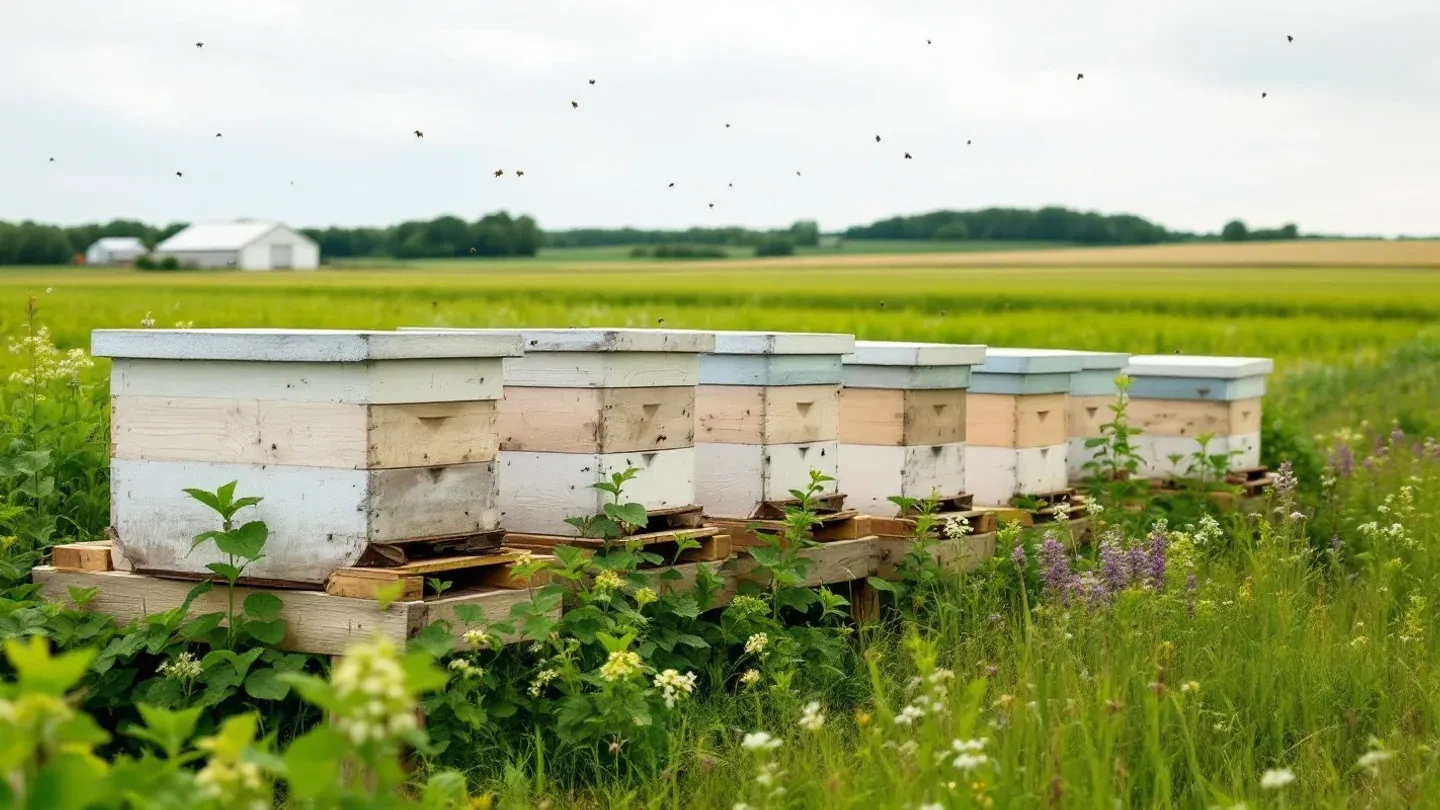
FieldWatch is a nonprofit that runs free, voluntary mapping registries: DriftWatch for specialty crop sites, which growers of organic and non-herbicide-tolerant row crops can use as well, BeeCheck for apiaries, and FieldCheck for applicators, who check the map for registered sites before they spray. DriftWatch was developed in 2008 by Purdue University's College of Agriculture and the Office of Indiana State Chemist, and applicators who register can receive email alerts when a new site appears in the areas they define. Ohio State recommends registering with your state's sensitive crop registry and posting signs at the field edge. Our organizations directory lists the groups that can tell you how your state runs its registry.
Prepare the evidence before you need it
The same Ohio State fact sheet is blunt about insurance: do not rely on your crop insurance, because drift is usually not treated as an act of God. What protects you is a paper trail started before anything goes wrong. Keep production and financial records by field, including yield history and a budget for inputs and labor. Draw a farm map that shows windbreaks, buildings, ponds and the adjoining properties. Install a weather station that logs wind, temperature and rainfall, since weather data often decides whether an applicator was negligent. Scout several times a week in spray season, photograph anything suspicious, and know the label limits: the fact sheet lists spraying dicamba in winds above 10 mph, or 2,4-D above 15 mph, among the prohibited conditions. That is long-term thinking in the most literal sense.
The day you see cupped leaves
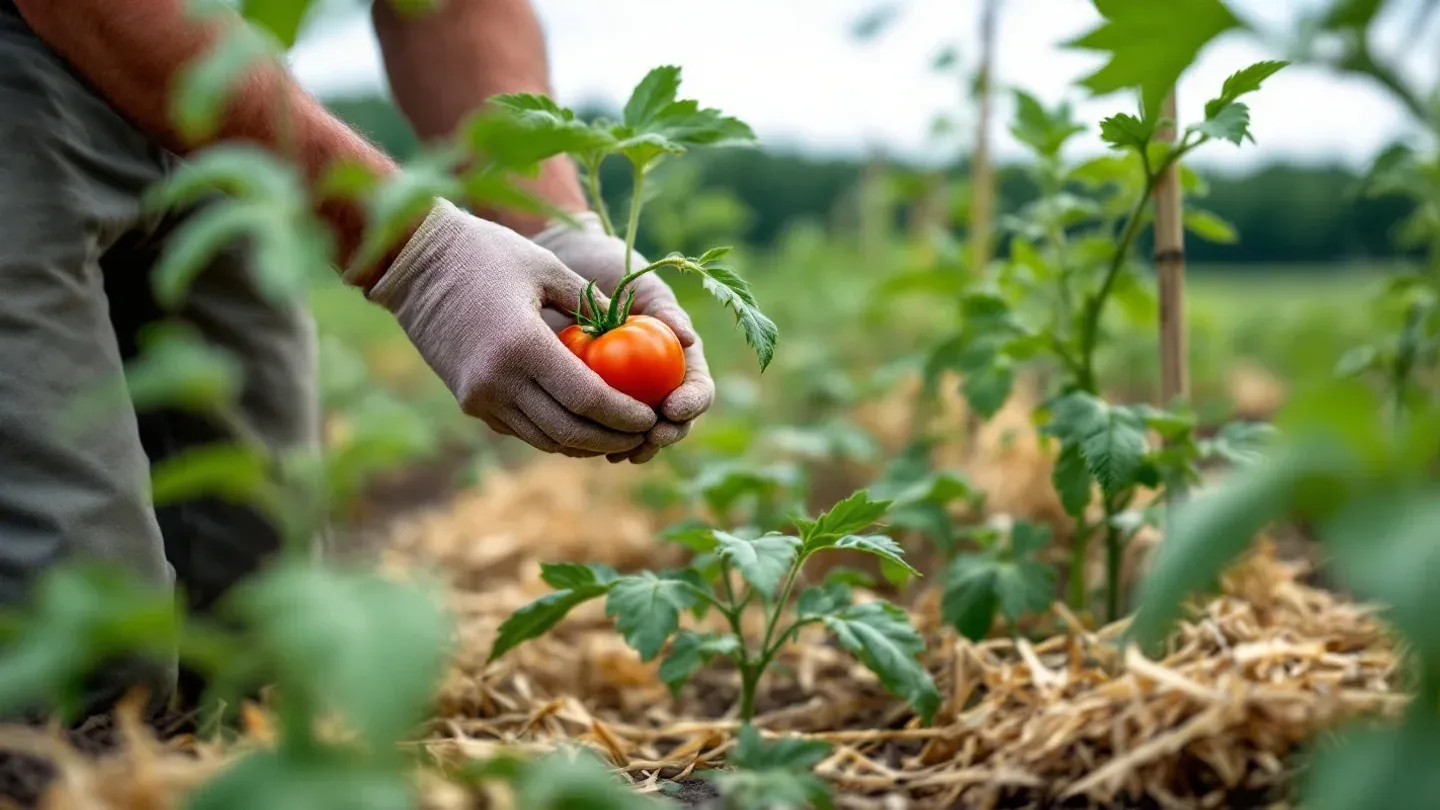
Ohio State's rule is to document immediately, thoroughly and repeatedly, because every response you might choose later depends on it. Record the date, the time and the growth stage, and the weather for the spray day and the three to five days after it. Take photos with time stamps and GPS: wide shots, close-ups with a coin for scale, and healthy plants of the same stage beside damaged ones. Map the affected areas and note low spots, where inversion drift settles. Walk the perimeter and look at the hedgerows: wild grape, roses, maples, dogwoods and oaks are the common indicator plants.
Rule out the look-alikes: aphids and leafhoppers, viruses, foliar fertilizer, frost, and your own lawn products. Collect more tissue than you think you need, several gallon bags per damage zone, fresh gloves for each zone, perforated paper bags, labeled and frozen, and log who handled every bag. Having an extension agent or certified crop adviser present reduces any claim of biased sampling.
NDSU adds the sober part. Early visual estimates can mislead; crops often recover and yield better than expected, and injury is best judged 15 to 30 days after the event. Lab tests are costly, usually test for one herbicide at a time, and will not tell you where the drift came from. And call your certifier the same day; the rule says immediately.
Filing a state complaint
In each state, one agency works with EPA to enforce pesticide rules and respond to complaints; in Illinois it is the Department of Agriculture. EPA's own drift page points to that agency or to the National Pesticide Information Center at 800-858-7378. The deadlines are short. Illinois must receive the complaint within 30 days of the incident or of first noticing the damage. Minnesota takes complaints only in writing and may decline one filed more than 45 days after the event. North Dakota requires written notice to the applicator by certified mail within 28 days, and before 20 percent of the crop is harvested, before any civil claim.
Know what the complaint does and does not do. An inspector visits, interviews you and nearby applicators, pulls spray records and weather data and may take plant, soil or water samples. In Illinois a violation can bring a warning letter or a fine between $750 and $10,000. But regulators can only find misuse; they cannot order compensation. Ohio State's action steps warn that an investigation can take a year or longer, usually cannot be stopped once started, and that documented residue can affect your ability to sell the crop. Compensation means an insurance claim or a lawsuit, and the fact sheet notes that many farms carry only $50,000 to $100,000 in spray liability, that most umbrella policies exclude pollution, and that claims should go in well before the state finishes.
That is why the fact sheet, like the University of Illinois, says to talk to the neighbor first. The conversation may turn out to be the only action you need, and your neighbor may not even be the source.
The duty runs both ways
A regenerative farm is not only a victim in this story. If you run a sprayer at all, even with products allowed under the organic rule, you owe the farm next door the same care: check FieldCheck before you fill the tank, respect the wind limits on the label, stay out of inversions, keep records, and tell neighbors with bees or sensitive crops what you plan. Ohio State notes that applicators are required to check the sensitive crop registries before they spray, and EPA's plain advice is to apply in calm weather and not when rain is forecast within the next 24 hours.
The ethical core is older than any label. A farm that respects creation does not let its inputs leave the property, and it does not treat a conventional neighbor as an enemy. The neighbor who follows the label is doing what the law asks. Our duty is to be the one who starts the conversation in December, documents fairly in June and files a complaint only with evidence in hand. We argued in an earlier piece that organic and sustainable are not the same thing; the fence line is where that difference stops being abstract. We will go into the certification side, including what buffers cost, in a future article on organic certification.
A December checklist
- Walk every boundary with a map. Mark which edges face a row-crop neighbor, which are downwind in summer and where water drains in.
- Decide the buffer for each edge and write it into your organic system plan. Order hedgerow stock or grass seed now.
- Visit each neighbor and each applicator before planting season. Leave a map and a phone number, and ask for a call before sprays.
- Register every field and hive on FieldWatch and set a reminder to check the entries again before next season.
- Put up a logging weather station and check that your camera stamps time and location.
- Find your state agency, its complaint form and its deadline, and line up a residue lab.
- Ask your insurance agent what drift would actually cover.
- Keep your certifier's number next to the phone. The rule says immediately, and it means it.