
The summer of 2023 is making its own argument. On June 20, Del Rio and San Angelo set all-time temperature records of 113 and 114 degrees, and four days later a weather station in Big Bend read 119, one degree short of the Texas state record, according to NOAA's June climate summary. Phoenix has not seen a high below 110 since June 30 and has already passed the 18-day streak that stood as the record since 1974, per NOAA's July report. The tomatoes, peppers and melons do not wait for the weather to break. Somebody is out in that field.
This article is about that somebody, and it is written for the owner or manager with a crew of two or twenty who wants to do right by them, with or without a regulator at the fence. Water, rest and shade are not perks a generous boss hands out on a bad afternoon. They are what the work costs, and a fair farm pays it.
Heat kills farmworkers first
The numbers here are old because the problem is old. A CDC study of 1992 to 2006 counted 68 crop workers who died of heat in those fifteen years and put their death rate at 0.39 per 100,000, against 0.02 for all US civilian workers: nearly 20 times higher. When OSHA opened its heat rulemaking in 2021, the notice in the Federal Register cited a later analysis that put agriculture, forestry, fishing and hunting at 35 times the heat-death risk of other industries from 2000 to 2010, and counted 907 US workers killed by environmental heat from 1992 to 2019, with 43 deaths in 2019 alone. OSHA itself says those figures are likely undercounts.
The pattern inside those deaths matters more than the totals. Citing a 2018 review, OSHA reports that almost half of heat-related deaths happen on a worker's first day and more than 70 percent in the first week. The person most likely to die in your field is the one who started Monday, or came back after two weeks away. We will come back to that.
A duty, not a favor
Here is the legal floor, and it is low. Federal OSHA has no heat standard. The one farm rule that touches the subject is the field sanitation standard, which requires suitably cool drinking water in single-use cups, toilets and handwashing within a quarter-mile walk, and reasonable breaks to use them. It applies only where eleven or more employees do hand labor in the field on a given day. On top of that, a rider renewed every year in the appropriations act keeps OSHA off any farm with ten or fewer employees that has not run a temporary labor camp in the past twelve months. For larger farms, OSHA falls back on the general duty clause, which says a workplace must be free of recognized hazards likely to cause death or serious harm.
Read that from the crew's side. On most small and mid-sized farms, nobody is coming to check whether there was shade at two o'clock. The owner is the only rule, which is exactly why we treat this as ethics rather than compliance. A farm that tells its customers it cares for the land cannot send its people into 105 degrees with a single jug and a shrug. The crew's families depend on them coming home upright; that is part of what we mean by a farm that nurtures families. And a farm that wants to find and keep good employees learns quickly that the heat plan is the first thing experienced hands ask about.
Where the law stands in July 2023
Three things frame what a careful farm should be doing now.
First, since April 8, 2022, OSHA has run a National Emphasis Program on heat. On "heat priority days," any day with a forecast heat index of 80 degrees or more, inspectors are told to look for heat hazards during any visit and to open heat inspections in targeted industries. Agriculture is on the target list by name: vegetable and melon farming, fruit and tree nut farming, cattle ranching, and support activities for crop production, which is where farm labor contractors sit. The program runs for three years.
Second, OSHA is still writing a rule. It published an advance notice in October 2021 and took comments into early 2022. As of the Spring 2023 regulatory agenda the standard is at the prerule stage, with a small business review panel penciled in for August 2023. A proposed rule, let alone a final one, is well down the road. Nobody should plan a farm around it.
Third, in our own state, Texas just moved the other way. HB 2127, signed June 14 and effective September 1, 2023, bars cities and counties from adopting or keeping any ordinance in a field the state Labor Code occupies. Whatever a Texas city once required of employers in the heat, from September the only floors are the federal ones described above.
Only a handful of states have heat rules of their own. OSHA's list names California, Washington and Oregon for outdoor work, Colorado for agricultural labor and Minnesota for indoor workplaces. The three West Coast rules were written with field crews in mind, which makes them a good benchmark for a farm anywhere.
The West Coast benchmark
California has had Section 3395 on the books since an emergency rule in 2005. Employers must provide enough water for one quart per worker per hour for the whole shift. Shade must be up whenever the temperature passes 80 degrees, and available on request below that. At 95 degrees, high-heat procedures kick in: a working communication system, observation of every worker, someone designated to call for help, pre-shift meetings, and for agriculture a minimum ten-minute cool-down rest every two hours. A worker newly assigned to a high-heat area must be closely watched for the first 14 days.
Washington rewrote its outdoor heat rule this year, and the agriculture version took effect on July 17, 2023, one week before this article. The trigger is 80 degrees in ordinary clothing, 52 degrees in nonbreathable gear. Employers must plan for a quart of water per hour, provide shade, and allow paid cool-down rests whenever a worker feels the need. Acclimatization gets its own section: close observation for 14 days for anyone newly assigned to the heat or back after seven or more days away, and on any day that is ten degrees hotter than the previous five. At 90 degrees the high heat procedures require ten minutes of paid rest in the shade every two hours; at 100 degrees, 15 minutes every hour, plus a buddy system or regular check-ins for anyone working alone.
Oregon adopted OAR 437-002-0156 in May 2022, effective June 15, 2022, with a twin rule for agriculture. It keys off the heat index rather than the thermometer. At a heat index of 80, shade must be close to the work, open on at least three sides, and large enough for everyone on break to sit fully in it; water must be cool or cold and sufficient for 32 ounces per person per hour. At a heat index of 90, employers need a written rest-break schedule, a way to spot a sick worker fast, a designated emergency caller, a written acclimatization plan and a written heat illness prevention plan. Training is annual and documented.
Side by side, the shape of a decent farm heat program is obvious: water in quantity, real shade, planned rest that gets longer as it gets hotter, a slow start for new people, somebody watching, and a plan for the bad moment.
Acclimatization: the first week decides
The body adapts to heat, but only if it is given time. NIOSH puts the schedule plainly: a new worker should spend no more than 20 percent of a normal shift in the heat on day one, adding no more than 20 percentage points each day after. An experienced worker who has been away can go faster: 50 percent on day one, 60 on day two, 80 on day three, full time on day four. Full adaptation takes seven to 14 days. A few days off does little harm; a week or more away and much of it is gone.
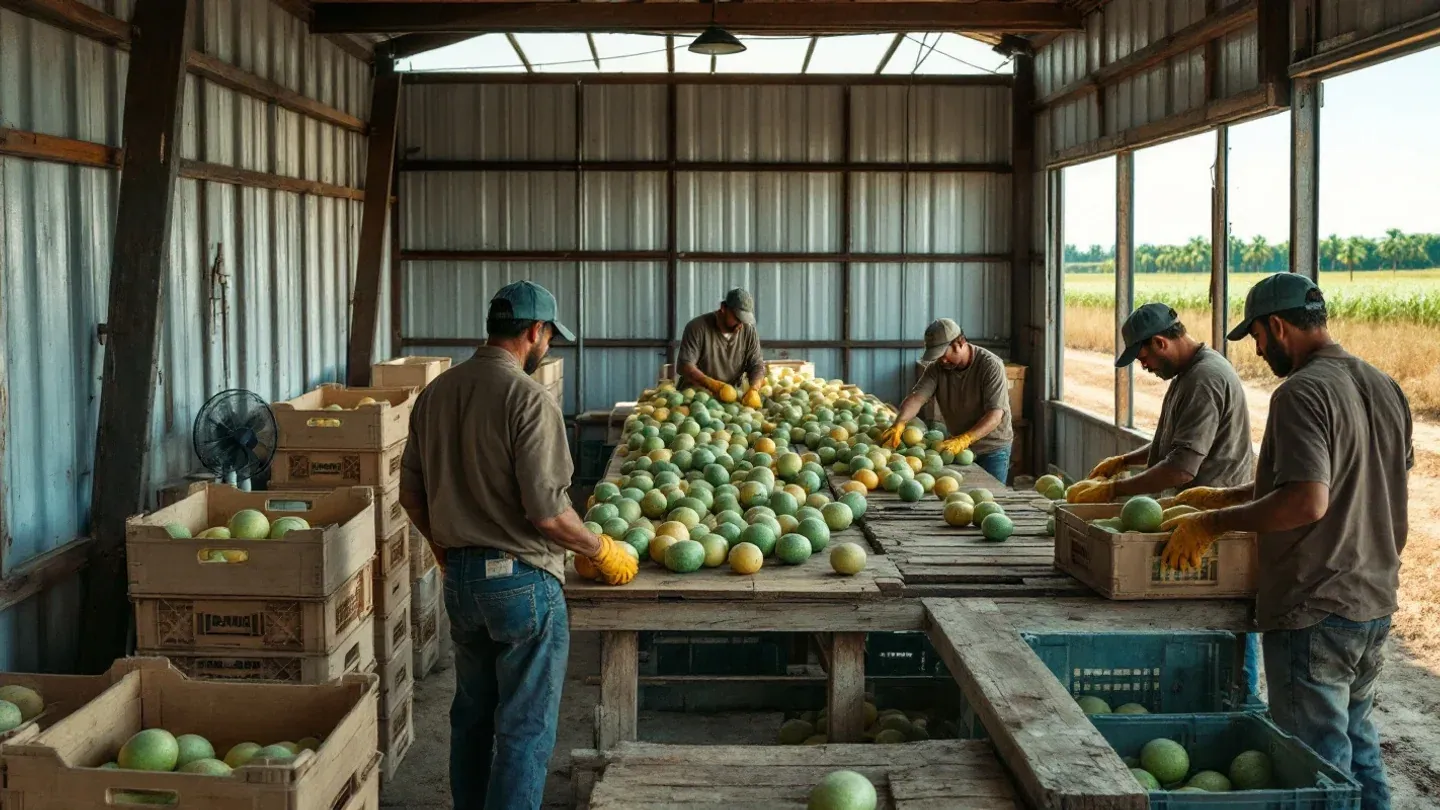
On a farm this means the hire who starts in the second week of July does not pick a full day in the sun on Tuesday. They do a morning, with a break in it, and spend the rest of the day washing, packing or sorting out of the sun. Reduce the time, not the effort: light duty does not build heat tolerance, so keep the task real and shorten the exposure. The same applies to the owner's teenager, the summer intern and the cousin helping with the melons; a fair deal for interns and apprentices starts with not cooking them in week one.
Build the day around the heat
A written plan is nothing without a schedule that respects it; some of this is time management in the plainest sense.
Start early and front-load the heavy work
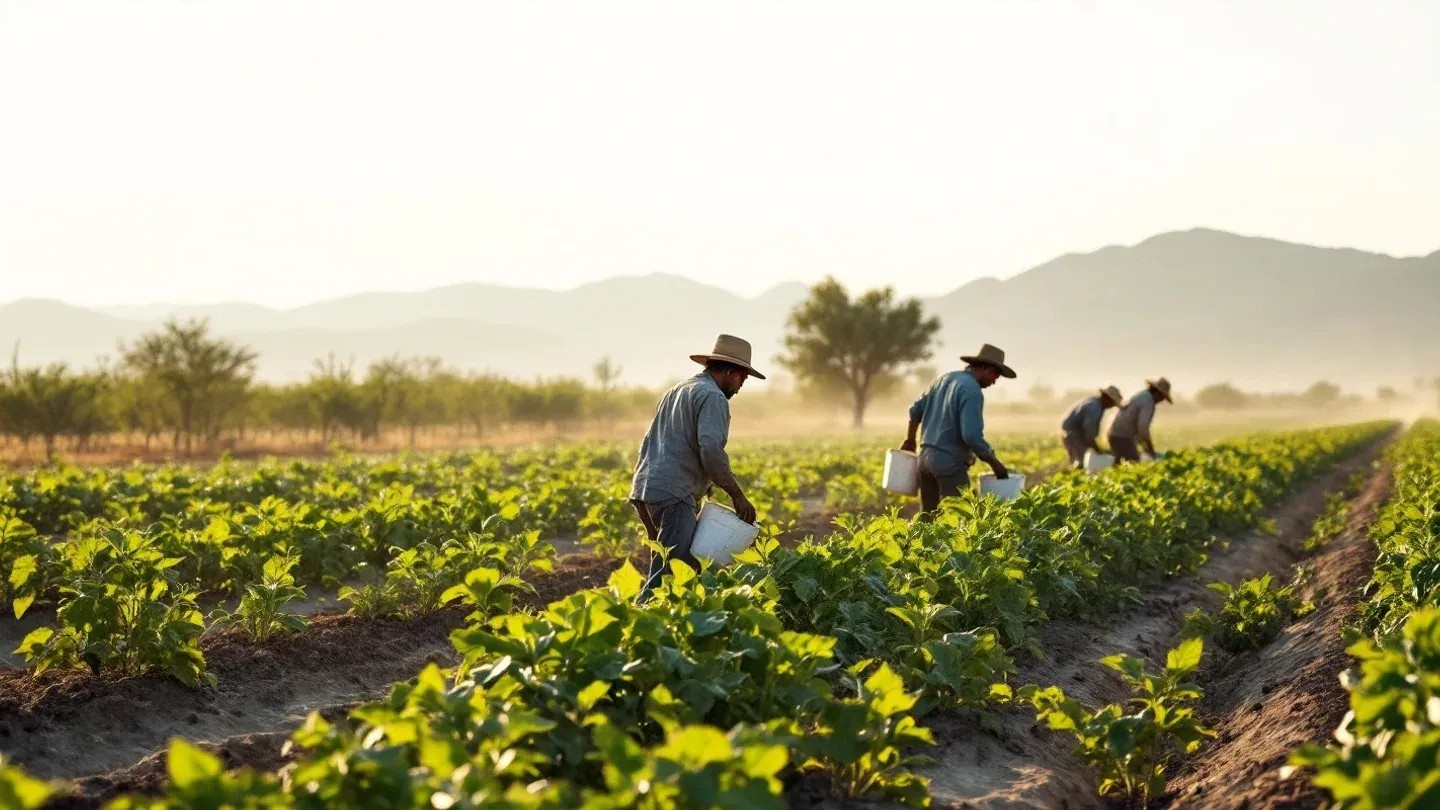
Harvest, trellising, hauling and hand weeding belong in the first hours. When the heat index climbs, move people to shaded or indoor tasks, or send them home and make the hours up on a cooler day. Check the forecast the night before and tell the crew the plan. Direct sun can add up to 13.5 degrees to the heat index you see on your phone, and OSHA notes that outdoor workers have died on days when the heat index topped out at 86 degrees. Heavy work in July does not need a triple-digit day to hurt someone.
Make water easy and cool
NIOSH's working figure is one cup every 15 to 20 minutes during moderate work, and not more than six cups in an hour. Water should be cool, under about 59 degrees, and near the work, not at the truck a quarter mile away. Past two hours of heavy sweating, add an electrolyte drink that is not loaded with sugar or caffeine. Thirst is a poor signal; people drink when the water is in front of them.
Make the shade real
Washington's definition is a useful test: shade is a blockage of direct sunlight, and a hot car in the sun does not count. A pop-up canopy at the field edge, a row of mature trees, the north side of the barn with a fan: any of these works if it is close enough that a ten-minute break is ten minutes in the shade. Make the rest paid and mandatory on the hottest days, on the Washington pattern of ten minutes every two hours at 90 and 15 minutes every hour at 100. A rule that is the same every day beats a judgment call every afternoon; that is the practical side of being consistent.
Nobody works alone in the heat
Pair people up, or put a radio or phone on anyone on their own, and check in on a schedule. The person getting into trouble is often the last to notice.
Warning signs and what to do
Train the whole crew, in the language they speak, before the first hot week, and again mid-season. The core fits on one card. OSHA's symptom list runs from heat rash and cramps through heat exhaustion (heavy sweating, thirst, nausea, dizziness, irritability) to heat stroke, where the signs are confusion, slurred speech, fainting or convulsions, with skin that may be either sweaty or hot and dry.
The response is simpler than the diagnosis, and OSHA puts it plainly: when in doubt, cool the worker and call 911. Move the person to shade, strip heavy outer clothing, apply cold wet towels or ice, fan them, and if heat stroke is possible keep cooling with cold water until the ambulance arrives; cold water immersion is the fastest way to bring a body temperature down. Never leave a sick worker alone, and never send someone home "to sleep it off" without first aid or medical care. Keep the field address and directions written where the person calling can read them.
Livestock have their own version of this problem, and a grazing plan that ignores it loses animals; we cover that separately in heat stress in cattle.
The one-page heat plan
All of this fits on a single sheet taped inside the barn door.
- Triggers. At 80 degrees: shade up, coolers full, breaks encouraged. At 90: mandatory ten-minute shade break every two hours. At 100: 15 minutes every hour, heavy work stops by early afternoon.
- Water. One quart per person per hour on hand or on a refill schedule, cool, within a short walk of the work, single-use cups.
- New and returning workers. First day 20 percent in the heat, then add 20 percent a day; anyone back after a week restarts at half. Closely watched for 14 days.
- Buddy system. No one works alone above 90. Check-ins on the hour.
- Emergency. Who calls, from what phone, with what address. First aid kit and cold water or ice on site.
- Training. Everyone, before the season and again in July, in their language. Keep a dated list of who attended.
Review the sheet when the weather changes and after any close call. For farmworker and farm safety organizations that have already worked this out, our organizations directory is the place to start. And if your farm carries workers' compensation, your carrier will usually help you write the plan; they would far rather pay for a canopy than a claim.
The crew in your field this week is doing the hardest job in American food in the hardest conditions this summer has offered. Water, rest and shade are not generosity. They are the bill, and it is overdue.