
Spring planting is under way across most of the country, and the first gene-edited foods have begun to reach American plates. At the same time the federal rulebook for the technique is in a state it has not been in for years. The 2020 USDA rule that would have waved many gene-edited plants through was thrown out by a federal court in December 2024, the older rules are back in force, and the replacement USDA promised has not arrived. A farmer deciding what to plant is left with a question that is at once agronomic, ethical and commercial, and with a lot of noise from both sides.
This is an attempt at a fair look. It covers what gene editing is and is not, what the research says about the first generation of engineered crops, how three federal agencies share the job, what the organic standard says, who owns the seed, and how a regenerative farm can reason its way to a decision it will still stand behind in ten years.
Transgenic, gene-edited and what the words mean
Conventional breeding crosses two plants and selects among the offspring. Every crop in your field came out of that work, and as the FDA notes, people have used selective breeding and cross-breeding for thousands of years.
Transgenic crops, the ones most people mean when they say "GMO", carry DNA moved in from another organism: the corn that makes a bacterial insecticidal protein, the soybean that survives glyphosate. USDA's bioengineered food standard defines such foods as containing genetic material modified through in vitro recombinant DNA techniques where the change "could not otherwise be obtained through conventional breeding or found in nature".
Gene editing is different in method and often in outcome. Tools such as CRISPR and TALENs cut the plant's own DNA at a chosen spot, and according to the FDA the result can "add, remove, or alter DNA in the plant genome". Many commercial edits simply switch off a gene the plant already has, which leaves no foreign DNA behind and gives a change a breeder could in principle have found by screening enough plants. Other edits insert sequences, and some editing work uses a bacterium to carry the editing tool into the cell. Those details decide how regulators treat the product, so they matter more than the marketing does.
The first generation is everywhere: USDA's Economic Research Service reports that more than 90 percent of US corn, cotton and soybean acres are planted to genetically engineered varieties. The gene-edited list is still short. The FDA says the first genome-edited plant grown and sold as food in the United States was a soybean producing high oleic, low linolenic oil, made with TALENs. In April 2016 Nature reported that a CRISPR-edited white button mushroom could be grown and sold without further USDA oversight. In May 2023 Pairwise of Durham, North Carolina, launched a CRISPR-edited mustard green through the foodservice distributor Performance Food Group and called it the first food developed with CRISPR in the US market. The edit rids the greens of the pungent, wasabi-like flavor that an enzyme in the raw leaf produces, and by late 2024 the company had licensed sales and distribution and was working with Bayer to reach grocery shelves.
What the research says about the first generation
The most thorough independent review remains the 2016 report of the National Academies of Sciences, Engineering, and Medicine. Its committee read the original studies and found no substantiated evidence that foods from genetically engineered crops were less safe than foods from other crops. It also found that insect-resistant Bt crops generally cut yield losses and insecticide use.
The same report is blunt about the other side of the ledger. Where herbicide-tolerant crops led to heavy reliance on glyphosate, "some weeds evolved resistance and present a major agronomic problem", and sustainable use of these crops "will require use of integrated pest-management strategies". That is the lesson a regenerative farm should take from the first twenty years: the trait is never the whole story. A trait that makes one simple practice easy will pull a farm toward that practice, and the costs show up in the system, not in the seed bag. We wrote about the same dynamic in the dangers of monocropping. It also runs through myths about modern farming.
Three agencies, one framework
Since 1986 the United States has regulated biotechnology under a Coordinated Framework that splits the work three ways. The FDA oversees the safety of the food. The EPA regulates pesticidal substances, including the ones a plant is engineered to make. USDA's Animal and Plant Health Inspection Service, APHIS, makes sure a new plant is not a risk to other plants.
The FDA's review is voluntary, and in February 2024 it published guidance that sorts genome-edited foods into two lanes: a fuller premarket consultation for products that raise safety questions, and a shorter premarket meeting for those that do not. The agency's standard does not change with the method: "Foods from genome-edited plants must meet the same food safety requirements as other foods." In December 2024 it began publishing an inventory of the meetings it has held.
The EPA moved in May 2023 with a rule that exempts two classes of plant-incorporated protectants from pesticide registration: edits that match a gene found in a sexually compatible plant, and loss-of-function edits that switch a gene off to make the plant resist a pest. The condition is that the trait could have been produced by conventional breeding and poses no greater risk. The first class needs EPA confirmation, and both require a notification.
The SECURE rule, the court and where USDA stands in April 2026
APHIS was the agency that changed most, and then changed back. Its rules dated from 1987 and ran on a permit, notification and petition system built around plant pest risk. On May 18, 2020 it issued the SECURE rule, which replaced that system and among other things exempted plants whose modifications could otherwise have been developed through conventional breeding, and let developers make their own "self-determinations" that a plant was exempt.
On December 2, 2024, the US District Court for the Northern District of California vacated that rule. The court found it arbitrary and capricious for APHIS to leave its noxious weed authority out of the rule and to implement the conventional-breeding exemptions, and it sent the rule back to the agency. USDA has confirmed that regulatory status review responses, confirmation responses and active permits issued before that date remain valid, so nothing already on the market lost its standing.
What came next was a return to the past. The pre-2020 regulations took legal effect again on December 2, 2024, and in June 2025 APHIS published a technical amendment that rewrote the Code of Federal Regulations to match. By February 2026 the agency was telling the Office of Management and Budget that confirmation letters and regulatory status reviews were discontinued and notifications and petitions reinstated. A developer with a new edited plant is back to asking APHIS, in writing, whether it falls under the rules at all, the "Am I Regulated" inquiry that the SECURE rule had set aside, and the same route the 2016 mushroom took.
A replacement has been promised but not delivered. In its Spring 2025 regulatory agenda USDA listed an interim final rule called "Regaining Lost Efficiencies for Products of Biotechnology", projected for March 2026, that would exempt products already reviewed by the EPA or previously deregulated by USDA. As of this writing it has not appeared. For a farmer the practical meaning is simple: the seed in the catalog is legal to plant, and the pipeline behind it is slower and less predictable than it was in 2023.
What the organic standard says
The organic rule leaves little room for interpretation. Its definition of "excluded methods" covers methods used to genetically modify organisms "by means that are not possible under natural conditions or processes", and lists recombinant DNA technology, including gene deletion, gene doubling, introducing a foreign gene, and changing the positions of genes. Traditional breeding, hybridization and tissue culture are explicitly allowed. The National Organic Standards Board determined in November 2016 that CRISPR is an excluded method, and its 2019 work on excluded methods carried that determination forward. USDA's own plain-language summary is that an organic farmer cannot plant GMO seeds and must protect the crop from contact with prohibited substances.
The organic seed rule reaches further than many growers realize. A certified producer must use organically grown seed unless an equivalent organic variety is not commercially available. For a certified farm, then, the gene editing question answers itself. The harder cases sit outside certification: a farm that sells on its practices, or one that is weighing certification later, as we discussed in organic versus sustainable farms. Our comparison of regenerative certifications covers the private labels.
Private labels have taken their own positions. The Non-GMO Project treats gene-edited crops as "new GMOs" and warns that they are "largely unregulated and unlabeled". That last point is fair under the federal disclosure standard: because the "bioengineered" definition requires recombinant DNA, a change not obtainable through conventional breeding, and detectable modified material, an edit that leaves no foreign DNA will generally fall outside the label. If your customers care, you will have to tell them yourself.
Who owns the seed
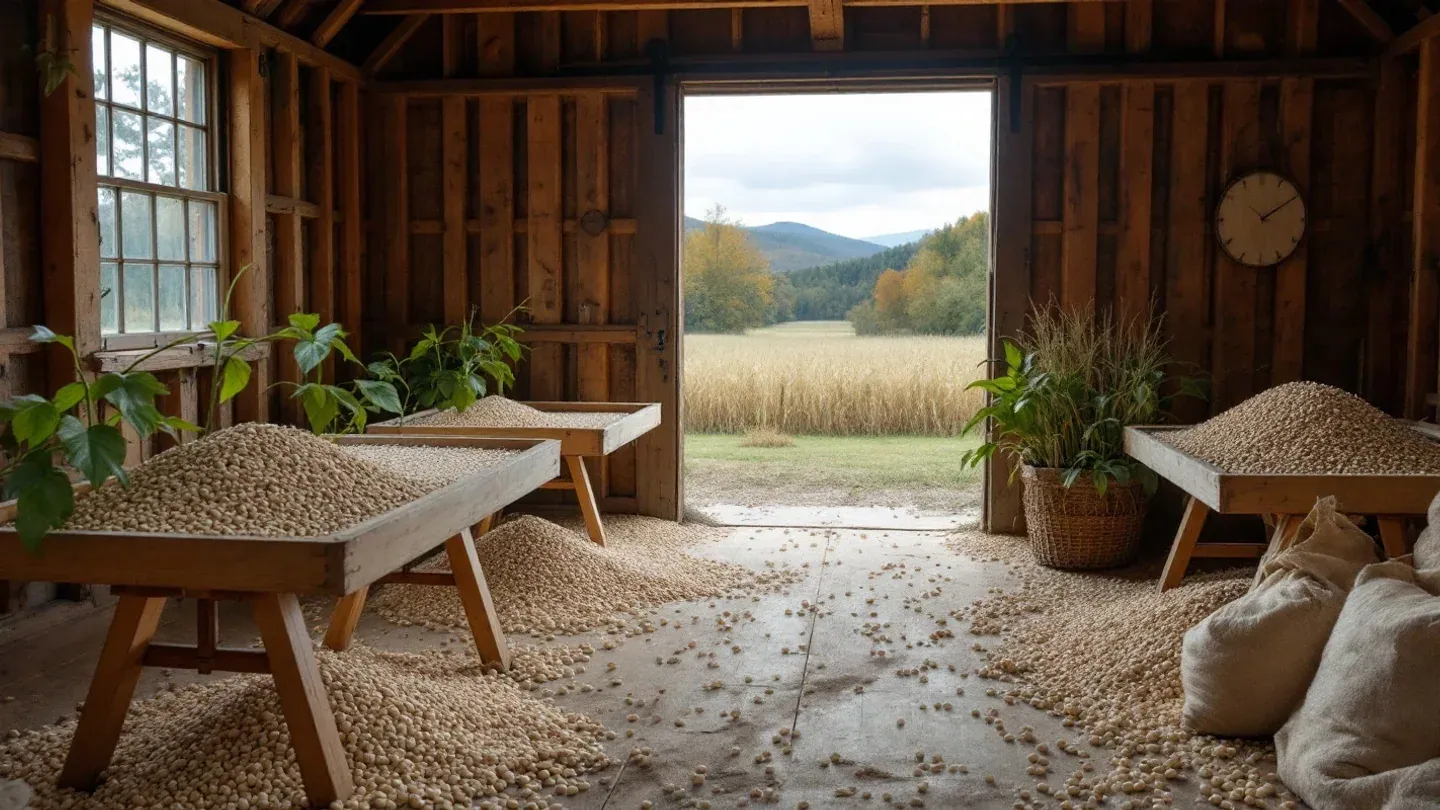
Seed choice is also a question of control, and the law here is settled in a way many farmers find uncomfortable. In 2013 the Supreme Court held in Bowman v. Monsanto that patent exhaustion does not permit a farmer to reproduce patented seeds through planting and harvesting without the patent holder's permission. If a variety carries a utility patent, the bag tag or the license tells you what you may do with the harvest, and saving seed is usually not on the list.
Varieties protected under the Plant Variety Protection Act are different. That law contains an explicit right to save seed from a protected variety for replanting on your own farm, and the Plant Variety Protection Office grants certificates for 20 years, 25 for vines and trees. At the other end of the spectrum, the Open Source Seed Initiative asks breeders to pledge that their varieties can be saved, shared, bred from and never restricted by patents. Most gene-edited varieties will arrive under patents and licenses, which is a fact to weigh alongside the trait itself. The same logic applies to the data your equipment collects, which we covered in who owns your farm data.
How a regenerative farm reasons about seed choice
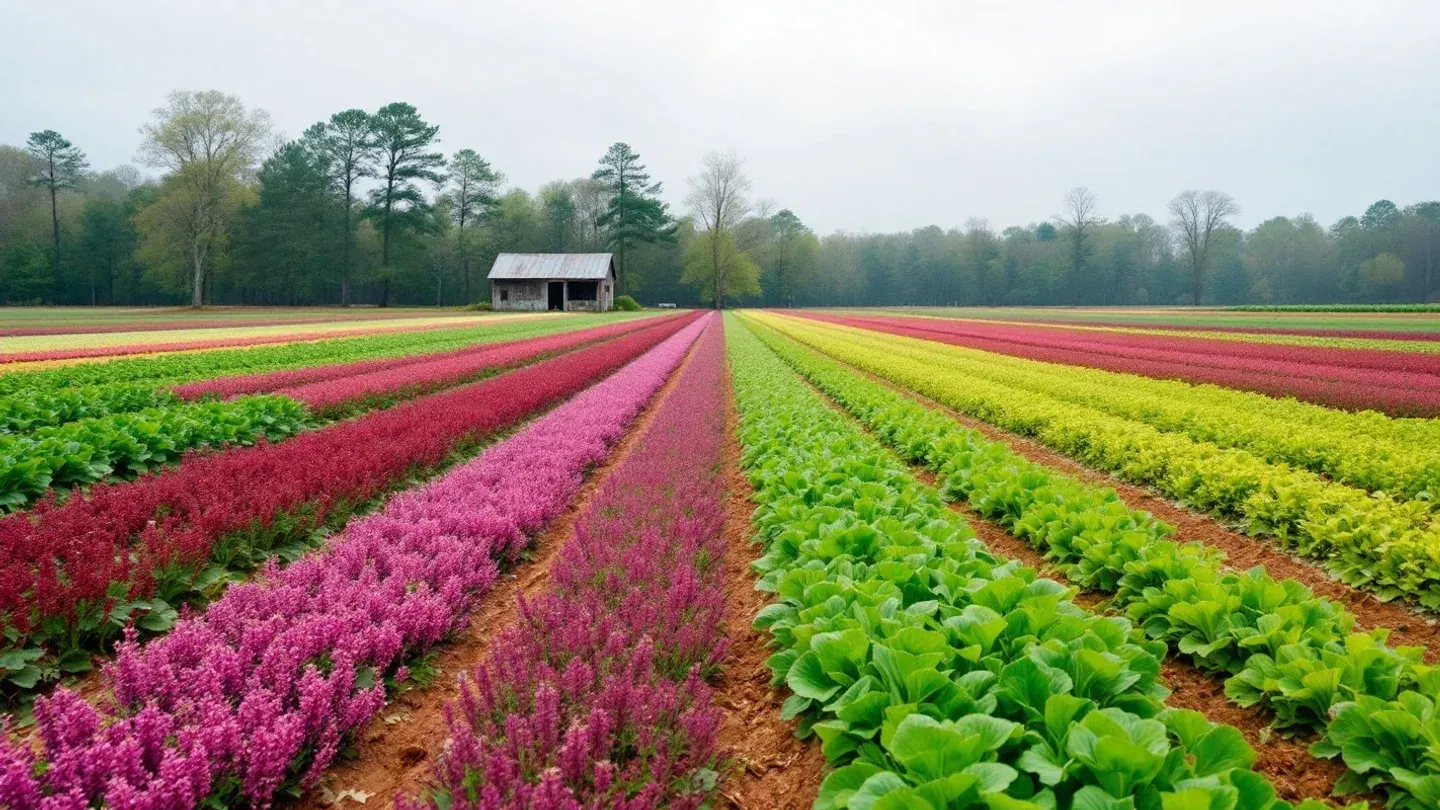
A regenerative farm does not start from the technology. It starts from the whole, which is the point of managing holistically: what is this farm for, what does the land need, and what does this decision do to everything else? Run a gene-edited variety through that frame and a handful of questions fall out.
What problem does the trait solve, and would management solve it first? A disease-resistant variety that lets you drop two fungicide passes is a different proposition from a herbicide-tolerant one that lets you spray more. The first can serve the soil; the second tends to pull a farm back toward the chemistry we are trying to leave, with the drift duties that come with it, as we described in pesticide drift and neighbors. Healing the soil is done with rotations, cover, livestock and rest. No trait replaces them.
Does it widen or narrow what grows on your farm? The regenerative case for heritage breeds rests on genetic diversity and local adaptation, and the same argument applies to crops. A single edited variety sold under one license can be a useful tool. A whole farm built on it is a bet on one company's catalog.
What does your market expect? Certified organic settles the question. A direct-market farm that trades on transparency owes its customers an honest answer either way, including the fact that gene-edited food usually carries no federal label.
What does the license say? Read it before the first bag arrives. Note whether you may save seed, what records you must keep, and what happens to pollen that drifts into a neighbor's field.
Who holds the knowledge? A farm that depends on a trait it cannot reproduce has moved part of its competence off the farm. Keeping things simple and thinking long term both argue for making sure you could farm without it.
None of this is an argument that gene editing is wicked, or that it is harmless. The honest position is that the method is less novel than its critics say, the outcomes depend on how it is used, and the first generation of engineered crops already taught us what happens when a powerful trait meets a simplified system. Respecting creation means treating a living genome as something you alter with humility, if at all, and treating your neighbors, your customers and the next generation as parties to the decision.
A practical close
If a gene-edited variety is on your list for 2026 or 2027, work through the following before you buy.
- Write down the problem the trait is supposed to solve, and the management changes that could solve it instead. Price both.
- Check your certification and your buyers' standards. Organic rules out excluded methods; private labels have their own definitions.
- Read the license and the bag tag. Note seed saving, record keeping and liability.
- Ask the seller which agency reviewed the product and under which process, and keep the answer in your files. APHIS "Am I Regulated" letters and FDA consultation records are public.
- Trial it on a small block beside your usual variety for at least two seasons, and measure what matters on your farm: inputs, soil, labor, sales.
- Watch the Federal Register. The USDA rule that replaces the SECURE rule will change the pipeline for every product after it.
Your certifier, your seed dealer and your extension agronomist each see part of the picture. The organizations in our resource directory can help you see the rest. So can the seed companies and breeders among our service providers. The beliefs we farm by are the test we apply to every new tool, this one included.