
Thanksgiving falls on November 27 this year, seventeen days from now. The farms that sell heritage turkeys took their orders months ago, and they had no choice about the timing: a bird that needs about 28 weeks to reach market weight had to hatch in May. That one number says more about heritage breeds than any label does. These animals grow slower, live longer, breed on their own and feed themselves on pasture, and every one of those traits is written in their genetics. Here is why that matters on a grass-based farm, how to read the list that tracks which breeds are in trouble, where to buy stock worth the money, and what kind of market pays for an animal that takes its time.
What "heritage" actually means
"Heritage" is not a word for anything old-looking. The Livestock Conservancy, the Pittsboro, North Carolina nonprofit whose stated mission is "to protect endangered livestock and poultry breeds from extinction," has written definitions for four species: turkeys, chickens, cattle and swine.
A heritage turkey must reproduce through natural mating in both the parent and grandparent generation, must have a long productive outdoor life (breeding hens are commonly productive for five to seven years, toms for three to five), and must grow slowly, reaching marketable weight in about 28 weeks. A heritage chicken comes from a breed the American Poultry Association recognized before the mid-twentieth century, mates naturally, stays productive for years, and reaches market weight in no less than 16 weeks. Heritage cattle must be a true genetic breed, endangered as the Conservancy defines it, continuously bred in the United States since 1925, and registered purebreds or their immediate offspring. Registration is the point: it proves an animal is what the seller says it is.
The tool that ties this together is the Conservation Priority List. Critical means fewer than 200 annual registrations in the United States and an estimated global population under 500; for poultry, fewer than 500 birds in the country, in five or fewer primary breeding flocks of 50 birds or more. Threatened means fewer than 1,000 registrations and under 5,000 worldwide. Watch covers breeds with genetic or numerical concerns or a limited geographic range, with fewer than 2,500 registrations, and Recovering is a breed that has climbed past the Watch numbers but still needs monitoring. The 2025 list, the 39th edition, covers more than 180 breeds. It added Araucana chickens as Critical, with only four breeding flocks of 50 or more birds and roughly 400 purebred birds in the country, and moved Barbados Blackbelly sheep from Watch to Threatened.
Why genetics decide what works on grass
Commercial genetics were selected for one environment: a ration delivered to the animal, shelter from the weather, and a short life that ends at a fixed weight. That selection worked, and it stripped out traits nobody in that system needed. The Conservancy's list of what traditional breeds retain reads like a checklist for a pasture farm: fertility, foraging ability, longevity, maternal instincts, natural mating, and resistance to diseases and parasites. On grass, each of those is money. A cow that calves unassisted for twelve years is worth more than one culled at six.
The trade is growth rate. Heritage animals finish later and lighter, and the feed and time that go into them cost real money. The question is whether your grass, your markets and your patience match their biology. That is a holistic management decision, not a sentimental one.
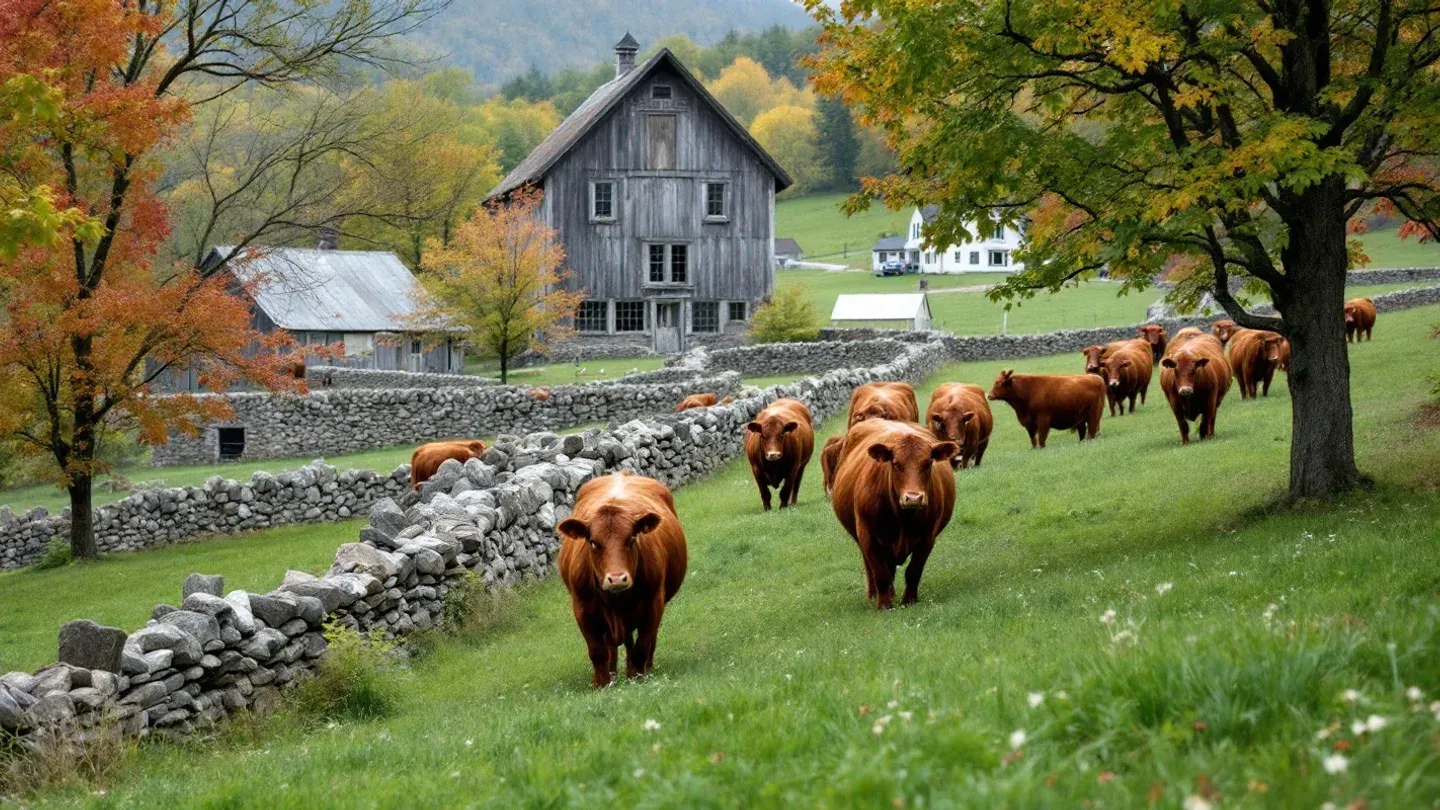
Cattle: frame size and finishing on forage
Penn State Extension's grass-fed beef guidance is plain about breed type. For most grass-fed operations it recommends small to medium-framed British-based breeds, which "tend to mature faster (at an earlier age) and have a lighter finishing weight," while large-framed Continental breeds suit the feedlot. The same page sets the bar: cattle need to gain a minimum of about two pounds a day to finish on forage, and "finishing cattle on grass takes a great deal of management."
That is the frame heritage cattle were built in. Red Devon, from England, is medium-sized and, in the Conservancy's words, "hardy; efficient for grass based production." Galloway, from Scotland, is medium-sized, polled, and "thrives in cold, wet climates on poor forage." Dexter, from Ireland, stands about 40 inches tall; the Conservancy calls Dexters "hardy, forage-efficient cattle with excellent maternal qualities." All three sit in the Recovering column. Milking Devon and Randall Lineback sit in the Critical column, with fewer than 200 registrations a year. Pineywoods cattle, descended from Spanish stock brought to the Americas in the early 1500s and shaped by the Southeast, are "heat tolerant, long-lived, resistant to parasites and diseases, and able to be productive on marginal forage."
Be honest about what a Critical breed is: a conservation project first and a beef enterprise second, and the breeder will want to know you plan to register and breed on. The lower-risk route is a Recovering breed such as Red Devon, Galloway or Dexter, or a registered heritage bull on a commercial cow herd. If you are setting up a grass-fed beef farm, choose cattle to fit your grass. Match them to the forages you can grow and the winter feed you can stockpile.
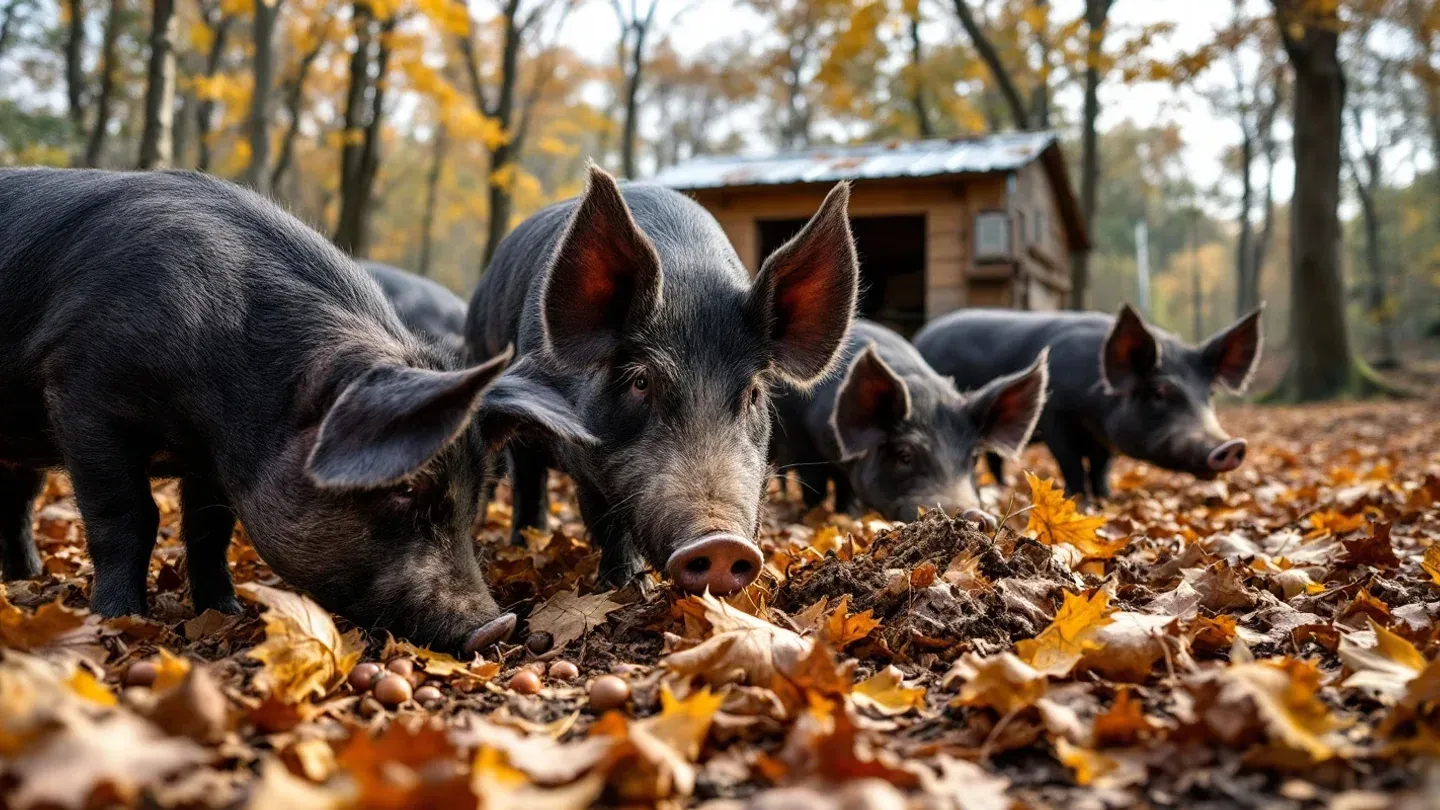
Pigs, sheep and goats: mothering and parasites
Heritage pigs make the clearest case. Large Black, Gloucestershire Old Spots, Red Wattle, Tamworth, Mulefoot, Guinea Hog and Ossabaw Island hogs are all on the priority list. The Conservancy's history of the Large Black, a Critical breed, tells the common story: after the Second World War, "the shift toward intensive husbandry of pigs led to the decline of outdoor breeds that couldn't compete indoors." Large Blacks "are best known for their foraging abilities, as they can obtain much of their own food from grazing," and sows "can raise and wean large litters of piglets outdoors." The population is thin enough that USDA's National Animal Germplasm Program in Fort Collins, whose mission is "to provide genetic security and increase genetic understanding of U.S. livestock," works with Purdue University on reproduction in rare pig breeds, Large Blacks among them. Our piece on pigs on pasture and in woodlots covers fencing and rotation.
For sheep, the NCAT/ATTRA sheep production guide says breed selection "is based on the intended market(s), on local climate, and personal preference," notes of hair sheep that "some breeds show resistance to internal parasites," and warns that for many producers, especially in humid climates, "internal parasites will be the primary health concern." Resistance bred into the animal beats any dewormer, and the guide's own advice is to use breeds and animals that show it. The Gulf Coast sheep, for centuries the only sheep in the Deep South and now a Critical breed, has "well-documented resistance to gut parasites, foot rot, and other diseases," and its ewes are "excellent mothers, pasture lambing without assistance." That is the animal for a farm that runs sheep and goats behind cattle.
Poultry: the 16-week bird and the 28-week turkey
A heritage chicken takes at least 16 weeks to market weight and a heritage turkey about 28, a fraction of the speed of a commercial strain. Penn State Extension puts the consequence bluntly: heritage birds are "slower growing but often more hearty than commercial strains," they need more feed, space and time, and the cost of raising one to market weight is "significantly higher" than a store-bought broiler.
What the bird gives back is the ability to live outdoors, forage, mate naturally and keep producing for years. The Conservancy's 1997 turkey census found just 1,335 breeding birds of the standard varieties in hatchery stock. After it began promoting heritage turkeys, the count rose to 4,412 in 2003, when individual breeders were surveyed as well, and to 10,404 in 2006. All eight standard varieties, Bourbon Red, Narragansett, Bronze and Slate among them, remain on the list, most in Watch, with Beltsville Small White and White Holland in Threatened.
The economics only work at a price that reflects the time. SARE's bulletin on pastured poultry reports a Wisconsin family netting between two and six dollars per pastured bird; a turkey that has eaten for seven months needs a price well above the supermarket's holiday special, which is why many farms sell them on reservation, with deposits. Our guide to pastured broilers covers the feed math. So does the one on pastured laying hens; heritage poultry stretches every one of those numbers.
Where to buy stock
Start with the Conservancy's Breeders and Products Directory. Listings are limited to members and directory participants, it is updated weekly, and the online version is abbreviated, so the printed directory that comes with membership is worth having. Its one piece of advice applies to every livestock purchase: confirm the seller actually has animals; a listing that says "breeding stock" is the signal. The Conservancy also runs a Heritage Breed Marketplace for individual animals, and most breeds have an association that keeps the registry.
For poultry, buy from a flock in the National Poultry Improvement Plan, the cooperative industry, state and federal program that began in the early 1930s against pullorum disease and now tests for pullorum-typhoid, mycoplasma and avian influenza. The NPIP site also lists each state's importation requirements, so check them before birds cross a state line.
Ask every seller whether the animals are registered and the papers will transfer, what the fertility, calving or farrowing records say, and whether the stock was raised on pasture or in a barn. If money is the barrier, the Conservancy's microgrants pay up to $2,000 per project and totaled nearly $26,000 this year, including one to Mulefoot hog breeders in Idaho for frost-free waterers, buried power lines and heat lamps in their farrowing pens.
The premium that pays for slower growth
A heritage animal cannot compete on price per pound with a commodity animal, so do not try. It competes on a true story and on eating quality, and it needs a buyer paying for both. Three things make that work.
First, know your cost of production to the animal. Slower growth means more days of feed, risk and labor, and the price has to carry all of it.
Second, use claims that are worth something. USDA's Agricultural Marketing Service runs a Grass Fed Small and Very Small Producer Program for farms that market 49 cattle or fewer a year, or lambs from 99 ewes or fewer: grass and forage only apart from milk before weaning, a review at $175 an hour, two-year approval, and a public listing. Penn State notes that USDA revoked its own "USDA Grass-fed" label in 2016, so the words on your package are your promise, and that "demand for grass-fed beef is greater than the supply in much of the U.S." Our guide to honest labels covers what each claim means.
Third, sell the animal, not the cut. Beef by the half or quarter, a whole hog, a reserved turkey: bulk sales move the whole carcass at once and give the customer a reason to come back. The chefs and food entrepreneurs who buy this way read Slow Food USA's Ark of Taste, a catalog of more than 3,500 foods facing extinction worldwide, over 200 of them from the United States, as a shopping list.
Why this is bigger than one farm's margin
The FAO's DAD-IS database records around 8,800 livestock breeds of 38 species, and FAO has said that more than 2,400 of them are at risk of extinction while 600 are already gone. Each one carried a solution to some problem of heat, drought, parasites or poor forage that someone will face again. The Livestock Conservancy says that since 1977 it has not lost a breed on its list, a record built by ordinary farms keeping a few registered animals and selling their offspring at a fair price. This is what we mean by respecting creation. It is also thinking long term: a pasture farm runs on what the land gives, and the breeds shaped by that land cannot be manufactured once they are gone.
Where to start this winter
- Read the current Conservation Priority List for your species. Pick a breed in Recovering or Watch if you need production volume, or in Critical if you want to be a conservator and can sell breeding stock.
- Find three breeders in the directory within a day's drive and visit at least one before you buy. Ask for registration papers and production records.
- Write the enterprise budget with the real days to finish: 16 weeks for a chicken, 28 for a turkey, and a steer that finishes later and lighter than a feedlot animal.
- Find your market before the animals arrive. Take reservations for the first turkeys and the first halves of beef, with deposits.
- Join the breed association and the Conservancy, and talk to the people who kept the breed alive. Our directory of organizations includes several that work with heritage livestock. So does our directory of farms and ranches.
- If you have a holiday order this month, write down what the customer said when they picked up the bird. That is your marketing copy for next May, when the poults go in the brooder.