
Most local food systems have vegetables, eggs and meat covered. Bread is different. The loaf at the farmers market may be baked two miles away from flour that traveled two thousand. Grain is the last big gap, and the one that takes the most equipment, testing and patience to close.
This fall it is on more minds than usual. The 2025 wheat crop is in the bin, the grain alliances are planning their winter conferences, and one buyer that a number of small grain farms and mills had come to count on, the Local Food Purchase Assistance program, went away in March. Here is the whole chain, from seed to the baker's bench.
Why grain is the hard part of local food
The US grows a great deal of wheat: USDA's small grains summary of September 30 put the 2025 crop at 1.98 billion bushels from 37.2 million harvested acres. Very little of it is sold as the flour of a named farm. The classes matter to a small grower, and USDA's Economic Research Service sorts them by use: hard red winter wheat is principally bread flour, hard red spring is valued for the high protein that specialty breads want, soft red winter goes into cakes, cookies and crackers, and white wheat into noodles, crackers, cereals and some breads.
The commodity system is efficient, which is exactly why local grain is hard. The small mills, cleaners and drying bins that once sat in every county are mostly gone. UVM Extension puts it plainly for Vermont: the state has not been a hub for grain production since the 1800s, and much of the knowledge and infrastructure has been lost. Rebuilding it is a farm-by-farm, mill-by-mill job, the kind of patient work we mean by thinking long term. It is also the most literal form of acting local there is.
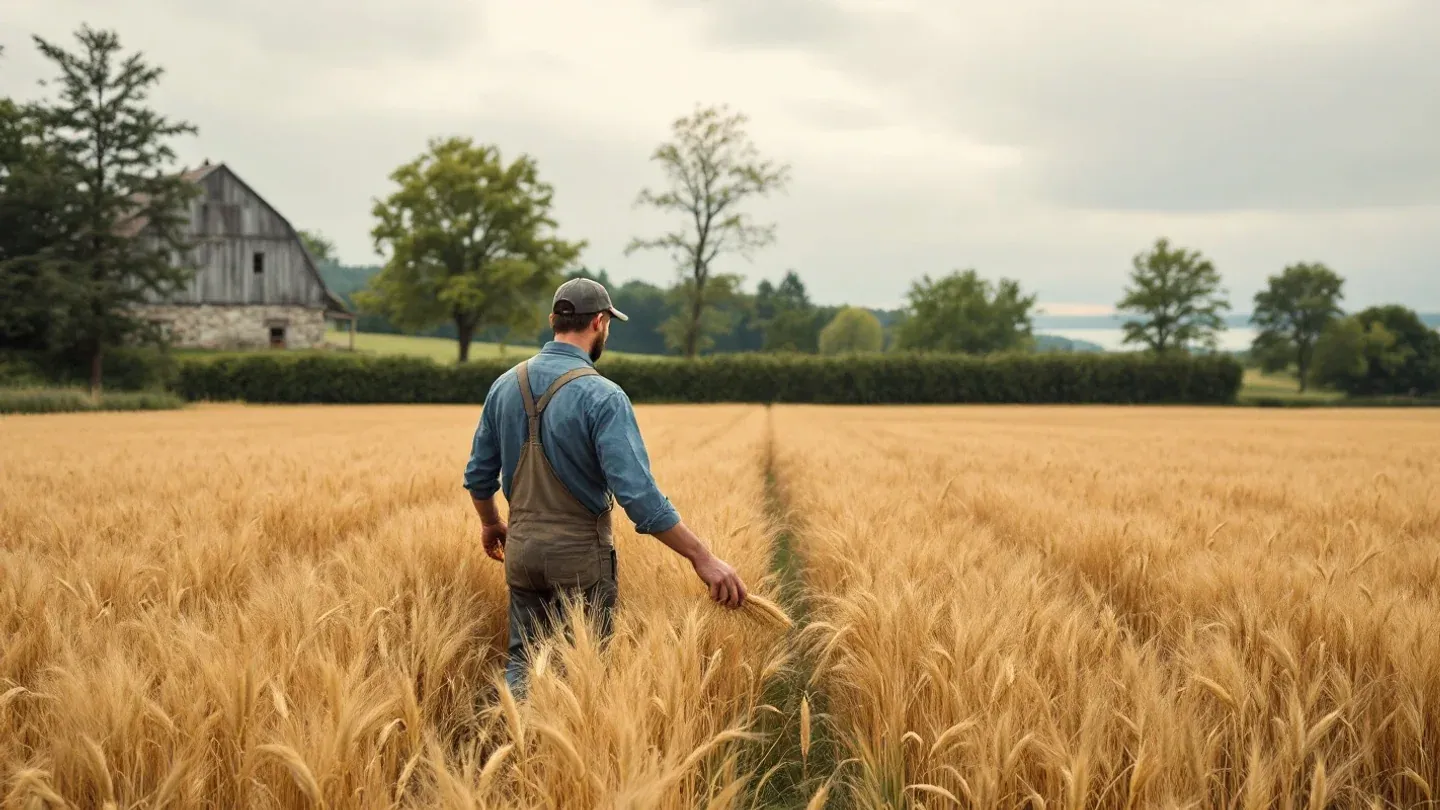
Growing bread grain at small scale
Start with the end product. Bread flour wants a hard wheat with enough protein and the right enzyme activity, pastry flour wants a soft wheat, and rye and spelt have their own followings. In the Northeast, UVM's variety trials and the Northern Grain Growers in Vermont have spent years trialing wheats and bake-testing the results.
Then be honest about equipment. Heather Darby of UVM Extension lists ten factors to weigh before growing grain: a combine to harvest most grain, cultivators or tine weeders if you farm organically, and because that gear is hard to find in Vermont, growers look to New York, Pennsylvania and Canada for used machines. Small grains have lower nutrient needs and fit well after corn or soybeans, most grains like well drained loamy soil, and combines and cultivators dislike rocks. Our older piece on the six principles of crop rotation still applies: grain is one of the best rotation crops a vegetable or dairy farm can add. It is also a real step toward healing the soil.
Harvest timing decides quality more than anything else. A University of Maine Cooperative Extension guide to organic cereal grains, which UVM Extension hosts, says to begin harvesting once the grain reaches 18 percent moisture or less and to store it at around 12 to 13 percent, so a batch dryer or heat and air in a bin is often needed. Waiting in the field for the crop to dry down risks shattering losses, and soft wheat in particular can begin to sprout once it is mature and takes up water from a rainstorm.
Cleaning, testing and storing the crop
Grain off the combine is not flour-ready. It carries chaff, weed seeds, straw, shriveled kernels and dust, and cleaning it over screens and through moving air is the step that separates a feed-grade crop from a food-grade one. The Maine Grain Alliance has made a program of it, with a project to buy grain-handling equipment and demonstrate its best uses on seven Maine farms, because the ability to handle and finish grain to top quality standards is critical on farms.
Storage follows the moisture rule. Darby's guidance is that small grains harvested above 12 percent moisture go into a bin with aeration, and that metal bins with aerators are best. Keep it dry and cool, keep rodents and insects out, and keep lots separate so a bad one cannot spoil a good one.
Then test. Three numbers tell a baker most of what they need to know: protein, test weight and falling number. Falling number is a lab test that times a plunger falling through a slurry of flour and water, which shows how far the grain has started to germinate. UVM's fact sheet on falling number explains that sprouted grain has high enzyme activity, which disrupts fermentation and gives poor crumb structure and low bread volume. It gives a working range of 200 to 400 for wheat, warns that below 250 a mill or bakery may reject the lot, and notes that rye bakers actually prefer 100 to 250. In the commodity trade, WSU's small grains program reports, grain is discounted below 300 seconds. UVM's E. E. Cummings Crop Testing Laboratory runs a baking quality package of moisture, test weight, starch, protein and falling number for $37.
Test for DON too, the vomitoxin that Fusarium head blight produces in wet years. FDA's advisory level for finished wheat products for human consumption, flour included, is 1 part per million. A lot that fails is not a flour lot, whatever it looks like.
Stone mills and the flour you sell
A kernel has three edible parts: bran, germ and starchy endosperm. The Whole Grains Council's definition is that flour is whole grain only if all three are present in their original proportions. White flour has had the bran and germ removed, a practice that became cheap and universal in the late 1800s when new milling technology made the separation easy. A stone mill does the opposite. It crushes the whole kernel between two stones, so germ and bran end up in the flour, and the miller decides afterward how much to sift out.
For a small farm, a stone mill is usually the right first mill: compact, simple, and it makes a product the commodity system does not sell, fresh single-origin flour. The trade-offs are real. The germ carries the kernel's fats, and fats oxidize, so stone-ground flour wants cool storage and quick turnover. For trial batches, UVM Extension even publishes instructions for building your own flour mill and sifter.
Two rules sit around any mill. First, raw flour is a raw food. FDA is blunt: processing raw grains into flour does not kill harmful bacteria, and since 2009 a series of outbreaks have been traced to raw flour. That is why your bags carry a cooking instruction and your tasting table serves bread, not dough. Second, a mill is a food facility. A farm does not have to register with FDA, but a facility that manufactures, processes, packs or holds food does, with registration renewed every other year. The preventive controls rule then applies, with modified requirements for a qualified facility: a very small business averaging under $1 million a year in food sales, or one whose food sales go mostly direct to consumers, or to restaurants and retailers in the same state or within 275 miles, and total under $500,000, both figures adjusted for inflation. Most farm mills fit one of those, but check with your state department of agriculture before the first bag leaves the farm. The same logic ran through our guide to turning a crop into a value-added product.
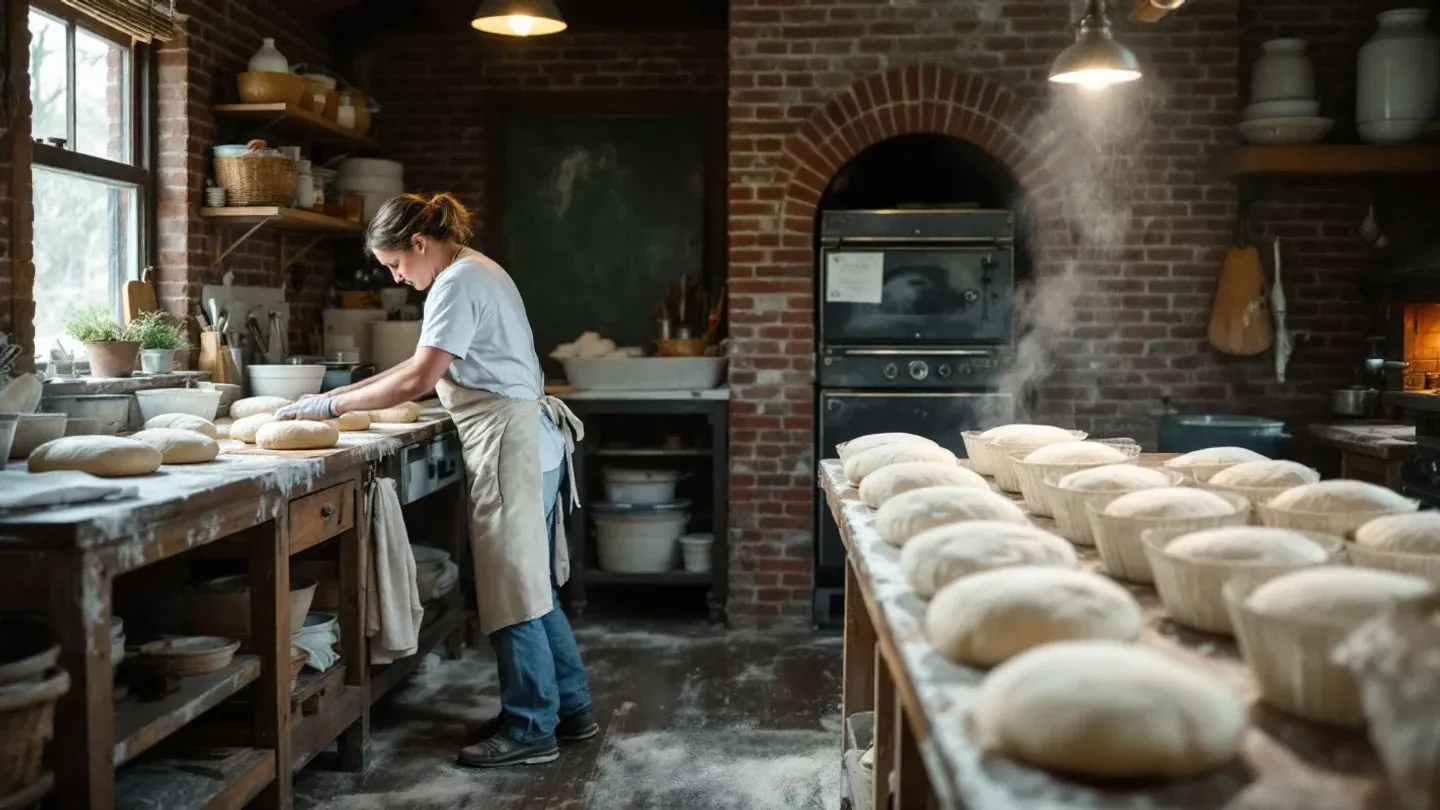
Bakery partnerships that last
Bakers are the natural first customers for a farm mill, and the relationship works best when both sides learn each other's language. In Vermont, Randy George of Red Hen Bakery, a member of the Northern Grain Growers Association, ran four Vermont-grown wheat samples through a scored bake test. One variety with only 9.8 percent protein, which commodity rules call far too low for bread, baked surprisingly well, while a variety farmers liked for its agronomics scored poorly. His conclusion: any evaluation of wheat should include both laboratory and bakery tests.
The Midwest shows how a partnership can scale. In March 2020 the Artisan Grain Collaborative launched Neighbor Loaves: bakers buy grain from local farms and bake loaves with at least 50 percent locally grown stone-milled flour, customers pay for them, and the bread goes to community feeding organizations. More than 50 bakeries and food makers have taken part, and the idea spread to the Northeast and the Mid-Atlantic. A Minnesota farmer in the program put it simply: without local partners he might not be able to grow some of the small grains his rotations need.
Price honestly: local flour costs more than commodity flour and always will. What you sell a baker is consistency and a field they can visit, so test every lot, label it with its numbers, and hold a field day.
Grain CSAs and direct sales
The CSA model we wrote about back in 2020 suits grain well, because flour, whole berries, rolled oats, cornmeal and dry beans all store. A grain share might be a monthly pickup of a few pounds of fresh-milled flour and a bag of berries, paid for in winter when the farm needs the cash. Keep shares small and pickups regular. Fresh flour is the point.
Cottage food laws differ on milled grain, so read yours before printing labels, and grocery or restaurant accounts need the facility paperwork above. If a mill or cleaner needs capital, USDA's Value-Added Producer Grant can pay up to 50 percent of project costs. Sharing helps as much as money: a few farms running one cleaner and one mill is the classic case for the producer cooperative we covered last month. A food hub can carry flour to buyers you cannot reach alone.
The regional grain alliances
Nobody builds a grain economy alone. The alliances exist because of that, and they are worth joining before you plant.
- The Northeast Grainshed Alliance gathers farmers, millers, maltsters, brewers, bakers and distillers across New York, New Jersey and New England, and is working toward acreage goals for its grainshed and a shared local grain brand; its SQFT Project gives member bakers, brewers and distillers a logo for the square feet of Northeast farmland in each loaf or bottle.
- The Artisan Grain Collaborative in the Midwest connects farmers, processors, makers and advocates through field days at farms, mills, malthouses and bakeries.
- The Common Grain Alliance connects farmers, millers, bakers and grain artisans across the Mid-Atlantic, holds a Mid-Atlantic grain conference and publishes a Growing Grain Handbook, funded by Southern SARE, that walks through flour quality, soil health and the basics of growing grain on 100 acres or less, with companion material on post-harvest cleaning, drying and storage.
- The Maine Grain Alliance has supported the grain community since 2007 and runs the annual Kneading Conference and Maine Artisan Bread Fair in Skowhegan, a heritage seed restoration project and technical assistance grants.
- In the Pacific Northwest, Cascadia Grains, presented by WSU Food Systems, holds quarterly regional calls, and the WSU Breadlab breeds grain for whole-grain foods that are affordable, accessible and taste good.
- The Colorado Grain Chain does the same for one state, and in Vermont the Northern Grain Growers work alongside UVM Extension's Northwest Crops and Soils Program.
We keep these and others in our organizations directory. Mill makers and testing labs are under service providers and manufacturers.
The buyer that went away
The Local Food Purchase Assistance program funded state, tribal and territorial governments to buy food produced within the state or within 400 miles of delivery for food banks and other feeding programs, with the stated aim of a more resilient supply chain and more economic opportunity for local producers. Flour, beans and grain travel and store well, so they fit those purchases naturally.
On Friday March 7, 2025, USDA notified states, territories and tribes that it was terminating the previously announced 2025 funding for LFPA and the companion Local Food for Schools and Child Care program, saying they no longer effectuated the Department's priorities. Reimbursements on agreements already signed were restarted, but the 2025 round was gone. The National Sustainable Agriculture Coalition warned that farms and businesses had invested their own money to scale up and that many had already planted for the season.
A grain economy with ten small buyers survives the loss of any one of them. One with a single program does not.
Where to start this winter
- Decide the product first: bread flour, pastry flour, rye, oats or beans. The product picks the crop.
- Call your extension small grains program and the nearest grain alliance before you buy seed.
- Budget for the combine, the cleaner, the dryer or aeration bin and the moisture tester before the mill. The mill is the last purchase, not the first.
- Send every lot to a lab for protein, falling number and DON, and keep the results with the lot.
- Find one baker who will run a bake test with you and tell you the truth.
- Register the mill if it needs registering, and put a cooking instruction on every bag.
- Sell to several kinds of buyer: shares, bakers, a food hub, a market stall. Never just one program.
The farms that do this well keep it simple: one crop they can grow reliably, one mill they can run, and buyers who know their name. That is the whole model, and it is enough.