
Where it started
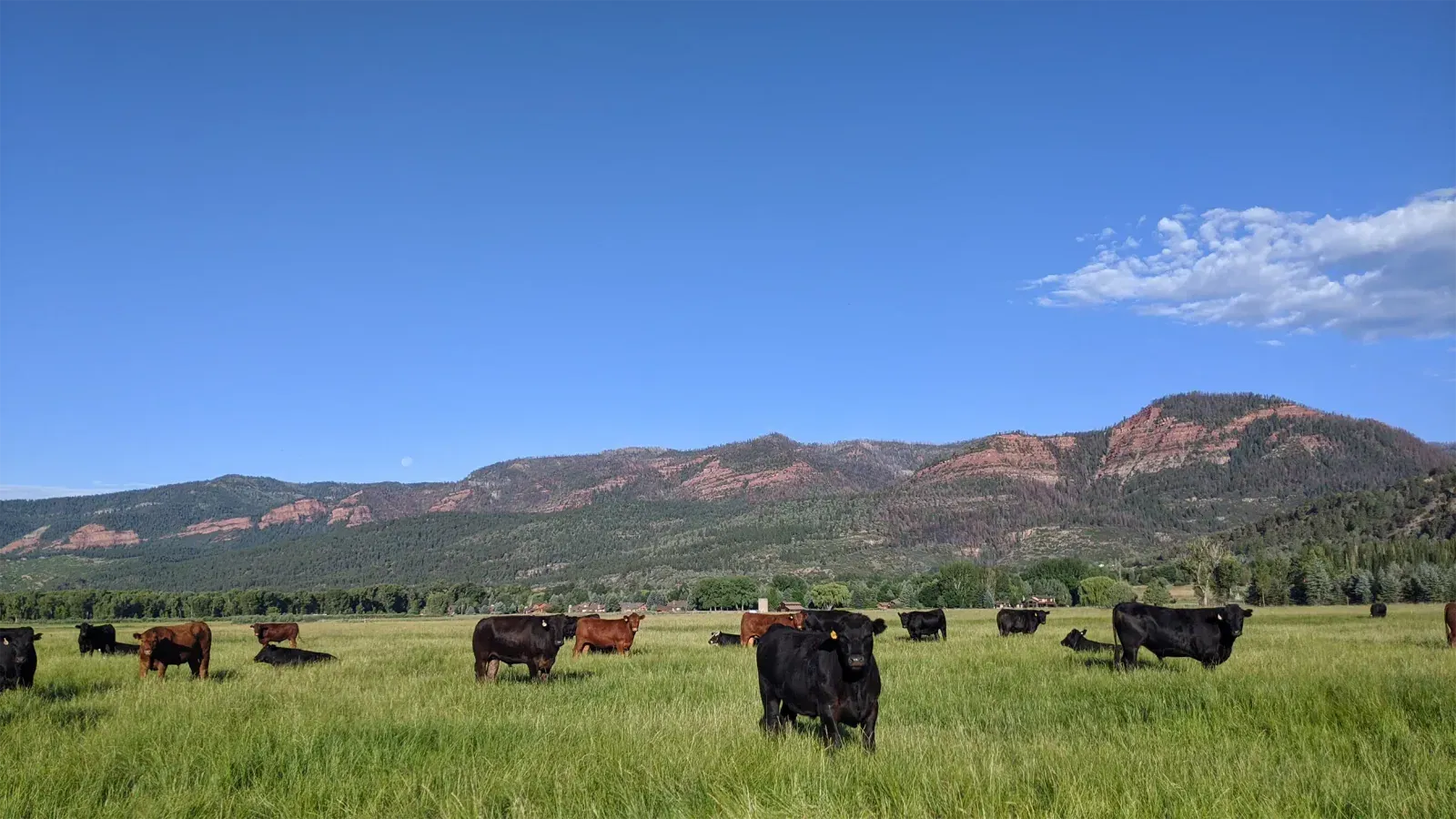
James Ranch lies in the Animas Valley, about 10 miles north of Durango in Southwest Colorado. Dave and Kay James came to the valley from southern California in 1961 with a dream: to raise a large family on the land. KSUT Public Radio, listing a 2026 history talk by their daughter Jenn James Wheeling, dates the founding to that year and traces the land's own history back to the 1870s.
The early decades were not easy. According to the family, the couple raised five children while juggling many businesses to make ends meet. All five left home at 18 to follow their own paths and, years later, began coming back one by one to give their own children the same rural upbringing. Today four of the five live on the ranch with their families and the fifth lives in Durango. Kay James died in 2020; Dave James remains active on the ranch.
The approach that holds the ranch together has a clear starting point. Holistic Management International reports that Dave and Kay were inspired to keep the property as a working farm after attending a Holistic Management event with Allan Savory. HMI, which appears in Ashfount's directory of regenerative organizations, held a two-day grazing workshop at the ranch in August 2022.
What they changed
The first change was in how the family makes decisions. The ranch follows the framework of managing holistically: it says it weighs every decision against its effect on the land, wild and domestic animals, families, customers and future generations. HMI's report of the 2022 workshop describes a joint Holistic Goal that the family revisits every year to make sure everyone still agrees, revising it when needed, and credits it with guiding the growth of the enterprises. The family also holds disciplined quarterly meetings on each enterprise and the ranch as a whole, and grandchildren take part.
The second change was structural. The land is held by one entity, and the businesses on it are separate enterprises, each family running its enterprise or enterprises with autonomy inside rules set by the landholding entity. HMI's account explains the purpose: each enterprise should be able to stand alone, succeed or fail without harming the land or the others. It also records that the ranch entity had not allowed debt, and that the shift to investing in a ranch store and restaurant took significant family discussion and planning. For other families facing the same questions, Ashfount's guide to starting the succession conversation early covers the groundwork.
The third change was on the land. Dan and Becca James moved back in 2000 with the idea of a 100% grass-based dairy and cheese operation. The ranch now says it feeds no grain to its beef cattle or dairy cows, calves in spring when the grass comes on, a practice explained in timing your calving season to the grass, and uses rotational grazing to rest pastures between grazings. In a 2010 producer profile, A Greener World described the dairy herd being moved twice a day from May through November and returning to the same pasture only after about 30 days.
How it works today
The ranch now describes seven enterprises. Joe and Jenn Wheeling run James Ranch Beef, with Abe and Maddie Ott joining them, and started the gardens about 20 years ago. Dan and Becca James run the cheese and egg businesses. Julie James Ott's three sons have taken over the tree farm, whose Colorado blue spruce have grown in the ranch pastures since 1978, and her eldest son, Gunther Ott, started the James Ranch School in 2020. Cynthia James Stewart and her husband Robert opened a food cart on the ranch in 2011 and moved into the James Ranch Grill building in 2019. Julie James Ott manages the market.
The beef is 100% grass fed and finished. According to the ranch, the herd comes from a Red Angus base, and market animals finish on irrigated pastures where they move to fresh grass every one to three days. Animals are processed at 18 to 30 months at a locally owned USDA plant about 40 minutes away, and the beef is dry aged for 21 days. Halves and whole animals are sold only from July through November, when the cattle are on green grass. HMI's 2022 report adds that David Lunde, who manages the steers, uses PastureMap and Brix readings to check forage against the grazing plan.
The dairy runs on the same seasonal logic. The cheese page says the cows are moved to new pasture daily, eat only grass in summer and hay in winter, and are milked only while there is green grass; the ranch's FAQ puts milking at mid-April to mid-November. The ranch states that it uses no chemical fertilizers, herbicides or pesticides on these pastures. The raw milk becomes Belford, Leyden and Colorado Blue, aged from 60 days to three years. A Greener World's certified product directory lists James Ranch Artisan Cheese as Certified Animal Welfare Approved by AGW.
Laying hens forage in the pastures near the dairy herd and spread the cow manure as they scratch. Their soy-free feed comes largely from nearby growers, including corn grown by the Ute Mountain tribe and sunflower seed from dryland farmers in Dove Creek. Ashfount's notes on pastured laying hens cover the feed side of such a flock.
Sales stay close to home. The ranch does not ship. Its market stocks ranch products alongside food from more than 30 other local farmers and ranchers, the Grill cooks with ranch and neighboring ingredients, and a handful of grocers and restaurants, most of them in Durango, carry the beef and cheese.
What it shows
James Ranch is above all an example of how family structure can carry a regenerative operation across generations. The separate enterprises give each household its own business and its own risk, while the shared goal and quarterly meetings keep them pointed the same way. That is a practical answer to the question many family ranches never settle, and it reflects the belief that healthy farms nurture families as well as land.
The example also shows how direct, local sales turn grazing choices into income. A raw-milk cheese made only in the green months, beef sold by the half only in late summer and fall, and eggs sold only at the ranch would struggle in a commodity channel. On the ranch they become reasons to visit the market and the Grill, which in turn sell food from more than 30 other local producers. HMI's account makes clear this was a deliberate and debated step for a ranch entity that had not allowed debt.
There are limits worth naming. The system depends on irrigated pasture in a mountain valley, and HMI's workshop stressed matching animal numbers to forage and expected rainfall, a reminder that grass supply sets the pace of every enterprise. Seasonality cuts both ways: the ranch makes no cheese in winter and sells whole beef for only a few months a year. The family's own accounts speak of how hard it is to farm and ranch this way.
The ecological claims also deserve a fair reading. The ranch says its grazing builds topsoil, improves water and supports wildlife, and HMI's report describes family members recording insects, birds, amphibians, mammals and reptiles and seeing bird life and game increase. None of the sources reviewed here publishes soil carbon or water quality data, so those outcomes rest on observation rather than measurement. For readers who want to see how such grazing is supposed to work, Ashfount's comparison of high stock density and holistic planned grazing is a useful companion.