
Where it started
The story of Grain Place Foods begins on a family farm near Marquette, in central Nebraska, in 1953. That year members of the Vetter family bought the farm, and Don Vetter, questioning the science and ethics of the farming practices of the day, began to adopt organic methods. A spotlight by the University of Nebraska-Lincoln's Buy Fresh Buy Local Nebraska program puts it more directly: he quit chemical farming after seeing soil that was more dead than living, declining farm wildlife and a falling quality of life for his family.
His son David returned to the farm in 1975 with a bachelor's degree in agronomy and soil science from the University of Nebraska and a Master of Divinity. The company's own history says that for David, organic farming became an application of both biological and theological principles. The two worked through what the university spotlight calls hard learning years, experimenting while keeping soil health first.
Their persistence produced one of the region's early certified farms. The farm was certified organic in 1978 and became The Grain Place, Inc. in 1979. That long, steady commitment to the soil is what the belief to think long-term describes.
What they changed
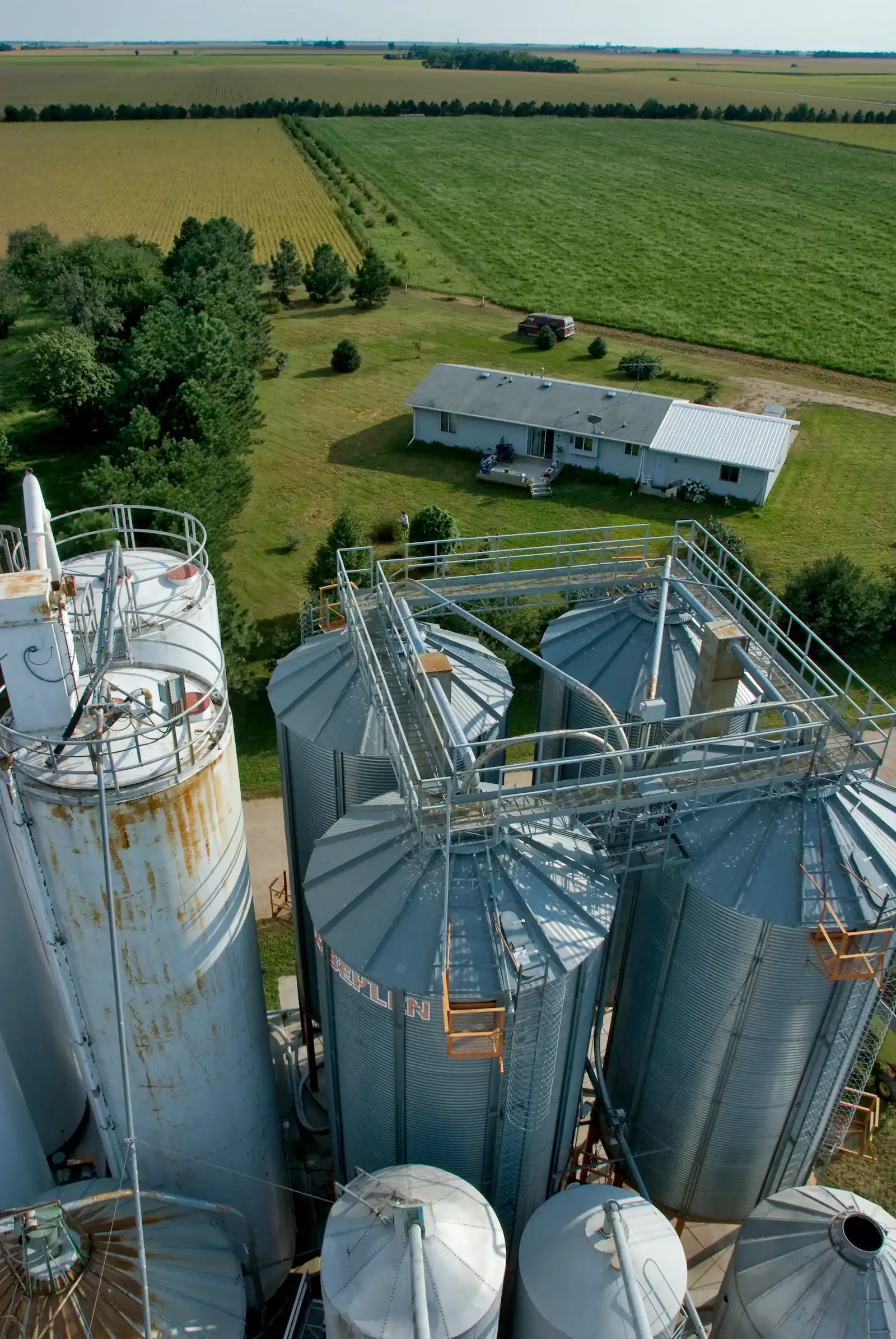
The university spotlight notes that the Vetters were among the first farmers in the Midwest with large quantities of organic crops that needed to be cleaned, sorted, dried, milled and packaged. So they built that capacity themselves. The farm added grain cleaning and storage facilities to serve small organic farmers and specialty organic distributors and processors, which the company describes as one of the first on-farm operations of its kind in the northern Great Plains.
In 1987 Don and David incorporated Grain Place Foods as a separate business to process and market organic grains and take on value-added manufacturing. That step, from growing a crop to turning it into a product, is what turned a single farm into a regional business that other organic growers could sell to.
On the land, the family kept refining a rotation built around soil. The Grain Place Foundation describes a nine-year rotation on 280 acres divided into 18 fields of about 15 to 20 acres each. The rotation includes four years of pasture, which the foundation says supplies nutrients and organic matter, alongside yellow corn, popcorn, soybeans and barley. Pastures use a mix of warm and cool season grasses, red clover, alfalfa and chicory. The approach follows the same logic as the general principles of crop rotation, with livestock built in.
The family also planted rows of trees along the farm's borders and between fields. The foundation says they help prevent pesticide drift from neighboring farms and enrich the farm ecosystem, a practical answer to the problem described in pesticide drift and neighbors.
How it works today
Today the business has two sides that depend on each other. On the farm, cattle graze the fields that are out of crops each year as part of the rotation, and pigs are kept in silvopasture, where they root through the ground and are fed grain waste from the processing plant on site. The foundation notes that the cattle and pigs are not certified organic but are raised to the same standards. The Organic Trade Association describes the farm as producing organic heirloom barley, soybeans, popcorn, corn and grass-finished beef in its nine-year rotation. The farm also keeps bees.
In the plant, Grain Place Foods offers grain cleaning, milling, color sorting, specialty packaging and co-packing, private label work and certified organic bulk storage in a refrigerated warehouse. It rolls and flakes grains after tempering them, using an infrared process, and markets its flaked grains to craft brewers. The company says it is one of the oldest organic popcorn conditioning facilities in the Midwest, and that part of its popcorn supply is grown on the home farm in a regenerative organic manner.
Because the business has expanded so much, it buys organic grain from other farmers to supplement what the home farm grows. In April 2025 the University of Nebraska-Lincoln spotlight quoted the company as working with 128 current growers, 101 of them in the Midwest and 46 in Nebraska. Its range includes barley, brown rice, corn, flax, Kamut khorasan wheat, millet, oats, popcorn, rye, spelt, triticale and wheat, among other products, and the company has bought its Kamut from Bob Quinn's Kamut International since 1987. The company lists a staff of about two dozen, several of them with more than 15 years at the company.
Its products are labeled USDA Organic, Non-GMO Project Verified and kosher. The company says some products are in the process of qualifying for Regenerative Organic Certified status, and that it is looking for farmers willing to use those practices. It does not yet claim that certification. Packaged grains and seeds are sold through its online shop, and it was a 2025 member of Buy Fresh Buy Local Nebraska.
Education runs through a separate nonprofit. After Don Vetter's death, the family set up the Grain Place Foundation in 2016 as a private operating educational and scientific foundation. It hosts interns, webinars and an annual field day, which in 2026 was set for July 18 with tours of the farm and the processing plant. The Organic Center reported in 2024 that the foundation partners with the Organic Crop Improvement Association in the USDA Transition to Organic Partnership Program to support farmers moving to organic.
What it shows
Grain Place is a long record of one family's choice, kept for more than seven decades. It shows that organic grain farming in the Corn Belt is not a recent idea. In a line quoted on the website of the documentary about the farm, David Vetter says: "What I've always called self-renewing, others are now calling regenerative." The practices that define regenerative grain farming today, long rotations, pasture and livestock in the cropping cycle, and close attention to soil, were in place here decades before the label, in line with the goal to heal the soil.
It also shows that processing can matter as much as practices. A farm that grows organic grain still needs somewhere to clean, store and mill it. By building that infrastructure on the farm, the Vetters created a market for other organic growers, and the company now buys from far more farms than it operates. That is a model for how small regional businesses can support local grain economies and how one operation can widen access to organic markets for its neighbors.
The limits are visible too. The home farm is small, at 280 acres, and the company relies on purchased grain to meet demand. The tree rows exist because the farm is surrounded by conventional agriculture and has to protect itself from drift, and the documentary's own description refers to rising pesticide use around the Vetters. Shared equipment means the company makes no gluten-free claims. And the move toward Regenerative Organic Certified products is still in progress rather than complete. In the Organic Center profile, the foundation's communications coordinator described the move to organic as a marathon rather than a sprint, with short-term challenges before the long-term benefits.
Taken together, Grain Place is an example of regeneration as patient infrastructure: a soil-first farm, a processing plant and a foundation that teaches others, each supporting the others over generations.