
Where it started
Harold Wilken comes from a family that has farmed in Illinois since his great-grandfather started in 1882. According to Illinois Farm Bureau Partners, Wilken started working the land of Iroquois County himself in 1982 and farmed conventionally for 23 years. He had looked at organic production in the mid-1990s and set the idea aside.
Several events pushed him back toward it. A hose broke on his farm equipment and left him doused in herbicide, which the same profile links to later health issues. His son, Ross, wanted to continue the family's farming tradition, and Wilken saw that a conventional operation had no room for another farmer, while organic production could increase the farm's income.
Then, in 2001, the Wilkens' 15-year-old daughter, Janie, died in a car accident. Harold and his wife, Sandy, named the farm after her. A condolence letter from a neighboring landowner, the organic pioneer Herman Brockman, asked whether Wilken would one day help him move a 30-acre plot to organic. Wilken did that in 2003, and he began converting his own 700-acre family farm. In an interview with WGLT public radio, he described the early years as rough, both in getting land through the transition and in the peer pressure he took from other farmers.
The farm's own site counts this as the start of Janie's Farm Organics, a family operation that now calls itself 4th and 5th generation on the same county's soil. The story of a family farm rebuilt around soil health is common in regenerative circles; here the trigger was as much personal as agronomic.
What they changed
The core of the change was the rotation. In 2019, FarmWeek described a three-year, three-crop rotation of corn, soybeans and small grains, with cover crops seeded between the corn and soybean crops and between corn and wheat. Ross Wilken told the paper that diversity is key for organic farming: without conventional pesticides or fertilizers, organic farmers break up pest cycles with diverse crops and rotations. The logic follows the familiar principles of crop rotation.
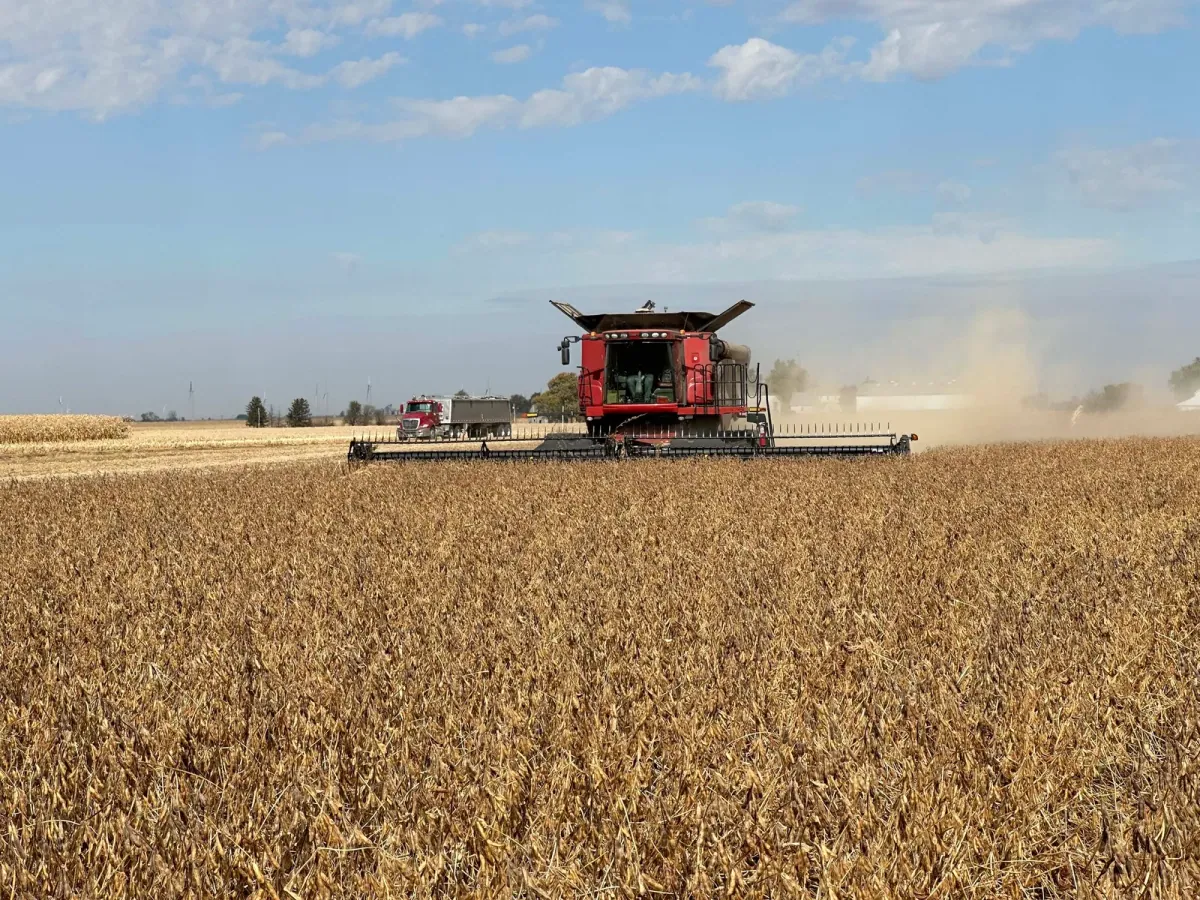
Weeds are handled with hand and machine cultivation instead of herbicides, according to the farm's website. Harold Wilken told Illinois Farm Bureau Partners the farm had not used any herbicide since 2004 and that the team could tell a difference in the soil after a few years. The farm describes its aim as restoring the soil through rotation and cover cropping, practices it credits with adding nutrients, increasing water absorption and preventing erosion. That is the same idea behind the belief to heal the soil.
The second change was moving closer to the people who eat the grain. Wilken told WGLT that he was once preparing to ship grain to New York for chicken feed when he decided the Chicago area was full of people who eat bread. In 2016 the family decided to build a stone mill. They bought a commercial building in Ashkum, about 3 miles from the farm, and hired Jill Brockman-Cummings, Herman Brockman's daughter, to run it. Janie's Mill began stone-grinding grain from the farm in the spring of 2017, using mills custom built by the Danish company Engsko. The first months were difficult, Brockman-Cummings told WGLT, until the team asked local bakers for help and settled on its first six flours.
How it works today
Janie's Farm now farms more than 3,000 acres of certified organic land, up from the original 700, according to its website. Harold Wilken is co-owner and handles sales; Ross Wilken, who graduated from the University of Illinois in 2012, is co-owner and manages day-to-day operations. Harold's nephew Tim Vaske joined in 2013 and works on equipment and farm management. The team page also lists Ryan Wolfe, who started at the farm in 2011 and later moved his own 160-acre farm to certified organic grain, and Colton Henrichs.
The Wilkens also farm other people's land. In 2019 FarmWeek reported they worked with 22 landlords, most of whom wanted their ground farmed organically, a model that depends on the kind of leases and rented ground many grain farms run on. The crop list covers yellow and white hybrid corn, open-pollinated heirloom corn in limited quantities, soybeans, several wheats, rye, oats and buckwheat. Bulk grain goes out by the semi-load to food processors and livestock farmers, and in 2,000-pound totes or 50-pound bags to brewers and distillers.
The mill turns part of that harvest into flour, grits and whole grains sold online, wholesale and at the mill. The Agricultural Marketing Resource Center reports two Engsko stone mills grinding 350 to 450 pounds an hour, supported by USDA Value-Added Producer Grants in 2018 and 2021, the second worth $250,000. When home baking surged in March 2020, online orders jumped from a handful a day to hundreds and the mill went from a few employees to about 40. WGLT reported in 2022 that about 90 percent of the grain the mill used came from Janie's Farm, and the Agricultural Marketing Resource Center notes the mill also sources from other organic producers. Every mill product carries third-party seals, including an organic seal from OCIA and a kosher certification. In 2023 Marbleseed, the Midwest organic farming nonprofit, named Harold and Ross Wilken its Farmers of the Year.
What it shows
Janie's Farm shows how far a conventional grain operation can travel when it changes both its rotation and its market. The agronomy is not exotic: a longer rotation, cover crops and mechanical weed control. What changed the economics was selling directly to end users. In 2019 the family direct-marketed all of its organic wheat, with 5 to 10 percent milled at its own mill and the rest sold to distillers and other mills, and Ross Wilken put the price of organic corn at $9 to $11 per bushel. The mill then added a retail product, a route explored in more depth in local grain economies and small mills and in turning a crop into a value-added product.
The people side is just as visible. In 2019 the farm supported six full-time farmers and the mill employed five more. Harold Wilken writes on the farm's site that he wants more farmers on the land than there were when he came in, and that a diverse organic operation needs more eyes and hands. The switch is also what made succession possible for his son, a theme worth reading alongside farm succession planning.
There are limits. Wilken himself told FarmWeek the model may not work for everybody, and told Illinois Farm Bureau Partners he is not there to tell other farmers to do it his way. The farm's partner page notes it tried to grow heirloom grains such as einkorn with limited success because of humid Illinois summers, and turned to a certified organic partner farm in Nebraska for them. The pandemic boom in mill orders tapered off, and federal grant money helped carry the mill's marketing. Janie's Farm is better read as one workable path than a template.