
Where it started
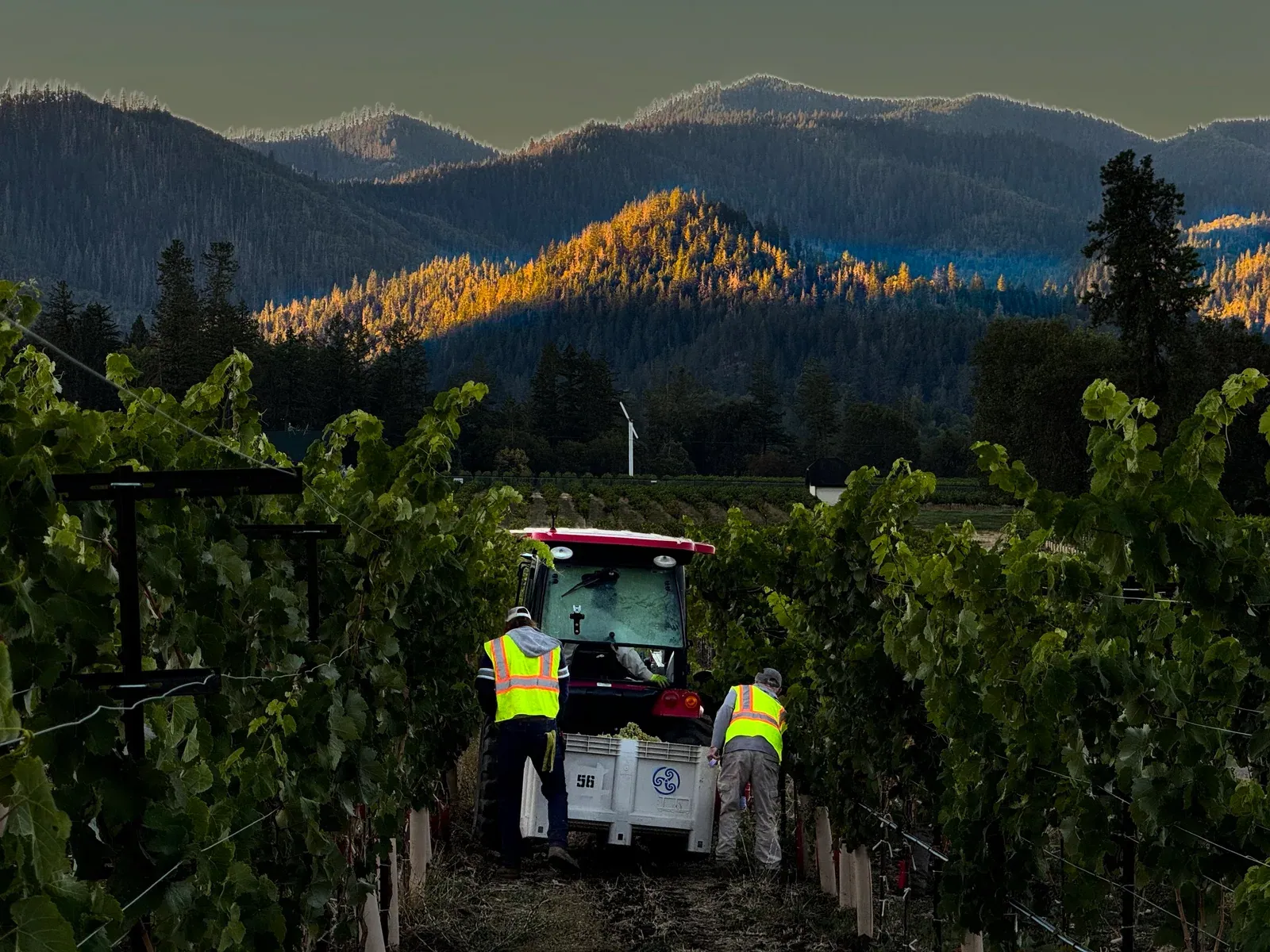
Troon Vineyard sits on the Kubli Bench, above the Applegate River in the Siskiyou Mountains of Southern Oregon, near Grants Pass. Its name goes back to the start of modern winegrowing in the valley. According to the winery's history of the region, Prohibition had all but ended commercial winemaking there, and viticulture only returned in 1972, when Dick Troon planted his vineyard.
The farm that exists today began with a change of hands. Craig Camp, a wine professional with experience in Italy, Napa Valley and the Willamette Valley, took over as general manager in 2016. He told VinePair in 2021 that the property had been conventionally farmed for many years and the vines lacked basic nutrients. Soil tests showed the nutrients were in the ground, so the problem, as he saw it, was the soil life that should carry them from the dirt to the plant. In 2017 Dr. Bryan White and Denise White, both from Texas, bought Troon, and with Camp they set out to turn it into a Biodynamic vineyard and winery committed to regenerative agriculture, Organic Grower reported. They replanted the vineyard with grape varieties they judged better suited to the site.
What they changed
The first framework was Biodynamics, a system Ashfount explains in what is Biodynamic agriculture. Troon became Demeter Biodynamic certified in 2020. Its farming page describes the routine: cow horns filled with manure from a neighboring dairy are buried over winter to make preparation 500, which is stirred into water and sprayed on the soil, alongside a quartz preparation for the vines, a horsetail tea against mildew and a set of herbal preparations for the compost. The compost itself is made from the grape skins and stems left after pressing.
Regenerative Organic Certification came next. In 2021 Troon became the first farm and winery in Oregon to earn it, and the winery says it was the second winery in the world to do so. The standard rests on three pillars, soil health, animal welfare and social fairness, and requires organic certification first. For how it compares with other labels, see regenerative certifications compared.
The step to the top tier came through the workers. According to Wine Industry Advisor, Troon became the first farm in the world in February 2023 to receive the Equitable Food Initiative's ERGO certification, which is designed to ensure fair and safe conditions for workers on smaller farms. That progress on the fairness pillar lifted Troon to Regenerative Organic Certified Gold in 2023, as the fourth farm and second vineyard worldwide at that level.
In the vineyard, the biggest change was leaving the soil alone. The winery describes a commitment to no-till farming, and Garett Long, its director of agriculture and a soil scientist trained at UC Davis, has written that tillage breaks up soil structure and the fungal networks that help build soil organic matter. Ashfount looks at the method in what is no-till farming.
How it works today
Troon farms about 100 acres. The Regenerative Organic Alliance directory lists it at the Gold level, with wine grapes, apples, hay, pasture, cover crops and mixed fruits and vegetables among its crops. The winery's homepage describes life on the farm as cider apples, a vegetable garden, hay fields, rewilded honeybees, sheep, chickens, wildlife and grapevines. According to the team page, the garden covers two acres and supplies a farm stand, and its manager is building sales to local restaurants and organic retailers; the farm also makes a barrel-aged Biodynamic vinegar from its estate Syrah.
The vineyard floor is planted, not bare. Long writes that Troon sows a mix of more than 30 species of annual and perennial cover crops. Grasses and legumes in the alleys double as forage when sheep, followed by chickens, graze the dormant vineyard, a version of multi-species grazing adapted to vines. Under the vines grow wildflowers, clovers and perennial forbs. In 2023 Long told SommTV Magazine that about ten of the 100 acres are set aside as biodiversity reserves, including a pond, riparian habitat, a native botanical garden and pollinator habitat.
The cellar follows the same idea. Troon grows twenty grape varieties, most of them from the Rhône Valley, the Languedoc and Southwest France. Grapes are picked by hand, every fermentation starts with native yeasts, nothing is added to adjust the harvest chemistry, and no new oak is used. The winery says total sulfites in its finished wines generally run around 30 to 40 parts per million, and that sulfites are the only additive most of its wines receive. Labels list grapes and ingredients, and QR codes lead to nutrition and technical data for each wine. Some wines sold mainly in Oregon go into Revino bottles, which can be collected, cleaned and reused.
Troon sells through its tasting room at the winery, a Biodynamic wine bar in McMinnville, its online store and a membership program. The wines also reach restaurants beyond Oregon: in September 2026, the beverage director of Union Square Cafe in New York singled out Troon, and especially its Mourvèdre, when VinePair asked wine professionals to name an underrated American wine region.
What it shows
Troon shows how a perennial crop can be farmed as a whole farm rather than a monoculture. The sheep and chickens are not decoration; they mow and fertilize the cover crops the vines grow in, and the garden, orchard and hay fields add more than one product to sell. It is a working answer to the question Ashfount asks in is winemaking sustainable, and it sits naturally beside California's Tablas Creek Vineyard, the first winery to reach Regenerative Organic Gold.
It also shows that the social side of regenerative farming can be measured. Troon reached Gold not through a new soil practice but through an audit of how its crew is treated, which is the part of the food system Ashfount covers in who harvests America's food.
The limits are written into the farm's own material. Long notes that dense cover crops can stunt young vines for their first one to three years, that tall cover must be mowed before hard spring frosts because it traps cold air, and that grazing should leave 30 to 50 percent of the plant mass to regrow. Revino bottles only work inside Oregon, so reused glass sent out of state is simply heavier glass. The soil carbon gains Long described to SommTV, after sampling in 2018 and again four years later at three depths, are the farm's own measurements rather than independent research, and they are worth reading that way.
Finally, Troon is open about its ambition. Its homepage says that the work on its hundred acres will not change the world alone and that the goal is to inspire other farms. Camp told Wine Industry Advisor in 2023 that regenerative agriculture "is not only good for the earth but is a sustainable business model." Whether that holds is a question for the long run, but Troon has made itself one of the farms and ranches where the experiment can be watched.