
Where it started
White Oak Pastures sits on the edge of Bluffton, a small town in southwest Georgia. The Harris family has farmed the same land for five generations. According to the farm, Captain James Edward Harris founded it soon after the Civil War, and the University of Georgia dates his first work on the land to 1866. In the early 20th century his son, Will Carter Harris, butchered animals on the farm six days a week and delivered the meat by mule-drawn wagon to stores, a hotel and a boarding house in town.
That changed after World War II. Under Will Bell Harris, the farm followed the national shift toward commodity, centralized production, and in the second half of the century it raised only calves for the industrial beef system. The farm describes that era plainly: pesticides, chemical fertilizers, hormones and antibiotics.
The current owner, Will Harris, earned an animal science degree from the University of Georgia in 1976, worked for the poultry company GoldKist and then helped his father run the farm for more than 20 years before taking it over. By the mid-1990s, the farm says, he had grown disillusioned with the industrial model. He is one of the people listed in Ashfount's regenerative agriculture people directory.
What they changed
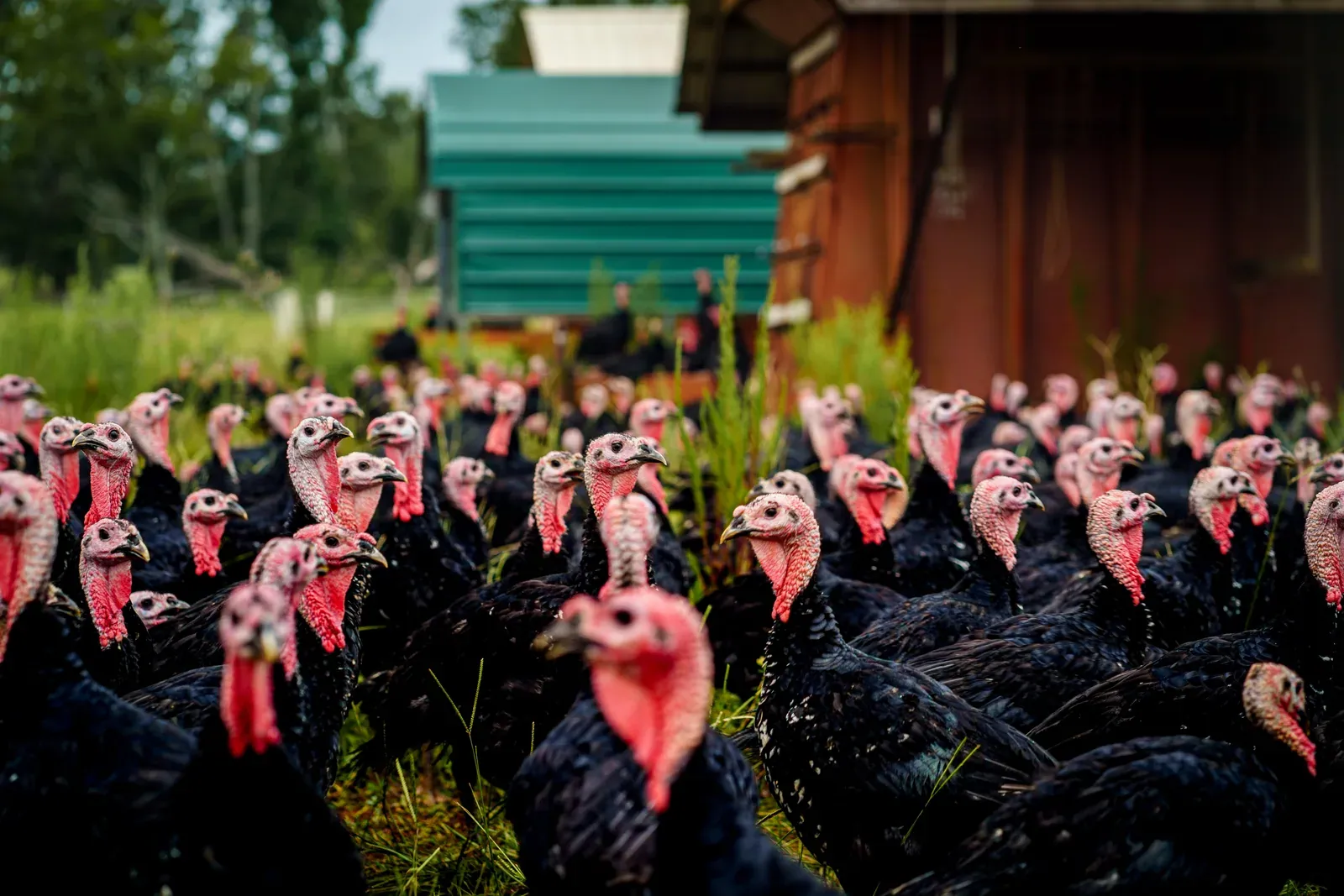
The turn came in 1995. Harris began moving the farm back toward the system his great-grandfather had used, and the University of Georgia reports that he gave up tillage, chemical fertilizers, pesticides and subtherapeutic antibiotics gradually rather than all at once. He reinstated multi-species rotational grazing, adding sheep, goats, hogs, poultry and rabbits to the cattle and moving complementary species side by side through the pastures. A peer-reviewed study of the farm describes much of that pasture as land converted from degraded cropland.
The second change was processing. In 2008 the farm built a USDA-inspected beef abattoir on its own property, which it calls only the second of its kind in the United States, and in 2011 it added a USDA-inspected poultry abattoir. Both were designed by the animal scientist Temple Grandin. Owning the kill floor let the farm sell its own meat instead of selling calves, and it set its own handling rules: cattle are stunned by hand with a captive bolt, and the beef plant handles 25 head a day.
Processing on site also made a zero-waste model possible, as the farm describes on its processing page. Hides become leather goods or pet chews, fat is rendered into tallow for soap, candles and lotion, blood becomes liquid fertilizer, bones become bone meal and inedible viscera are composted and spread on the pastures.
How it works today
The farm now raises ten species of animals and grows more than 40 varieties of heritage vegetables, fruits and nuts on a small vegetable farm on the property. It employs more than 160 people, and Georgia's Department of Economic Development calls it Clay County's largest private employer. The 2020 study described a farm of about 3,000 acres.
It sells the meat online with direct delivery and in its own businesses in Bluffton: a general store opened in 2016, a restaurant, lodging, an RV park and an event center. The farm's FAQ also lists supermarket chains that carry its grass-fed ground beef and, in some regions, its steaks and chicken.
Land management follows the Savory Institute's framework of holistic management. The farm says it became one of 23 global Savory Hubs in 2016, and it takes part in Ecological Outcome Verification, with monthly samples from transects across the farm. White Oak Pastures appears on the current member list of Land to Market, the Savory Institute program that brings EOV results to the marketplace. For a plain comparison of this and other labels, see regenerative certifications compared. A solar array behind the abattoirs supplies part of the power, and the farm puts solar at about 20 percent of its energy needs. Will Harris has set up the Center for Agricultural Resilience, a nonprofit that teaches other producers, and has written a book about the farm, A Bold Return to Giving a Damn, published by Viking.
What it shows
The clearest lesson is about where the value sits. A calf sold into the commodity chain earns one price. A farm that slaughters, butchers, packs and sells its own meat, and then sells the hides, fat and bones too, keeps margin that would otherwise go to a packer. That makes White Oak Pastures, which appears in Ashfount's farms and ranches directory, a reference point for vertical integration. It is not a cheap path. Harris told the University of Georgia that the business runs at roughly break-even, with high capital investment and a low return. Two abattoirs, a retail operation and a payroll of more than 160 people are a long way from a cow-calf herd.
The soil and climate evidence is real but needs careful reading. In 2020 a team led by Jason Rowntree published a life cycle and soil study of the farm in Frontiers in Sustainable Food Systems. Measured on its own, the farm's beef had higher emissions than conventional beef: 33.55 kg of CO2 equivalent per kg of carcass weight, against 21.3 for the conventional comparison. Soil carbon told a different story. Across fields grazed for different lengths of time, soil carbon rose by about 2.29 metric tons per hectare per year, and when that gain was credited to the cattle, the authors estimated a net sink. The study also found that the system needed about 2.5 times as much land as conventional production for the same carcass weight.
The authors name the main method limit themselves: soil carbon was estimated by comparing different fields rather than tracking the same fields over time. The study also covers a single farm, and General Mills funded the project in full. Anyone using the figures should keep those caveats attached, and a farm that wants its own numbers can start with a soil carbon baseline of the kind the study lacked.
Finally, the example shows what a farm can mean to a small town. The Georgia Department of Economic Development credits the farm's growth with changing Bluffton's economy, and the farm now runs a general store in town as well as a restaurant and lodging. That is the argument for acting locally in practical form: jobs, processing and spending kept within a few miles of the pasture. The trade-offs are just as concrete: more land per pound of beef, a heavy capital load and a business that depends on customers willing to pay for what the system costs.