
Where it started
CatSpring Yaupon grew out of a drought. In 2011, Texas had its driest year on record, and founder Abianne Falla told NPR's Weekend Edition in 2025 that the state lost something like 300 million trees. The one plant that was not dying was yaupon, a native evergreen holly that most people in her part of Texas knew as a nuisance that takes over fence lines and trails. The Agricultural Marketing Resource Center notes that she did not have to look past her own property to find it.
Falla, who was raised in Texas and is a citizen of the Chickasaw Nation, started reading about the plant. She found that yaupon is one of the only caffeinated plants native to North America, and that tribes along the Gulf Coast had brewed it for a very long time. Its use faded as imported tea and coffee took over, and people who drank it were dismissed as "yauponers." Yaupon was not sold commercially when she began, so she experimented with preparation methods, took the tea to farmers markets in Austin and asked for feedback. Over the years she developed green, medium and dark roasts.
Money was tight. AgMRC reports that Falla received her first USDA Value-Added Producer Grant in 2017, used it for marketing and farmers market outreach, and later won two more that helped launch new products. She told AgMRC she did not think the company would still be in business without them. For other producers weighing the same route, Ashfount has written on turning a crop into a value-added product.
What they changed
The central change is in how yaupon is treated on the land. Falla describes the plant's spread in Texas as about a 20 million acre problem of overgrowth. The company's grassland restoration page traces the thickets to the loss of bison, a century of fire suppression and heavy grazing, which let woody plants advance into former prairie. It says the usual answer, bulldozing, spraying and burning the stumps, costs landowners $2,000 to $3,000 an acre and the yaupon grows back in three to five years.
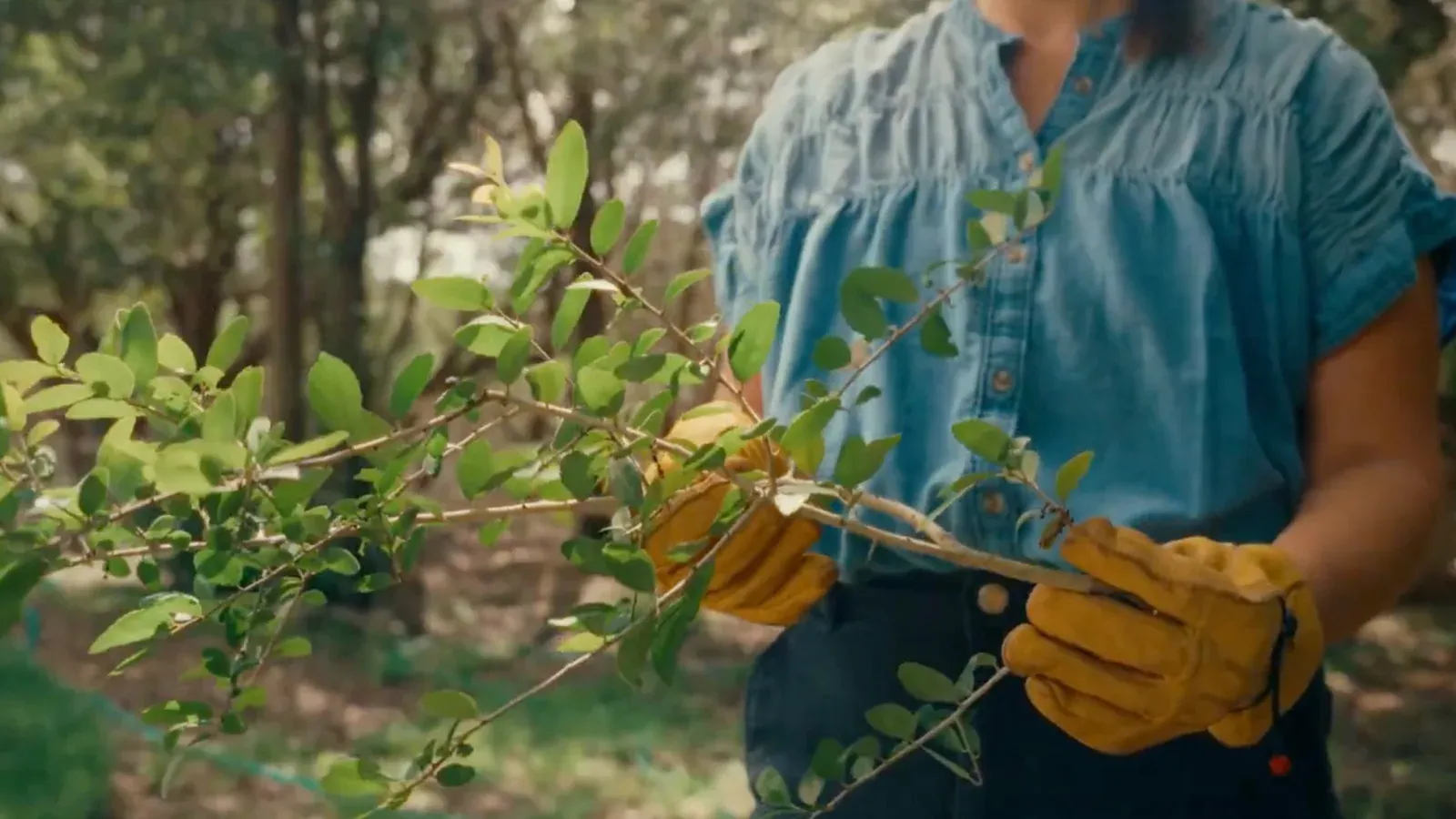
CatSpring does not plant, irrigate or fertilize yaupon. It does a managed wild harvest with landowners, as Falla put it on NPR. The company says it walks each property with the landowner and maps the stands, shears the yaupon worth harvesting, and sends the leaves to Brenham to be processed into organic tea. Then comes the restoration half: the remaining canopy is mulched back into the soil, native grasses are seeded at nine pounds an acre, the land is monitored twice a year and maintained with prescribed fire. The leaf, in the company's framing, is the byproduct of a conservation practice. The goal it describes is the one behind Heal the Soil: let grass cover and roots return to land that had closed over.
The company formalized this through a nonprofit, Yaupon AgWorks. Texan by Nature describes it as working with landowners in the Post Oak Savannah and Blackland Prairie ecoregions, with the aim of cutting midstory canopy by 70% through forestry mulching and reseeding native grasses and perennials for wildlife such as the Houston toad and northern bobwhite. The first pilot started in August 2023 and is being monitored for three years, with results evaluated with the Oaks and Prairies Joint Venture and Texas Parks and Wildlife.
The work also has federal backing. The Natural Resources Conservation Service awarded $1,570,148 to Yaupon Holly Tea, LLC of Cat Spring for a project on managing and harvesting yaupon while converting the land to grassland habitat, running from September 2024 to September 2028, according to the federal award record. The record lists the funding under the Environmental Quality Incentives Program (EQIP), and the company describes it as a $1.6 million Conservation Innovation Grant; a separate USDA organic marketing grant to the same company describes the work of CatSpring Yaupon. How these programs reach farms is explained in How EQIP and CSP Conservation Payments Work.
How it works today
Today CatSpring says it harvests across about 1,100 acres. In 2024, Falla told Ambrook that the company sources 50 to 60 tons of wild leaves a year from about 1,100 leased acres of certified regenerative organic ranchland, enough to supply national brands such as Sweetgreen and True Food Kitchen. Its own line includes loose-leaf tea, tea bags, iced tea bags for home and restaurant use and an iced tea concentrate, in three roasts named for Texas places: Pedernales green, Lost Maples medium and Marfa dark. It also sells bulk yaupon to other brands; New Hope Network reported in 2025 that Mountain Rose Herbs uses it in its teas.
The Regenerative Organic Alliance directory lists the company's teas as Regenerative Organic Certified, the standard that builds on organic certification and adds requirements for soil health, land stewardship and the fair treatment of workers. The company says it was the first yaupon producer to earn ROC, and that it also holds USDA Organic certification through CCOF and kosher certification. Its site also calls it FairWild certified for sustainable wild harvesting, but the FairWild Foundation's own participant list describes the company as pursuing that certification in 2025, so the FairWild status is not confirmed here. More on how ROC compares with other programs is in Regenerative Certifications Compared.
The people side is deliberate. New Hope reported that the company's hiring prioritizes people with a history of generational poverty or a criminal record, and that it offers flexible time off and points workers to help with public assistance programs. Falla said some workers have been with the company for 10 years, while others stay a few months and leave with an employer reference. CatSpring was named the 2025 Stewardship and Sustainability winner at the Nutrition Business Journal awards. Falla told New Hope that growth ran at 5% to 10% in the early years and was now regularly in double digits.
What it shows
CatSpring is an unusual regenerative case because its raw material is a problem on the land. Most regenerative brands pay farmers to change how they grow a crop. Here the crop already exists, and the business case rests on turning the cost of brush clearing into a source of income and a path back to grassland. That is a practical version of managing holistically: the decision about yaupon starts from what the whole ranch, its grass, water and wildlife need.
The limits are clear in the sources. Texan by Nature states that the economic return of the restoration project has not yet been calculated, and the sources do not yet report results from the three-year monitoring of the pilot that began in August 2023. Many of the larger figures come from the company and its founder, including the 20 million acres of overgrowth, which the company attributes to a state estimate. Scale is another open question. CatSpring's sustainability page says its yaupon is selectively harvested rather than cleared or mechanically cut, while New Hope reported in 2025 that the company was moving into mechanical harvest to produce much more leaf. Whether restoration keeps pace with volume is what the federal project and the pilot results should eventually show.
The case also shows how much early public money can matter to a new category. A founder who says she would not be in business without Value-Added Producer Grants went on to win a conservation grant to test the restoration model at scale. For readers following who does this work on the ground, Who Harvests America's Food adds context on farm labor, and similar businesses appear in the food brands directory.