
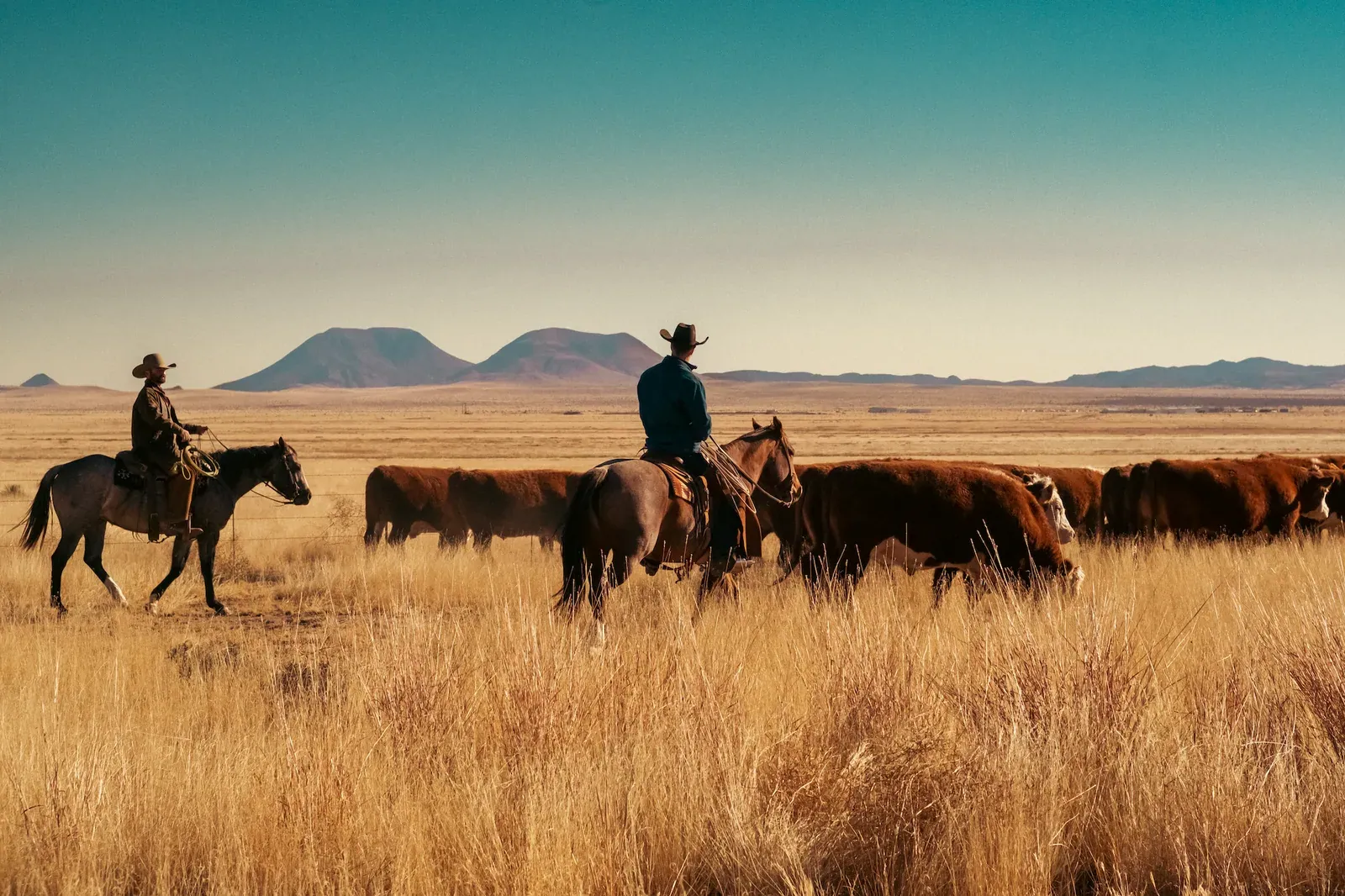
Where it started
The Dixon Water Foundation is a Texas nonprofit, not a family business, but it runs its land the way a ranch does: with cattle, fences, water points and grazing plans. Its stated mission is to promote healthy watersheds through regenerative land management so that future generations of Texans have the water they need. It keeps offices in Decatur in North Texas and in Marfa in far West Texas, and it owns and operates working cattle ranches around both towns. Ashfount's directory of organizations collects other groups working on the same questions.
The foundation dates to 1994. Its own pages and Sand County Foundation describe it as founded by the late Roger Dixon. A 2022 profile by Marfa Public Radio tells the story through Clint Josey, who founded it in 1994 in honor of his friend Roger Dixon. Both men were oil men worried about Texas water, and both were drawn to the ideas of Allan Savory, whose approach Ashfount covers under managing holistically. Josey still sits on the board as an advisory member, according to the foundation's 2025 annual report.
The North Texas land came first. The foundation says it has managed the Leo Unit in Cooke County since it was formed, and its ground cover records there reach back to 1989. Sand County Foundation records that it acquired Bear Creek Ranch in Parker County in 2005 and, in 2008, bought the Mimms Ranch near Marfa to test its approach on drier soils. Bear Creek does not appear among the ranches the foundation lists today.
What they changed
The central change was in how cattle use the grass. The foundation describes livestock as its tool for healthier land and watersheds. Herds rotate through small pastures enclosed with electric fencing, graze each one for a short period and leave it until the grass has fully regrown, with rainfall and growth setting the pace. Sand County Foundation summarized the system in 2017 as high intensity, low duration grazing meant to mimic the bison herds that once crossed Texas. Readers new to the method can compare it with Ashfount's guides to portable electric fencing for rotational grazing and to high stock density versus holistic planned grazing.
At Mimms the foundation went further and built a side-by-side comparison. The ranch was bought in 2008 and first grazed in 2009, and a large wildfire burned most of it in April 2011, so nearly all of the monitoring record, which starts in 2010, comes from after the fire. The foundation's grass-finished beef page, written in 2022 while the design ran, describes one cow-calf herd grazing continuously and a second herd grazing in a multi-paddock system, both at the same stocking rate. Its monitoring page puts the rotational area at roughly 9,000 acres and the continuous pasture at roughly 2,100 acres, and the 2025 report counts 19 one-acre grazing exclosures. The U.S. Fish and Wildlife Service project page adds that rotational paddocks were grazed hard for a short time and then rested a full growing season, with timing shifted each year. The herds calved from August to October, which the foundation ties to the late West Texas growing season.
The third change was measurement. Every fall, staff visit fixed points and throw 100 darts around each one, recording whether each lands on bare ground, litter or a plant base and which plant group is nearest. The foundation added infiltration tests in 2023 and multispectral drone images in 2024. Outside researchers work on the ranches too: the Fish and Wildlife Service page lists the Borderlands Research Institute at Sul Ross State University, Bird Conservancy of the Rockies, Rio Grande Joint Venture and NRCS among partners, and the University of North Texas reported in 2022 on foundation-funded aquatic biodiversity work on the North Texas ranches.
How it works today
The foundation names its ranches as the Mimms Unit and the Alamito Creek Preserve in West Texas and the Leo and Pittman Units in North Texas. Mimms covers 16,000 acres on the northwest edge of Marfa, and in 2019 the foundation bought the adjoining George property. Leo and Pittman cover more than 4,600 acres in Cooke County, including close to 2,000 acres of tallgrass prairie, and the Leo bottomlands are former farmland being restored to prairie.
Drought has reshaped the West Texas operation. The 2025 annual report says Mimms received just over 3 inches of rain in 2024, and the foundation destocked the ranch in November 2024, ending roughly 15 years of the original three-way design. After a year of rest, it moved in mid-November 2025 to a seasonal stocker model, custom grazing a local rancher's heifers through May 2026, which the ranch managers judged more flexible than cow-calf in that climate. In North Texas, cows and sheep stayed on the land, old fences came out, and virtual fencing collars went onto heifers at Pittman. Earlier, when a monitoring point on a degraded utility easement in the Leo complex showed a spike in bare ground in 2023, staff bale grazed the site, a technique Ashfount explains in its guide to winter feeding and bale grazing.
During the cow-calf years, Mimms sold grass-finished steers. The beef page says steers grazed native grass with occasional hay, were driven on horseback to the pens at about two years old and shipped through the Grassfed Livestock Alliance to Whole Foods Market. Grain and animal protein were excluded, a third-party auditor reviewed animal welfare, and any steer treated with antibiotics left the grass-finished program. Audubon certified three Dixon properties, more than 21,000 acres, as bird-friendly habitat in 2023, and Audubon Texas listed the Mimms Unit Ranch among its fully certified ranches in January 2026. The 2025 report does not mention beef sales. Ashfount's notes on grass-fed and regenerative labels explain what such claims cover.
Other income and work round out the picture. In 2025 the foundation secured funding for its endowment, put both demonstration ranches under contract with Grassroots Carbon, launched an internship program at the Leo Ranch, and gave $495,598 in grants. Ashfount's review of carbon contracts for farmers covers the questions such deals raise. The ranches recorded 615 visitors at 22 events that year, and the 2026 calendar has included a drought and stockmanship workshop at Mimms, a Grassroots Carbon workshop there in September and a Holistic Management International livestock selection day near Decatur in October.
What it shows
The Dixon ranches show what a controlled comparison can add to a field full of testimonials. On Mimms, the foundation's monitoring from 2010 to 2023 shows high seral, or late succession, plant cover rising in the rotational pastures and falling in the continuous pasture, with low seral cover moving the opposite way. Bare ground trended down across the ranch, in both treatments. Marfa Public Radio reported in 2022 that bird research found more diverse and abundant grassland bird communities on the rotational side, and less bare ground there. In North Texas, high seral cover on the core Leo Unit has climbed since 1989.
The foundation is careful about its own numbers, and readers should be too. It notes that the continuous pasture has two monitoring points against four in the rotational area, that the data do not meet the assumptions for a true regression analysis, and that the gap in bare ground between the two treatments is likely not statistically significant. Rainfall drives much of the year-to-year swing.
The limits are real. The Fish and Wildlife Service page warns that drought-stressed land that is overgrazed can revert to bare ground, so stocking has to follow local conditions. At Mimms, the 2024 drought forced a full destocking, and in 2025, when about 11 inches of rain followed that drought year, sheet flow collapsed the banks of a gully on the north side of the ranch, a reminder of how desertification and grazing interact in brittle country. Philip Boyd, the foundation's vice president of science and research, told Marfa Public Radio that multi-paddock grazing can require investment in fencing and water, and the station reported that the foundation is not out to evangelize for it.
That framing matters. A foundation with an endowment and grant budget could absorb a year without cattle and keep a comparison pasture going for some 15 years in a way most commercial ranches cannot. Its value lies less in proving that one system pays than in showing, in public and with its doubts stated, how land responds when grazing is planned, measured and changed when the weather says so.