
Where it started
Sequatchie Cove Farm lies in the Sequatchie Valley of southeast Tennessee, bordered by the Little Sequatchie River and surrounded by the hills of the Cumberland Plateau. In the farm's own description, it is a diversified farm of 300 acres about 35 minutes northwest of downtown Chattanooga. The farm's blog says the land was bought by Jim Wright, Miriam Keener's father, and describes it as multi-generational family land.
Bill and Miriam Keener became interested in biodynamic agriculture in the early 1990s, according to a profile by the Cumberland River Compact, a Tennessee watershed nonprofit. The farm says all of its produce is still grown using biodynamic practices. The Compact dates the farm to the 1990s, and the farm's home page says it has been dedicated to regenerative farming since 1998. Over the following decades the Keeners raised cattle, sheep, chickens and pigs alongside vegetables, and the farm says it has raised pastured chickens for more than 25 years.
The farm names Bill and Miriam Keener and Kelsey and Ashley Keener, with their children, among the people who run it, and the home page speaks of four generations working side by side, each caring for the soil, animals and community. Kelsey Keener, Bill and Miriam's son, has focused on the egg business in recent years and handles wholesale egg inquiries.
What they changed
The central idea at Sequatchie Cove is that animals are tools for managing land. The farm's philosophy page says that animals, and the family's careful management of them, are the tools it has to create a positive impact on the environment, and it points to wild herds that moved often and stayed bunched together as the model.
The Cumberland River Compact describes what that looks like in the fields. The Keeners rotate livestock through small paddocks so grass and soil can recover, and they have gone a step further by integrating livestock into the crop rotation. After a cash crop such as corn or wheat, they use chickens, sheep and cover crops to rebuild the soil, with manure and plant biomass feeding the next season's crop. This is the kind of livestock and crop integration that many regenerative farms aim for. The Compact notes that the system keeps the soil covered at all times, by cash crops, cover crops or grazing grass, which is one of the basic steps to heal the soil.
The river shaped other decisions. The Keeners installed exclusion fencing to keep livestock out of the Little Sequatchie and built a bridge so animals can cross without damaging the banks. They also put their sheep to work: the flock is flash grazed for a day along the filter strip between the riparian buffer and the fence, where it eats invasive plants such as privet. The Compact reports that the farm has seen fewer invasives and the return of native grasses including gamagrass, bluestem and purple top, a practical case for sheep in a multi-species grazing system. In over 30 years of farming, according to the same profile, the Keeners have not used chemical pesticides, herbicides or fertilizers, relying on animal manure for fertility and on natural remedies for the occasional pest problem in the vegetable gardens.
The biggest change of recent years is the egg flock. A Tennessee Local Food speaker profile says Kelsey Keener spent five years scaling the farm's pasture-raised egg operation from 400 laying hens to over 8,000, while the rest of the farm stayed highly diversified.
How it works today
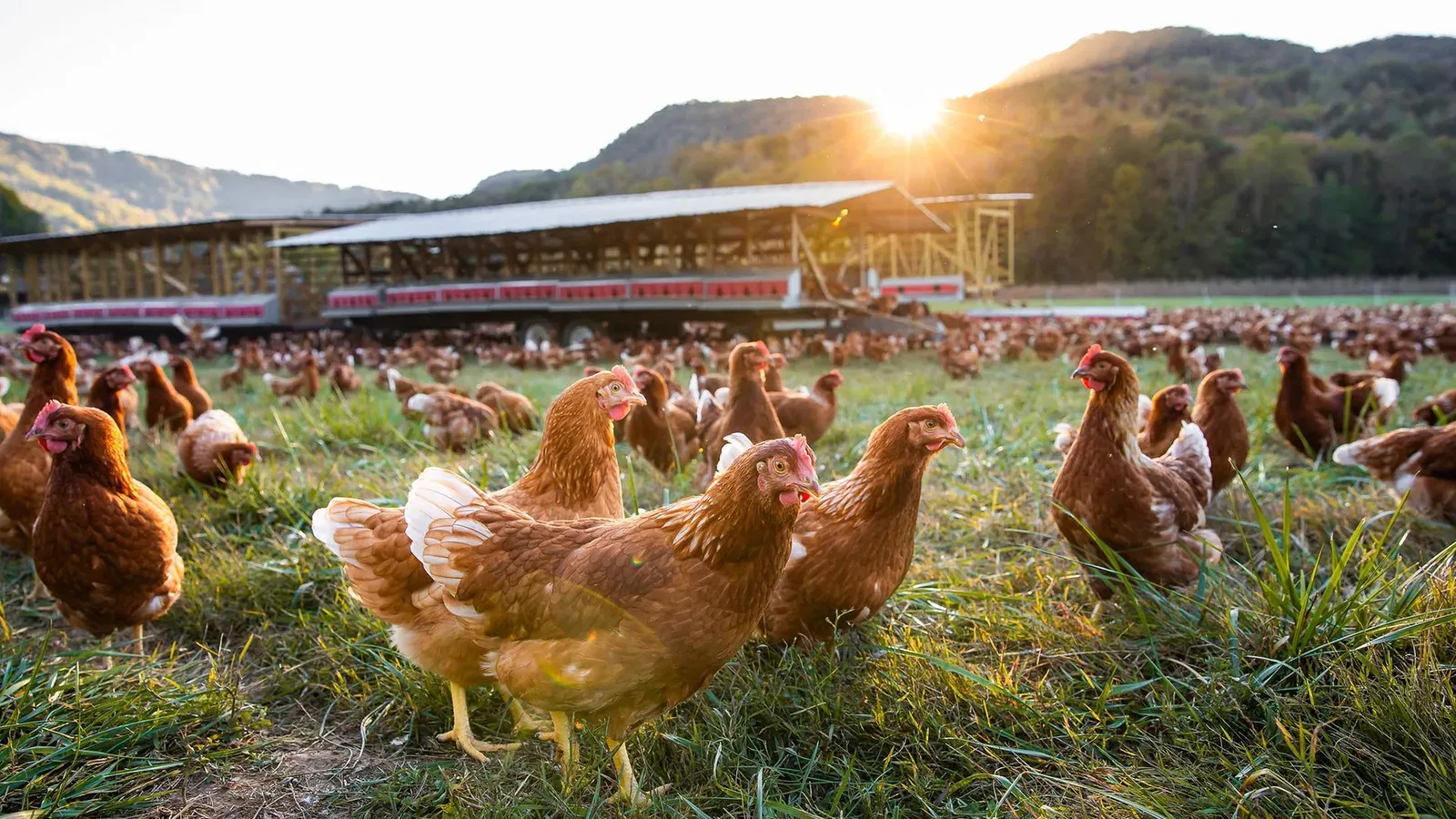
The laying hens live on pasture with open-air coops and are guarded day and night by livestock guardian dogs, according to the farm's pasture-raised eggs page. By mid-morning most of the day's eggs are laid, around 3,000 a day, and a crew that includes Kelsey and Ashley Keener, farm hands and family gathers them by hand. The farm's job listing, last updated on its site in September 2026, shows the daily routine behind that number: rotating the sheep and moving portable fencing in the morning, feeding and watering the hen flocks, collecting eggs, then washing, sorting by size and packing them into cartons for retail or flats for restaurants. Farm hands use a tractor to move the laying hens through pasture and record daily egg counts for each flock. The listing offers 30 to 40 hours a week, five to six days, starting at $15 an hour. Anyone weighing a pastured laying flock will recognize how much hand work sits behind each dozen.
The other livestock enterprises are smaller. The farm raises Katahdin hair sheep, rotated daily to fresh pasture alongside its cattle and fed only on native grasses and shrubs; lambs are processed at 8 to 12 months at a family-owned USDA facility in South Pittsburg, Tennessee. Its heritage pigs, Gloucestershire Old Spots, Mulefoot, Large Black and Red Wattle, number around ten a year. They forage on pasture and nuts such as acorns, hickory and walnuts, get cracked eggs and persimmons as treats, and receive supplemental feed. The farm notes that it has only about 90 acres of pasture, and it supplements its pork and beef with animals from Manderley Farms in nearby Pikeville. The farm pledges that its cattle and sheep have eaten only grass, and that its pigs and poultry roam outdoors with natural grain as a supplement, without growth hormones or antibiotics.
Selling happens through several channels at once. The on-farm Trading Post, a rustic open-air farm stand, is open every Saturday morning, and the Compact notes it also sells products from neighboring farms that share the family's approach, a working example of acting local. The farm runs an online store with local delivery to the Chattanooga area and sells at the Main Street Farmers Market. Its egg locator lists 32 locations across regions from Chattanooga and Nashville to Knoxville and Atlanta, including select Whole Foods Market stores. In 2025 the Cumberland River Compact certified Sequatchie Cove as a River Friendly Farm, a program that recognizes farmers who are good stewards of water and land. The farm also hosts events and classes, and its home page listed dated events running into November 2026.
What it shows
Sequatchie Cove shows how a small, diversified farm can find one enterprise to scale without giving up diversity. Pork comes from around ten pigs a year, beef is available in limited quantities, and produce and berries are seasonal. The eggs, by contrast, reach dozens of shops and restaurants and Whole Foods shelves. The hens also do field work: chickens are part of the rotation that rebuilds soil after cash crops.
The farm is also candid about limits. Its pork page ties the small pig herd directly to the land base: with about 90 acres of pasture, it keeps its own herd at around ten pigs a year and partners with a neighboring farm to supplement supply. That choice shows a trade-off many regenerative livestock farms face, where pasture capacity, not demand, sets the ceiling. Pastured hens and pigs still receive grain feed alongside what they forage, so "pasture-raised" here describes how the animals live, not a grass-only diet, a distinction worth knowing when reading farm labels.
The river work shows conservation built into production rather than set apart from it. The sheep that produce lamb also clear privet from the buffer strip, and the fencing that protects the banks is part of the grazing layout. The results reported so far, fewer invasive plants and returning native grasses, are observations from the farm and the Compact rather than measured studies. Data is still being gathered: in an October 2024 WUTC segment featuring Kelsey Keener, the station reported that the Southeast Tennessee Young Farmers Coalition is running a soil carbon study to provide data on regenerative agriculture in the region.
Finally, the farm shows that this kind of system runs on people. Eggs are gathered and sorted by hand every day, sheep move daily, and hens move by tractor. The published figures also vary by source: the Compact describes 100 acres of pasture and forest, while the farm counts 300 acres, so numbers should be read as approximate. What is consistent across every source is the approach: animals used to build soil, a river kept clean, and a family that sells through its own stand and outlets across its region.