
Where it started
Breathe Deep Farm lies in Claverack, in Columbia County, in New York's Hudson Valley. Its story begins with a farm that was about to be sold. Chris Cashen grew up in Claverack and, with his wife, runs the Farm at Miller's Crossing, a diversified organic farm that sells produce, maple products and pasture-raised meat. The couple had been leasing ground on a neighboring former dairy farm. In an interview with Hudson River Flows, Cashen recalled that the owner told them in February 2015 that the land was going up for sale, and that he expected it to be "chopped up into pieces and sold as houses."
Cashen contacted Equity Trust, Scenic Hudson and the Columbia Land Conservancy. According to Equity Trust, Scenic Hudson connected with a conservation investor, Breathe Deep, which bought the entire former dairy in the summer of 2015 and took it off the market. The farm describes its founding the same year as a collaboration between a few farmers, a land trust and a group of aligned funders. The stated aim was to regenerate the land, connect with other Hudson Valley producers and build a regenerative grain corridor in Columbia County.
Protecting the ground took several years. Equity Trust reports that New York State funds for a conservation easement were awarded in May 2016. The farm says it closed on an easement covering all 400 acres of its home farm in 2018. In December of that year, a 70-acre parcel passed to the Cashens, protected by the easement and a permanent affordability restriction, both held by the Columbia Land Conservancy. Our guide to leases, land trusts and easements explains how these tools keep farmland in farming.
What they changed
The first job was conversion. Breathe Deep worked with Ben Dobson of Stone House Grain to get the farm running and to transition the land to certified organic. The certifier CCOF lists the operation's organic crop and handling certification from November 2018. Hudson River Flows reported that moving Stone House's machinery six miles up a busy state highway soon proved impractical, and in early 2018 Cashen took over management and set Breathe Deep up as an independent grain farm.
Grain was a different business from vegetables, and Cashen said so plainly at the time. "You can bring turnips to market in 30 days but wheat is a big deal, it takes six months to grow," he told the interviewer, adding that molds and toxins make the Northeast a hard place to grow food-grade grain. At the time of the interview the farm sold its grain for feed and seed and was looking at malting barley, which he saw as a better-paying market with a direct link to people.
The next step went beyond organic. The farm says it was one of the first operations in the world to be certified Regenerative Organic. That standard, overseen by the Regenerative Organic Alliance, uses USDA organic as a baseline and adds requirements for soil health, animal welfare and social fairness. CCOF lists the farm's ROC Soil and ROC Social Welfare certifications from September 2022. For how this label differs from others, see our comparison of regenerative certifications.
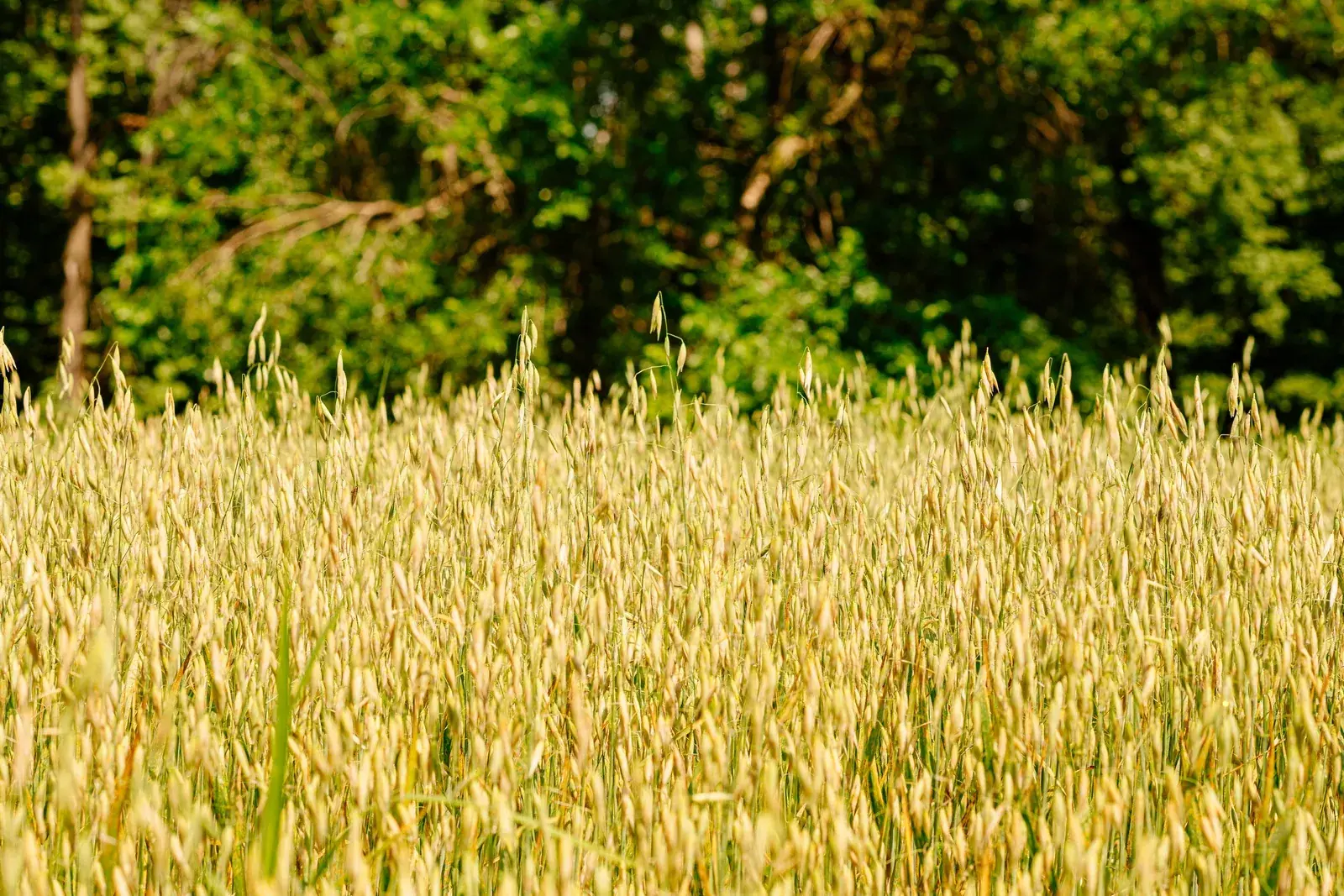
In the field, the farm runs a diverse rotation that produces a different mix of grains each year, in line with the basic principles of crop rotation. A grower profile on Valley Malt's site lists corn, soybeans, clover and grasses among its other crops and fall oats grown as cover, with all fields within a 3-mile radius and the largest at 40 acres.
How it works today
Through partnerships with neighboring landowners, Breathe Deep says it now farms over 735 acres. Other listings give other figures: CCOF's public directory shows 1,489 acres for the operation, and the Valley Malt profile gives 600. The sources do not explain the difference. The Regenerative Organic Alliance directory lists the farm at the Silver level, with barley, corn, oats, peas, rye, soybeans, sunflowers and wheat among its crops.
The farm says 100 percent of the crops it sells are Regenerative Organic Certified. It grows feed grade soybeans and corn, and food and beverage grade rye, barley, corn, oats and wheat. Valley Malt buys its barley and wheat and malts them for brewers. In December 2023 the maltster released three Regenerative Organic Certified malts, and Cashen described Breathe Deep as "the first ROC grain farm in the Northeast."
Not every crop has a buyer. In a September 2024 notice on the Regenerative Organic Alliance site, the farm said it had grown certified corn, soy and small grains, mostly wheat, for several years and was selling more into food and beverage markets, but had no outlet for food-grade soy and had excess corn.
The farm also manages for wildlife. Its site lists 122 rare or uncommon plant species, 51 acres of ancient upland forest, habitat for grassland birds, shrubland birds and monarchs, and vernal pools that shelter amphibians. Our article on habitat on a working farm shows how farms make room for such species.
Beyond its own fields, Breathe Deep says it seeks to advance regional work on certification, marketing, trade promotion and value chain development. Its partners page points readers to the Northeast Grainshed Alliance and to regional mills, maltsters and bakeries, the backbone of a local grain economy. For September 2024 the Regenerative Organic Alliance chose it to host the inaugural field day of its new Regenerative Organic Learning Center. The farm also rents a restored 1800s farmhouse to visitors.
What it shows
Breathe Deep shows that a regenerative grain farm can begin with land protection rather than a farmer's savings. Investor capital bought time, an easement fixed the land in agriculture, and an affordability restriction let a neighboring family own part of it. Cashen himself named the limit: "You can't say to a young person, 'find a group of impact investors and start farming.'" The model depends on conservation money and willing investors, which not every region has.
It also shows how much grain depends on what happens off the farm. Vegetables can go straight to a market stand; wheat and barley need cleaning, storage, malting and milling. The farm's buyers are regional processors, and its partners page reads as a directory of regional mills, maltsters, bakeries and grain farms. That is why its stated mission reaches into certification and value chains, an act local approach applied to a commodity that is usually shipped far away.
Certification helps, but it does not create demand on its own. The ROC label met a demand from craft brewers, as Valley Malt's co-founder put it in 2023, yet the 2024 notice shows food-grade soy and part of the corn still looking for buyers. A rotation that is good for soil produces crops a single buyer may not want, and selling each one is a separate job.
Finally, the public record is stronger on practices, audits and habitat than on measured soil outcomes. The sources describe rotations, cover crops and wildlife, not published soil test results, so the soil case here rests on certified management rather than data. Readers looking for comparable operations and the groups behind them can browse the organizations directory.