
Every vegetable grower knows the arithmetic of weeds. Hand weeding is slow, it comes due in the busiest weeks of the year, and the crew that did it last season may not be there this season. So when a machine shows up that promises to see every seedling and kill every weed around it without a hoe or a herbicide, the interest is real. So is the sticker shock.
This is a reality check for the spring of 2026: what camera-guided cultivators and laser weeders actually do, what the university trials have found, how the cost compares with hand weeding, and what a grower with ten or forty acres of mixed vegetables can use this season. The news is moving fast. The best-known laser weeder maker's own news page lists a new plant-recognition model in February and a growth milestone in March, and the first peer-reviewed East Coast trial was published last year. Fast-moving is exactly when a reality check helps.
Why the pressure is on
Labor is the biggest line on a vegetable farm's books. USDA's Economic Research Service put labor at about 13 percent of cash expenses across all US farms in 2022, but on specialty crop farms it was 38 cents of every dollar, against 4 cents on corn and soybean farms. ERS has also cataloged the six USDA programs that support automation and mechanization for specialty crops, precisely because those crops depend on hands that get harder to find every year.
The cost of those hands is not abstract. A 2023 University of California Cooperative Extension cost study put hand weeding of film-wrapped iceberg lettuce at an average of $635 an acre, and the UC weed specialist quoted in the same report told growers that vegetable crops face a shortage of new registered herbicides and still lean on one registered in 1972. For organic growers, and for herbs and greens with no registered herbicide at all, hand labor is often the only tool left. That is the gap these machines are built to fill, and it is why they are the most interesting development in precision agriculture since auto-steer.
How a camera-guided cultivator works
The simpler of the two technologies is the intelligent cultivator. It is a tractor-mounted toolbar with cameras, bright lights under a hood, a computer and fast-moving blades or knives. The cameras image the row, the software decides which plant is crop and which is weed, and the blades swing in and out of the seedline around each crop plant. Everything between the rows is cultivated the old way with sweeps and knives.
UC's lettuce weed management guidelines describe these machines plainly. Camera-guided cultivators are now used for the second cultivation after thinning and remove weeds in the crop row much like a hand hoeing. In organic lettuce, intelligent cultivators such as the Robovator and IC Steketee remove a large percentage of in-row weeds but not all of them, they work best when the crop is larger than the weeds, and they suit transplanted lettuce better than direct-seeded. In the guidelines' words, hand hoeing is still essential in organic lettuce; the machines make the hoeing crew faster, they do not replace it.
Two examples are FarmWise's Vulcan and Stout's Smart Cultivator. In September 2024 FarmWise made RDO Equipment its exclusive dealer for the Vulcan, and Taylor Farms said at the time that its two Vulcans had weeded more than 2,500 acres that season. Stout's Smart Cultivator is built for 80 to 160 inch beds, which tells you the scale it is aimed at. These are commercial row-crop implements that need a tractor of real size and a field laid out in straight, uniform beds.
How a laser weeder works
A laser weeder goes a step further. Instead of a blade it carries lasers, and instead of avoiding the crop it targets the weed. Cameras image the bed, a deep-learning model identifies each plant and locates the growing point of each weed, and a laser fires a brief pulse of heat at that point. Nothing touches the soil, which will appeal to anyone who has read our reasons to reduce tillage. It will also appeal to anyone who takes heal the soil as a working rule rather than a slogan.
The machine most growers have seen is the Carbon Robotics LaserWeeder. The first generation, introduced in February 2022, is a 20 foot implement that weighs 9,500 pounds, carries 30 lasers and 42 cameras, needs a tractor of at least 175 horsepower with a front PTO generator, and covers 0.5 to 1.5 acres an hour. The maker says it is owned by more than 100 growers across North America, Europe and Australia.
In February 2025 the company introduced a modular second generation, and this is the part that matters for smaller growers. The G2 200, described by the maker as its smallest and lightest unit for smaller farms, has four modules and eight lasers, weighs 3,900 pounds, needs 110 horsepower and covers 0.40 to 0.70 acres an hour. The flagship G2 600 has 24 lasers, needs 145 horsepower and covers 1.5 to 3 acres an hour, and a 40 foot G2 1200 is aimed at organic corn and soybeans. All of them are Class 4 laser products, with their own safety rules for operators and for anyone standing nearby.
What the trials found
The marketing claims are easy to find. The spec sheet says the machine kills up to 99 percent of weeds, and the maker's own site promises weed control costs cut by up to 80 percent and payback in one to three years on a machine built to last seven to ten. Treat those as a vendor's best case. The independent evidence is thinner, but it exists, and it is encouraging with real caveats.
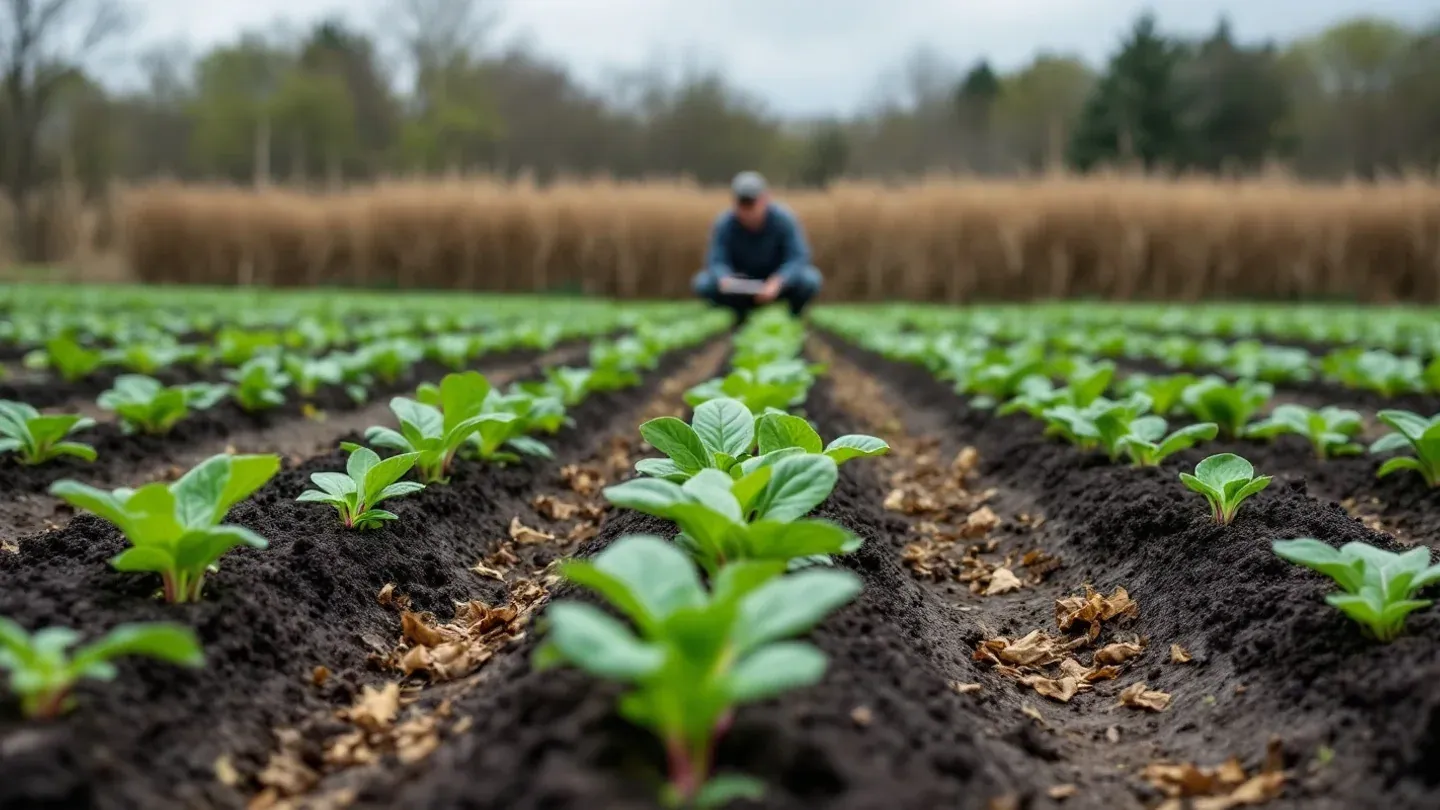
Rutgers and Cornell ran field trials in the spring and summer of 2024 on spinach, peas and beets using a Carbon Robotics demonstration unit. The results, published in Pest Management Science as the first peer-reviewed study of AI-guided laser weeding on the East Coast, found that the machine performed as well as conventional herbicides, and in some cases the crops grew better. Rutgers weed scientist Thierry Besançon reported weeds half a centimeter from crop seedlings killed with no laser damage to the crop. The same report lists the limits: prices starting around $500,000, best results on short-season crops and on small weeds, multiple passes per season in a wet East Coast climate where weeds keep emerging, and a working speed of one or two miles an hour today.
In Wisconsin, extension weed scientist Jed Colquhoun evaluated the first-generation laser weeder in replicated 2024 trials in direct-seeded dry bulb onions on a commercial farm. The conventional program of five herbicide applications showed up to 18 percent crop injury in June against none where the laser was used alone, and the laser-weeded onions carried more leaves and bulked up earlier, although the yield of large-diameter onions did not differ significantly. Under moderate weed pressure, a single pre-emergent herbicide plus four laser passes matched the conventional program. Under high weed pressure, the laser plots needed a lot more hand weeding, and a barley cover crop sown against wind erosion slowed the machine down. Those findings together are the honest summary: the technology works, it rewards clean fields, and it is not a rescue tool for a field that has gotten away from you.
Crop and acreage fit
Both technologies want the same things: straight beds of uniform width, a precision-planted crop that stands out from the weeds, and weeds caught small. The UC guidelines explain why the small-weed rule matters even for the hoeing crew. Direct-seeded organic lettuce is thinned and weeded 30 to 40 days after seeding and hand weeded again about two weeks later, transplants cut that to a single weeding, and pre-germinating weeds with irrigation and killing them with shallow tillage before planting can remove up to half the weeds that would otherwise come up. A machine that arrives on that same schedule fits into the farm. One that is booked on another farm that week does not.
The laser's sweet spot is high-value, high-density crops where the hoe is slow and the herbicide shelf is empty: baby leaf, spinach, herbs, onions, carrots, transplanted brassicas. The camera-guided cultivator's sweet spot is transplanted crops on standard beds. Neither is much use in a mixed market garden with twenty crops on beds of three widths, and neither does anything for the perennial weeds like field bindweed and nutsedge that the UC guidelines tell growers to avoid in the first place.
On acreage, be realistic. A G2 200 covering half an acre an hour needs about 20 hours to pass over ten acres once, and the Rutgers team's point about multiple passes means that ten-acre farm might need 60 to 80 machine hours a season. That is a workable number for a shared or rented unit. It is not a number that justifies a six-figure purchase on one small farm.
The cost math against hand weeding
Start with your own numbers, the way we urged in knowing your cost of production before you price. Hours of hand weeding per acre per crop, times your fully loaded wage, times the crops you grow. The UC figure of $635 an acre for iceberg is one benchmark; organic baby leaf on 80 inch beds with 24 to 32 seedlines, which the UC guidelines say is hard to cultivate at all, will run higher. This labor bill is a large part of why there are not more organic farms.
Against that, a laser weeder bought outright is depreciation plus interest plus the tractor hours plus fuel for the generator plus the operator plus the maker's service plan after the first-year warranty. The Rutgers figure of $500,000 as a starting price, spread over the maker's claimed seven to ten year life, is roughly $50,000 to $70,000 a year before you pay anyone to drive it. Divide by the acres you will actually treat. On 500 acres of organic greens with three passes each, that is small against the hand crew. On 30 acres, it is not. The maker's own financing page talks of owning a LaserWeeder for less than $25,000 a month and names four agricultural lenders, which tells you the scale of operation it has in mind.
The same arithmetic applies to the camera-guided cultivator. Neither FarmWise nor Stout publishes a price on its site; you will be quoted. At any price, the implement has to be displacing a real crew across real acres every month of the season.
Renting, custom hire and financing
Here is the gap in the market in spring 2026. We could not find a national custom-hire network for laser weeding the way there is for combining or spraying, nor a published custom rate. What exists is private: a grower who bought a unit and rents it out between his own crops, a dealer demo program, neighbors who split a machine. Ask the maker's sales desk and your dealer directly, ask at your state vegetable growers' meeting, and ask the researchers running trials in your region, because they know who owns one within a hundred miles.
If you do buy, the money is ordinary farm equipment finance. FSA direct operating loans go up to $400,000 and cover farm equipment on terms of one to seven years. We walked through the program in FSA microloans and beginning farmer loans explained. Dealer financing is the other route, and the maker's financing page above names its four lenders and a lease-to-own option.
One more cost to weigh: these are software machines. The lasers fire on deep-learning crop models the maker updates, the implement reports its performance and weed metrics to the maker's Ops Center software, and support after year one is a paid plan. Read the service contract the way we suggested in who owns your farm data. Read it again with our look at right to repair for farm equipment.
What a small grower can use today
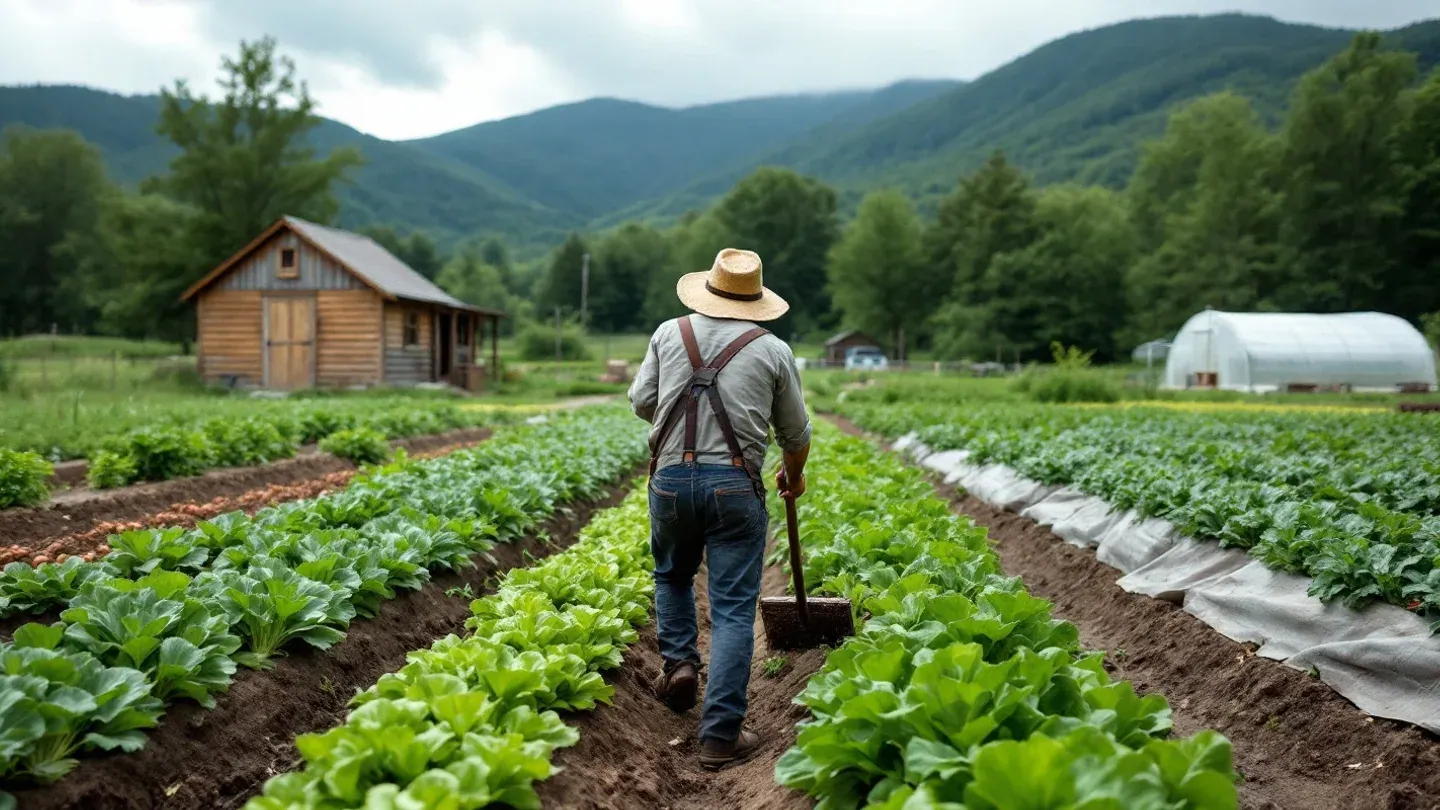
If you grow on a few acres, the robot that earns its keep this season is probably not a laser. It is better steel and better timing. The UC guidelines list what works in organic lettuce: a stale seedbed, precision planting that lets you cultivate 80 percent of a 40 inch bed, finger and torsion weeders for the seedline, transplants that cut hand weedings from two to one, and a strict rule that no weed sets seed, in the field before planting or on the edges around it. SARE's Steel in the Field remains the plainest guide to the cultivation tools behind that list. We covered the tractor-free versions in small farm tools that earn their keep.
The small autonomous platforms are worth watching rather than buying. The Wisconsin presentation points to two: Naïo's Oz, a small robot for planting, tillage and mechanical weeding, and farm-ng's Amiga, a micro tractor tool carrier that can take seeders, cultivators and a compost spreader. Both are real, and neither has the body of independent trial data behind it that the big implements now have. If you try one, do it on your straightest field, keep records, and judge it by hours saved per bed, not by novelty. That is always simplify applied to a robot.
Before you sign anything
Ask the vendor for a trial on your own ground, in your own crop, at the weed size you actually have when the crew normally goes in. Ask for the names of three growers in your region who own the machine and call them in the slow season. Ask what a service plan costs in year three, what happens when the cameras cannot see through dust or a cover crop, and what the machine does on your narrowest bed.
Then do the arithmetic above with your own wage rates and your own acres. A camera-guided cultivator can pencil out on a transplanted crop at a few dozen acres. A laser weeder, in 2026, pencils out on hundreds of acres of high-value crops, or on a shared machine, or for a grower with no other legal way to control weeds in a crop that pays well. For everyone else it is a tool to keep an eye on, and the companies and programs tracking it belong in our service providers and manufacturers directory. The programs following it are in our organizations directory. The soil does not care whether the weed died by hoe, steel or photon. It cares that the canopy closed over a clean field, and that you are still farming that field in ten years, which is the long view that makes any machine worth owning.