
Mid-August is when the paperwork piles up on a small farm. The tomatoes and peppers are coming in faster than you can pack them, the CSA newsletter is three days late, the wholesale buyer wants a price list, and a soil test from the spring is still sitting unread in a drawer. It is tempting to hand some of that to one of the chat assistants that now live on every phone.
That is a reasonable instinct, as long as you know which jobs these tools are good at and which ones they will quietly get wrong. The research record on that question has grown fast in the last three years, much of it from land-grant universities. Here is what it says, in plain terms, and a short checklist at the end.
What a chat assistant actually is
A tool like ChatGPT, Gemini or Claude is a large language model: a program trained on a very large pile of text that predicts a plausible next word. It is excellent at language tasks. It has no soil probe, no rain gauge and no memory of your fields unless you give it one. It does not know whether what it writes is true, and it will write with the same confidence either way.
Keep that picture in mind and most of the rest follows.
Four jobs it does well
Sorting and summarizing records. Researchers writing in Applied Engineering in Agriculture in 2025 loaded machinery maintenance logs, financial statements and multi-year yield and soil files into ChatGPT Plus running GPT-4o. The tool picked out trends in fuel costs and equipment servicing, read the farm's financial health against university extension benchmarks, ranked soil types by productivity and drew the charts. The authors also note that results shifted a little with how the question was worded and that careful prompting was necessary. That matches what we hear from farmers: give it a clean spreadsheet and a clear question and it is a patient bookkeeper's assistant. Give it a shoebox of receipts described from memory and it will guess.
Drafting. CSA emails, a job posting, a market sign, the grant narrative nobody wants to start. Mississippi State Extension's guide to generative AI tools offers the practical recipe: state the audience, the purpose and the constraints, ask for a format and a tone, paste in the document you are working from, then revise the prompt until the draft is usable. The guide's rule is blunt: "Never accept outputs without questioning them." A first draft in two minutes is real value. The final draft is still yours.
Price lists and simple math. If you have done the work in Know Your Cost of Production Before You Set a Price, an assistant will turn that sheet into a tidy wholesale list, convert units, add a margin and format it for the buyer. Check every sum. These tools are much better at arranging numbers than at arithmetic, and a wrong price on a list that went out to twenty restaurants is expensive to walk back.
Explaining a soil test, line by line. A soil report is dense, and the assistant is good at translating it. Ask what a lime index means, why the pH scale is logarithmic so each unit is a tenfold change, or why a cation exchange capacity of 3 on your sandy field matters more than the phosphorus number, and you will get a clear, mostly correct tutorial. What you should not ask it for is the rate. The lab's recommendation on the report, written for your state's calibration, and a conversation with your county agent decide how much lime goes on. Our older piece on 6 Easy Soil Tests covers what you can check yourself before the sample goes to the lab.
Three ways it fails
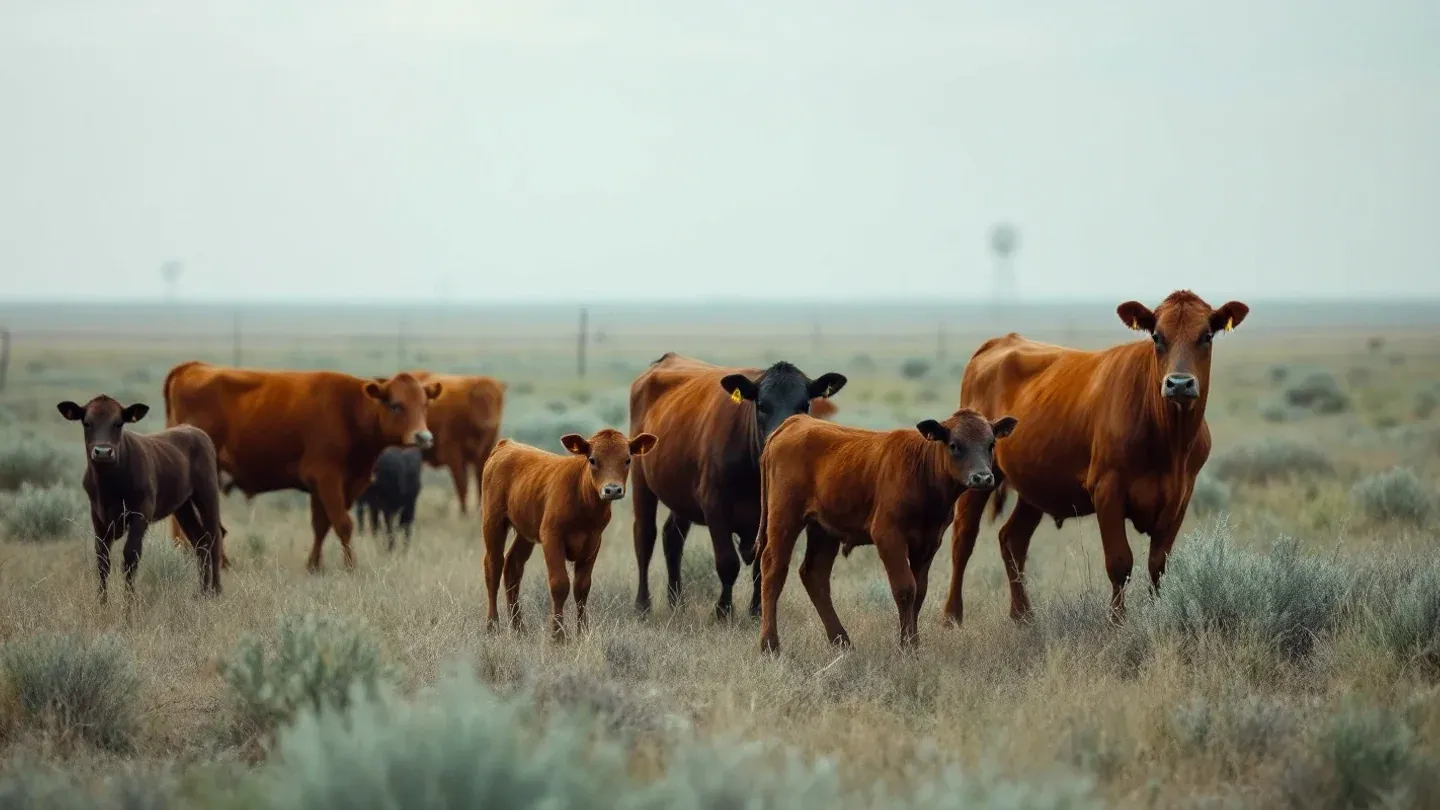
It makes things up. Two researchers writing in Animal Frontiers asked OpenAI's models the same stocking-rate question 1,000 times each: is five acres per cow-calf pair enough on unirrigated, continuously grazed land in Potter County, Texas, or in Jackson County, Florida? The answer depends on rainfall, and the correct one differs by county. The responses varied from run to run, and the links the models offered were not necessarily the sources they had used. The authors define the problem plainly: hallucinations are "cases in which the model invents its own answers or URLs." Their recommendation is that producers "validate AI-provided information with local experts."
It gets agronomy wrong in the details that matter. A 2023 Perspective in Nature Food tested GPT on technical advice for cassava farmers in Nigeria and found enough shortcomings to call for a design with human experts in the loop. A 2024 study in Scientific Reports is more nuanced: four local rice experts preferred ChatGPT's answers to farmers' questions over those of extension agents answering from memory in 78 percent of cases, and over agents working from their extension materials in 69 percent, yet the chatbot scored worse on planting time, seed rate and fertilizer rate and timing. Those are exactly the numbers a farmer acts on. The pattern is consistent: fluent on principles, unreliable on local specifics.
The most instructive US test we have seen ran at the University of Nebraska-Lincoln, where a team let ChatGPT-4o manage a plot in the university's farm management competition against experienced producers. The AI plot finished in the top third on yield. It was not the best on input efficiency or profitability, its irrigation water-use efficiency was below average, and it struggled whenever an input such as a real-time weather forecast or the cost of irrigation was missing. The researchers' verdict, as the university summarized it in April 2026, is that generative AI is "not yet a standalone solution."
Your data leaves the farm. Everything you paste into a consumer chatbot goes to a company server. Google's privacy notice for its Gemini apps says a subset of chats are reviewed by human reviewers, asks users not to enter confidential information they would not want a reviewer to see, and explains the setting that stops future chats being used to train its models. Every vendor publishes a page like it. Read it before your lease, your payroll or your buyer's contract goes into a prompt. The Ag Data Transparent principles give you the right questions to ask any farm software, and Who Owns Your Farm Data walks through what the answers mean. For a deeper framework, the National Institute of Standards and Technology published a generative AI profile of its AI Risk Management Framework in July 2024; it is written for organizations, but the risk categories apply to a farm office too.
What the vendors and Washington are doing
The farm software industry saw this coming. Farmers Business Network launched Norm, an agronomy chatbot built on OpenAI's GPT-3.5, as a free beta for members in spring 2023, with a warning on every answer that it was an experiment and not intended for real agronomic guidance. That disclaimer was honest, and it is still the right way to read any AI feature bolted onto farm software: a drafting and lookup aid, not an agronomist.
Extension has moved from warnings to guidance. University of Wisconsin-Madison Extension published a plain-language summary in November 2025 of a Cornell-led review of more than 200 studies on models that read text, photos and sensor data together. The uses it lists include automated documentation, plain-language rewriting of technical material and disease identification from a photo. The cautions are the ones above, plus two that hit small farms hardest: "Data availability and quality are enormous challenges," and farms with thin broadband are at a disadvantage. The article's bottom line is to verify all recommendations with trusted experts.
Congress noticed too. On July 14, 2026, Representatives Zach Nunn of Iowa and Don Davis of North Carolina introduced the FARM AI Act, H.R. 9686. The bill would make AI a priority area in USDA's competitive research grants and amend the Smith-Lever Act so that Cooperative Extension's mandate explicitly covers "artificial intelligence systems and data-driven agricultural management tools" and outreach to producers on using them. Its findings name "small, medium, and family-run farms" as intended beneficiaries, and the sponsors' announcement is candid about why adoption has been slow: "High upfront costs, limited technical expertise, and a shortage of rural workforce training." On introduction it was referred to the House Agriculture Committee, and the sponsors describe it as the House companion to a Senate bill from Ted Budd of North Carolina and Adam Schiff of California. Whatever happens to it, the direction is clear: the public advice on these tools will come through your county extension office, which is one more reason to be involved there.
The plumbing is mostly in place. USDA's August 2025 technology survey found 85 percent of US farms with internet access and 82 percent using a smartphone, with 74 percent connecting over cellular service and 24 percent over satellite. If your signal drops in the back forty, the assistant does too; see Rural Broadband: What the BEAD Program Means for Farms.
A short checklist for using them well
- Use it for words, not for rates. Drafts, summaries, translations, explanations: yes. Seed rates, fertilizer rates, pesticide choices, stocking rates, withdrawal times: no. Those come from the label, the lab report and your extension agent.
- Ask for the source, then open it. If the link is dead or says something else, the answer was invented. Treat that as a signal about the whole reply.
- Ask the same question twice. If the two answers disagree, the model is guessing.
- Give it clean inputs. A tidy spreadsheet beats a description from memory. The researchers above got good results precisely because they fed it structured files.
- Strip the private details. Names, account numbers, lease terms and employee data stay out of the prompt. Turn off the training setting where the vendor offers one.
- Keep your own copy. Records belong in a file you control, not in a chat history. Considerations for Farm Management Software still applies to any app that now carries an AI badge.
- Check the math by hand once. Every price list, every margin, every unit conversion. It takes five minutes and catches the error that would have cost a season.
- Decide first what you will not use it for. Written down, on the wall of the office. That is simplicity in practice.
Where this leaves a small farm
The honest summary is that a chat assistant is a capable office helper and an unreliable field advisor. Used for the first job, it gives back hours in a season when hours are the scarcest thing you have. Used for the second, it hands you confident advice calibrated to nowhere in particular.
The farms we see using these tools well treat them the way they treat a sharp new employee from out of state: welcome help with the paperwork, no say over the sprayer until they have earned it. The long-term value is in the habits that go with the tool: cleaner records, clearer questions, a closer relationship with the extension office that has to verify the answers. Those habits pay whether or not the software keeps improving.
If you want to go deeper, the farm organizations and extension-linked groups we follow are listed in our organizations directory, and the software and service companies appear under service providers and manufacturers. Start with a soil report and a spreadsheet, ask the assistant to explain rather than decide, and keep the agronomy where it belongs.