
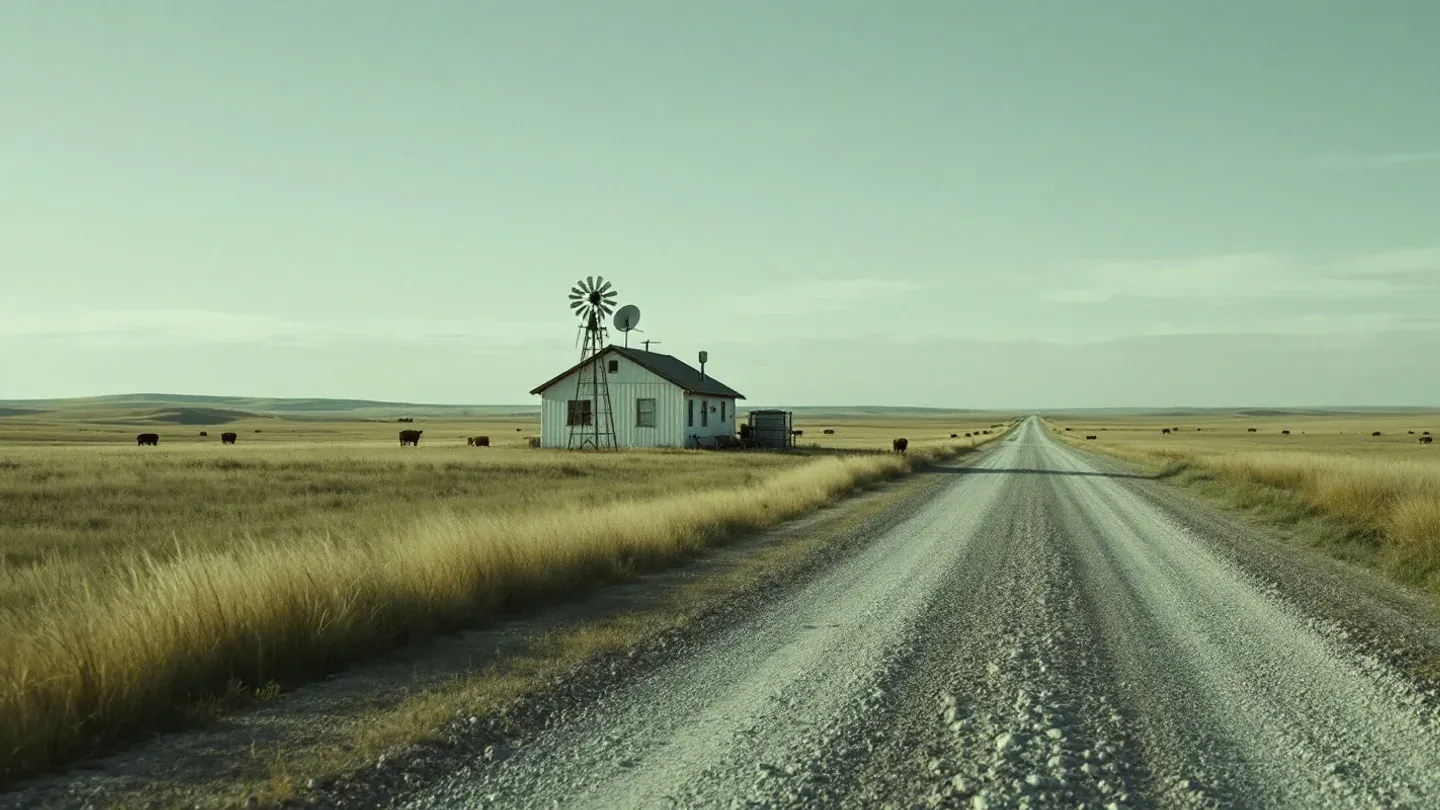
Walk to the far end of most farms in America and watch the bars on your phone disappear. For years that was an inconvenience. It is now a business problem, because the things that make a small farm pay, direct sales, good records, sensors in the field and the vet or the doctor on a video call, all assume a connection that holds.
Two federal programs are supposed to fix that. The Broadband Equity, Access, and Deployment program, BEAD, is the largest broadband build-out the country has ever funded, and in the summer of 2024 the state plans that will spend it are being approved one by one. USDA's ReConnect program has been paying for rural networks for several years and took a new round of applications this spring. Here is how both work, where they stand as this is written, and what a farm can do while the fiber is still a line on a map.
What the connection does on a farm now
USDA's statisticians ask farmers every two years how they use computers and the internet. The 2023 edition, released in August 2023, found that 85 percent of US farms had internet access. Among connected farms, which could name more than one method, 75 percent reached the internet through a cellular data plan, only 51 percent through a broadband line (DSL, cable or fiber) and 23 percent through satellite. The spread between states is wide: 93 percent of Montana farms were online, but only 55 percent in New Mexico and 66 percent in Pennsylvania (USDA NASS, Technology Use 2023).
The same survey shows what the connection is for. In 2023, 32 percent of farms bought inputs online and 23 percent used the internet for marketing, both up from 2021. That second number is the one we care about most. A farm that sells direct lives on its order page, its email list and its market-day posts, which is why we compared online stores for farms in March and why marketing a farm keeps coming back to the same tools.
Records are the second use. Farm management software, which we have written about choosing, syncs to the cloud. So do the spreadsheets behind a Schedule F. Sensors are the third. USDA's Economic Research Service reported in February 2023 that automated guidance was in use on well over half the acreage planted to corn, cotton, rice, sorghum, soybeans and winter wheat, with yield maps, soil maps and variable-rate tools long established on corn and soybean ground (USDA ERS, Precision Agriculture in the Digital Era). On a small farm the equivalent is the soil moisture sensor that warns you before the drip line runs dry. Every one of these tools is only as good as the signal where it sits.
The fourth use is people. The Rural Health Information Hub, a resource at the University of North Dakota supported by the federal Health Resources and Services Administration, says plainly that patients need high-speed internet at home to make full use of telehealth, and that many rural communities do not have the connection speeds it takes (RHIhub, Telehealth and Health IT). For a farm family forty miles from the nearest clinic, a video visit that does not freeze is part of nurturing the family, not a luxury.
How far behind rural America is
In March 2024 the Federal Communications Commission raised its benchmark for broadband to 100 megabits per second down and 20 up, and measured the country against it. Using data as of the end of 2022, the Commission found that fixed service at that speed had not been deployed to about 7 percent of Americans overall, but to about 28 percent of people in rural areas and 23 percent of people on Tribal lands (FCC, 2024 Section 706 Report). The report says in so many words that it expects BEAD and similar programs to narrow those gaps in the coming years. For a farm, "the coming years" is the planning horizon that matters.
BEAD in plain terms
BEAD was created by the Infrastructure Investment and Jobs Act, signed into law on November 15, 2021 (Public Law 117-58). It puts $42.45 billion into the hands of the 50 states, the District of Columbia and five territories, which run their own grant programs to build networks (NTIA allocation announcement, June 26, 2023). The National Telecommunications and Information Administration, NTIA, at the Department of Commerce, writes the rules and approves each state's plan.
Two definitions from NTIA's 2022 Notice of Funding Opportunity decide who gets served first. An unserved location has no broadband at all, or nothing that reaches 25 Mbps down and 3 Mbps up. An underserved location has something, but nothing that reaches 100 down and 20 up. The money was allocated mostly by each state's count of unserved locations, with a floor of $100 million per state, and a state has to show it can reach every unserved and underserved location before it may spend on anything else. Projects that run fiber all the way to the premises are the program's stated preference (NTIA, BEAD Notice of Funding Opportunity).
The allocations announced on June 26, 2023 tell you how much your state has to work with. Texas received the largest share, just over $3.3 billion. Missouri was allocated about $1.74 billion, Wisconsin about $1.06 billion, Montana about $629 million, Iowa about $415 million and Vermont about $229 million. A state does not get the money in one piece. It first files an Initial Proposal, which NTIA let states split in two volumes: Volume I describes the challenge process, through which a local government, nonprofit or internet provider can dispute whether a given address counts as served, and Volume II covers the rest, including how the state will choose the companies that build (NTIA, Louisiana approval). Every state had to submit by December 27, 2023. Once the proposal is approved, the state can request its funds, finishes its challenge process, picks its builders and has one year to file a Final Proposal.
Where the state plans stood in July 2024
Louisiana was the first state through the gate, on December 15, 2023. Kansas, Nevada and West Virginia followed on April 25, 2024, together authorized to request more than $2 billion (NTIA, April 25, 2024), and the District of Columbia, Delaware and Washington on May 9 (NTIA, May 9, 2024). Then the pace picked up. Colorado and New Hampshire were approved on June 11, Illinois, Oregon and Puerto Rico on June 13 (NTIA, June 13, 2024), Kentucky and Maine on June 17, Indiana on July 8, Maryland on July 10, Hawaii on July 16, Rhode Island on July 17 and Connecticut on July 18, 2024 (NTIA, July 18, 2024). NTIA announces approvals on a rolling basis and keeps a public dashboard of where each of the 56 states and territories stands (NTIA, BEAD progress dashboard).
That leaves most of the big farm states still waiting for the final sign-off as this is written, every state in the allocation list above among them: Texas, Missouri, Wisconsin, Montana, Iowa and Vermont. Approval is not a shovel in the ground either. After it come the challenge process, the bidding and the Final Proposal, and only then construction, which in open country means poles, trenches and permits across whole counties. A farm that is unserved today should plan on being unserved for a while yet, and should use the waiting time well.
USDA ReConnect, the other door
ReConnect is older, smaller and run by USDA's Rural Utilities Service. It was authorized in the Consolidated Appropriations Act of 2018 and makes loans and grants to the companies, cooperatives, Tribes and local governments that build rural networks, not to farms directly. The fiscal year 2024 round was announced on February 21, 2024, opened for applications on March 22 and, after a one-month extension, closed on May 21, 2024 (Federal Register, ReConnect FY2024 notice; extension notice).
The rules say a lot about what a farm can expect from a ReConnect network. The round offered up to $200 million in loans at a fixed 2 percent, up to $150 million in grants with a 25 percent cash match, a combination category of up to $100 million each in loans and grants, and a further $150 million in grants for Tribal governments, Alaska Native corporations, colonias, persistent poverty areas and socially vulnerable communities, who need no match. A grant request is capped at $25 million and a loan at $50 million. To qualify, at least 90 percent of the households in the proposed service area must lack even 25/3 service, and an area whose only service is satellite or unlicensed wireless counts as lacking it. Whatever gets built must be able to deliver 100 Mbps up and down to every premises at the same time, and applications from local governments, nonprofits and cooperatives score extra points.
That last rule is the one to remember. If your electric or telephone cooperative is thinking about broadband, it has a head start in the scoring, and your voice as a member-owner counts.
The affordability gap after June 1
Getting a line to the farm is half the problem; paying for it is the other half. The Affordable Connectivity Program took up to $30 a month off a household's internet bill, $75 on qualifying Tribal lands, and gave a one-time $100 discount on a computer or tablet. It ended on June 1, 2024 because Congress did not fund it again (USAC, Affordable Connectivity Program). If your bill went up this summer, that is why. Ask your provider whether it has a low-income plan of its own, and read your state's BEAD plan: the BEAD rules require every network built with the money to offer a low-cost service option, and each state spells out what that means.
What a farm can do in the meantime
Find out what the map says about you
BEAD money follows the FCC's National Broadband Map, address by address. If the map shows your farmhouse as served at 100/20 and it is not, you are at risk of being skipped. The challenge process is run by your state broadband office, and challenges come from local governments, nonprofits and providers, so take your speed test results to the county, the cooperative or a regional nonprofit and ask them to file. Purdue's Center for Regional Development, for one, offers communities broadband planning assistance and a survey that validates broadband data and gathers demand (Purdue PCRD, Digital Opportunities), which is the groundwork a challenge needs.
Count demand with your neighbors
Builders bid on areas, not farms. A signed list of households and businesses on one road who want service is the cheapest thing you can hand a cooperative weighing a ReConnect or BEAD application. This is acting local in its plainest form.
Use what reaches you
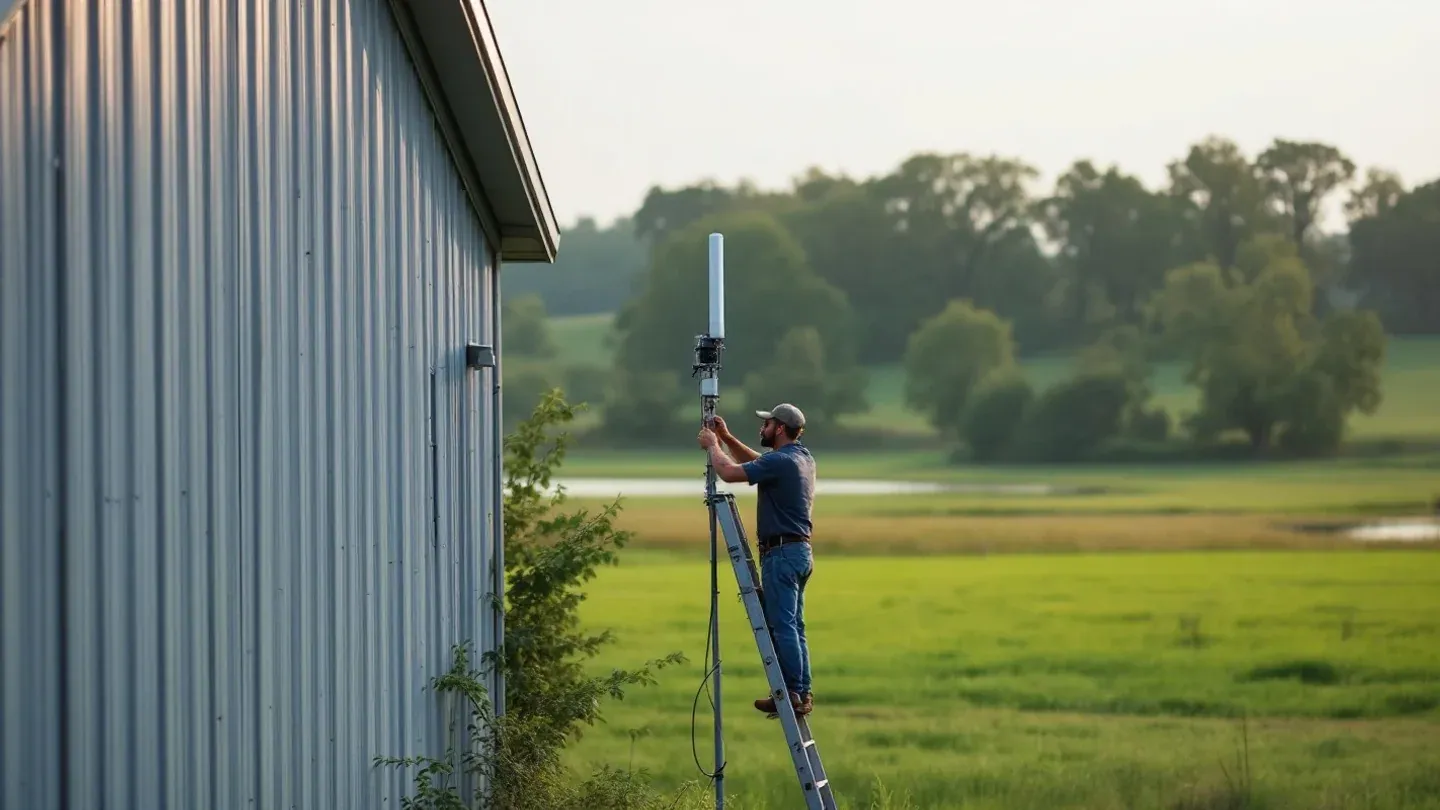
Three in four connected farms already run on a cellular plan and nearly one in four on satellite. A booster on the shop roof, a hotspot in the truck and a dish at the house are not the answer, but they are a bridge, and they keep the order page open.
Build the business for a thin connection
Choose record-keeping and sales tools that work offline and sync later, batch your uploads for the evening, and keep paper or a local copy of anything you cannot afford to lose. Simplicity in the office is as much a virtue as in the field. Who ends up owning the data those tools collect is a question we will take up in a piece on farm data.
Show up
State broadband offices hold public comment periods on their plans, and county boards decide whether to put local dollars alongside federal ones. Being involved here is measured in evenings, not years. Our organizations directory lists groups that follow rural policy, and our service providers directory is where to look for the people who install and maintain farm networks.
Plan the farm around the arrival date, not the promise
If your state was approved this summer, construction is still a long way off in most places. Put connectivity in the long-term plan the way you would a new barn: with a date, a budget and a fallback.
The long view
When rural America was electrified, it was farmer-owned cooperatives that carried the lines the last mile, and the people announcing BEAD reached for that comparison themselves (NTIA, June 26, 2023). The money is there this time. The question for a farm is not whether the fiber comes, but whether the farm is on the map when it does, and whether the business can stand on its own until then. Two weeks ago we looked at crop insurance for diversified farms. Next month we turn to solar on the farm and REAP grants. Connectivity belongs in the same drawer: infrastructure you plan for, apply for and do not wait on.