
Mid-February is when a crop plan stops being a sketch. Seed orders are in, the rotation is penciled onto the field map, and anything new has to earn its square. For a small but growing number of US farms, one of the new things on the map is a grain that never needs replanting. Three years ago to the day, Civil Eats ran a piece on how perennial crops build biodiversity above and below ground, with Kernza among its examples. Since then the crop has gained a second University of Minnesota variety, a five-year federal research program has run its course, and a four-year on-farm trial of grazing it alongside a grain harvest has been published. Here is where perennial grains, and Kernza in particular, stand on US farms.
What Kernza actually is
Kernza is not a new species. It is the trademarked name for grain from intermediate wheatgrass, Thinopyrum intermedium, a cool-season perennial the USDA introduced to the United States in 1932 from the Maikop region near the Caspian Sea. The USDA NRCS plant guide describes a long-lived grass three to four feet tall with short rhizomes and a deep root system, grown for hay and pasture across the northern Great Plains, good alone or with alfalfa, and valued as nesting cover for game birds and waterfowl.
The idea of turning that forage grass into a food grain goes back to 1983, when Rodale Institute breeder Peggy Wagoner picked it as the most promising candidate. The Land Institute in Salina, Kansas, began breeding it in 2003, registered the Kernza trademark in May 2011 and brought in the first large commercial harvest from a 30-acre Kansas field in 2010. The University of Minnesota released the first commercial variety, MN-Clearwater, in 2019 and MN-Itasca in 2025. The Land Institute has released six varieties of its own and in 2023 worked out how to run two breeding cycles in one year, doubling the pace of selection.
The trademark matters on the farm. Only grain-type varieties grown under an annual license with The Land Institute, on acres registered in its identity-preserved program, can be sold as Kernza. The license and its royalties pay for the data The Land Institute collects and shares with growers and buyers. Keep the plant and the program apart in your head; both come up below.
Where the acres are
The Land Institute keeps a state-by-state table of Kernza acres and growers. Minnesota leads with 57 growers on 1,417 acres, Kansas follows with 29 growers on 930 acres, then Montana with 498 acres, South Dakota with 278, Wisconsin with 271 and Nebraska with 217. The table lists growers in 18 states, most with a university or research partner listed alongside, and the network counts more than 100 farmers and 53 research partners.
That is a real crop, but a small one next to the corn and soybean acreage of any single Midwestern county, and a young one. When University of Wisconsin researchers interviewed ten Kernza growers in the summer of 2017, those ten were about a third of the 36 farmers on the national registry. Between them they had roughly 140 acres (57 hectares) of the crop, much of it on field margins, odd-shaped fields, uneven ground or poor soils, places that did not suit row crops, which kept costs and risks low. Three of the ten had not harvested grain at all, because of sparse stands, weeds, small or awkward fields, the wrong equipment or no experience with small grains. Apart from the two growers with contracts, none knew what price they would receive.
Some of that has changed, and not only for the better: The Land Institute now says grain supply has increased dramatically and demand needs to catch up, a useful warning for anyone planning acres before lining up a buyer.
What it yields, and what it is worth
Here are the numbers without varnish. The Land Institute reports that research plots can top 1,000 pounds of grain per acre, that average production yields in 2021 were a little over 400 pounds, and that experienced growers reached 1,200. The grain is about a fifth the size of a wheat kernel and carries a hull, so cleaning and dehulling sit between the combine and the mill. The Wisconsin growers reported yields falling after the second year as stands thickened and the plants became root-bound.
Breeding is moving: five cycles of selection raised yield by 145 percent and lifted the free-threshing share of the seed from under a quarter to more than half. But Kernza still yields a fraction of annual wheat, so the economics rest on three other legs: a premium for a perennial grain with a nutty flavor and more protein and fiber than annual wheat, the forage and straw from the same field, and the inputs you do not buy. The grower pages quote no price, and the 2017 interviews found that growers without a contract did not know what they would be paid. Treat any number a buyer mentions the way we suggest in knowing your cost of production before you price: cost the acre and work back.
The market has a recognizable shape. Birchwood Cafe in Minneapolis served the first Kernza waffles in 2013, Patagonia Provisions launched Long Root Ale in 2016 as the first packaged Kernza product, and General Mills' Cascadian Farm followed with a limited release of Honey Toasted Kernza cereal, a 2019 fundraiser edition that lifted demand and publicity. Perennial Pantry in Northfield, Minnesota, processes Kernza and sells the grain and flour online, and growers formed the Perennial Promise Growers Cooperative in 2021 to market together. The brewer and the pantry are in our food brands directory. It is the pattern we described for local grain economies and small mills: the grain sells where someone nearby mills, malts or bakes it.
Grain and forage from the same field
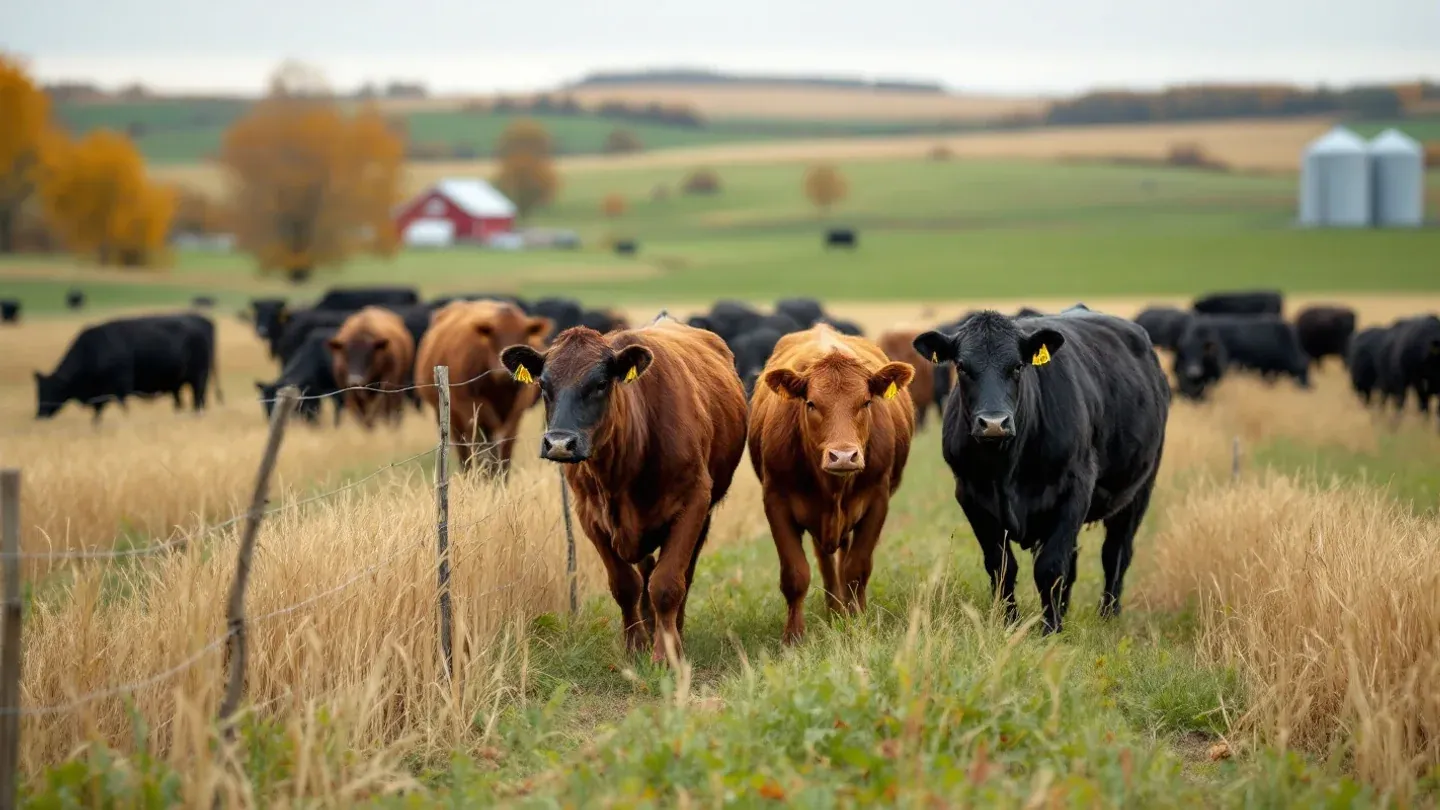
This is where Kernza looks most like a crop a diversified farm would want. The NRCS guide still rates intermediate wheatgrass palatable to cattle, sheep, horses and deer, best in spring, early summer and fall, with 21 to 28 days of rest between grazings and six inches of stubble left going into winter.
In April 2025, University of Minnesota and Michael Fields Agricultural Institute researchers published a four-year on-farm trial in Minnesota in Frontiers in Agronomy comparing a grain-plus-straw system with a dual-use system that also grazed the regrowth in fall and spring. Grain-only produced 42 percent more grain and 41 percent more straw in year two, the two were level in year three, and the grazed stand out-yielded the ungrazed one for grain in year four. Fall and spring regrowth ran 14 to 15 percent crude protein against 3 percent for summer straw, with a relative feed value of 100 in fall and 127 in spring. Net returns worked out to $721 per hectare per year for grain-only and $609 for dual use, about $292 and $246 an acre, mostly because of the second-year grain gap, so the authors advise holding off grazing until after the second grain harvest.
For a farm that already runs stock through its cropland, as in combining livestock and plant growth, that is a familiar rhythm: grain and straw in August, a grazing window in October and another in May. Set the regrowth figures beside the species in our guide to forage grasses for cattle and they hold up well for a field that also paid a grain check.
What the soil and water research says
The strongest evidence is below ground and about water. The roots run ten feet deep and stay all year, and The Land Institute cites research showing Kernza absorbs up to 96 percent more nitrate than corn and soy. Tim Crews, its chief scientist, told Civil Eats that under a perennial cover "the vast, vast majority of nitrate leaching stops." The first Kernza water quality paper, in 2013, was the finding that opened agency doors and encouraged plantings on land vulnerable to leaching. It is the logic of cutting synthetic nitrogen without cutting yields: living roots in the off-season are the cheapest nitrogen filter there is.
Soil carbon deserves more care. The Land Institute estimates 300 to 1,000 pounds of carbon sequestered per acre per year. But a Michigan State study on a sandy Midwest soil found no detectable soil carbon gain after four years of intermediate wheatgrass against annual wheat, even though the perennial carried up to 15 times more root carbon. The authors concluded not that the carbon is not coming, but that on light soils it takes longer than four years to show. If you plant Kernza hoping to sell carbon, take a proper baseline first and let the field, not the brochure, set the timetable. The wildlife claims sit in the same category: the NRCS guide confirms nesting cover, and kernza.org itself notes that its habitat claims rest on observations, anecdotal evidence and research on similar grasslands, with a formal study still waiting for funding.
None of this undercuts the crop. It is why we hold healing the soil as a belief rather than a sales pitch: the gains are real, they are slow, and they belong to the farm that stays long enough to see them.
The agronomy in brief
Kernza needs six weeks between 32 and 50 degrees Fahrenheit to flower, so it is planted in the fall: most growers in the northern hemisphere plant between August 1 and September 15, drilled half an inch deep into a firm seedbed. A spring planting establishes but gives no grain the first season. Harvest comes in late summer or early fall when most heads are brown, swathed and picked up or taken direct with a stripper header or a combine set for small, light seed. The NRCS guide suggests 10 to 12 pounds of pure live seed per acre for a hay stand; grain growers follow The Land Institute's own planting guide, which the growers page carries.
Weeds are the main management question. The crop suppresses annual weeds once established, but the interviewed growers saw the weed community shift toward perennials, which are harder to handle in a stand you cannot till. The first broadleaf herbicide labeled for grain production, a 2,4-D amine, was approved in late 2021; organic growers rely on a clean, firm seedbed and a dense stand. Keep it out of orchard alleys: in The Land Institute's experience, stands near trees produced dramatically less seed.
Money follows the crop more than it did. The Conservation Crop Rotation practice, code 328, carries a short-term perennial payment scenario under both EQIP and CSP, the programs in how EQIP and CSP payments work. For insurance, Whole-Farm Revenue Protection covers all commodities on the farm under one policy and is available in all counties nationwide. And the research backbone of the past five years, KernzaCAP, was a USDA National Institute of Food and Agriculture grant that ran from September 2020 through September 2025 and produced, among other things, the current grower guide.
The other perennial grains
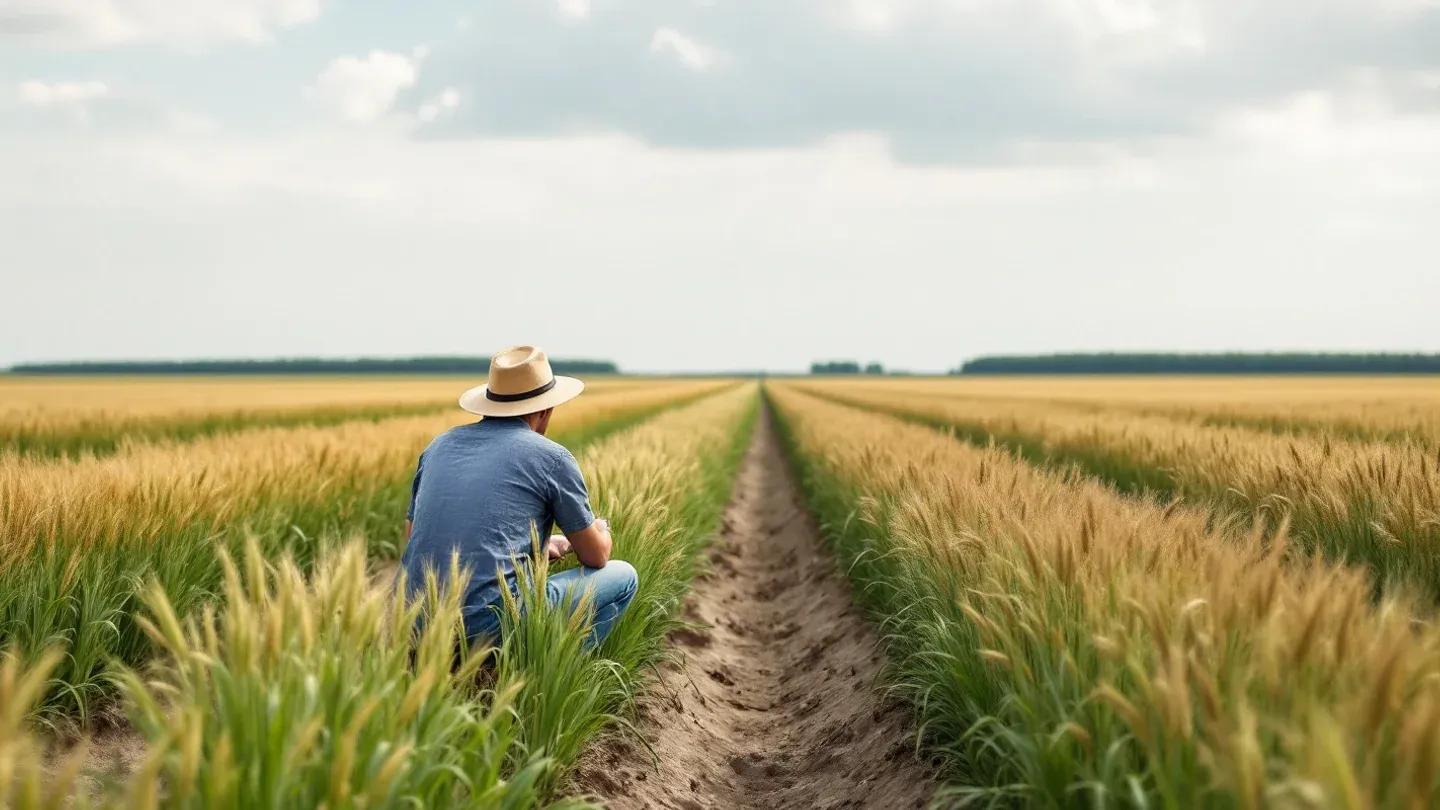
Kernza is the first perennial grain you can buy, not the only one being bred. The Land Institute's perennial wheat program, running since 2001, crosses bread wheat with intermediate wheatgrass; its best lines yield 50 to 70 percent of annual wheat, and Washington State University's Breadlab lists its own perennial wheat, Salish Blue, beside its wheat and barley varieties. Perennial rice bred in Yunnan, China, with early Land Institute support has given eight harvests over four years from one planting at yields matching elite annual varieties. Perennial sorghum from crosses with Johnsongrass has been a Kansas project with Kansas State University since the 1980s, and a commercially viable variety is still the long-term goal. When Michigan State researchers interviewed eleven Michigan and Ohio farmers about perennial wheat, soil and environmental quality were their main motives, and only one of them raised the question that preoccupies breeders, whether it can match annual wheat for yield. Breeders still put that question first. The Land Institute is in our organizations directory for anyone who wants to follow the breeding from the source.
Should a small farm try an acre?
Here is the part most articles skip. You cannot try an acre of Kernza. The Land Institute's FAQ sets a minimum of 20 acres to become a registered grower, seed goes only to licensed growers, and approval depends on your location, your experience with small grains or forage grass seed, and the resources you can bring to managing the crop. The program is prioritizing production at a scale that can build a market, which is defensible, but it means the entry ticket is 20 acres of suitable ground, a combine you can adjust, a plan for cleaning and dehulling, and a buyer.
If you have that, apply, plant the smallest block the license allows on your best-drained, cleanest field, and keep stock off it until after the second grain harvest. If you do not, there are three honest ways in. Plant plain intermediate wheatgrass from a forage seed dealer as hay or pasture, which is what the species has done here since 1932, and learn how it establishes, grazes and winters on your ground; you simply cannot sell the heads as Kernza. Buy the grain and flour and run it through your kitchen, bakery or brewhouse, because the market this crop needs is made by people who know how it bakes. And talk to the growers' cooperative or the university program in your state before you commit.
Whichever door you take, treat it as the long-term move it is. A perennial grain fits a farm already working toward fewer passes and less tillage. It also fits one moving away from a single crop on every acre. It does not rescue one that is not.
A practical close
- Decide which crop you mean: licensed Kernza grain needs 20 acres and a buyer; intermediate wheatgrass forage needs neither.
- Cost the acre with real numbers: a planning yield near the 400-pound 2021 average rather than the research-plot figure, dehulling and cleaning, the forage value of fall and spring regrowth, and the inputs you drop.
- Line up the buyer before the seed: a local mill, malthouse, brewer or the growers' cooperative.
- Ask your NRCS office about the short-term perennial scenario under Practice 328 and your agent about Whole-Farm Revenue Protection.
- Plan the fall: a clean, firm seedbed on well-drained ground, drilled half an inch deep between August 1 and September 15, no trees nearby.
- Pull a soil carbon baseline and a water nitrate sample before planting, so the field can report in five years what the roots did.
- Keep animals off until after the second grain harvest, then graze the regrowth on a rest-and-recover schedule.
Kernza is a working crop on a few thousand American acres and a promise on the rest. The promise is well founded, the acres are honest, and the farm that does both the arithmetic and the waiting is the one that gets the grain and the roots.