
Late June is when the question gets real. The first tomatoes are splitting after a rain, the squash plants are producing faster than the market can take them, and every wash day ends with a crate or two of fruit that is perfectly good to eat and impossible to sell at full price. What happens to that crate decides whether a farm feeds people or feeds a compost pile. This guide walks through the choices in the order that makes sense: grade it, sell it, process it, give it away, feed it, and only then compost it. It also covers the liability protection and the tax deduction that make donation worth the trouble.
How much is at stake
Farm surplus is a bigger share of the problem than most people assume. ReFED's 2026 food waste report, published on April 7 with 2024 data, puts total surplus food in the United States at 70 million tons, about 29 percent of the food supply, and attributes 24.2 percent of that surplus to the farm sector. Only 2.5 percent of all surplus was donated and 11 percent went to livestock feed; the other 85 percent went to waste destinations.
On the farm itself the pattern is stark. ReFED's farm sector fact sheet, built on 2023 data and covering produce only, counts 17.6 million tons of surplus food on farms. Of that, 15.4 million tons is classed as food waste, and 94.3 percent of that waste, 14.5 million tons, was simply never harvested. ReFED values the food left unharvested at 11.5 billion dollars. ReFED names the causes plainly on its problem page: low market prices, high harvest costs, cosmetic standards, and labor shortages, with most unharvested food tilled under despite gleaning and farm-to-food-bank efforts.
The federal frame is unchanged. The national goal of halving food loss and waste by 2030 dates from 2015, and the National Strategy for Reducing Food Loss and Waste and Recycling Organics that USDA, EPA and FDA announced on June 12, 2024 is still posted, with its four objectives: prevent food loss, prevent food waste, raise the recycling rate for organics, and support policies that encourage both. FDA's food loss page records that date and still carries the 2030 commitment. What has changed is the tone and the money. ReFED's report notes a modest decline in federal funding, partly from Inflation Reduction Act grant cancellations, alongside EPA's new Feed It Onward initiative, which spotlights farmers, nonprofits and businesses that move good food to people and animals rather than to the landfill. States kept legislating: ReFED counts 24 food waste bills passed in 2025. For a farm, none of this changes the practical order of operations, which is what the rest of this article is about.
The order of operations
EPA's Wasted Food Scale ranks the pathways for surplus from most to least preferred: prevent, donate, upcycle, feed animals, leave unharvested, anaerobic digestion with beneficial use of the digestate, compost, digestion without that use, and application to land. Down the drain, landfill and incineration sit at the bottom. Pathways within one tier are ranked equally, and two things on that scale matter for a grower. Donation and upcycling share the tier directly below prevention, so a crate that goes to a pantry and a crate that goes into a sauce are equal wins. And leaving a crop unharvested sits in the third tier with feeding animals, a step above composting in the fourth; EPA notes that ranking is based on limited data, but it matches what a farmer sees: tilling in a bed of overripe lettuce feeds the soil without the diesel and labor of hauling it to a pile. Composting is a fine thing to do with what is left. It is not the plan.
Grade for seconds before you pick
Most seconds are made at the wash table, not in the field, and most of them are made by not deciding in advance what a second is. USDA's grade standards give you the vocabulary. The tomato standard runs from U.S. No. 1 through U.S. Combination and U.S. No. 2 down to U.S. No. 3, and the vegetable standards index does the same for nearly everything else you grow. You do not need to pack to those grades to use them: write a one-page sheet for your crew that says what goes in the firsts crate, what goes in the seconds crate, and what goes in the bin for the hens, with a photo of each. Catfacing, a healed crack, a curved cucumber and an undersized pepper are seconds. A soft spot, mold or a fresh split is not.
The same sheet changes how you harvest. If you know there is a seconds market this week, the crew picks the blemished fruit instead of dropping it between the rows, and a bed that would have been abandoned gets picked once more. A clean, cool place to hold the seconds crates for a day or two makes the rest of this article possible, which is why we covered wash and pack shed design and on-farm cold storage at length.
Selling imperfect produce
The seconds table is the oldest trick at the farmers market and it still works: a flat of split tomatoes at a canning price, sold by the box rather than the pound, moves fast with a hand-written note about sauce. The customers who want it are the same ones who buy a bushel of pickling cucumbers, so sell the two together. If you run a CSA or a roadside stand, a weekly bulk box of seconds at a set price is an easy add-on that clears the cooler without touching the price of your firsts. Restaurants are the other steady outlet; chefs who cook from scratch want cosmetically poor tomatoes for sauce and bruised peaches for dessert, and they want them at a discount, delivered on their schedule.
Price seconds from your numbers, not from embarrassment. If you know your cost of production, you know the point below which picking and washing the fruit loses money, and that is the floor. Anything above the floor beats composting. Keep the seconds price visibly separate from your regular price, and keep the volume modest, so that the seconds box does not become the reason nobody buys firsts.
Processing the surplus
When the volume outruns even the seconds market, the next step is to change the form. Freezing, drying, sauce and pickles turn a glut in July into inventory in January, and a value-added product that started life as seconds carries the same margin as one made from firsts. A shared-use commercial kitchen is the usual entry point. Some products fit under your state's cottage food law without one. The practical limit is labor at the busiest time of the year, so plan the processing days in winter and book the kitchen before the tomatoes ripen.
Gleaning partnerships
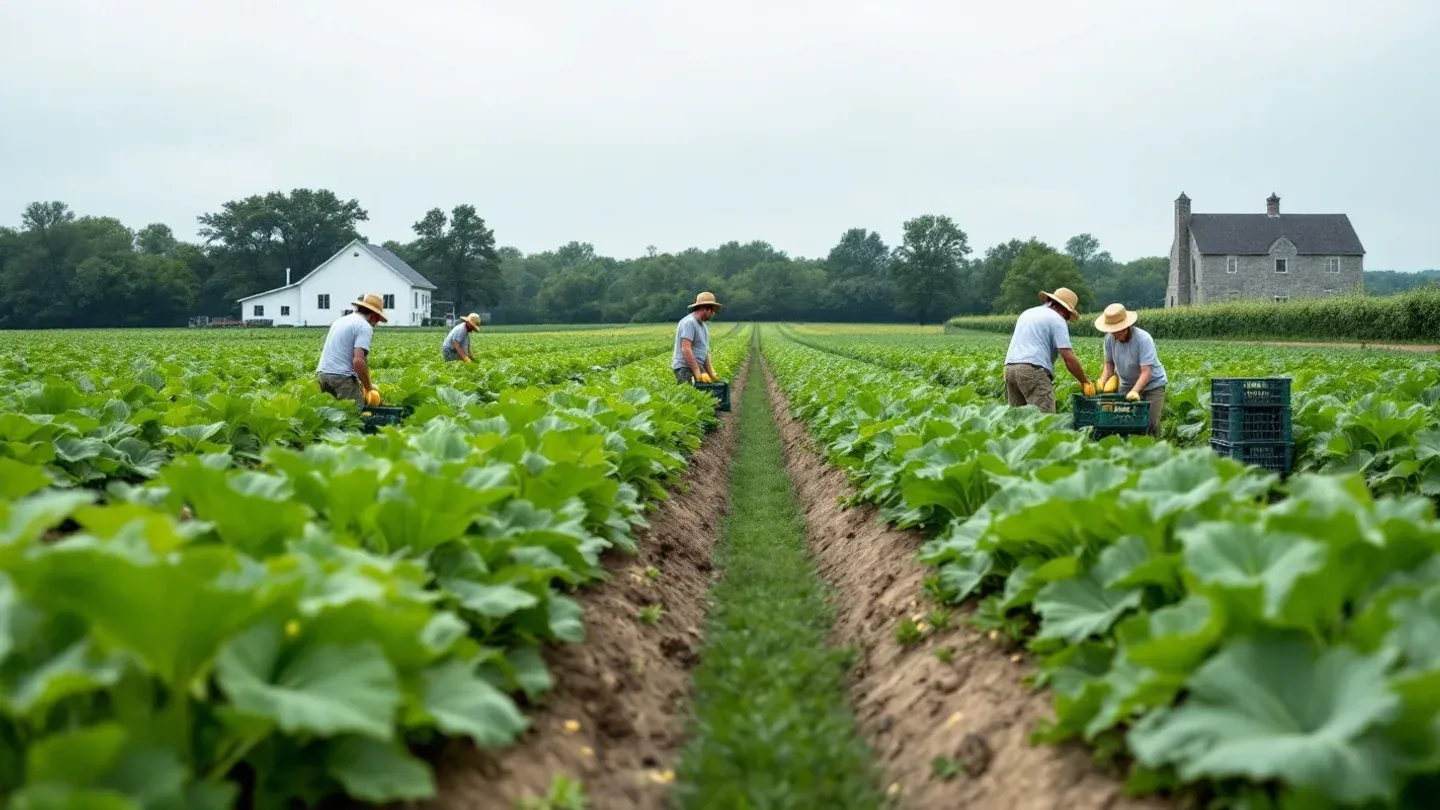
Gleaning is the harvest after the harvest: volunteers pick what the crew left and deliver it, at no cost, to food banks and pantries. Two national networks make it easy to find a partner. The Society of St. Andrew coordinates growers, volunteers and distribution agencies in many states, and the National Gleaning Project keeps a map of gleaning and food recovery organizations nationwide. A good partnership runs on three rules: the farm says which field and which day, the gleaning group brings its own crates and supervision, and gleaned produce is handled with the same food safety care as sold produce, because it is going to people who may be more vulnerable than your market customers. Our organizations directory lists the groups we know. Gleaning is the clearest case of acting local a farm can make: the food stays in the county, it goes straight at local food security, and the volunteers come back as customers.
Liability is the worry that stops most farms, and the law has been generous for a long time. The Bill Emerson Good Samaritan Food Donation Act of 1996 shields donors and gleaners from civil and criminal liability for apparently wholesome food donated in good faith to a nonprofit, unless there is gross negligence or intentional misconduct. The Food Donation Improvement Act, signed on January 5, 2023, went further. As the University of Maryland's agriculture law program explains, agricultural producers are now "qualified direct donors" who are protected when they give food straight to people in need at no cost, and donations to nonprofits are protected at zero cost or at a good Samaritan reduced price that covers no more than the cost of harvesting, handling, processing, packaging, transporting and distributing the food. "Apparently wholesome" means the food meets quality and labeling rules even if it is unmarketable because of appearance, grade, size or surplus, which describes your seconds crate exactly. Every state and the District of Columbia has its own donor protection statute on top of the federal one, and they differ in who and what they cover.
The tax deduction, in plain terms
Donated produce earns a federal income tax deduction, and the enhanced version in 26 U.S.C. 170(e)(3)(C) has been open to every kind of business, not only C corporations, under a rule Congress first added in 2005 and made permanent in 2015. The National Gleaning Project's tax factsheet lays out the mechanics. The ordinary deduction equals your basis, roughly the cost of production. The enhanced deduction is the lesser of twice that basis, or the basis plus half the profit you would have made selling at fair market value. A cash-basis farm that does not keep inventory may elect to treat its basis as 25 percent of fair market value, which works out to a deduction of half the market value of the donated food.
Three details make the difference on a farm. First, the statute says fair market value is not reduced because the food failed your own standards or had no buyer; it is the price you charge for the same or similar food. Second, the deduction is capped at 15 percent of your aggregate net income from the businesses that made the donation, and anything over the cap carries forward for five years. Third, you need a written statement from the recipient, a 501(c)(3) that will use the food for the ill, needy or infants and will not sell it. Keep a weight slip for every load. One caution from the factsheet: if your farm income lands on a personal return and you take the standard deduction, the enhanced deduction may do nothing for you, so ask the person who prepares your Schedule F before you count on it.
Some states add a credit, which helps even when the federal deduction does not. Iowa's Farm to Food Donation Tax Credit is 15 percent of the value of food commodities donated to a registered Iowa food bank or pantry, up to 5,000 dollars a year, with a five-year carryforward. The National Gleaning Project factsheet, written in March 2023, lists others, including Arizona, California, Colorado, Missouri, New York, Oregon and Pennsylvania, some of them with sunset dates that have since passed, so check the current rule for your state.
Feeding livestock
Culls that are too far gone for people are still feed, and feeding animals sits in the third tier of EPA's scale, above every disposal route. The legal line is clear at the federal level: the Swine Health Protection Act regulates "garbage," which 9 CFR 166.1 defines as waste derived in whole or in part from meat or other animal material, or refuse that has been in contact with it. Field culls and packing line rejects that never touched animal products fall outside that definition. State law is where it gets complicated. EPA's feeding animals page warns that regulations vary by state and that some ban or restrict food scraps as feed, and the Harvard Food Law and Policy Clinic's Leftovers for Livestock guide, a state-by-state survey from 2016, shows the range: forty-eight states regulate the practice, nine prohibit feeding vegetable waste to swine outright, twelve require vegetable scraps to be heat treated first, and Oregon, which bans most vegetable waste, still allows waste from a fruit or vegetable cannery, processing plant or sorting establishment. A call to your state veterinarian settles it in ten minutes. FDA's guidance on human food by-products as animal food is written for food facilities that must register with FDA, such as manufacturers and processors, not for a farm feeding its own culls.
On the husbandry side, the rules are the ones you already know: sort out anything moldy or rotten, introduce a new feed gradually, chop large items that could choke an animal, and treat produce as a supplement rather than the ration. Pigs on pasture and laying hens are the easiest takers; cattle do well on a steady, modest amount.
Composting last, and still well
What is left after all of that is compost feedstock, and it is worth doing properly rather than letting it rot in a pile behind the barn. Wet produce needs carbon, so stockpile straw, leaves or wood chips before the glut arrives. Our guide to farm-scale composting covers the ratios, the turning and the rules. The loop it closes is the one we described in What is Circular Farming?. A field that has grown food should get that food's leftovers back; that is healing the soil in its most literal form. Just keep it in its place on the scale: after the pantry, after the sauce, after the pigs.
A summer checklist
Before the peak hits, do six things. Write the one-page grading sheet and pin it at the wash table. Set a seconds price from your cost of production and tell your market customers and your chefs that seconds boxes are coming. Book a kitchen day for the week you expect the most volume. Call a gleaning group now and agree on how they will be told when a field is ready. Call your state veterinarian about feeding culls, and set a crate at the wash table for the animals that may take them. And ask your tax preparer, before the first donation, which deduction or credit applies to your farm and what paperwork they want to see, so that every load that leaves for the pantry arrives with a weight slip and a receipt. By the time the tomatoes split, the surplus will already have somewhere to go.