
The days before Christmas are when a lot of small food businesses find out they have outgrown the kitchen at home. The granola orders doubled, the jam has a waiting list, the oven holds two trays, and the chest freezer in the garage is full. For a farm that turned a surplus crop into a value-added product to diversify its income, or a baker who has been selling at the Saturday market, the next step is usually not a building of your own. It is a licensed kitchen you rent by the hour.
This article is about how those kitchens work: what they are called, how the clock runs, what storage really costs, which licenses the kitchen covers and which stay with you, and how to make the move from a cottage food business to a licensed one. It closes with who paid for new kitchens in 2024, because some of that money may be close to you.
What a shared-use kitchen is
A shared-use commercial kitchen is a facility built to code, with the plumbing, surfaces and sanitation program that food regulations require, where several businesses work at the same time and rent the space by the hour, the day or the month. UF/IFAS Extension sorts out the vocabulary in a short 2020 guide. A commissary rents time and storage and often serves food trucks. An incubator kitchen adds training and business support for early-stage companies. An accelerator runs a short program for businesses with growth potential and may take equity. A community kitchen serves the community at large rather than for-profit tenants alone. A food hub aggregates and distributes local food and may include a kitchen.
The names overlap, and the Florida guide warns that a facility calling itself an accelerator does not always run like one. What matters is the service level you need. An established business whose only problem is space can live with a bare commissary. A first-time producer usually needs the kitchen that also knows the health inspector by name.
The reason these kitchens exist is simple arithmetic. The same guide says the cost of building out a commercial kitchen in an existing space can run up to $100 to $300 per square foot. Few farms or startups can carry that before they know whether the product sells.
How renting time works
Most kitchens charge by the hour, with cheaper off-peak rates overnight and discounts for prepaid blocks. The Shared Kitchen Toolkit, written by The Food Corridor with Purdue Extension and funded by USDA's North Central SARE program in 2018, puts national average rates between $15 and $45 per hour, with off-peak hours typically running from about 7 p.m. to 5 a.m. Specialty equipment such as a large Hobart mixer or a bottling line may carry a separate fee.
A national industry survey run in 2019 and published in January 2020 by Econsult Solutions and partners drew 180 responses from kitchens in 44 states. Forty-four percent charged $20 to $29 per hour at peak times, and 49 percent charged less than $20 per hour off-peak. Nonprofit kitchens were cheaper: 58 percent of them charged under $20 at peak, against 35 percent of for-profit kitchens. Seventy percent offered a membership plan. More than half offered sliding scales, with discounts for volume, off-peak hours, low-income users, incubator members and, at some kitchens, farmers renting for value-added production.
A 2024 briefing from the University of Northern Iowa gives real price lists from Midwest kitchens. The eKitchen in western Nebraska charges $20 per hour with a two-hour minimum, $75 for a day, $250 for a week or $650 for a month, plus a $150 deposit. No More Empty Pots in Omaha rents its shared kitchen from $10 per hour off-peak and $15 at peak after a $200 deposit. The Ennovation Center in Independence, Missouri, sells monthly packages: 10 hours for $190, 50 hours for $800, 100 hours for $1,300, with extra time at $19 an hour. The Kitchen Council in Council Bluffs, Iowa, charges $450 a month for round-the-clock access or $350 for nights and weekends.
Before you compare rates, ask what the hour includes. Some kitchens bundle a shelf of dry storage and a shelf in the cooler; others charge for every shelf. Ask about minimum bookings, cleaning rules and fines, and whether the clock keeps running while you clean up.
Storage is the real constraint
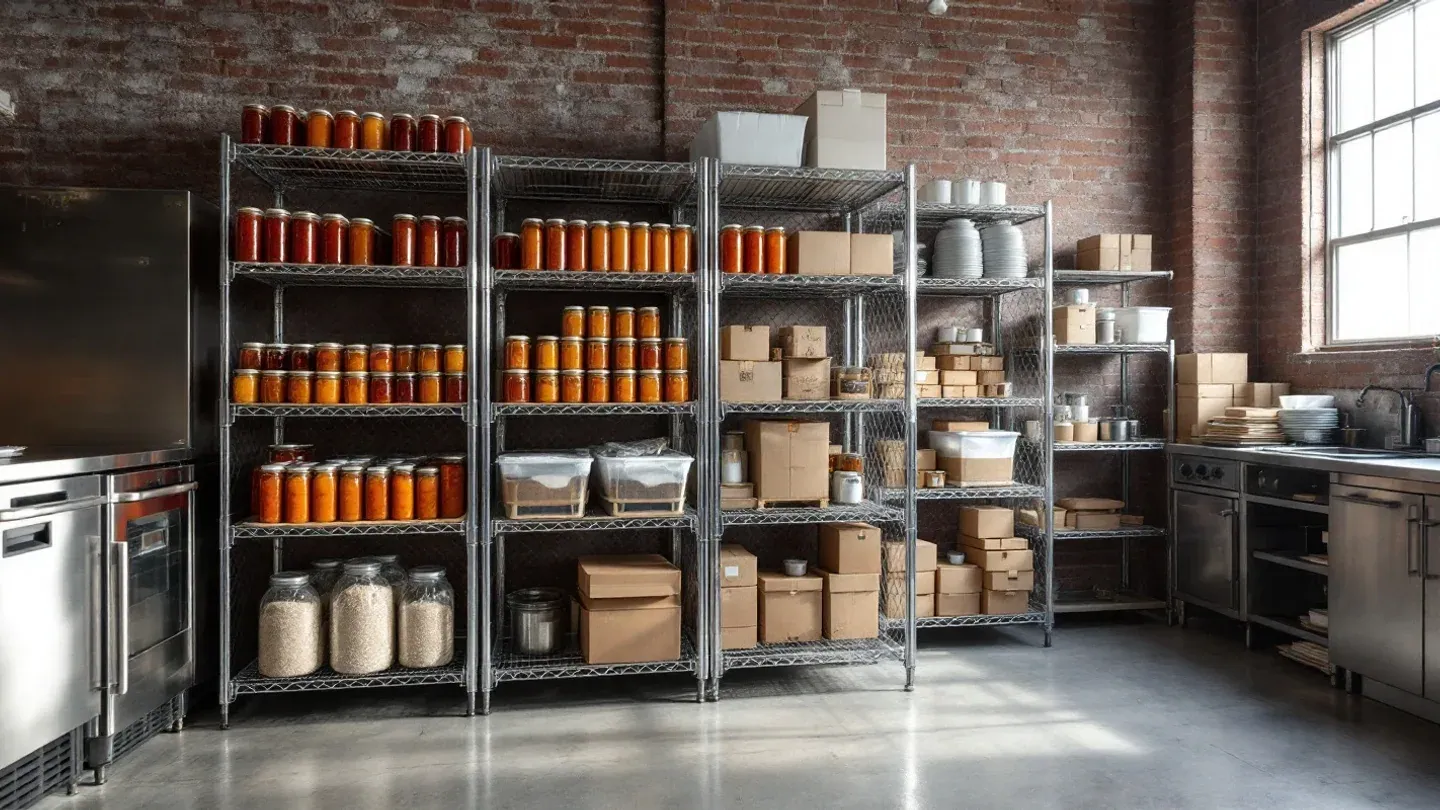
Kitchen time is rarely the bottleneck. Storage is. The toolkit calls dry, cold and freezer storage "hot commodities" in a shared kitchen and says rates often fall between $25 and $50 per shelf. The Ennovation Center charges $1 per square foot per month for dry storage, lockers, freezers and coolers. The Kitchen Council includes two shelves and cold storage in its membership and charges $50 a month for each extra shelf.
That matters for seasonal producers. The Wisconsin Innovation Kitchen, a licensed processing facility in Mineral Point that worked as a small co-packer, found that most of its clients needed a small batch run once or twice a year to meet seasonal demand, and learned too late that short-term warehouse space near the kitchen would have helped them most. If your holiday production starts in October and your market runs through December, you need a plan for where the finished jars live in between. Our piece on cold storage and post-harvest handling covers the on-farm side of the same problem.
Which licenses the kitchen covers, and which stay with you
This is the part that surprises people. Renting a licensed kitchen does not make you licensed. The toolkit states it plainly: each food business in a shared kitchen generally needs its own food license, specific to its products and processes, and the kitchen needs its own commissary-type license on top. Food service businesses such as caterers are usually licensed by the county or city health department; packaged food businesses are usually licensed by the state department of agriculture. Rules differ by jurisdiction, and the UF/IFAS guide notes that several agencies can inspect inside the same building.
The federal layer sits above that. A facility that manufactures, processes, packs or holds food for sale in the United States must register with FDA, and registrations are renewed every other year. Penn State Extension points out that registration is free and that a central kitchen which does not serve food directly to consumers is not treated as a restaurant and must register. The exemption that saves many farm businesses is the retail food establishment definition in 21 CFR 1.227: if the dollar value of your sales directly to consumers exceeds your sales to all other buyers, you are a retail food establishment and do not register. Start selling more to restaurants and grocers than at the market, and that changes.
Retail and food service rules in most states are modeled on the FDA Food Code, which state and local regulators adopt and adapt. Meat, poultry and egg products bring USDA into the picture, and only 16 percent of kitchens in the 2019 survey held a USDA certification for processing them. Acidified foods such as salsas and pickles need a scheduled process established by a qualified process authority, as 21 CFR 114.83 requires. We covered that in the value-added article.
The kitchen will also ask for paperwork of its own. The 2019 survey found the most common requirements were liability insurance, an application and proof of food safety training. Product liability coverage is usually a separate policy from general liability; our overview of farm insurance is a starting point, and a kitchen manager can usually name the brokers who write food policies.
Moving from a home kitchen to a licensed one
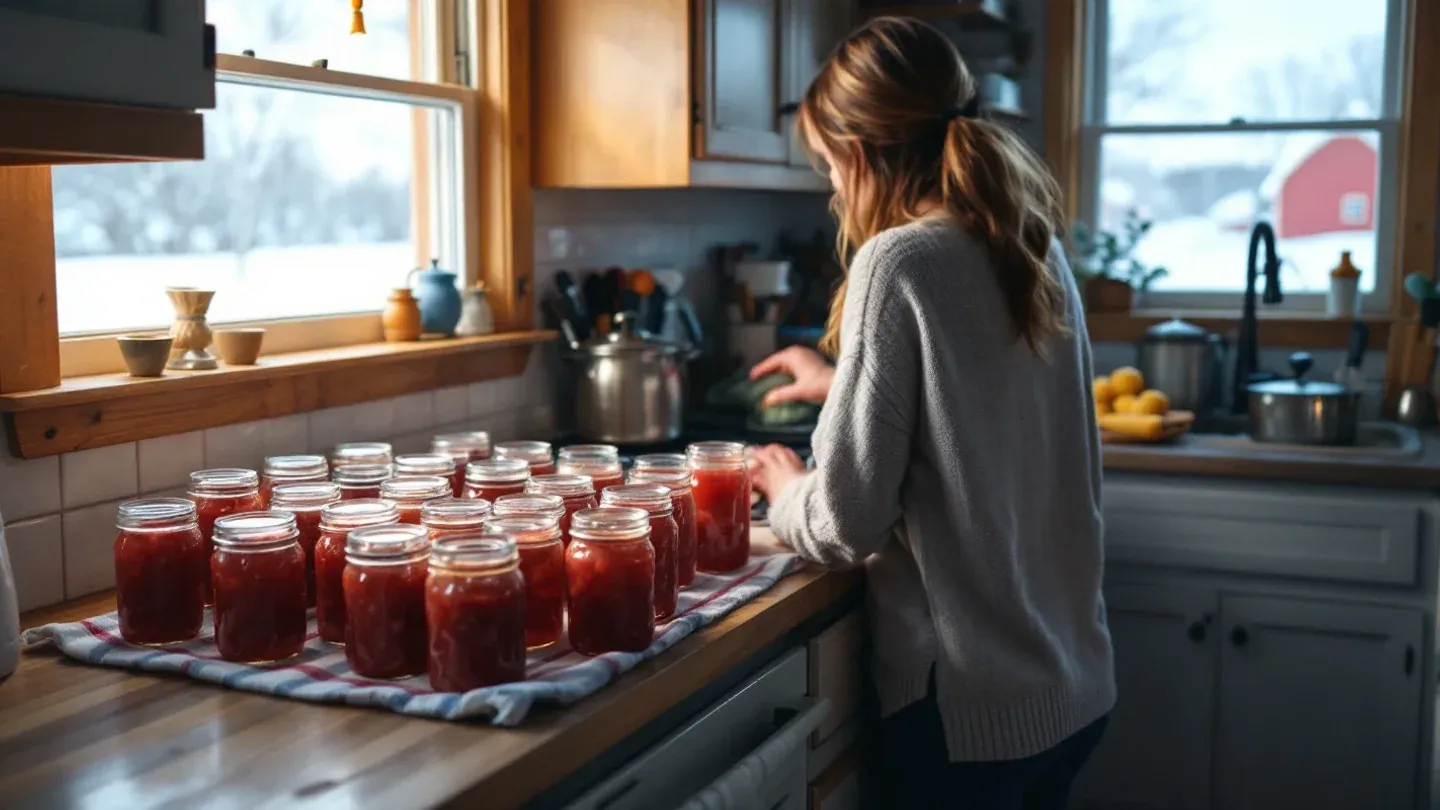
Most food businesses start under a state cottage food law. Those laws are generous but bounded. Minnesota, for example, lets a registered producer sell up to $78,000 a year of non-potentially hazardous foods such as baked goods, jams and high-acid pickles, but only directly to the final consumer, with the producer or an employee physically present at the sale or delivery, and with no shipping of food for people. The label must state that the product is homemade and not subject to state inspection. Every state draws these lines differently; we will cover the map in a coming piece on cottage food laws.
You outgrow the exemption in one of three ways: a buyer who needs a licensed product (a grocer, a school, a restaurant), a product the law does not allow (anything refrigerated, most sauces, meat), or sales that pass the cap. Iowa State University's food business programs aim their commercial kitchen training at home-based processors positioned to pass $50,000 in annual revenue, the businesses the university says are best suited to move into a commercial kitchen.
The move itself runs in a sensible order. Write down the products, the batch sizes and the hours you really need; a business plan for the food line, even a short one, will be asked for by lenders and some incubators. Settle your business structure and get a food handler or manager certificate. Call the licensing agency for your product type and ask which license applies when you produce in a shared kitchen; the toolkit notes that most states and cities have no specific licensing guidance for shared kitchens, so the agency itself is the only reliable answer. Tour two kitchens, read the member agreement, and book a trial month in the off-peak slot before signing a membership. Then update your labels: the "not inspected" statement comes off, and the licensed address goes on.
A kitchen is also a place where the work gets simpler, which is our preference. One scheduling system, one cleaning checklist, one inspector. The extra cost buys back the hours you were spending improvising.
Who paid for kitchens in 2024
Shared kitchens are expensive to build and thin to run, so public money matters. The 2019 survey found 60 percent of nonprofit kitchens had received grant support, against 5 percent of for-profit ones, and more than half of all kitchens operated on budgets under $100,000.
The largest source in 2024 was the Resilient Food Systems Infrastructure program, which USDA's Agricultural Marketing Service runs through the states. In May 2023 USDA announced up to $420 million, authorized by the American Rescue Plan, for the middle of the supply chain: processing, aggregation and distribution. States ran their own competitions during 2024. Iowa took applications until March 15 for more than $3 million; Louisiana took them until April 15 for more than $4.6 million and named food preparation, cold storage and packaging among its priorities. Awards followed through the year. On December 4, Hawaii announced $2.6 million for 17 projects, split between four infrastructure grants and 13 equipment grants; 13 of the 17 awards were $100,000 or less, the scale of a kettle line or a walk-in cooler rather than a building.
The other door is the Local Food Promotion Program, which funds planning projects of $25,000 to $100,000 and implementation projects of $100,000 to $500,000 with a 25 percent match. The fiscal year 2024 awards ran to 43 grants worth $14.15 million, and several bought kitchen capacity. Prairieland Market in Salina, Kansas, received $321,592 toward a new facility with an on-site commercial kitchen for value-added products from local produce, meat, honey, cheese and eggs. Hope & Main in Rhode Island received $491,899 to expand its shared-use kitchens to Providence and connect farmers with the 130 businesses working there. The City of Tempe, Arizona, received $486,728 to turn a city-owned kitchen into free production space and training for worker-owned food businesses.
If there is an incubator kitchen near you, ask whether it holds one of these grants. The money often comes with a mandate to serve small, new and underserved producers, which means subsidized hours and free business coaching for exactly the people reading this. We will take a closer look at which USDA programs are worth a small farm's time in a coming article.
A word of caution
Kitchens fail, and so do their tenants. The Wisconsin Innovation Kitchen closed in the first quarter of 2024 after mismanagement of funds cost it three of five staff and a key customer, and it had already stopped renting to outside users because several rentals left the facility in such a state that fees and deposits could not cover the staff time to clean up. The 2019 survey found 45 percent of kitchens listed business closure as a frequent reason tenants leave, while 42 percent listed the happier reason: moving into a building of their own.
Treat the kitchen as a partner whose survival matters to you. Pay on time, clean well, and show up when the manager asks for a letter of support on a grant application. Being involved in a shared facility is not charity; it keeps the place open for your busiest week next year. Local kitchens, local buyers and local money reinforcing each other is what we mean by acting local.
Where to start this winter
- Count the hours. Pull the last three months of production and write down the kitchen hours, cooler shelves and freezer space you actually used, then add the holiday peak.
- Find three kitchens. Look up incubators and commissaries within a reasonable drive; our directories of service providers and organizations include the extension programs and networks that keep state lists.
- Call your licensing agency before you call the kitchen. Ask which license your product needs when it is made in a shared facility and what the inspector will want to see.
- Get the paperwork ready: food safety certificate, insurance certificate, labels, recipe files and a process letter for any acidified product.
- Book off-peak first. A month of overnight hours at $10 to $20 is the cheapest test of whether your product and your schedule survive a licensed kitchen.
- Ask about grants. If the kitchen was built with RFSI or LFPP money, there may be subsidized rates or a cohort program with your name on it.
The home kitchen got you to the market. The shared kitchen gets you to the shelf, and it does so without a mortgage on a building you may not need for years. That is a long-term way to grow a food business. When the next holiday season comes around, the consistency of a licensed kitchen and a known schedule is what lets you say yes to the bigger order.