
At the end of March 2026 the Grand Avenue Market in Plains, Kansas, a nonprofit grocery store that opened in 2021 in a town of about 1,000 people, closed its doors. One resident told HPPR she now faces a drive of 15 to 60 miles for groceries. The store had community investment, grants and a federal construction loan behind it, and it still could not make the numbers work.
That story matters to anyone growing food in rural America, not only to the people who shopped there. A small-town grocery store is the shortest wholesale route a farm will ever have: a buyer ten minutes down the road who takes a standing order every week and pays on an invoice. When the store goes, the farm loses a market and the town loses the one place where local food met local people every day. This article looks at why rural stores close, the ownership models that bring them back, how a farm fits into one, and the federal and state money on the table this spring.
Why rural grocery stores close
USDA's Economic Research Service traced the rural food retail landscape from 1990 to 2015. By 2015, 44 nonmetro counties had no grocery store at all, 115 had just one, and 23 counties had no food retailer of any kind. Single-location grocery stores made up about 82 percent of all food stores in rural counties, which is a polite way of saying a family runs them. Over those 25 years the grocery store's share of rural food retail fell while dollar stores grew by 150 percent in rural nonmetro counties.
The dollar store effect is measured, not anecdotal. A 2024 ERS study covering 2000 to 2019 found that when a dollar store opened in a rural census tract, the independent grocer there was about three times as likely to close as an urban one, roughly 5 percent against 1.7 percent, and lost 7.1 percent of its employment and 9.2 percent of its sales. In urban areas the effect faded after about five years. In rural tracts it did not.
Then there is the owner. A 2021 survey cited in the Plains coverage found about a quarter of rural grocery store owners were of retirement age and most had no contingency plan. The Rural Grocery Initiative at Kansas State University counted 105 rural Kansas grocery stores that closed between 2008 and 2018; in half of those towns no new store ever opened. Add thin margins, the buying-power gap against the chains, staff who are hard to find and freight that costs more per case the farther you are from the warehouse, and the pattern is clear. The store does not fail in one dramatic week. It fades, and nobody steps in.
How far is far? The ERS Food Access Research Atlas counts rural residents as low access when they live more than 10 miles from a food store, with 20 miles as a second marker; in urban areas the thresholds are half a mile and one mile. Ten miles is a 20-mile round trip for milk.
The models that reopen a store
K-State's Rural Grocery Initiative, which has worked on this subject since 2006, lays out the ownership models it has seen work in rural Kansas when no new independent operator steps up:
- A cooperative, where residents buy shares, elect a board and may receive discounts or dividends. It is the for-profit model rural America already knows from its agricultural co-ops and rural electric co-ops, and memberships raise capital.
- A nonprofit, driven by service rather than profit, able to take donations and volunteer help, usually where food access is treated as a charitable mission.
- A public-private partnership, where the city owns the building and an independent grocer owns and runs the business. The city maintains the roof, the grocer pays rent, and when the grocer retires the successor does not have to buy a building.
- A municipally owned store, run by the city or county with the backing of a vote or survey, and city benefits for the employees.
- A school-run store, owned by the district and staffed partly by students, with the lower profit pressure that comes with an educational mission.
Each of these exists. In Emerson, Nebraska, a village of 824, residents raised nearly $160,000 locally, twice their goal, and opened the Post 60 Market cooperative in 2022 in the old American Legion hall; investors get discounts and dividends and elect the board every year. In Cody, Nebraska, population 167 and 40 miles from the next store, the Circle C Market, open since 2008, is run by the Cody-Kilgore school district, with about eight students working there each semester. By 2023 the Rural Grocery Initiative had helped fund 13 stores through its own grant program, which began in 2017.
The honest part of the record is that models fail too. Baldwin, Florida, a town of nearly 1,400 outside Jacksonville, opened a town-owned market in 2019 after its IGA closed in 2018. By February 2024 the store was not making enough money and, in its assistant manager's words, was not getting the support it needed; the town announced it would close in March 2024, leaving the nearest grocery 8.1 miles away in Jacksonville. Plains had a nonprofit board, grants and a federal loan; in November 2023 voters turned down a half-cent sales tax that would have helped pay that loan, and the store closed in 2026. The Rural Grocery Initiative's reading of Plains fits both cases: a creative ownership model redistributes the burden, it does not remove it. The store still has to clear its costs, and the community still has to shop there.
What St. Paul, Kansas got right
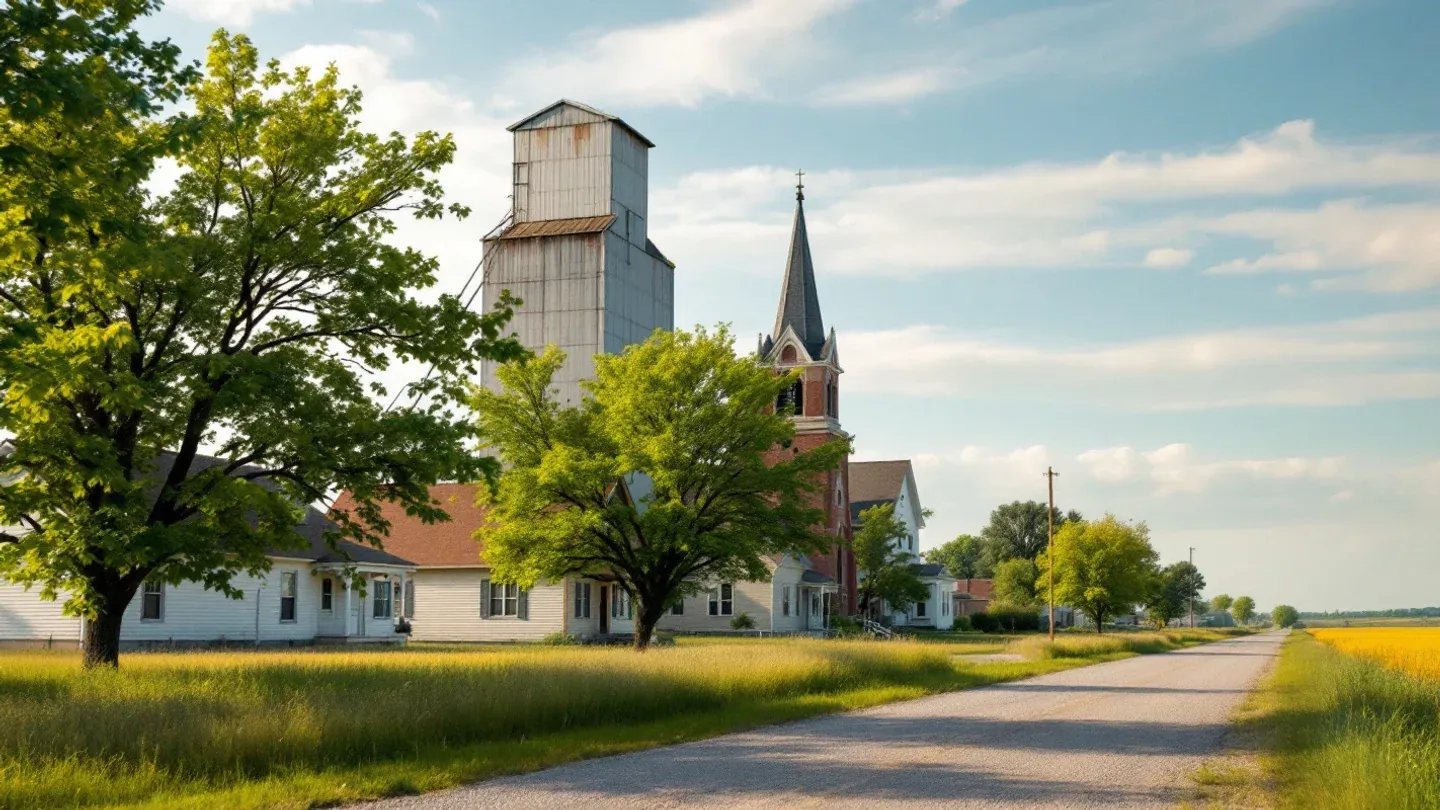
The case K-State uses as its success story is St. Paul, a town of about 600 in southeast Kansas. Its grocery store closed in 1985. For two decades the nearest full-service supermarket was a 34-mile round trip. In 2004 the school board closed the local schools, and a group of residents decided that a food source other than a convenience store was one of two things the town needed to survive.
What followed is a model of layered financing. In 2007 USDA approved a $400,000 zero-interest Rural Economic Development Loan through the Heartland Rural Electric Cooperative, which passed the money to a citizen-formed community development corporation to buy the land, build the store and buy the equipment. The city guaranteed the loan after residents voted overwhelmingly to let it. The development corporation raised $5,000 to buy membership in a wholesale food cooperative, Affiliated Foods Midwest, which made it the owner of the grocery business. A couple with grocery experience bought the inventory and managed the store, which opened in 2008. When they retired in 2013, the city bought out both the corporation and the managers, hired a new couple to run it and made the full-time staff city employees with city benefits.
K-State's lessons from St. Paul are plain: a local champion, but also a team with real skills; a recognized need argued in public; a vote; and a community that then shops at the store it asked for. The former mayor's argument was that the city already ran the water department to furnish water, so it could run a grocery store to furnish food. That is the municipal model in one sentence, and it only holds if the town keeps buying.
How a farm supplies a small store
For a farm, a rural grocer is a wholesale account at a scale you can actually serve. K-State's Farm to Grocery fact sheet and the National Center for Appropriate Technology's tip sheet on selling to grocery stores agree on the mechanics.
Start with grocers already stocking something local; that signals interest. Call early in the day and ask for the owner, then offer to come by. Before the season, bring a crop plan or product list for the full season, a price list and samples. The grocer is not buying one delivery. They are buying reliability.
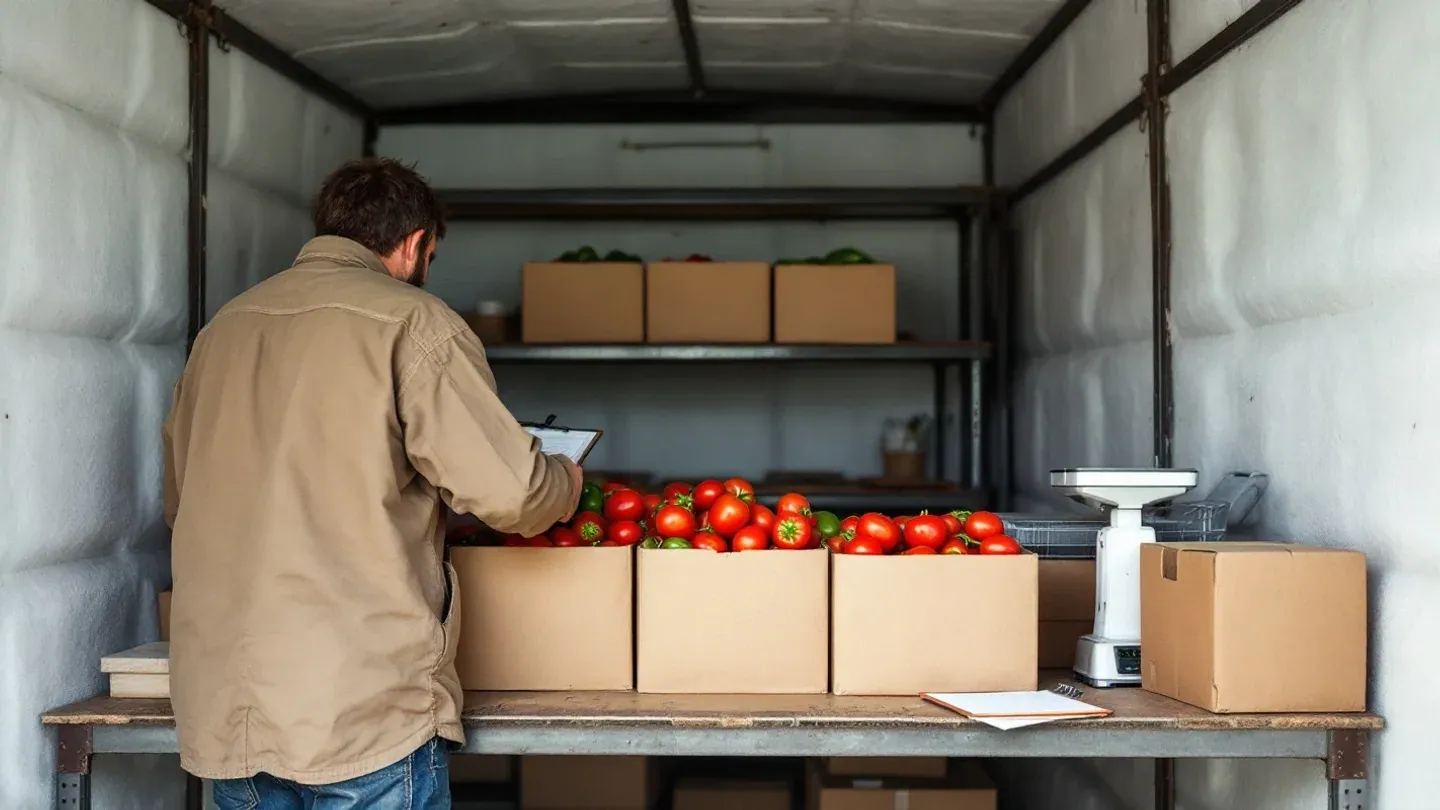
Aim for a standing order with a set delivery day: 10 pounds of tomatoes every week from July through September is K-State's own example. Plan plantings for continuous harvest so you can fill it. Deliver clean and cold, packed to the store's grade and size, and bring two copies of the invoice, both signed at the door, listing items, unit cost, total, due date and whether freight is included. Expect payment on a 15-to-30-day cycle. The wholesale rate sits below your farm-stand price, but it does not have to match the distributor's, because customers pay a premium for local; know your cost of production before you name a number.
Then the paperwork. Many stores want product liability insurance of at least $1 million. Some want a PLU number or a barcode on the pack. Some will ask for a food safety plan, which is where GAP certification earns its keep. Licensing comes from your state department of agriculture and the other regulators that apply to your products, not from the grocer. And keep the produce cold between field and shelf: an on-farm walk-in cooler is what turns a Tuesday harvest into a Thursday delivery.
Once you are on the shelf, help the store sell it. Samples for the produce team, a farm photo by the display, a recipe card, an in-store demo in strawberry week. In a town of 800 people the grocer's customers are your neighbors, and the store is the one place they all walk through. That is what we mean by acting local: not a slogan, a delivery route.
If one store cannot take your volume, a food hub can pool several farms' product for several stores. So can a producer cooperative. We wrote back in 2020 that farmers selling locally get too little help; a grocer who wants your product is the help that counts. Several of the operations in our farms and ranches directory sell this way.
The federal money behind the store
The main federal program built for grocery stores is America's Healthy Food Financing Initiative, run by Reinvestment Fund on behalf of USDA Rural Development. Its Food Access and Retail Expansion Fund, the FARE Fund, has offered grants of up to $250,000 for implementation and up to $100,000 for planning and technical assistance, plus loans. On April 16, 2026 Reinvestment Fund closed out the 2024-25 rounds: $16.5 million to 62 food retail and supply chain projects in 39 states, 30 of them rural, as $9 million in grants, $1.5 million in technical assistance and $6 million in loans. One of them is Manna Food Co-op in Detroit Lakes, Minnesota, expanding its cooperative grocery store. The FARE Fund is accepting funding inquiries for its 2026 cycle, and the program plans $60 million in loans, grants and technical assistance from 2024 through 2028. Since 2023 HFFI has also funded local and regional partnerships, state, regional or local public-private partnerships that give food retailers technical and financial assistance, with $30 million in grants on offer in the 2023 round.
USDA Rural Development's general tools fit grocery stores too, and the North Dakota Department of Commerce keeps a plain-language summary of them. The Rural Economic Development Loan and Grant program, the one St. Paul used, lends up to $1 million at zero interest for up to 80 percent of a project, through the local rural electric or broadband cooperative, which has to pass a resolution of support. The Business and Industry Loan Guarantee lets a bank lend with USDA guaranteeing up to 80 percent of the loan. Rural Business Development Grants go to nonprofits and local governments, for buildings and equipment leased to a business, or for feasibility studies and marketing; that is how a city or a community foundation pays for the market study before anyone signs anything. The Rural Energy for America Program covers energy efficiency work, and K-State's financing toolkit notes that includes refrigeration and freezer upgrades, which in a grocery store are most of the power bill.
The pattern in every successful case is St. Paul's pattern: a public body or cooperative holds the building and the debt, a grocer runs the business, and the federal loan sits behind a local guarantee. No single program builds a store. Three or four together do.
What the states are adding
States have started writing their own grocery programs, and they move faster than federal rules. Illinois created the Illinois Grocery Initiative with $20 million in fiscal 2024, followed by $13.5 million and $13 million in the two years after, with two programs under it, New Stores in Food Deserts and Equipment Upgrades. An applicant must be a small independent grocer with fewer than 500 employees and fewer than five locations, run a brick-and-mortar store that offers or will offer SNAP and WIC, and earn less than 30 percent of its revenue from alcohol and tobacco. Independent for-profit grocers, cooperatives, nonprofits and government bodies all qualify.
North Dakota's 2025 legislature passed Senate Bill 2228, an appropriation to the Department of Commerce for a Rural Grocery Store Sustainability Grant Program whose first application window ran from July to September 2025, and Senate Bill 2390, a rural catalyst grant whose eligible uses include preserving or reopening grocery stores in communities of 4,500 people or fewer. Kansas has the Kansas Healthy Food Initiative, which pairs technical assistance with loans and grants for food retail in underserved Kansas communities. The Rural Grocery Initiative tracks state bills in a public policy tracker. If your state is not on it yet, a state legislator with a closed store in their district is the person to call. That is one way to be involved.
A practical close
For a farm, this spring:
- List every grocery store within 30 miles and note which already stocks anything local.
- Pick two products you can supply every week for at least ten weeks.
- Book an appointment with the owner before June. Bring the season plan, prices, samples and proof of insurance.
- Agree on a standing order, a delivery day and payment terms in writing.
- Make the store's success your business: samples, a demo, your photo by the display.
For a town that has lost its store:
- Survey residents and get a vote before spending a dollar. St. Paul did.
- Form a team, not just a champion: someone for finance, someone for the building, someone who has run a store.
- Pay for the market study first. A Rural Business Development Grant or a state planning grant can cover it.
- Choose the ownership model after the study, not before.
- Stack the money: HFFI FARE, a zero-interest loan through your electric co-op, a state grant, local shares.
- Then shop there. Every model K-State has documented lives or dies on that.
A grocery store is infrastructure, like the water tower, and food security in a rural county depends on it as much as on the farms around it. We argued years ago that localism in agriculture only works where there is somewhere local to sell; the small-town grocer is that place. Thinking long term about a rural food system means keeping that shelf, and the farm that fills it, in business together. The groups working on rural grocery access, the Rural Grocery Initiative among them, are listed in our organizations directory.