
The second week of September is when a delivery route shows its true shape. Summer shares are winding down, fall shares are starting, restaurants are rewriting menus around squash and greens, and the van is full every day it leaves the farm. It is also the season when the weak links show: the lettuce that arrived warm, the drop that took forty minutes of parking, the chef who asked for a temperature log and got a shrug. This article covers the four pieces of a local delivery operation that have to work together, the route, the vehicle, the cold chain and the price, with a section on sharing the route with other farms and a note on the USDA money that has been buying vans and coolers across the country this year.
The clock is still running in the van
Everything in our article on on-farm cold storage applies on the road. USDA's Agriculture Handbook 66, the standard reference on produce storage, puts temperature first among postharvest factors and gives the rule of thumb: the speed of a biological reaction rises two to three fold for every 18°F rise in temperature. Its worked example is sobering for anyone with a hot van. A crop with a shelf life of 13 days at 68°F can last 100 days at 32°F and no more than 4 days at 104°F, and a closed cargo van in September sun reaches the top of that range quickly.
The handbook's advice on loading is one sentence: perishable products should be cooled before being loaded into a refrigerated transport vehicle. A van is not a cooler. Its job is to hold a temperature the walk-in already reached, not to remove field heat, and the whole system works only if product leaves the cooler cold, goes into a cold vehicle, and reaches the customer's cooler before it warms. That is the cold chain, and the delivery leg is the one you control least, so it deserves the most planning.
Plan the route before you buy the vehicle
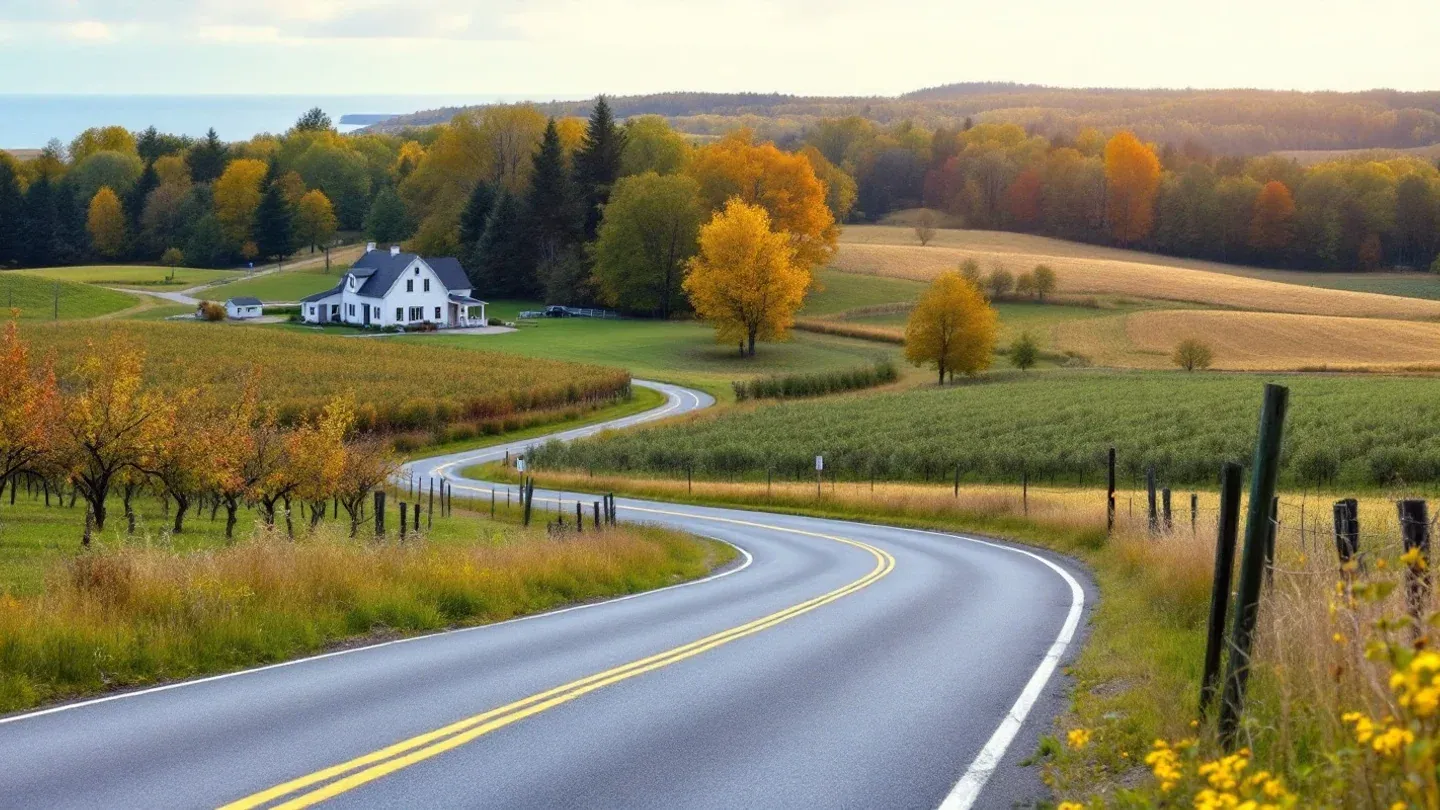
The biggest cost driver in local delivery is not fuel or the van. It is stop density: how many paying stops fit into one loop from the farm and back. A route with twelve restaurant drops in one downtown is a different business from twelve drops spread across three counties, even if the sales are identical.
Put real numbers on it. The IRS set the 2026 standard mileage rate at 72.5 cents per mile from January and then raised it to 76 cents per mile from July 1, 2026, a change the IRS attributed to recent increases in the price of fuel. That rate is a tax figure, not a cost study, but it is a reasonable all-in proxy for what a mile in a loaded van costs once fuel, tires, maintenance, insurance and depreciation are counted. A 90-mile Tuesday loop is about $68 in vehicle cost before anyone is paid to drive it. Add the driver's hours at a fair wage, including loading and the time spent waiting at a kitchen door, and divide by the stops. That is your cost per drop, and it is the number every other decision in this article hangs on. Our article on knowing your cost of production covers the same discipline for the crop itself, and the mileage log you keep for this also feeds Schedule F in March.
A few rules hold on almost every farm:
- Fix the delivery days and keep them. Chefs plan orders around a day they can count on, and in our article on what chefs actually want reliability sits above price.
- Cluster drops by neighborhood and add new accounts to loops you already drive rather than opening new ones. A new stop on an existing route costs a few minutes; a new route costs a day.
- For CSA shares, favor pickup sites over home delivery. USDA's CSA directory describes the model as regular, usually weekly, deliveries during one or more harvest seasons, and a church hall, a brewery or a workplace that takes 25 boxes at once is one stop instead of 25.
- Set a minimum order for wholesale drops and print it on the price list. A $40 order that takes twenty minutes to deliver is a gift, not a sale.
- Deliver early. Kitchens receive before prep, and a 7 a.m. drop is cooler, quicker to park and rarely has to wait.
Refrigerated, insulated or iced
There are three honest ways to carry cold, and the right one depends on the length of the route and what rides in the back.
A refrigerated van or box truck with a thermostat-controlled unit is the standard for mixed loads, long loops and anything with meat, dairy or eggs. It costs the most to buy and run, and it is the only option that holds a set temperature for hours while the doors open at every stop.
A CoolBot trailer is the farm-built alternative. NC State's Pack 'N Cool, a 5 by 8 foot insulated trailer built around a window air conditioner and a CoolBot controller, holds a trailer in the 30s on a 110-volt cord or a generator, and the team's point was that a failed air conditioner is a $300 part from the home improvement store rather than a refrigeration service call. UVM Extension's CoolBot guidance sets the limits: these units are not for rapid cooling, they will not go below 32°F, and they are not recommended where the door opens more than about six times an hour. A trailer parked at a farmers market or holding pre-cooled boxes between a handful of drops is well within that; a twenty-stop restaurant run is not.
Insulated totes with ice are the third option and the right one for short routes and small volumes. The University of Wisconsin's produce handling guide cites a University of Georgia extension rule: about one pound of ice for every three pounds of produce brings a crop from 85°F down to 40°F, for ice-tolerant crops such as broccoli, leafy greens, sweet corn and green onions. Ice does not belong on berries, tomatoes or anything that bruises or rots when wet, and a tote cannot hold meat, dairy or eggs for a long route. FDA's storage guidance is the yardstick for those: refrigerated foods at or below 40°F, nothing perishable out of refrigeration for more than two hours, and only one hour when the air is above 90°F.
Whichever you choose, the cargo space needs an accurate thermometer and a plan for the day the cooling fails. USDA's guide to regional food distribution, Moving Food Along the Value Chain, describes how Co-op Partners Warehouse in Minnesota leases one truck in its fleet precisely because the leasing company must supply a replacement if it breaks down, so the route serving its biggest customer is always covered. A one-van farm cannot lease a fleet, but it can know in advance which neighbor's van, trailer or rental it will use when the compressor dies on a Wednesday in August. Suppliers of CoolBots, insulated panels and reefer units are listed in our service providers and manufacturers directory.
The temperature log and the rules behind it
Two sets of rules matter. FDA's Sanitary Transportation rule under FSMA governs vehicles, temperature control, training and records for shippers and carriers, but it exempts transportation activities performed by a farm and operations with less than $500,000 in average annual revenue. Most farms reading this are exempt twice over. The rule still describes what a careful operation does: vehicles that are cleanable and hold the needed temperature, ready-to-eat food kept away from raw, and no contamination from the previous load.
The second set comes from buyers. The USDA Harmonized GAP standard, version 3.1 since July 2025, has a short transportation section that doubles as a checklist for any farm selling wholesale: a written temperature range for each commodity in transit, a vehicle pre-cooled before loading, refrigeration equipment that is maintained and thermostat controlled, product temperatures taken and recorded at loading where required, and a cleanliness checklist that keeps raw animal products out of the produce van. Hospitals, school districts and food hubs ask for exactly this, and it is the bridge to GAP certification if you go that way later.
The log itself is simple. One line per delivery day: cooler temperature at loading, van temperature at departure, van temperature at the last stop, driver's initials. A cheap fridge thermometer does the job; a small data logger that records every few minutes does it better and settles the argument when a chef says the greens arrived warm. Keep it with the packing slips. This is the belief we call be consistent applied to a clipboard, and it is the record that separates farms that get reordered from farms that get dropped.
Pricing the delivery
Delivery is a service with a cost, and hiding it in the produce price punishes customers who pick up and rewards those who do not. Three models work: a flat fee below a minimum order and free delivery above it; a per-case or percentage charge on wholesale orders; or a CSA price that is simply higher for home delivery than for a pickup site. What does not work is free delivery everywhere, because the cost per drop you calculated above does not disappear. It comes out of your margin.
Quote the fee plainly, put it on the price list and on the invoice, and revisit it each winter with the mileage log in hand. Customers rarely leave over an honest delivery fee. They leave over missed days, and over farms that vanish in November without a word, which is why keeping customers is the companion to this article.
Sharing the route
The cheapest mile is the one somebody else was driving anyway. The USDA distribution guide above is full of shared arrangements built by small producers. In its 2012 case studies the Oklahoma Food Cooperative ran 48 member-operated delivery routes across the state, with farmers bringing product to one drop-off point where volunteers assembled the member orders. La Montanita's distribution center in New Mexico leased two 36-foot refrigerated box trucks and let local vendors deliver to their own customers on them, under their own invoice, for a fee. Appalachian Harvest in southwest Virginia filled empty return trips by hauling for a produce broker and other growers until about three quarters of its runs to Richmond had a backhaul, which saved fuel, labor and wear on its trucks.
The farm-scale versions are familiar: two farms on the same road alternating delivery days into the city, a pastured poultry farm paying a neighboring vegetable farm per case to ride along, or a half-dozen growers renting one reefer trailer for a weekly institutional drop. USDA's Regional Food Hub Resource Guide notes that many hubs own or lease trucks for on-farm pickup and delivery, and that some, such as Red Tomato in Massachusetts, never handle the product at all and rely on farmers and contract trucking firms instead. That is a model a group of farms can copy without a warehouse. Put the arrangement in writing, agree who is responsible for temperature between gate and dock, and check that your farm insurance covers product and vehicle when a neighbor is driving. Our articles on food hubs and producer cooperatives cover the formal versions, and the groups in our organizations directory know which hubs in your state are picking up.
When a distributor makes sense
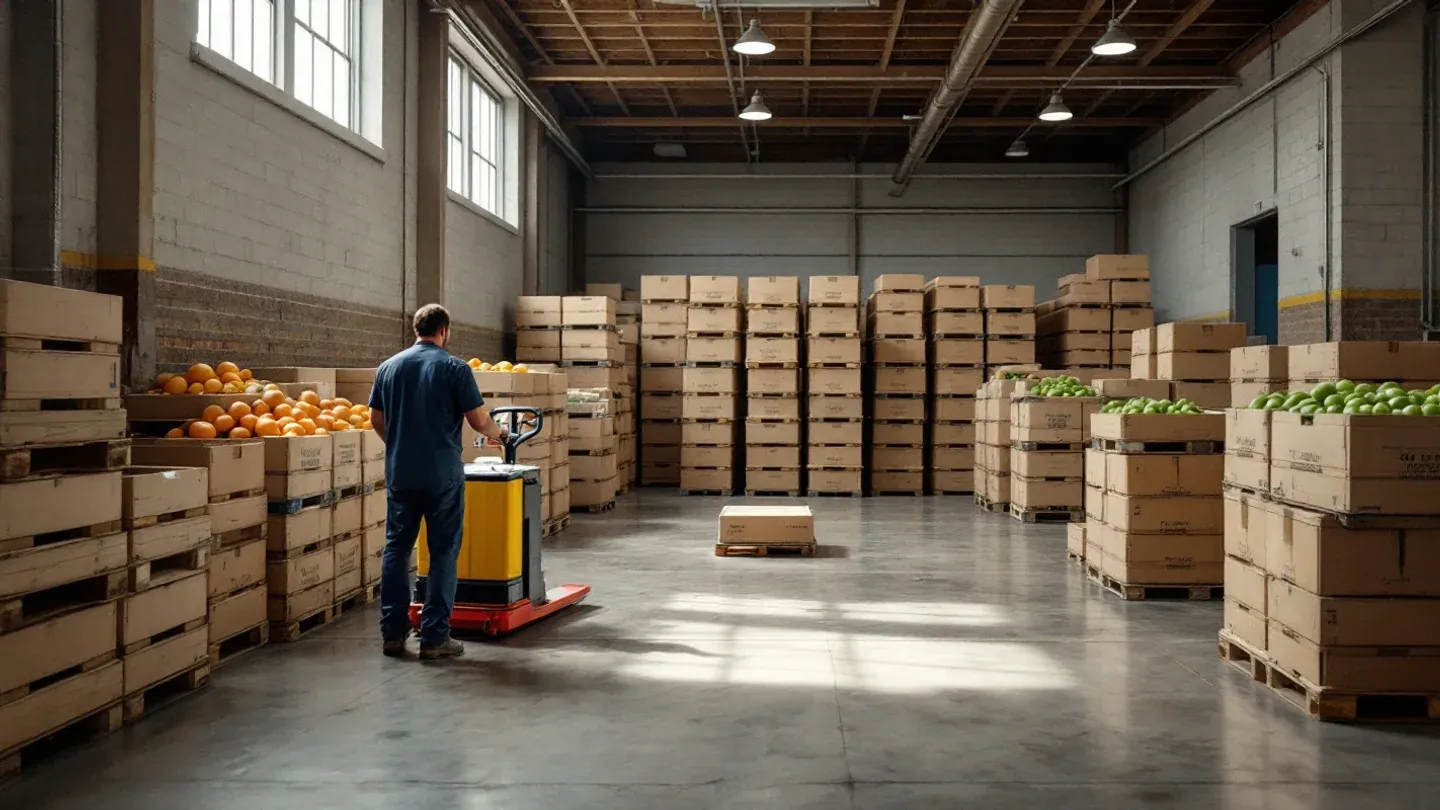
SARE's guide to scaling up for wholesale gives the honest test. Wholesale buyers want volume and consistency, delivery logistics are one of the factors that decide which buyers fit a farm, and when the requirements are too great the sensible move is to work with a cooperative or food hub that provides the services small farms find most daunting, refrigerated trucking and storage among them. A distributor takes a margin for doing that, and the margin is the price of your Tuesdays.
The point where it pays is usually visible in the numbers you already have. When the cost per drop on your own route is higher than the distributor's margin on the same cases, when the driver is you and you are also the only person who can run the harvest, or when the accounts you want are beyond the range a van can serve and still be home for evening chores, hand the route over and keep the direct channels that pay best. Many farms land in the middle: a distributor for the institutions, their own van for restaurants and the CSA. That mix is what we mean by acting local with a clear head rather than a full calendar, and it is close to what we described years ago in what localism means for farmers.
RFSI money for vans and coolers in 2026
The delivery leg is where USDA's Resilient Food Systems Infrastructure program has been quietly spending. RFSI put about $400 million through state departments of agriculture for the middle of the supply chain, with infrastructure grants of $100,000 to $3 million at a 50 percent match, 25 percent for historically underserved applicants, and simplified equipment-only grants of $10,000 to $100,000 with no match. The public project dataset AMS maintains, in its version dated September 3, 2026, lists 1,471 subawards worth about $309 million, 1,062 of them equipment-only, and by our reading of the project summaries roughly one in four mention a refrigerated van, truck, trailer or delivery vehicle.
The state reports show what that looks like on the ground. Illinois's 2025 and 2026 subaward list includes $71,244 for a refrigerated cargo van at Klein's Quality Produce, $36,225 for a refrigerated trailer that Farmers Rising will use to extend storage for at least 25 farms, $99,850 for a refrigerated electric van at Jo Daviess Local Foods, and several walk-in cooler and delivery vehicle packages for food hubs. Michigan announced more than $3.2 million to ten entities on April 30, 2026, among them $475,000 to Wunsch Farms for cold storage and packaging behind statewide cherry distribution and $63,000 to the Grow Jackson food hub. Wisconsin reports $27.2 million across 51 equipment and 30 infrastructure grants. Most states have awarded their rounds, a few list their call as closed with awards still to come, and the state status page shows whether any still has one open, so the practical use of these reports this fall is to find out which hubs and farms near you now have a reefer van or a cooler with spare capacity, and to ask. Electric delivery vans, which several awards bought, are covered in our article on electric farm vehicles.
A practical close
Before the fall shares peak, do five things. Drive your current route once with a notebook and time every stop, then work out the cost per drop. Put a thermometer in the cargo space and start the log this week, even if nobody has asked for it. Decide which cold method fits each route, and pre-cool everything before it leaves the walk-in. Write the delivery fee and the minimum order on the next price list. And call the farm down the road about sharing a delivery day before winter planning starts; the farms and ranches directory is one place to find the ones already doing it.
The farms that deliver well are rarely the ones with the newest van. They are the ones that keep the system simple, keep it cold, and keep showing up on the day they said they would. Crossing state lines with meat, eggs and produce is its own subject, with its own rules, and we will take it up in a coming article on shipping farm products across state lines.