
Late September is when a direct-market farm decides what kind of holiday season it will have. The boxes that leave the farm in the weeks before Thanksgiving and Christmas are sold in October, and the carrier account, the cooler, the price and the paperwork all have to be settled first. For a farm that has only ever sold at the market or from the farm gate, the first question is not which box to buy. It is whether the product is allowed to cross the state line at all. The answer is different for meat, poultry, eggs and produce, so this article takes each in turn before it gets to coolers, dry ice and what to charge.
Meat: the federal mark is the ticket
Start with the rule that catches the most people. Meat from a state-inspected plant stays in the state. Federal law lets a state run its own inspection program only if its standards are at least equal to the federal ones, and it limits those plants to product "solely for distribution within such State." By the National Agricultural Law Center's 2021 count, 27 states run a state meat inspection program, and in every one of them the state mark on its own means home-state sales only.
Product that crosses the line needs a federal mark of inspection, which means the animal was harvested and the cuts were packed at a plant under USDA inspection. Custom-exempt meat is further away still. Under 9 CFR 303.1 it goes back to the owner of the animal for that household's use, marked "Not for Sale," so a half or a quarter sold under the custom exemption cannot be boxed up for a customer two states over. We covered the custom and inspected routes in our guide to selling beef by the half, quarter and bundle. The politics of state inspection are in the PRIME Act piece.
The Cooperative Interstate Shipment program
There is one bridge between state inspection and interstate sales. The Cooperative Interstate Shipment program, written into the Federal Meat Inspection Act as 21 U.S.C. 683, lets USDA select state-inspected plants to ship "carcasses, portions of carcasses, and meat items in interstate commerce," as long as each item bears a federal mark of inspection. The plant stays under state inspectors who have been trained and designated for the job, and the regulation at 9 CFR 321.3 says product that qualifies "will bear an official Federal mark of inspection and may be shipped in interstate commerce."
The catch is size. A plant is eligible only if it employs on average no more than 25 employees, and it must sit in a state that has a cooperative agreement with USDA. North Dakota's program warns that the 25 count includes part-time staff, seasonal help and volunteers, and that a plant which grows past the limit is moved out of the program and into federal inspection for at least a year. Indiana's Board of Animal Health explains that CIS product carries the USDA mark, not the state legend, that every label needs approval, and that plants pay nothing extra to take part. Iowa's department of agriculture makes the point that matters most to a farm: individual livestock producers cannot apply, but they can sell meat and poultry across state lines if it is processed at a CIS facility, and the department points to the list of selected plants that USDA's Food Safety and Inspection Service keeps.
So the practical question for a farm in a state-inspection state is whether any plant within driving distance has been selected. Indiana, Iowa and North Dakota are among the states with agreements. Ask your own state program whether it has signed one and which plants are in, and ask the plant whether it will put your label on CIS product. If the nearest option is a federal plant three hours away, that drive is part of the shipping cost, and it belongs in the price. The Niche Meat Processor Assistance Network's summary of the rules is a good one-page refresher: federally inspected products can be shipped over state lines, state-inspected ones cannot unless the state and the plant are both in CIS, and custom-exempt meat is not for sale.
Poultry: the exemptions stop at the line
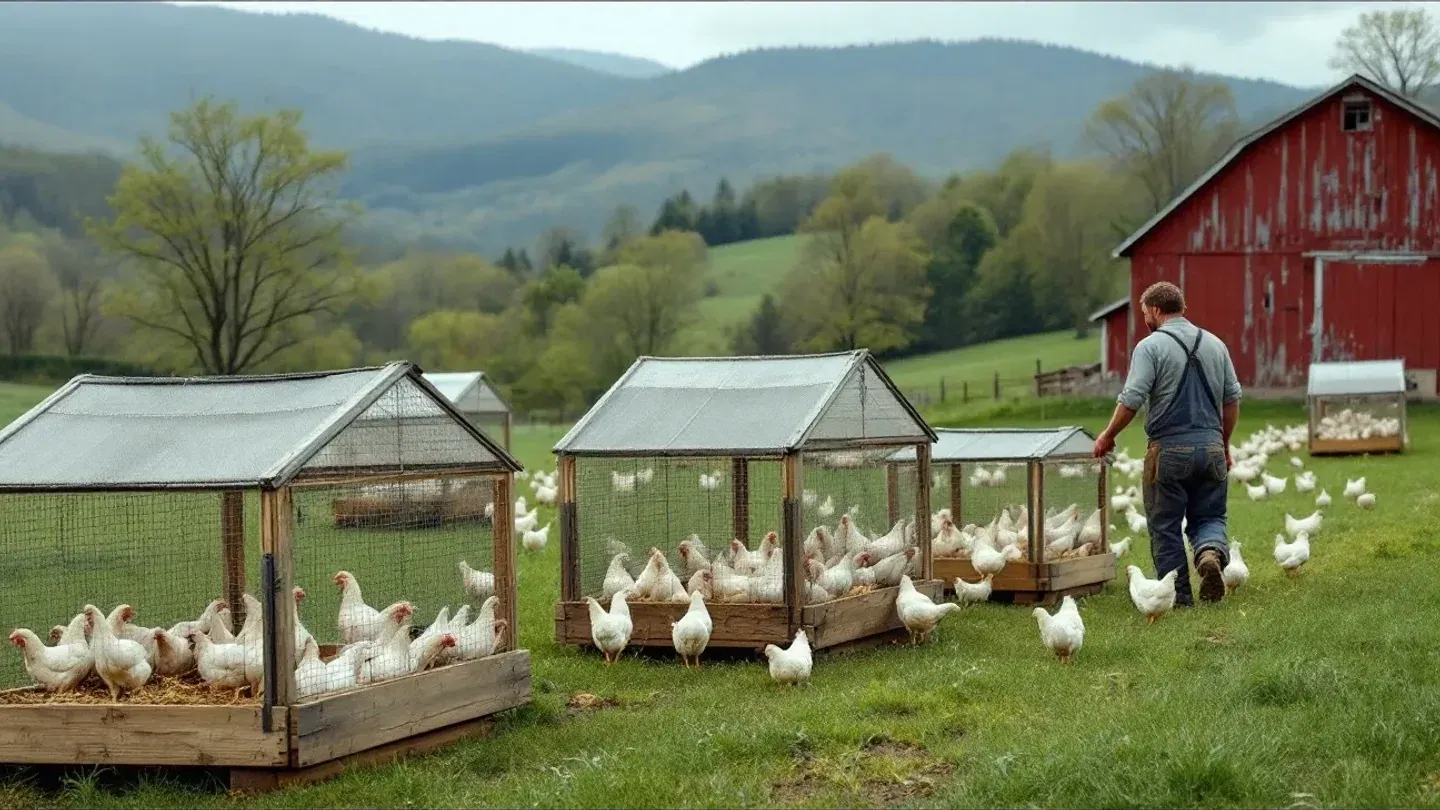
Many pastured poultry farms process under the federal exemptions rather than at an inspected plant. Those exemptions are written for home-state sales. Under 9 CFR 381.10, the 1,000-bird producer exemption requires that none of the poultry moves in commerce, and the larger producer and grower exemptions that run up to 20,000 birds are limited to distribution "solely within such jurisdiction." A farm that wants to ship chickens or turkeys to another state needs them slaughtered under inspection, federal or CIS. Our piece on pastured broilers covers the processing options, and the out-of-state holiday turkey order is where most farms run into this first.
Eggs: two federal layers and fifty state laws
Shell eggs have a federal food-safety rule and a federal marketing rule, and both hinge on flock size. FDA's egg rule applies to a producer with 3,000 or more laying hens at a particular farm who does not sell all of the eggs directly to consumers. Covered producers must hold and transport eggs at or below 45 °F ambient temperature beginning 36 hours after lay. On the marketing side, USDA's Agricultural Marketing Service runs the Shell Egg Surveillance program under the Egg Products Inspection Act: handlers with over 3,000 layers that grade and pack their own eggs must register with USDA, and eggs sold to consumers may contain no more restricted eggs, meaning cracks, checks and dirties, than Grade B allows. A producer-packer with a flock of 3,000 hens or fewer is exempt from registration.
Below those thresholds, the rules that bite are state rules. Egg licensing, grading, sizing, carton labeling and pack dates are set state by state, and a sale into another state can bring that state's egg law into play. Before you list eggs for shipment, call the agriculture departments in both states and ask three questions: do shipped eggs have to be graded and sized, do I need an egg handler or dealer license, and what must the carton say. Then look hard at whether the economics work. Eggs are heavy, fragile and need to stay cold. The Postal Service will accept them only if each egg is individually cushioned, the pack withstands normal handling, and the expected temperature changes are not likely to affect them. Most small flocks do better selling eggs close to home, which is why our pastured laying hens article prices them for the market and the farm store.
Produce: FSMA follows the sale, not the state line
Fresh produce has no inspection mark to earn, which makes it the easiest product to put in a box and the easiest to get wrong. The federal rule that matters is FDA's Produce Safety Rule. A farm is covered once its average annual produce sales over the previous three years pass $25,000, adjusted for inflation from a 2011 baseline; the most recent figure FDA has posted is $35,247 for 2025, with a three-year average of $34,324.
Above that, many direct-market farms rely on the qualified exemption: food sales under $500,000 adjusted ($704,950 for 2025) and more than half of them to "qualified end-users." Here is where shipping across state lines gets interesting. A qualified end-user is the consumer of the food, or a restaurant or retail food establishment in the same state or not more than 275 miles from the farm. A household in another state that orders a box from your website is a consumer, and that sale counts toward your exemption. A restaurant 400 miles away does not. If you hold the exemption, FDA requires the farm's name and complete business address on the label or at the point of purchase, which for a shipped box means on the package. Covered farms without the exemption face the rule's full requirements, including the pre-harvest agricultural water provisions, which applied to farms selling more than $250,000 up to $500,000 from April 6, 2026 and reach the smallest covered farms on April 5, 2027. Our guide to a wash and pack shed that meets FSMA covers the on-farm side.
Two more checks before produce ships. Some crops and plant materials sit under federal domestic quarantines, listed in 7 CFR Part 301, and the states add their own; citrus, nursery stock and anything with soil on it deserve a call to the destination state's plant protection office. And the Postal Service rule is blunt: fresh fruits and vegetables are nonmailable unless presented in a dry condition, and perishable foods that cannot reach their destination without spoiling are not mailable at all.
What stops at the line no matter what
Raw milk cannot be shipped across state lines for drinking. Federal law bars delivering milk in final package form into interstate commerce unless it has been pasteurized. Cottage foods are a creature of state law, and the state that licenses your kitchen does not license a sale in another one; the jam that is legal at your farmers market is usually not legal in a box to another state, as our cottage food article explains. A processed product that does travel generally has to come from a licensed kitchen, and the facility that makes it may have to register with FDA. The registration rule exempts farms, retail food establishments and restaurants, so a farm shipping its own raw produce is usually outside it, while a shared kitchen making sauces for interstate sale usually is not.
The box, the carrier and the cold
Once the product is allowed to travel, the job is to deliver it cold. The target is the same number FDA gives every household: a refrigerator at 40 °F or below and a freezer at 0 °F. A box that arrives frozen or firmly cold is a box the customer keeps. FDA's two-hour rule for perishable food left out, one hour when the air is above 90 °F, is a fair description of what happens on a sunny porch.
FedEx's published guidance for perishables is a good template whichever carrier you use. It calls for an insulated foam container with walls at least 1.5 inches thick inside a sturdy outer box, a watertight liner, gel packs for product that should stay between 34 °F and 50 °F, and dry ice for product that must stay frozen. If you do not pay for next-day service, the packaging and refrigerant should hold for at least 24 hours beyond the delivery commitment. Ship Monday through Wednesday so the box is not sitting in a hub over the weekend, and from May through September add hold-at-location or a signature so it is not left in the sun.
Dry ice has its own rules because it is a hazardous material in transit. Federal hazmat rules for dry ice shipped by air require packaging designed to permit the release of carbon dioxide gas, and the same advice holds on the ground: never seal the liner airtight. The Postal Service allows no more than 5 pounds of dry ice per package by air, requires the name of the contents and the net weight of dry ice on the address side, and adds a Class 9 label for air shipments; heavier dry-ice loads go by surface only. Meat and meat products are mailable in domestic mail only when they comply with USDA regulations, which brings the inspection mark back into the picture. Priority Mail promises delivery in 2 to 3 days and, as of this writing, charges a $15 handling fee for live animals and perishable items like food or plants.
Pricing shipping honestly
Here is where good farms lose money quietly. A shipped box costs the carton, the foam cooler, the liner, the gel packs or dry ice, the label, the carrier's rate for the zone and weight, any handling fee, and the labor to pack it and drive it to a drop-off. Pack a sample box with real product, weigh it, and price it to three addresses: one in your state, one two zones away, one across the country. Then decide, in writing, which of two honest models you will use. Either show shipping as its own line at checkout, or build it into the product price and set a minimum order, with a plain sentence on the product page saying so. What you should not do is call it free. Shipping is never free; the only question is who sees the number. Knowing your cost of production applies to the box as much as to the beef. Being consistent about it is what keeps repeat buyers from feeling tricked.
Two more lines belong in the plan. Decide now what happens when a box arrives warm: a replacement, a refund, a photo of the thermometer. Write it down before the first complaint. And talk to your accountant about sales tax. Since the Supreme Court's 2018 decision in South Dakota v. Wayfair, a state can require an out-of-state seller to collect its sales tax without a physical presence there; South Dakota's threshold in that case was more than $100,000 of sales or 200 or more separate transactions into the state. Most farms shipping a few hundred boxes will not get near it, but it is good to know where the line is.
The tools around the sale matter too. A store that calculates shipping by zone and holds orders for your ship days is worth more than a pretty one; our comparison of online stores for farms goes into that. If you deliver locally as well, the cold chain in a delivery van is the same problem in a different box. So is the freezer on the farm. When supply chains broke in 2020 and farms turned to farm-to-door CSAs, the ones best placed to keep those customers had a clear shipping policy and an email list, which is the whole argument of our keeping customers article. Marketing a farm has not changed much; the box just has further to go.
The holiday calendar, in practice
Thanksgiving falls on November 26 this year, the fourth Thursday in November as federal law sets it, and Christmas on December 25. Work backwards from those two days and you have your calendar:
- Confirm with the plant now that holiday product will carry a federal or CIS mark and your approved label.
- Open the carrier account, order foam coolers and gel packs in October, and test-ship one box to a friend two states away.
- Set order cutoffs that leave a Monday or Tuesday ship day before each holiday week, and say them on the website.
- Decide the shipping model and the warm-box policy, and put both on the product page.
- Keep the first season small. A hundred boxes delivered cold build a reputation; a thousand delivered late end one.
Shipping across state lines is a way to reach the family that moved away and still wants your beef, not a replacement for the customers who can drive to the farm. Acting locally comes first, and the patience that thinking long term asks for is what makes the box worth the trouble. Our directory lists service providers and manufacturers who supply insulated packaging and labels, farms and ranches that already ship, and food brands that started with a cooler and a carrier account.