
It is the first week of July. The campus dining hall is closed for summer, the hospital kitchen is running its lightest menu of the year, and the senior center down the road has its congregate lunch dialed in. This is the quiet season for institutional food service, and it is the best time of the year to get a food service director on the phone. By September, every one of them will be buried.
If you have sold at a farmers market or to a few restaurants, institutions are the next rung: bigger, slower, heavier on paperwork, and the steadiest customer a farm can have.
Why institutions are worth the trouble
The USDA Economic Research Service puts local food sales at $11.8 billion in 2017, and the interesting number sits underneath it. In the survey of 2015 sales, most local food was not sold at a market stall. Intermediate markets and institutions took 39 percent of sales, direct-to-consumer channels 34 percent and retailers 27 percent.
The buyers are everywhere. The American Hospital Association counts 6,100 hospitals in the United States, 5,121 of them community hospitals. The National Center for Education Statistics lists 3,896 degree-granting colleges and universities for 2022-23. The National Council on Aging reports more than 11,000 senior centers serving more than 1 million older adults every day. Every one of those buildings has a kitchen or a meal contract that buys 52 weeks a year.
That steadiness is the point. A kitchen on a cycle menu wants the same case of carrots every Tuesday, which is exactly the demand a small farm can plan around. It is the local relationship we described in our piece on localism in agriculture and the reason we believe a farm should act local.
How an institutional kitchen buys
There are two basic models. A self-operated kitchen is run by the institution's own staff, and the food service director answers to the hospital or the college. A contract-managed kitchen is run by a food service management company under a contract with the institution. In a self-op kitchen the director can usually decide to buy from you. In a contract kitchen the on-site manager may want to, but the company's approved vendor list and the institution's contract decide whether local purchasing is allowed or required. Farm to Institution New England's campus dining report covers exactly this split, self-operated colleges and food service management companies, along with the distributors they use.
Under either model, most food arrives on one or two broadline distributor trucks, which gives you three ways in: sell direct as an approved vendor for a short list of items, sell through a food hub that already delivers there, or get your product listed as a local line item in the distributor's catalog so the kitchen can order it with everything else. The last route is the slowest to set up and the easiest to keep.
Colleges are the most open door. In FINE's 2018 survey of New England campuses, 93 percent of responding colleges bought local food, and on average the responding colleges spent 21.5 percent of their annual food budget on it, $67.7 million across the 110 responding schools. The campuses defined local for themselves, most often as food raised within 250 miles, within 150 miles, or within the six New England states. Ask your campus how it defines the word before you pitch.
Hospitals move slower but think in decades. Health Care Without Harm's healthy food program supports more than 2,000 health care facilities across North America, and in 2021 it and Practice Greenhealth found that 78 percent of health care survey respondents spent, on average, 7 percent of their budgets on local food. Their working definition of local is 250 miles from the facility, 500 miles for meat, poultry and seafood. New England alone has 270 hospitals plus nursing homes and retirement communities, all serving thousands of meals a day.
Congregate lunches at a senior center are often funded through the Older Americans Act, and the law itself leans your way: a state nutrition project must provide meals that comply with the Dietary Guidelines and must, where feasible, encourage the use of locally grown foods and identify partnerships and contracts with local producers. The buyer is often not the center but the nutrition provider or central kitchen contracted by the Area Agency on Aging, so ask who cooks the lunch. Adult day care centers are a related market; they are fed through the Child and Adult Care Food Program, which covers licensed centers serving functionally impaired adults or people 60 and older. Feeding elders well is part of what we mean by nurture families.
The rules behind the money
Wherever federal grant dollars pay for the food, the buyer follows the Uniform Guidance. Under 2 CFR 200.320, a micro-purchase can be awarded without competitive quotes if the price is reasonable, and the buyer should spread those purchases among qualified suppliers. The federal micro-purchase threshold in the Federal Acquisition Regulation is $15,000, and a grant recipient may self-certify a threshold up to $50,000. Above that, the kitchen must collect quotes, and above the simplified acquisition threshold it runs a formal bid. We walked through the same ladder for school districts in How to Sell to Your Local School District; it applies to a senior nutrition program and to a public university spending federal money.
A private hospital or a private college spending its own money sets its own policy, which is often simpler: a vendor application, a W-9, a certificate of insurance, your food safety documentation and a product list with prices. Have that packet ready before the first meeting.
Local purchasing targets and incentive laws
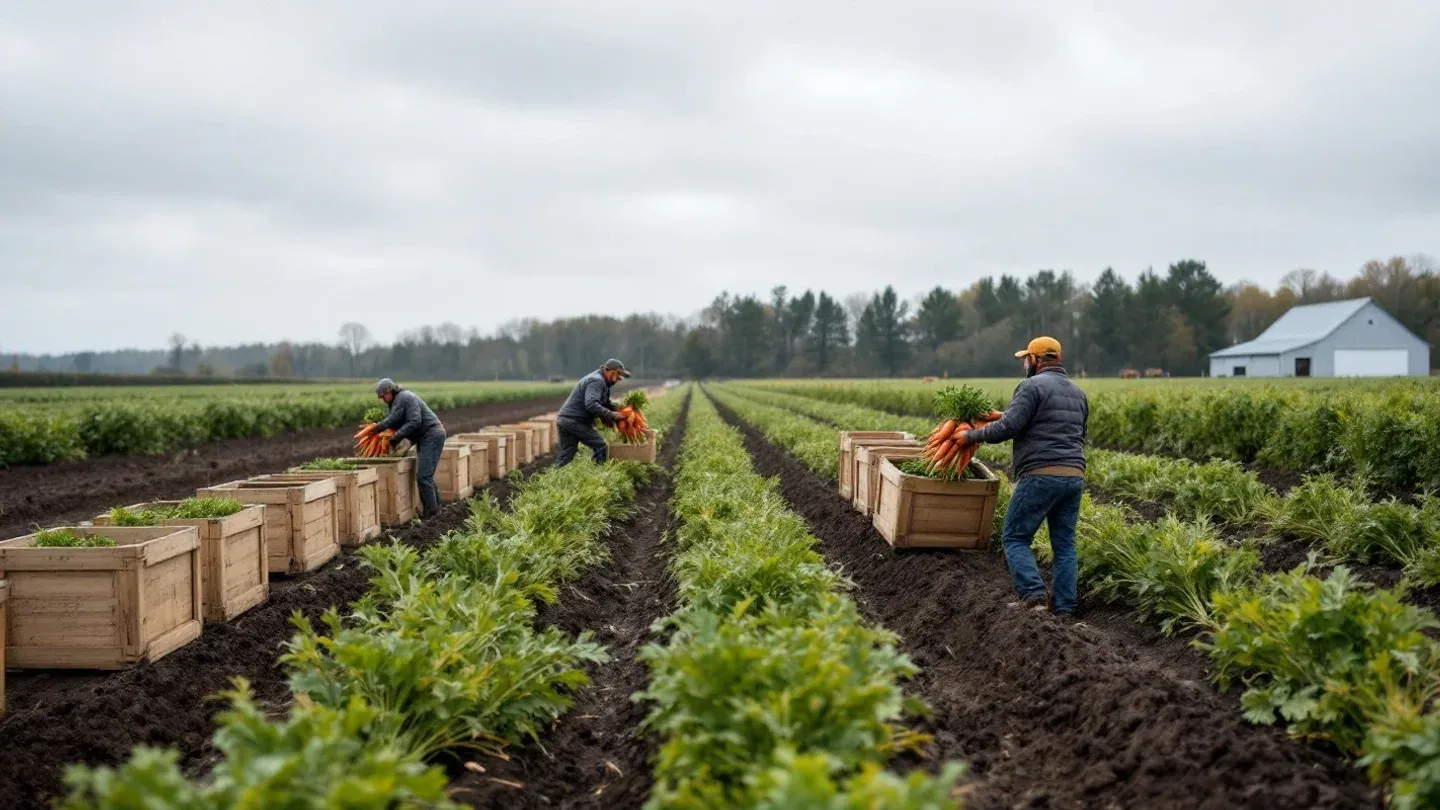
The clearest incentives on the books are written for school meals, but they shape the whole institutional market because the same distributors and the same food hubs serve everyone. Michigan's 10 Cents a Meal gives schools, early care and education centers and other organizations in USDA Child Nutrition programs grant funds for Michigan-grown fruits, vegetables and dry beans; the 2024-25 program year was funded at $4.5 million, with 251 grantees reaching about 600,000 children. It began as a pilot in 2016 and went statewide in 2020. New York's 30% Initiative raises the state lunch reimbursement from 5.9 cents to 25 cents when at least 30 percent of lunch ingredients come from New York farms, and the state's Farm-to-School grants have provided up to $100,000 per project. Vermont wrote a goal of 20 percent local food by 2023 into statute and, subject to appropriation, pays 15, 20 or 25 cents per reimbursable lunch to supervisory unions and supervisory districts that reach 15, 20 or 25 percent local, with vendors certifying which products qualify. FINE has co-facilitated a local food purchasing incentive community of practice across eight states to offset the cost of local food for schools and campuses.
For hospitals and colleges the targets are mostly voluntary, set by the institution's own sustainability goals or by frameworks like Health Care Without Harm's. That is a reason to sell the goal, not just the product. A director who has promised a 20 percent local number needs you as much as you need them.
Federal programs are a different story, and the last two years are a warning. USDA's Local Food Purchase Assistance agreements, which funded states, tribes and territories to buy food produced in-state or within 400 miles of delivery for food banks and other feeding programs, ran for up to two years from award. On July 15, 2025 USDA announced the termination of the Regional Food Business Centers program, with only the current Business Builder grants continuing. We covered what a lapse does to farm programs in What Happens When the Farm Bill Lapses. The lesson for institutional sales is simple: build on a buyer, not on a program. Programs change in Washington; the hospital kitchen is still there, and that is the long-term way to think about a market.
What the kitchen needs from you
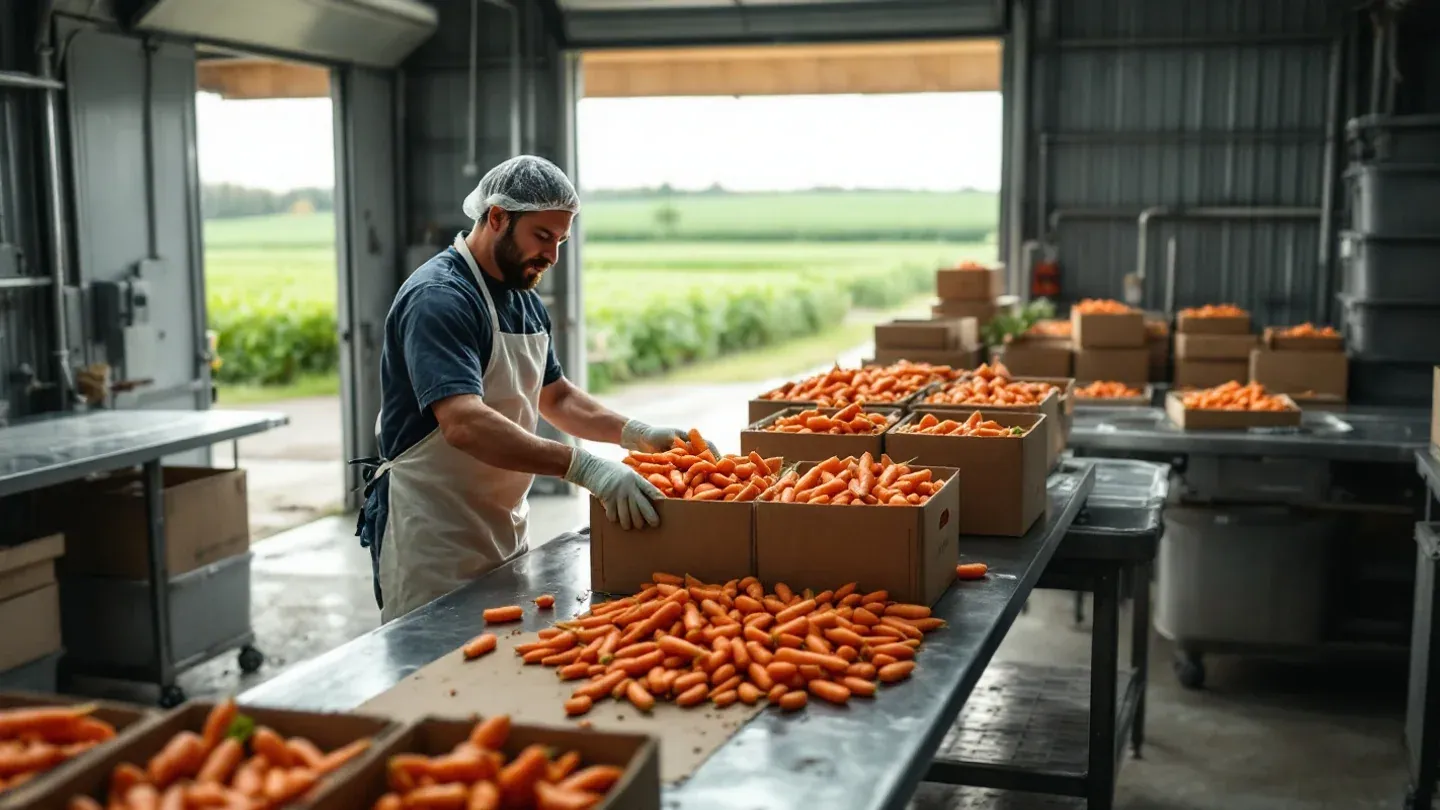
Institutions buy by specification. A cook feeding 800 people wants carrots of one size so they roast evenly, greens that are washed and trimmed so prep time is predictable, and cases of a known weight so the order can be costed. Ask for the spec sheet for anything you want to sell and grow to it. For meat, large-volume buyers such as government agencies, schools and other food service users reference USDA's Institutional Meat Purchase Specifications, a set of voluntary consensus specifications for meat products, to say precisely what they want. If you sell beef or pork to a hospital, learn how the IMPS describe your cuts.
Food safety paperwork comes next. Your customers may require a GAP audit for produce, a voluntary USDA audit that verifies fruits and vegetables are produced, packed, handled and stored to minimize microbial food safety risks, and the FSMA Produce Safety Rule sets the federal minimum standards for growing, harvesting, packing and holding. We covered the path to an audit in Getting Wholesale Ready. The building is covered in Designing a Wash and Pack Shed. You will also need a walk-in cooler once you promise a Tuesday delivery of greens.
On volume, do not guess. Ask the director for weekly usage of your three strongest items in cases; a kitchen knows that number because it orders it every week. Then decide honestly whether you can cover twelve consecutive weeks. One item every week for a season is worth more to a kitchen than a dozen items you can supply twice.
On price, institutional budgets are tight and the buyer will have a distributor price in hand. You will rarely beat it. What you can offer is freshness, a product that arrives ready to use, a story for the menu board, and a number that lets you make money. Know your cost of production before you quote, and treat the quote as part of your business plan, not a favor.
How to start with one account
Pick the institution closest to your farm, not the biggest. Find the right person: the food service director or executive chef at a self-op kitchen, the on-site general manager at a contract kitchen, the sustainability coordinator at a campus, the nutrition director at the Area Agency on Aging for senior meals. Bring one page: who you are, what you grow, the three items you can supply weekly from a given date, your food safety status and your delivery day.
Ask three questions. Who makes the purchasing decision? Who delivers your produce today? What would make a local line item easy for you? The answers tell you whether to sell direct, through a hub, or through the distributor. Then start small, inside the micro-purchase range, where nobody needs a bid. Deliver on time every week for a season. That is the whole sales pitch, and it is why we hold consistency as a core belief.
If your farm is too small for the volume, pool with neighbors. A producer cooperative or a food hub can turn five small farms into one reliable vendor. The networks that broker these relationships are listed in our organizations directory, and the distributors and hubs that carry local lines are in our service providers directory.
Make the call this month. The director has time now, the fall menu is being written, and the farm that shows up in July with a clean spec sheet and a realistic number is the one that gets the September order.